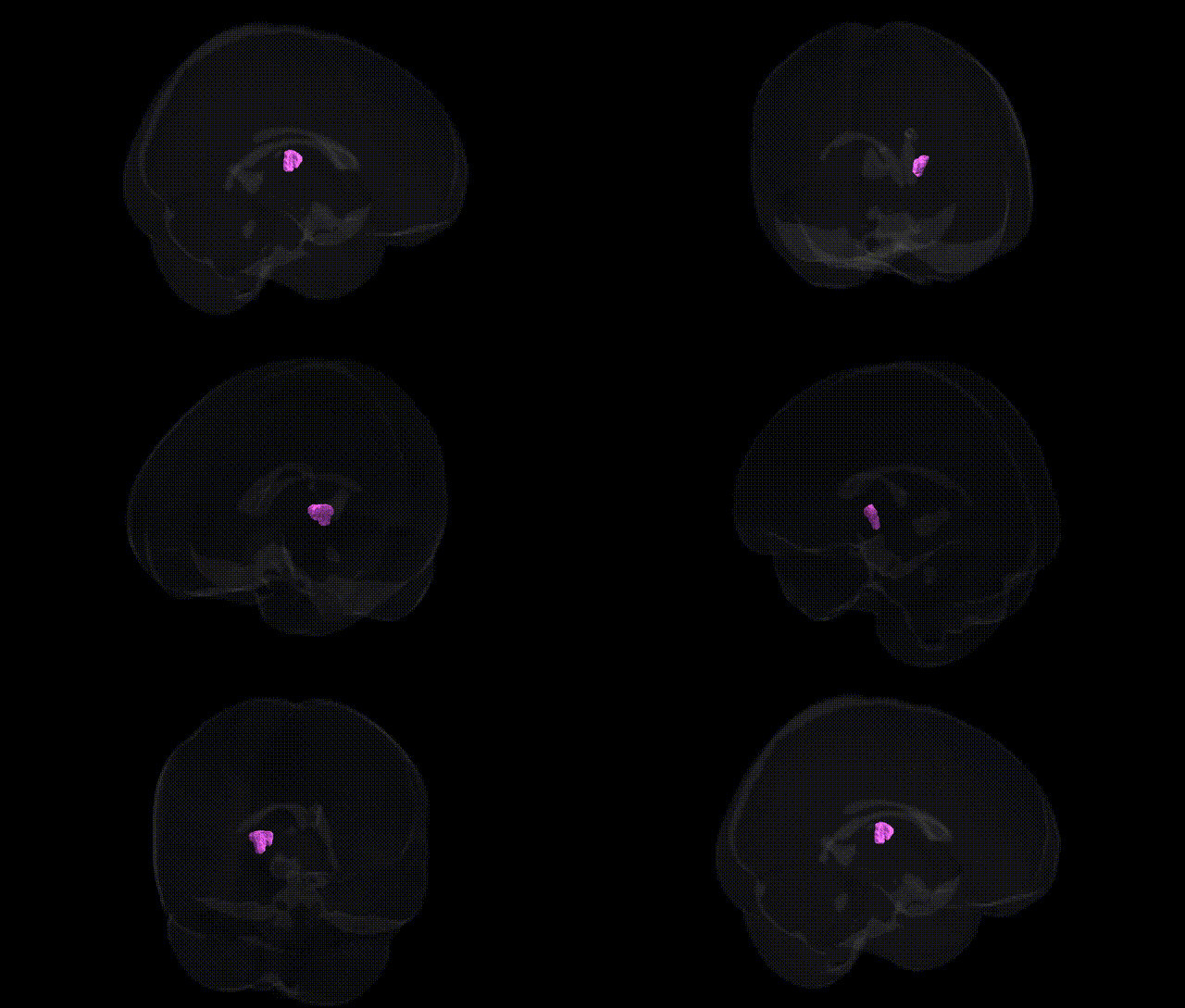
The bilateral Right Cerebrum.Sub-lobar.Thalamus.Gray Matter.Ventral Posterior Lateral Nucleus corresponds to the ventral posterolateral (VPL) nucleus of the thalamus, a key somatosensory relay nucleus located in the ventral tier of the lateral thalamus. It receives ascending input from the medial lemniscus and spinothalamic tracts conveying discriminative touch, vibration, proprioception, pain, and temperature from the body (excluding the face), and projects primarily to the primary somatosensory cortex in the postcentral gyrus. Somatotopically organized, the VPL helps maintain a precise body map and is essential for conscious perception of bodily sensations; lesions can result in contralateral sensory deficits including loss of fine touch and pain perception. There is no direct link for this specific nucleus; see the related structure Thalamus.
Genetic associations involving the bilateral ventral posterior lateral (VPL) nucleus of the thalamus, as defined in the Talairach 1 mm atlas under “Right Cerebrum.Sub-lobar.Thalamus.Gray Matter.Ventral Posterior Lateral Nucleus,” are largely inferred from broader thalamic or thalamocortical genetic findings rather than VPL-specific GWAS. The VPL, a major somatosensory relay, has been implicated indirectly in genome-wide studies of thalamic volume and thalamic nuclei, which highlight variants in genes related to neurodevelopment (e.g., cell adhesion and axon guidance genes like those in the cadherin and semaphorin families), synaptic signaling and plasticity (including glutamatergic and GABAergic pathway genes), and oligodendrocyte or myelination-related genes that influence thalamic microstructure on MRI. Large neuroimaging-genetics consortia (such as ENIGMA and UK Biobank–based studies) have reported associations between common variants in genes like MAPT, APOE, and several loci near calcium channel and synaptic scaffolding genes with overall thalamic volume or specific nuclei, suggesting shared genetic architecture with neurodegenerative diseases and cognitive traits; although not isolated to the VPL, these effects plausibly extend to it as part of the sensory thalamus. Thalamic nuclei, including sensory relay regions, also appear in polygenic overlap analyses for schizophrenia, bipolar disorder, major depression, and autism spectrum conditions, consistent with genetic findings in glutamatergic, GABAergic, and neurodevelopmental genes affecting thalamocortical circuitry. Additionally, rare Mendelian and channelopathy-related mutations (e.g., in SCN and CACNA family genes) that alter thalamic excitability have been linked to generalized epilepsies and pain syndromes and are thought to involve relay nuclei such as the VPL because of their central role in somatosensory and nociceptive transmission.
Overview generated by GPT-4o (2026).
Region ID: 584
Hemisphere: bilateral
Atlas: Talairach labels 1mm
Full Quality Version: Download MP4
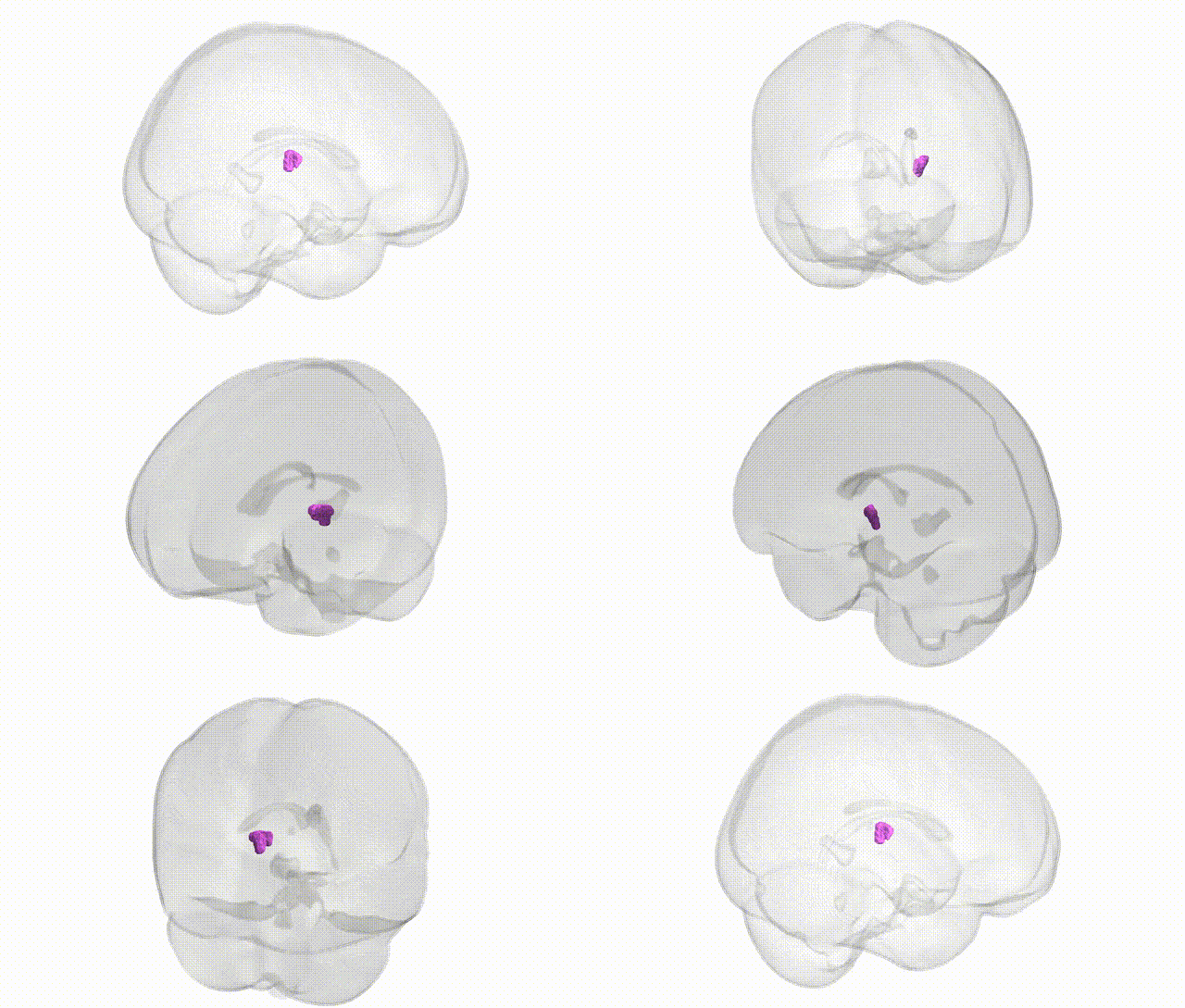
Full Quality Version: Download MP4
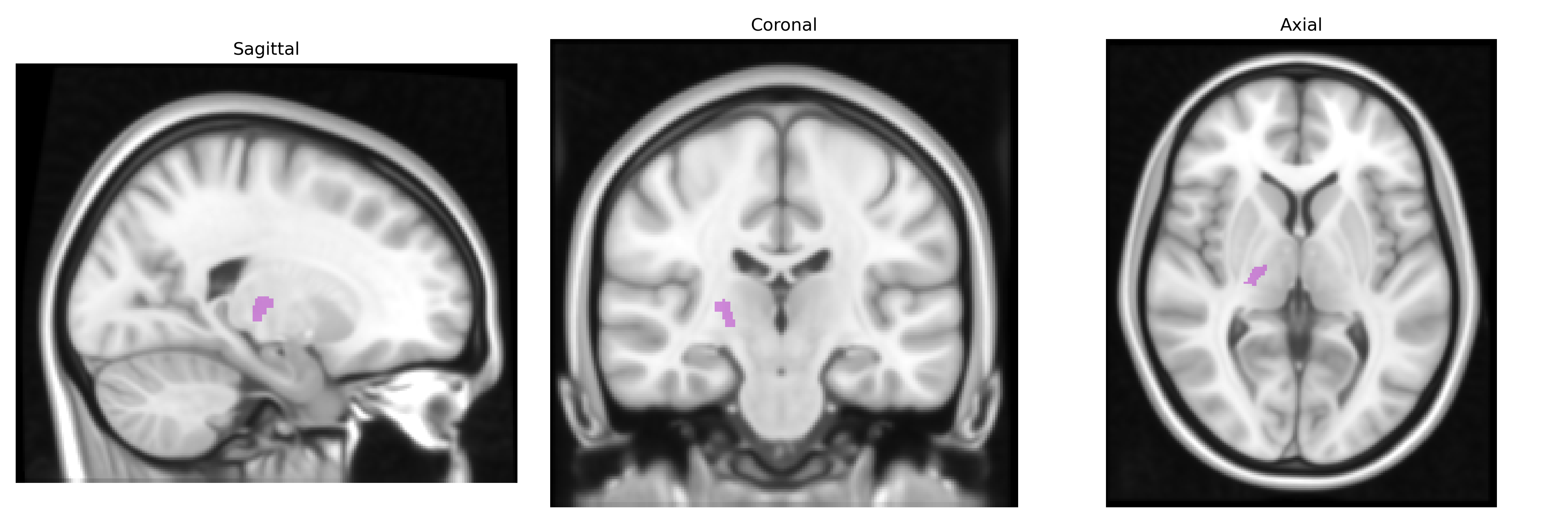
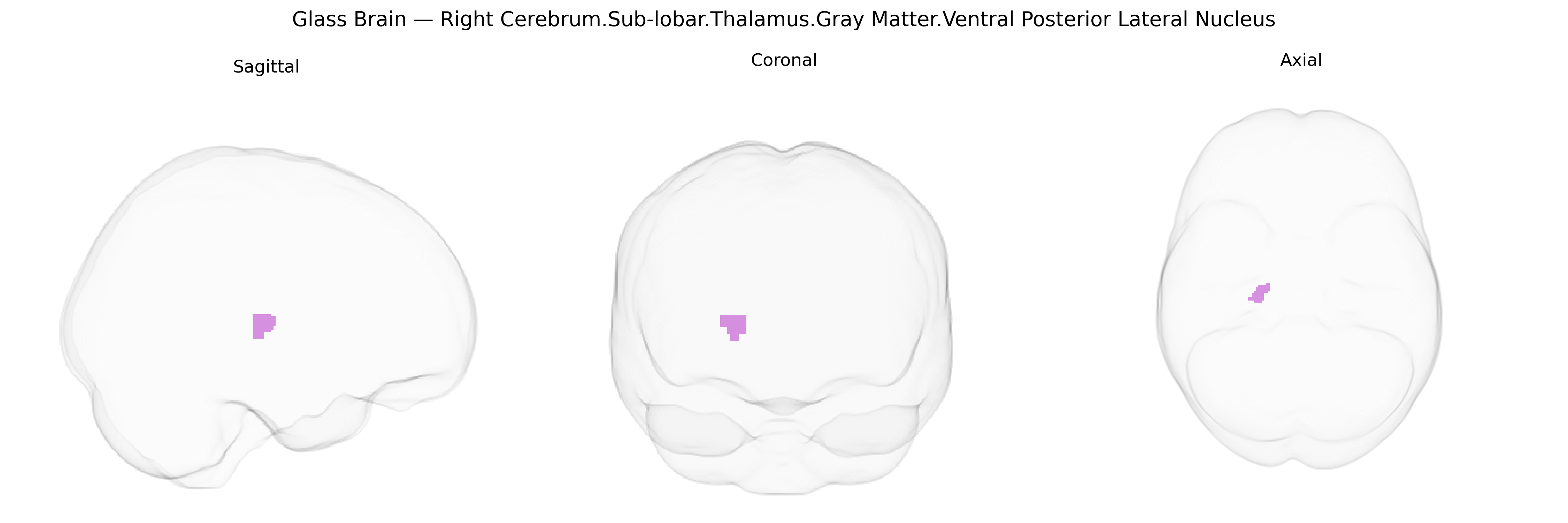
Wali Sidiqyar*, Gaurav Rudravaram*, Elyssa M. McMaster, Trent M. Schwartz, Adam M. Saunders, Kurt G. Schilling, Bennett A. Landman "Introducing SPINS: A Shared Public Visualization Library of Neuroanatomical Structures." Medical Imaging with Deep Learning- short paper
This resource is licensed under CC0 1.0 Universal (Public Domain).