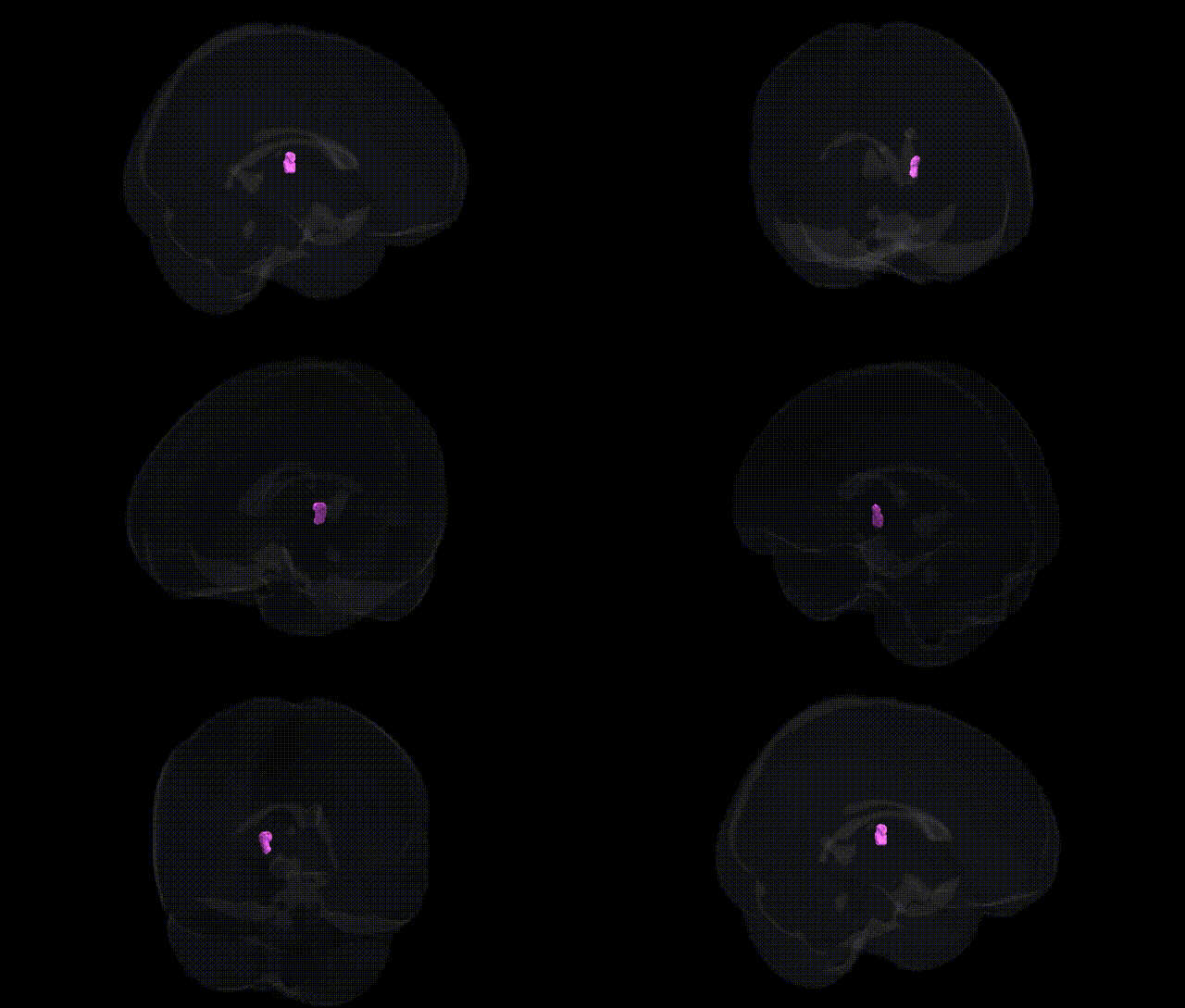
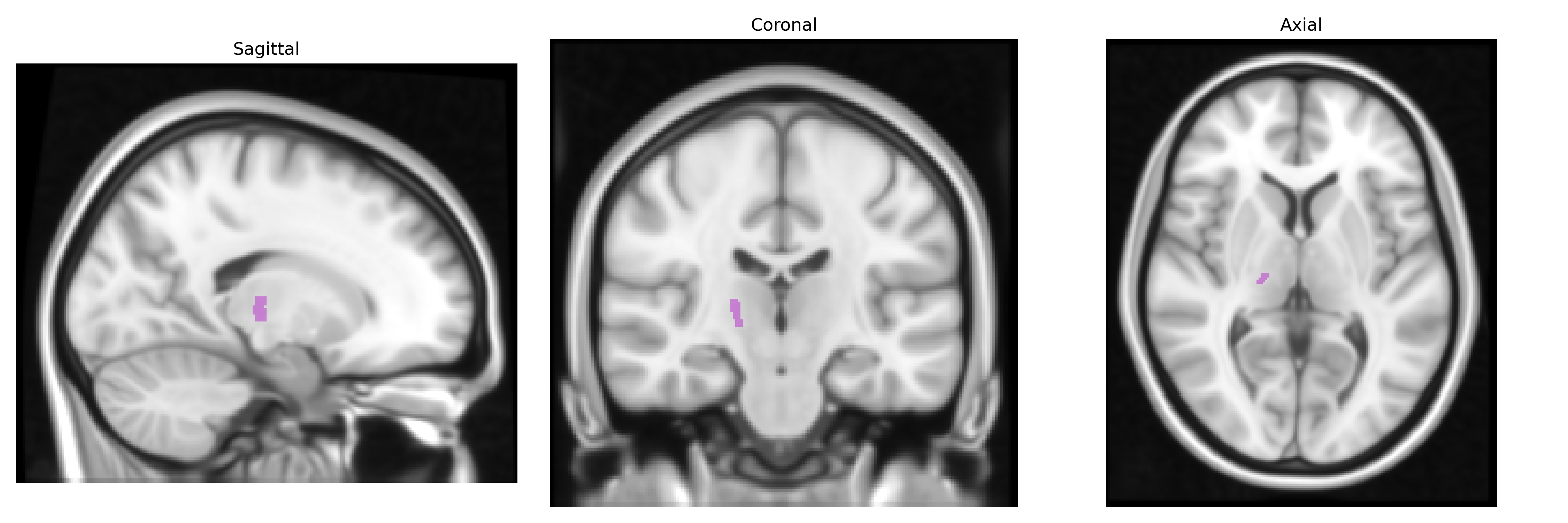
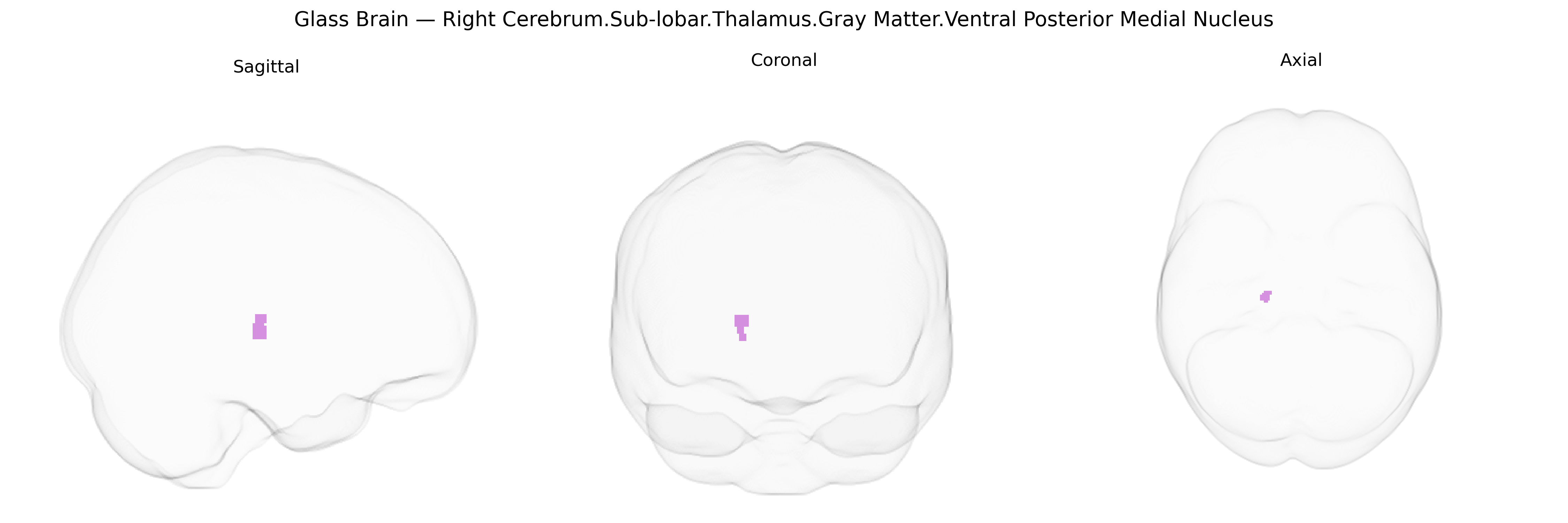
The bilateral Right Cerebrum.Sub-lobar.Thalamus.Gray Matter.Ventral Posterior Medial (VPM) nucleus is a somatosensory relay nucleus of the thalamus that primarily processes tactile, nociceptive, and thermal information, as well as taste, from the face and oral structures via trigeminothalamic and related pathways. It resides within the ventral posterior complex of the thalamus, where it receives afferents from the principal sensory and spinal trigeminal nuclei and projects mainly to the primary somatosensory cortex (particularly the face representation) and related cortical areas, thereby contributing to precise localization and conscious perception of facial sensation and gustation. Functionally, the VPM is critical for integrating and relaying modality-specific information about facial somatosensation and taste, maintaining topographic (somatotopic) organization and supporting normal sensory discrimination of facial stimuli. There is no direct link for this specific subnucleus; see the related structure Ventral posteromedial nucleus of the thalamus.
Genetic associations involving the ventral posterior medial (VPM) nucleus of the thalamus—an essential relay for somatosensory and trigeminal inputs—are typically inferred from GWAS that map variants to thalamic volume, thalamo-cortical connectivity, or pain and sensory phenotypes rather than to this subnucleus alone, given current imaging and parcellation limits. Large neuroimaging-genetics consortia (e.g., ENIGMA, UK Biobank–based GWAS) have identified common variants in genes related to neurodevelopment, synaptic function, and axon guidance (such as those in or near NPTN, GRIN2B, CACNA1C, and multiple MHC-region and cell-adhesion genes) associated with total thalamic or posterior thalamic nuclei volume and microstructure, which would encompass the ventral posterior complex. Disorder-based genetic analyses implicate thalamic circuitry in schizophrenia, bipolar disorder, and major depression, with polygenic risk scores for these conditions correlating with altered thalamic volume and thalamo-cortical connectivity, while pain and migraine GWAS (e.g., implicating TRPM8, LRP1, and other sensory-transduction or nociception-related loci) support a role for genetic variation in pathways that modulate thalamic nociceptive and somatosensory processing, consistent with the VPM’s function. Additional associations arise from studies of chronic pain, neuropathic pain, and allodynia, in which genetically influenced differences in thalamic relay and cortical representation of facial and oral sensation are hypothesized, though not yet resolved at the VPM-specific level. Overall, available genetic evidence links thalamic structure and function—including regions overlapping the VPM—to polygenic architectures underlying psychiatric disorders, pain perception, and general brain morphology, while precise GWAS associations explicitly annotated to the bilateral ventral posterior medial nucleus remain limited.
Overview generated by GPT-4o (2026).
Region ID: 583
Hemisphere: bilateral
Atlas: Talairach labels 1mm
Full Quality Version: Download MP4
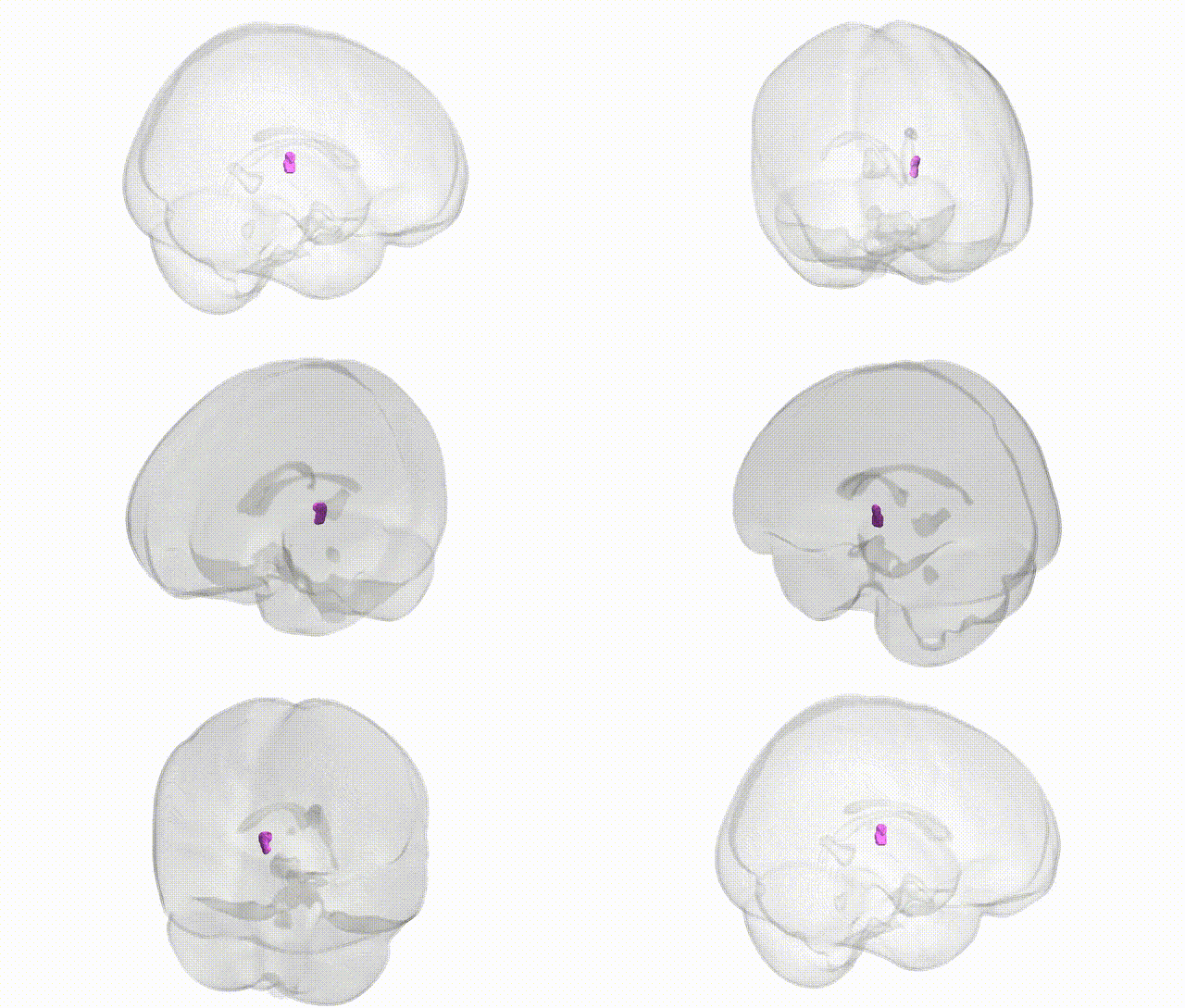
Full Quality Version: Download MP4
Wali Sidiqyar*, Gaurav Rudravaram*, Elyssa M. McMaster, Trent M. Schwartz, Adam M. Saunders, Kurt G. Schilling, Bennett A. Landman "Introducing SPINS: A Shared Public Visualization Library of Neuroanatomical Structures." Medical Imaging with Deep Learning- short paper
This resource is licensed under CC0 1.0 Universal (Public Domain).