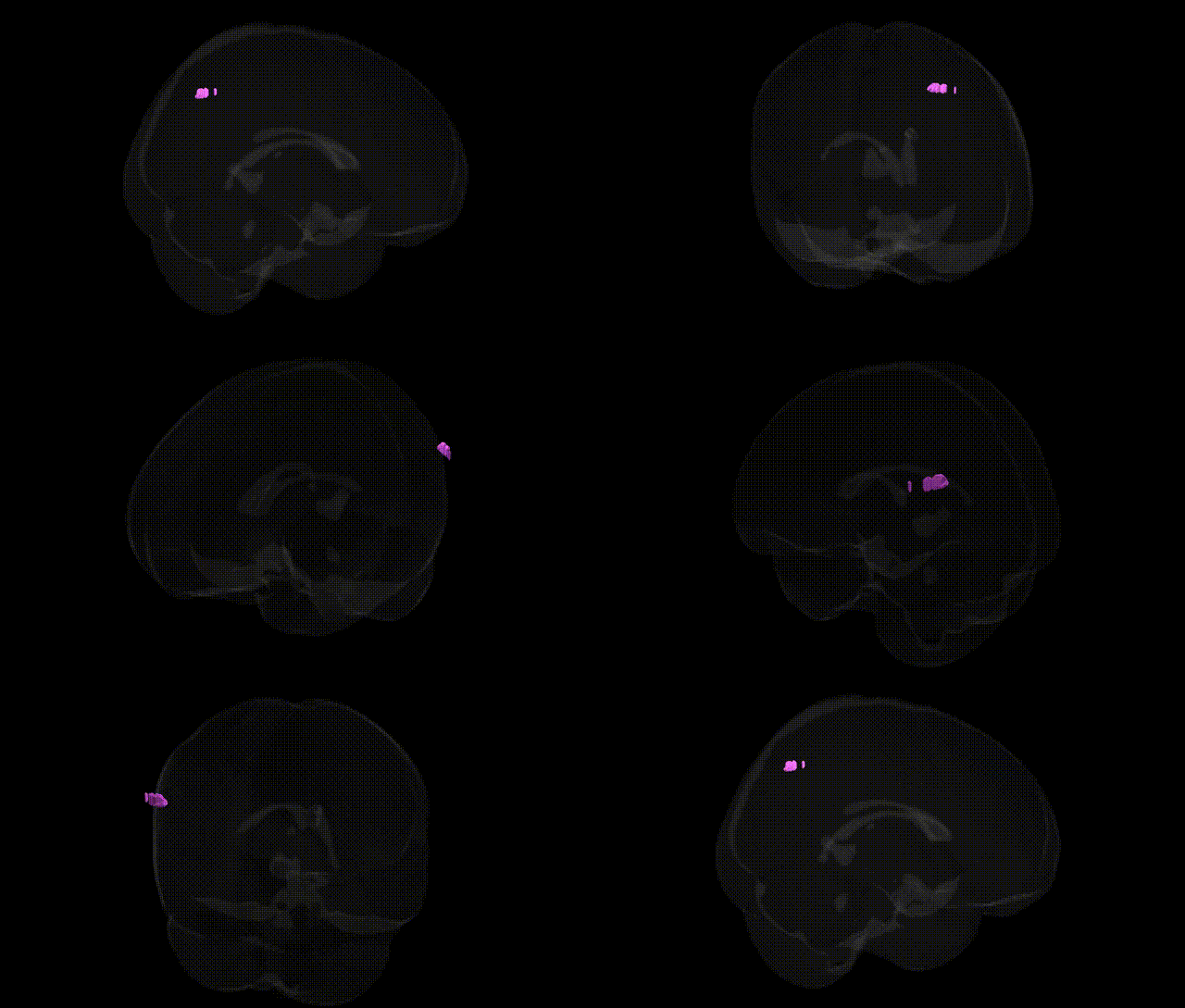
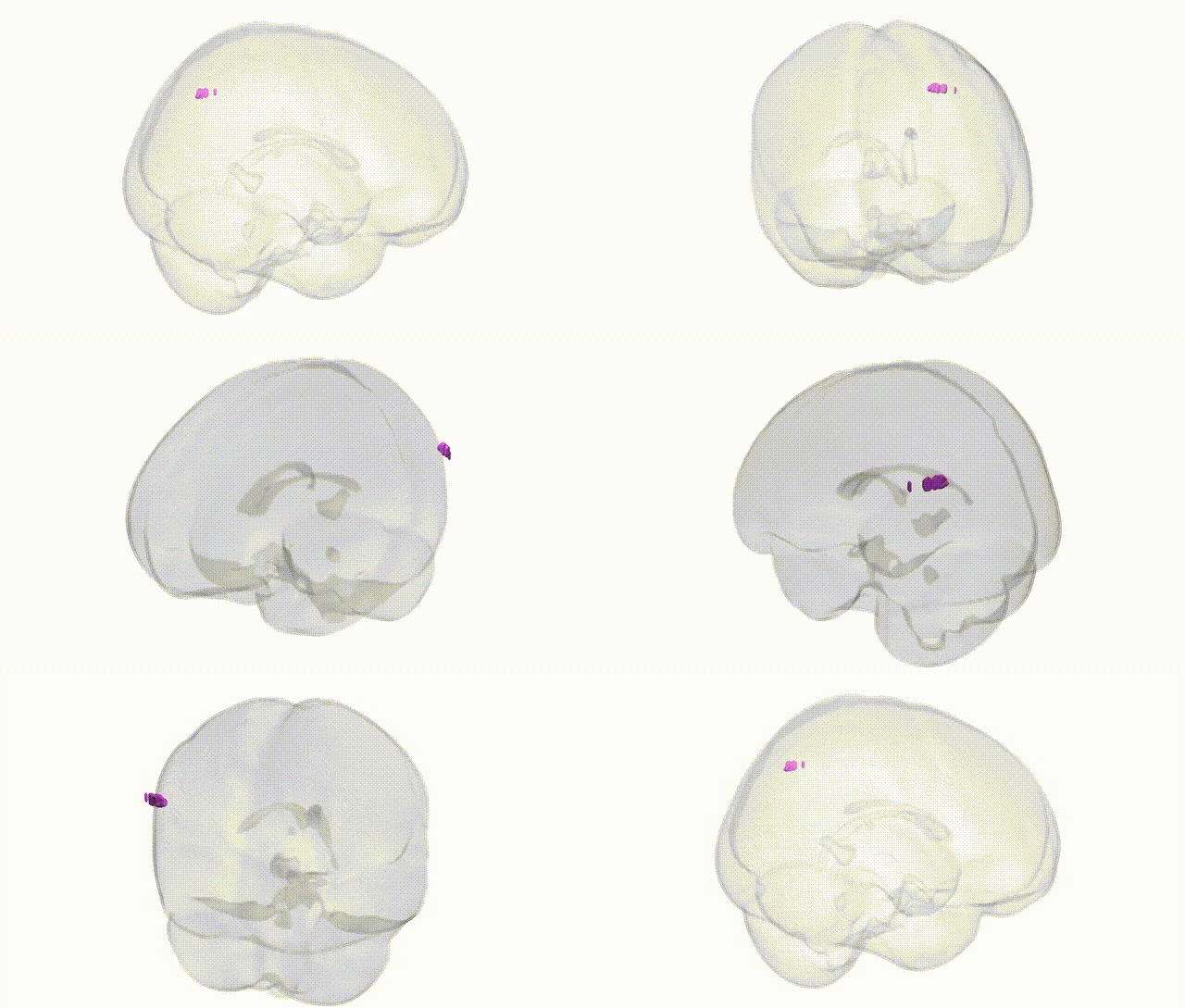
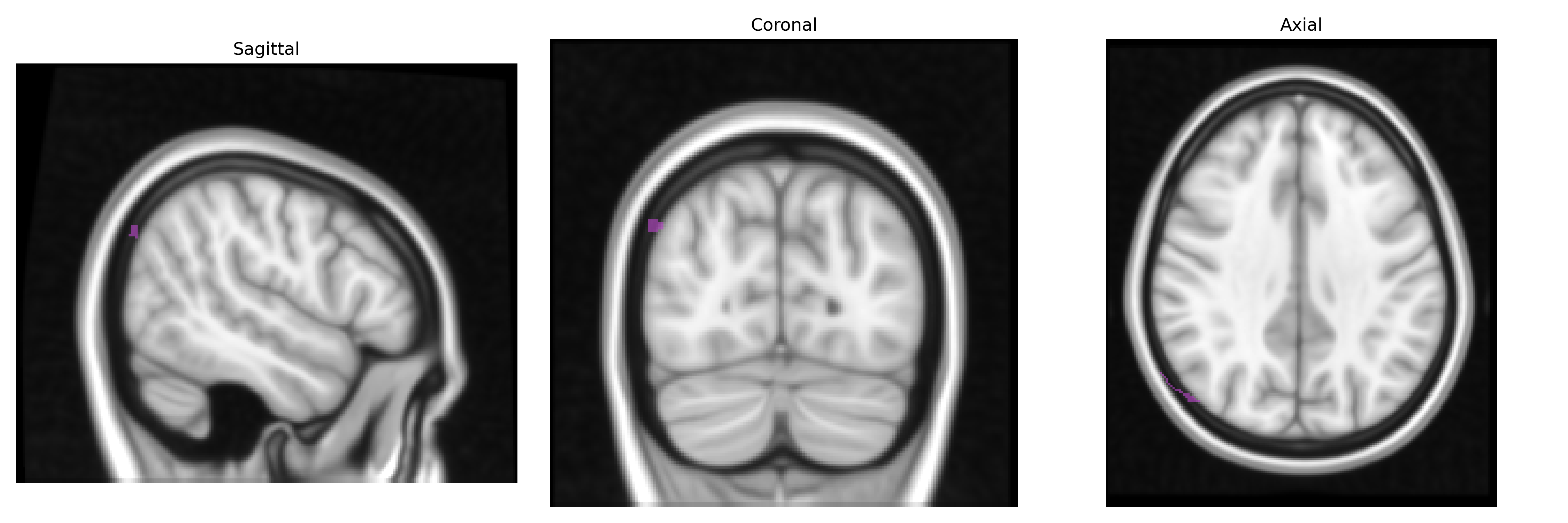
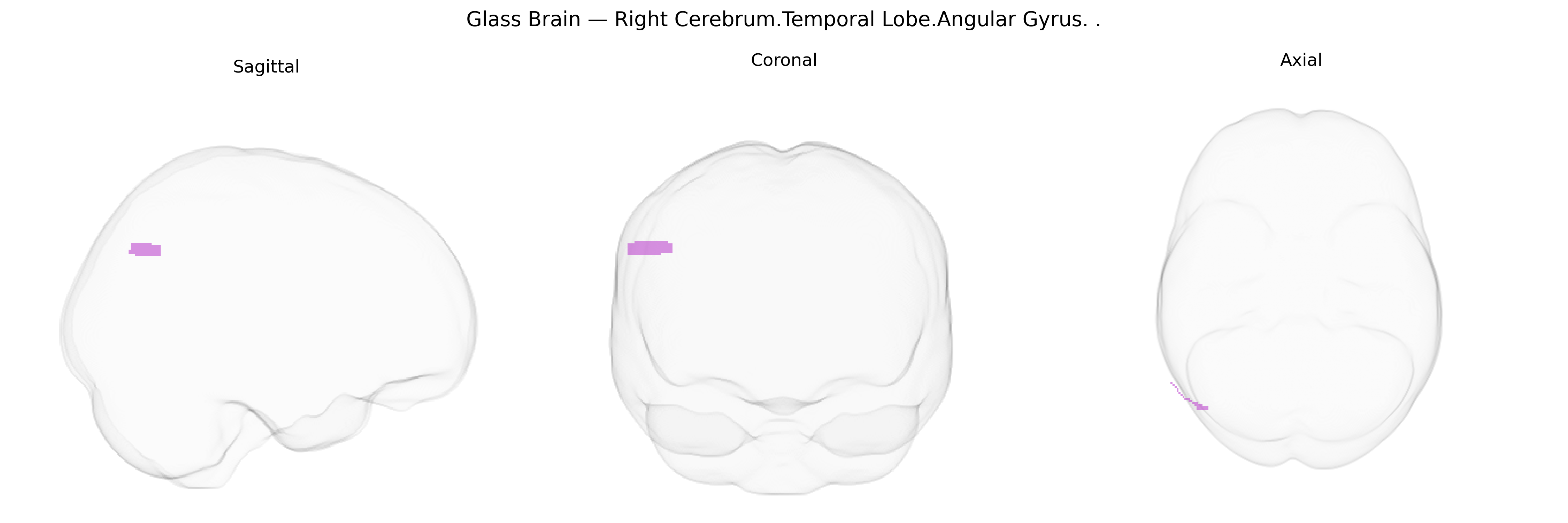
The bilateral right cerebrum temporal lobe angular gyrus corresponds to a portion of the posterior temporal–parietal junction, situated near the superior margin of the temporal lobe and extending into the inferior parietal region. In Talairach space it lies posterior to the superior temporal sulcus and inferior to the intraparietal sulcus, forming part of the heteromodal association cortex. This region is implicated in complex language processing (including semantic integration and reading), number processing, spatial cognition, and aspects of theory of mind and social cognition. It also participates in multisensory integration and contributes to higher-order conceptual and attentional networks that link auditory, visual, and somatosensory information for meaningful interpretation. Angular gyrus
The right angular gyrus, part of the temporal–parietal junction and implicated in language, number processing, social cognition, and episodic memory, has been linked indirectly to multiple genetic findings through imaging genetics and GWAS of brain structure and cognition rather than direct atlas-specific studies. Large neuroimaging GWAS (e.g., ENIGMA, UK Biobank) have identified common variants associated with regional cortical thickness, surface area, and volume in temporoparietal regions that encompass the angular gyrus, including loci near genes involved in neurodevelopment (e.g., FOXP2, DCC, and other axon guidance and synaptic plasticity genes), although effects are typically small and distributed across many loci. Functional and structural abnormalities in the angular gyrus are reported in autism spectrum disorder, schizophrenia, dyslexia, and Alzheimer’s disease, and GWAS for these conditions highlight polygenic architectures involving synaptic, immune, and neurodevelopmental pathways that may contribute to altered temporoparietal function; however, specific variants uniquely and robustly tied to right angular gyrus anatomy or activity remain poorly defined. In Alzheimer’s disease, imaging genetics work has linked APOE and other risk loci to atrophy and hypometabolism in parietotemporal regions including the angular gyrus, while GWAS of cognitive traits (e.g., educational attainment, mathematical ability, and general intelligence) implicate genes relevant to cortical development and connectivity that show expression and functional relevance in the temporoparietal cortex. Overall, genetic associations with the right angular gyrus are best understood as part of broad, polygenic influences on cortical organization and cognitive networks, rather than discrete, region-specific genetic effects.
Overview generated by GPT-4o (2026).
Region ID: 960
Hemisphere: bilateral
Atlas: Talairach labels 1mm
Full Quality Version: Download MP4
Full Quality Version: Download MP4
Wali Sidiqyar*, Gaurav Rudravaram*, Elyssa M. McMaster, Trent M. Schwartz, Adam M. Saunders, Kurt G. Schilling, Bennett A. Landman "Introducing SPINS: A Shared Public Visualization Library of Neuroanatomical Structures." Medical Imaging with Deep Learning- short paper
This resource is licensed under CC0 1.0 Universal (Public Domain).