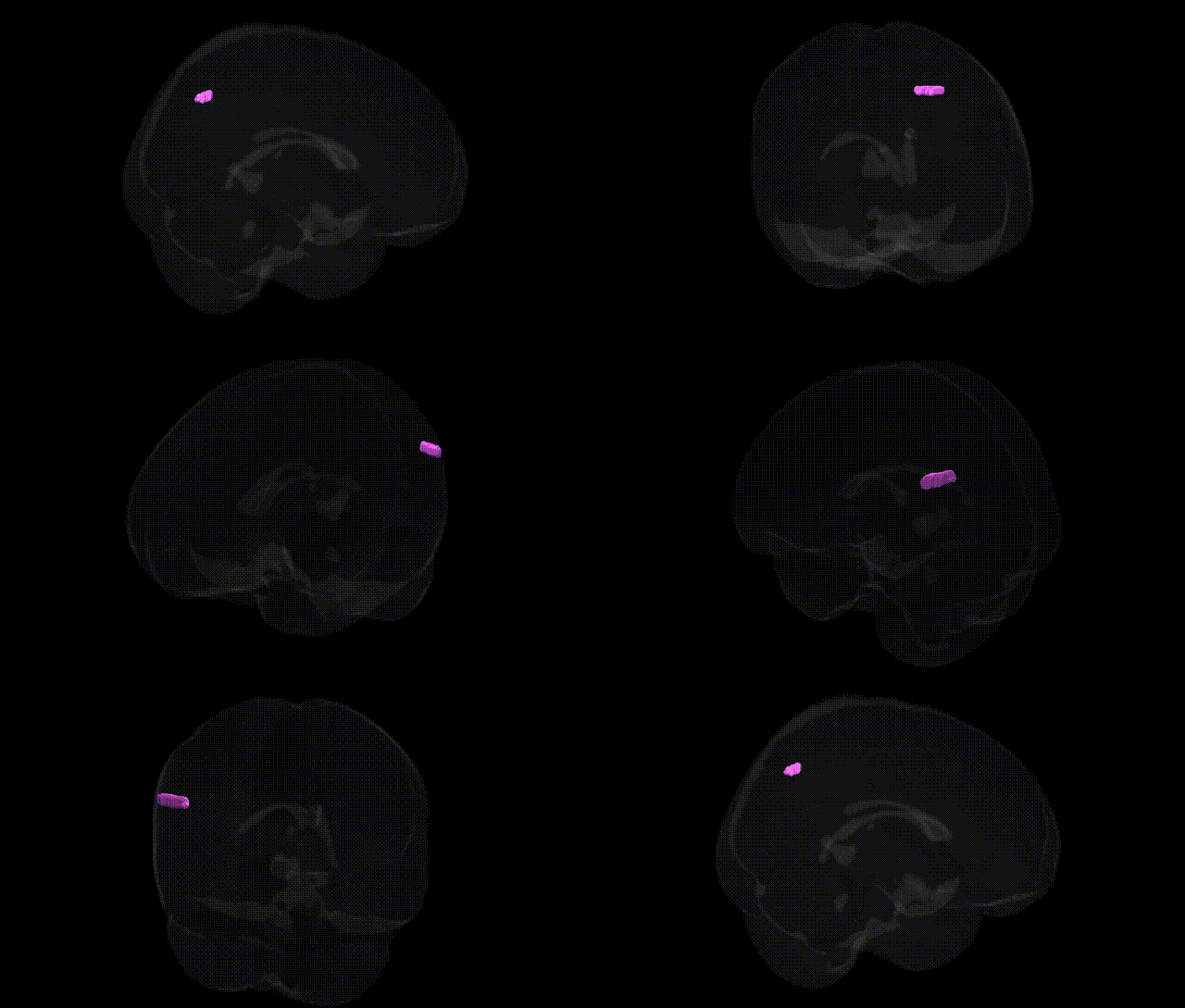
The bilateral Right Cerebrum.Temporal Lobe.Angular Gyrus.White Matter corresponds to subcortical myelinated fiber pathways underlying the cortical angular gyrus (Brodmann area 39) in the temporal–parietal junction region of the right hemisphere, extending medially and inferiorly from the gyral surface into the deep temporal white matter. This white matter compartment contains association fibers that interconnect the angular gyrus with adjacent temporal, parietal, and occipital cortices, participating in long-range networks involved in language processing, semantic integration, reading, number processing, and aspects of spatial cognition and attention. As part of the larger temporoparietal association system, these fibers contribute to multimodal integration of auditory, visual, and somatosensory inputs, supporting higher-order cognitive and linguistic functions rather than primary sensory or motor operations. There is no direct Wikipedia article for the white matter of the angular gyrus; a related cortical structure is the Angular gyrus.
Genetic associations involving the white matter underlying the right angular gyrus (Right Cerebrum.Temporal Lobe.Angular Gyrus.White Matter in the Talairach 1 mm atlas) are typically captured through imaging–genetics and GWAS of white-matter microstructure (e.g., diffusion metrics) rather than region-specific case–control studies, and implicate polygenic effects tied to neurodevelopment, myelination, and axon guidance. Large-scale consortia such as ENIGMA and UK Biobank have reported that common variants in genes related to neuronal growth and myelin integrity (for example, loci near genes such as MAG, MBP, NCAN, and others involved in oligodendrocyte function and neurodevelopmental pathways) contribute to individual differences in white-matter integrity of association tracts that traverse or connect with the angular gyrus, including components of the superior longitudinal fasciculus and related temporoparietal pathways. These genetic influences on right temporoparietal white matter overlap with polygenic architectures for cognitive traits (such as general cognitive ability and educational attainment), reading and language-related skills, and risk for neuropsychiatric conditions (including schizophrenia, bipolar disorder, major depressive disorder, and autism spectrum disorder), where risk variants often show downstream effects on frontotemporal and parietal white-matter microstructure. Moreover, genes implicated in Alzheimer’s disease and small-vessel cerebrovascular disease (e.g., APOE and loci affecting vascular integrity) have been associated with microstructural changes and lesion burden in temporoparietal white matter, consistent with the vulnerability of this region in dementia and age-related cognitive decline, though current evidence remains largely indirect and mediated through broader networks rather than specific to the right angular gyrus white matter alone.
Overview generated by GPT-4o (2026).
Region ID: 962
Hemisphere: bilateral
Atlas: Talairach labels 1mm
Full Quality Version: Download MP4
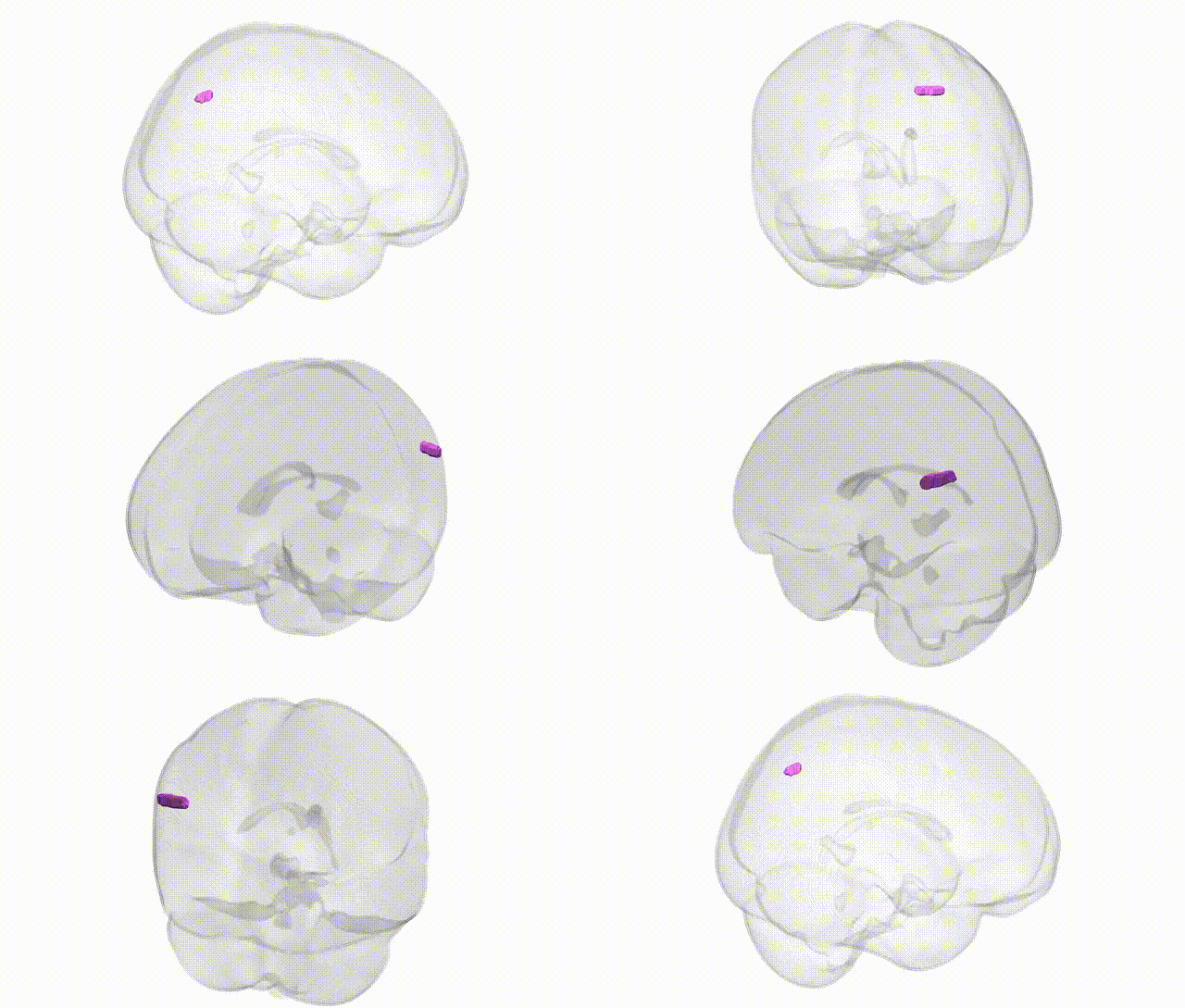
Full Quality Version: Download MP4
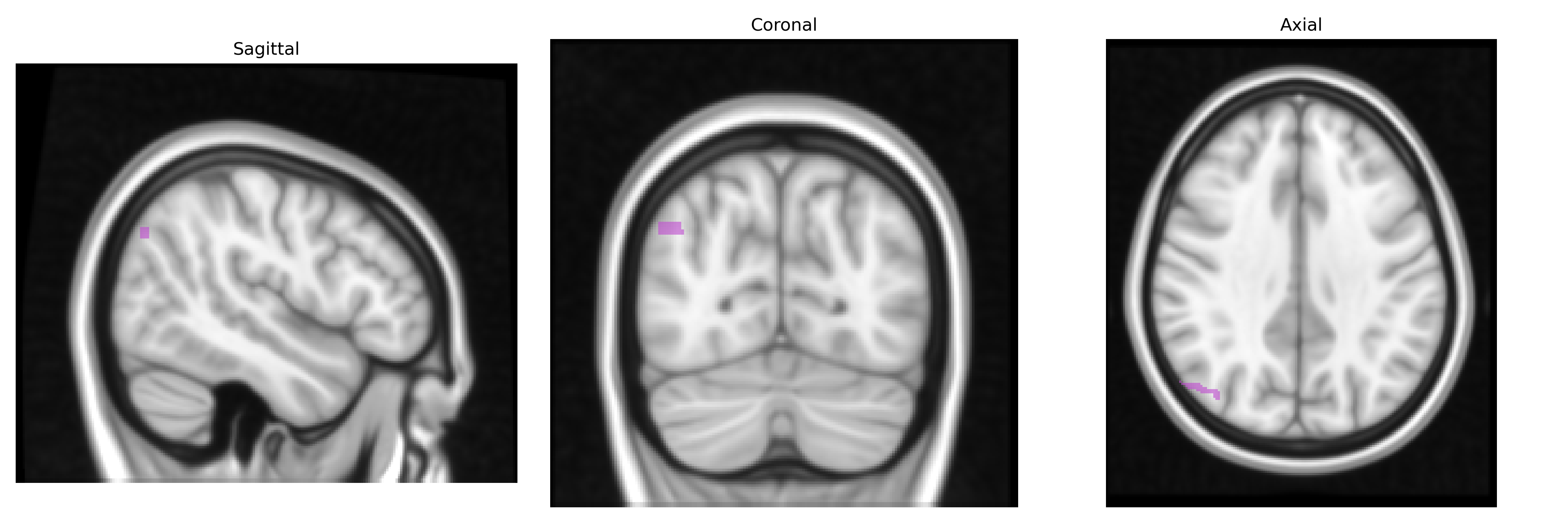
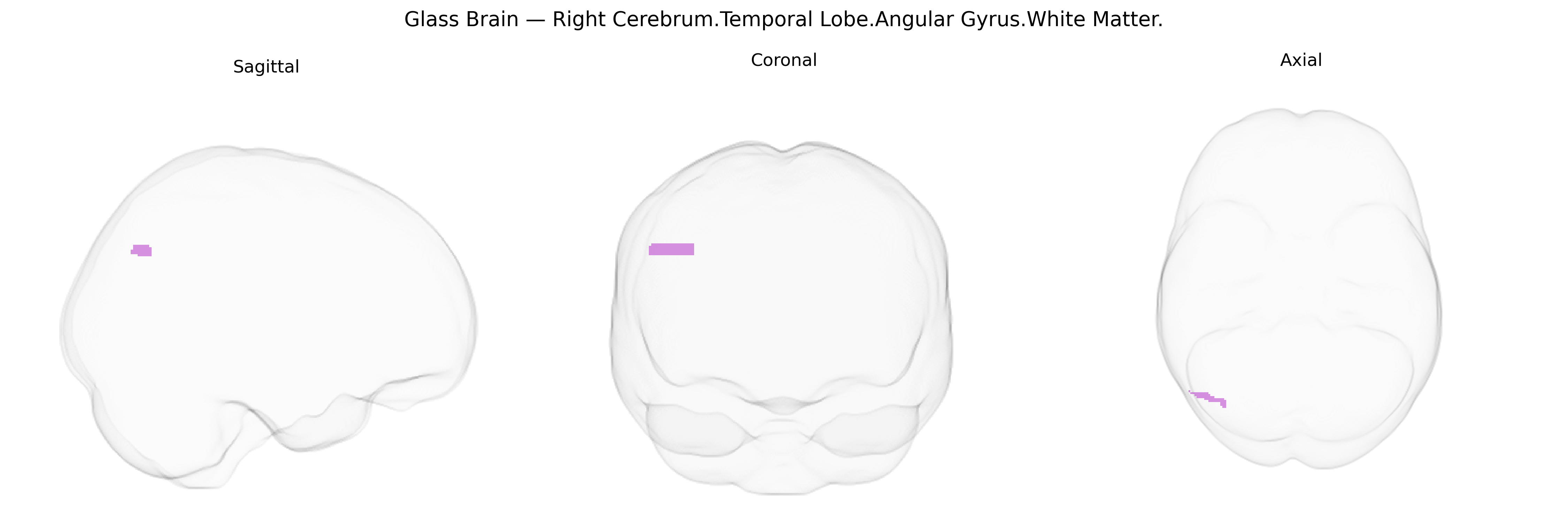
Wali Sidiqyar*, Gaurav Rudravaram*, Elyssa M. McMaster, Trent M. Schwartz, Adam M. Saunders, Kurt G. Schilling, Bennett A. Landman "Introducing SPINS: A Shared Public Visualization Library of Neuroanatomical Structures." Medical Imaging with Deep Learning- short paper
This resource is licensed under CC0 1.0 Universal (Public Domain).