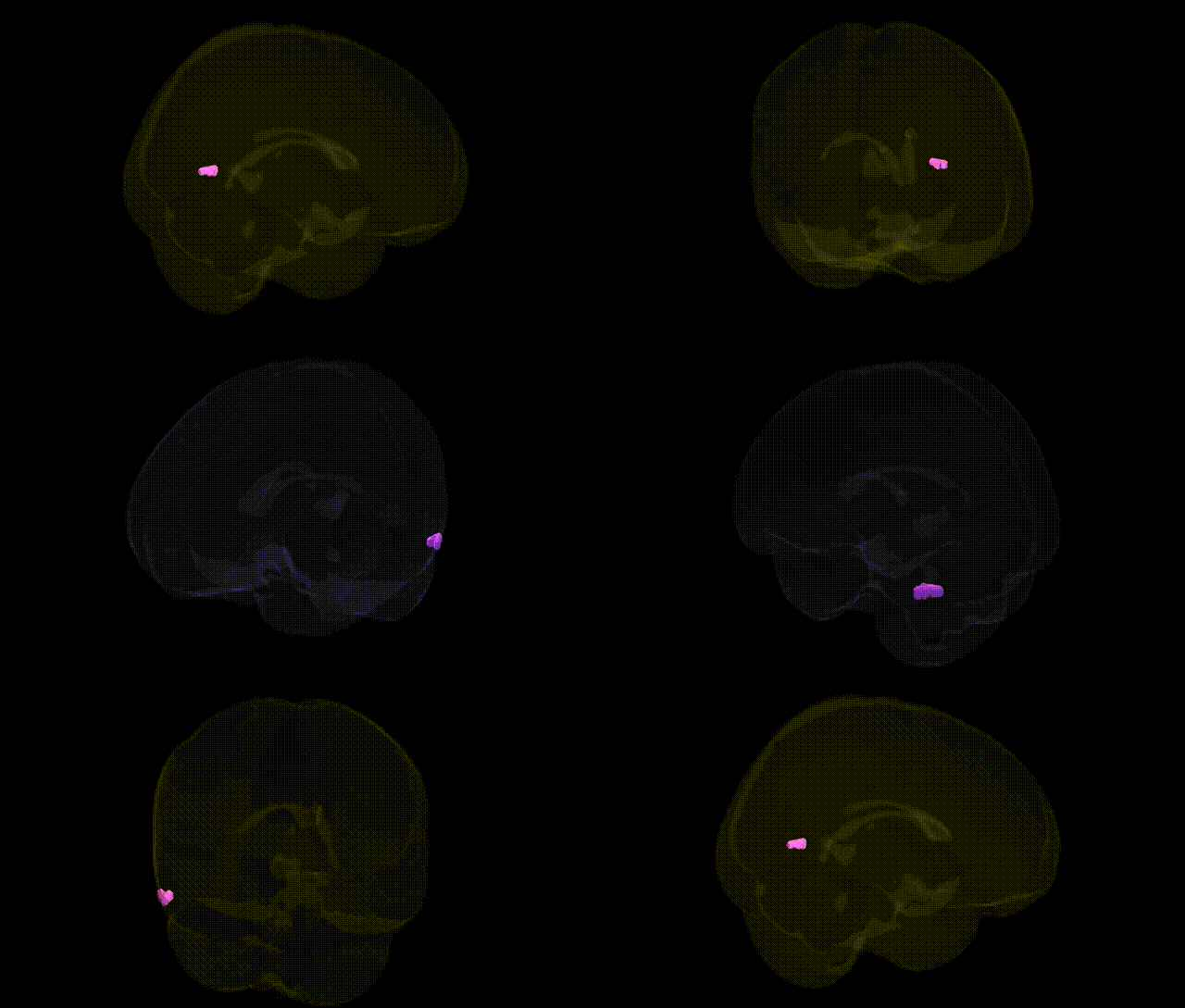
The bilateral Right Cerebrum.Temporal Lobe.Fusiform Gyrus.Gray Matter.Brodmann area 19 region (Talairach labels 1 mm Atlas) corresponds to a portion of the ventral occipitotemporal cortex implicated in higher-order visual processing, particularly complex pattern and object recognition. Although classically associated with the occipital lobe, Brodmann area 19 extends onto the fusiform gyrus where it integrates visual information from primary and secondary visual areas (BA17 and BA18), contributing to processing of form, color, and motion that supports recognition of faces, objects, and text. Neuronal populations in this gray matter region exhibit receptive fields tuned to increasingly complex visual features, forming part of the ventral “what” visual pathway. Its bilateral organization allows for integration of visual inputs from both hemifields, and functional connectivity with adjacent fusiform and temporal areas supports category-specific recognition and visual memory processes. There is no direct link for “Brodmann area 19” in the fusiform gyrus; a closely related structure is the Fusiform gyrus.
The bilateral right fusiform gyrus gray matter in posterior temporal/occipitotemporal cortex (including area overlapping Brodmann area 19 in the Talairach 1 mm atlas) has been repeatedly implicated in genetic and GWAS-based studies of visual, social, and neurodevelopmental traits. Twin and heritability studies show moderate to high SNP-based heritability for fusiform gyrus cortical thickness and volume, with polygenic influences distributed across the genome rather than single large-effect loci, and several ENIGMA consortium GWAS have identified common variants near genes involved in neurodevelopment, synaptic function, and cell-adhesion (for example in or near MIR124-1, HMGA2, FAT3, and other broadly expressed neurodevelopmental genes) associated with occipitotemporal and fusiform morphometry. The fusiform region partially overlapping BA19 is genetically correlated with face-selective fusiform areas, and genetic variation influencing fusiform structure and activation has been linked to individual differences in face recognition ability, social cognition, and autism spectrum conditions, including associations with polymorphisms in genes such as CNTNAP2, NRGN, and others involved in synaptic plasticity and cortical circuit development. Structural and functional alterations of the right fusiform/BA19 region have also been associated in imaging-genetics studies with schizophrenia, major depressive disorder, and Alzheimer’s disease risk loci (e.g., APOE ε4 and other GWAS-identified AD variants) via their effects on posterior cortical thinning and occipitotemporal atrophy. In addition, GWAS of visual and reading-related traits, including dyslexia and orthographic processing, have implicated variants in neurodevelopmental genes that modulate activation and gray-matter characteristics in occipitotemporal/fusiform cortex, consistent with the role of this region in high-level visual processing, word-form recognition, and object expertise.
Overview generated by GPT-4o (2026).
Region ID: 266
Hemisphere: bilateral
Atlas: Talairach labels 1mm
Full Quality Version: Download MP4
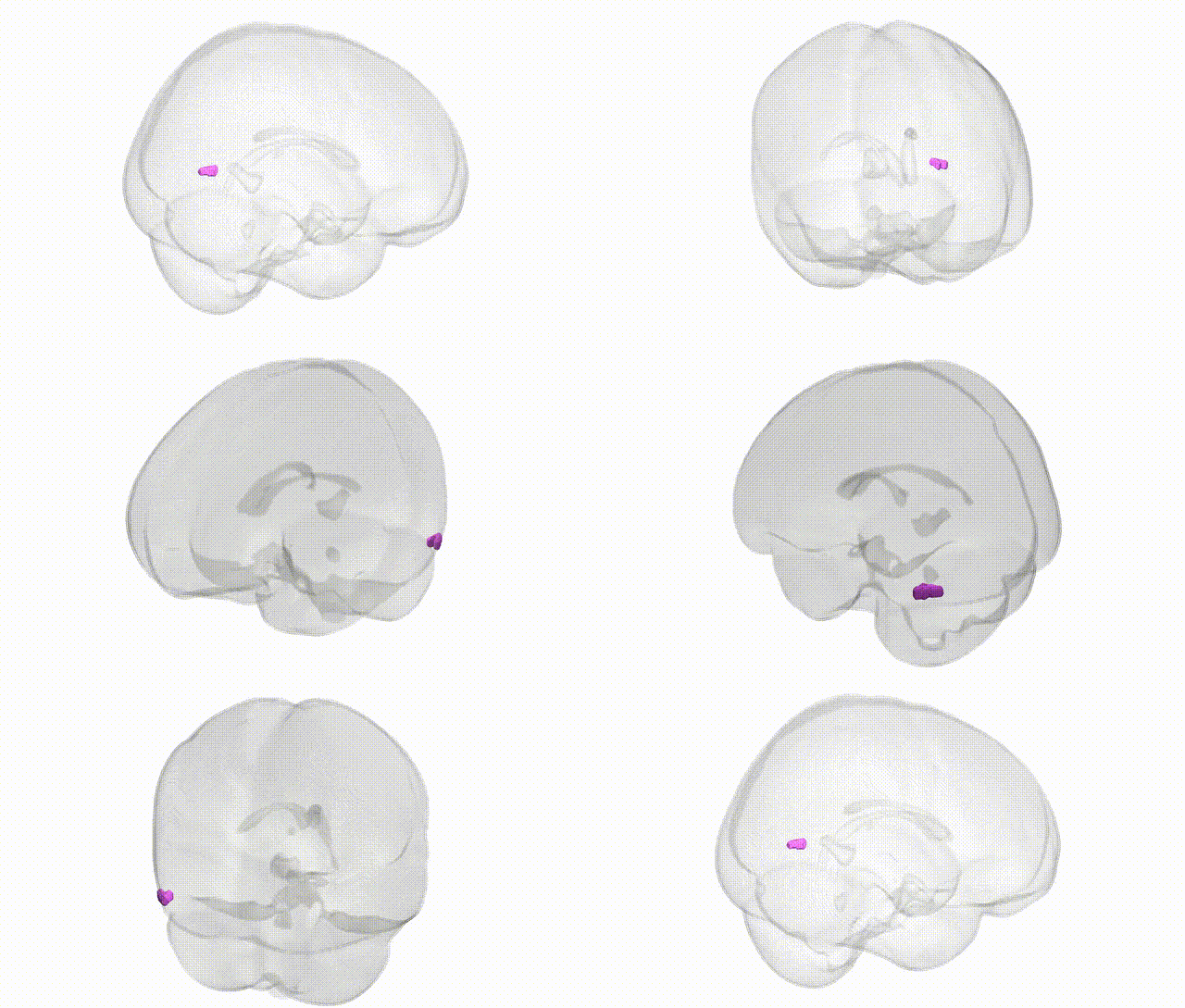
Full Quality Version: Download MP4
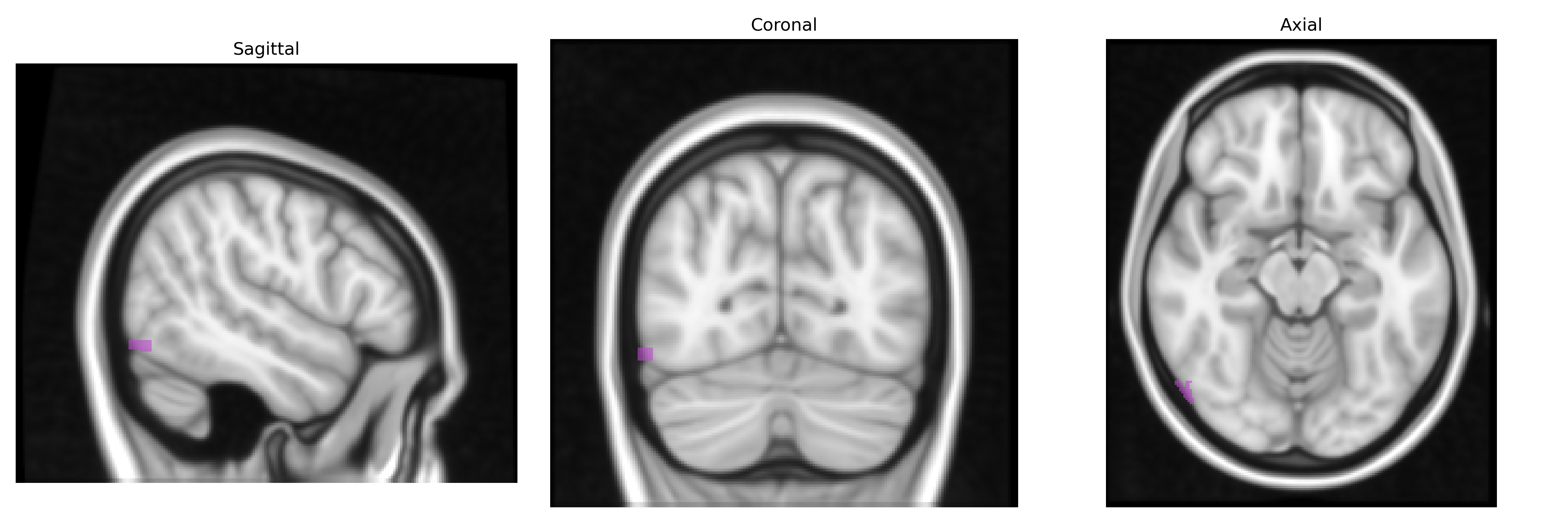
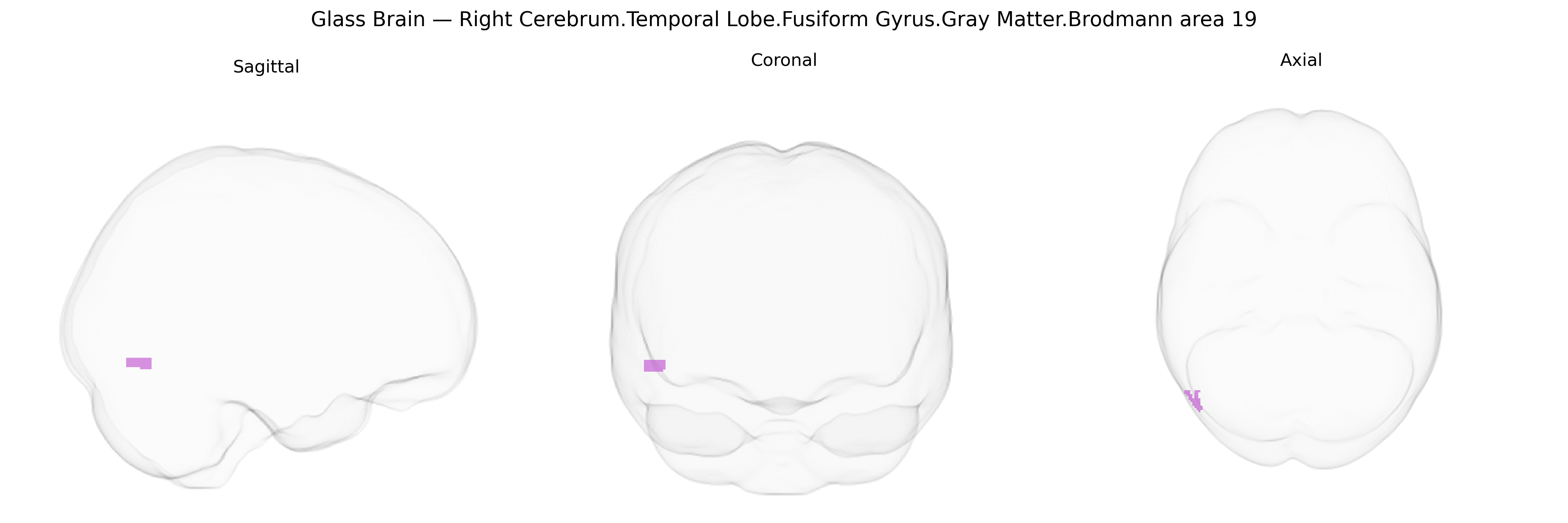
Wali Sidiqyar*, Gaurav Rudravaram*, Elyssa M. McMaster, Trent M. Schwartz, Adam M. Saunders, Kurt G. Schilling, Bennett A. Landman "Introducing SPINS: A Shared Public Visualization Library of Neuroanatomical Structures." Medical Imaging with Deep Learning- short paper
This resource is licensed under CC0 1.0 Universal (Public Domain).