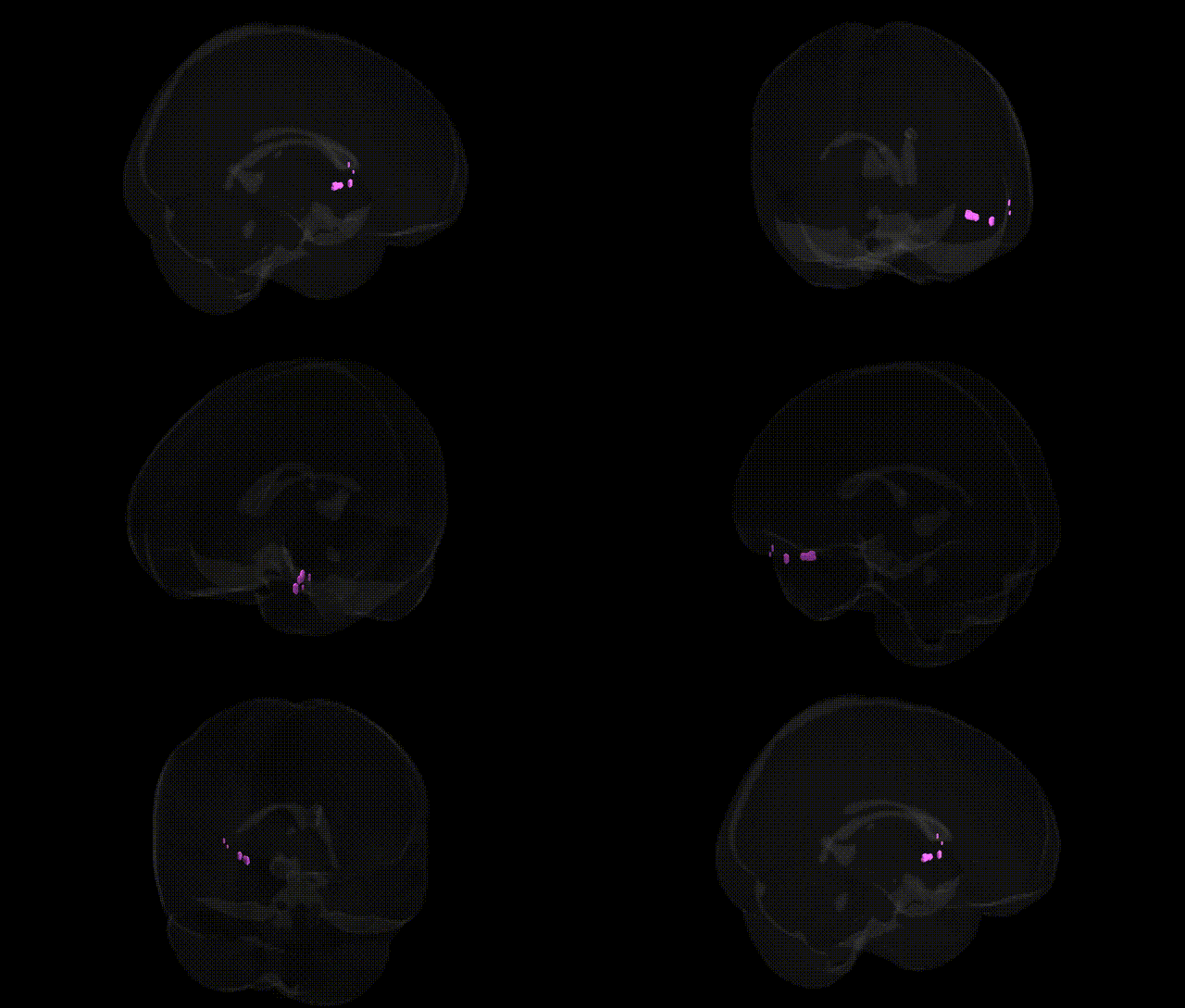
The bilateral Right Cerebrum.Temporal Lobe.Inferior Frontal Gyrus, as labeled in the Talairach 1 mm Atlas, reflects a composite designation that spans both temporal and frontal territories, likely capturing voxel clusters at the junction of the inferior frontal gyrus and adjacent temporal regions (e.g., anterior superior temporal areas) in the right hemisphere. Functionally, the inferior frontal gyrus on the right is implicated in response inhibition, prosody and emotional aspects of speech, and aspects of social cognition and attention, while neighboring temporal cortex contributes to auditory processing, semantic comprehension, and higher-order integration of multimodal sensory input. Together, this region participates in networks subserving language-related processing (especially non-dominant hemisphere contributions), affective and pragmatic aspects of communication, and executive control. There is no single dedicated Wikipedia article for this exact composite Talairach label; a closely related structure is the Inferior frontal gyrus.
The bilateral right inferior frontal gyrus (IFG), encompassing portions of the temporal lobe–frontal transition zone as defined in the Talairach 1 mm atlas, has been implicated in multiple genetically influenced traits and disorders through imaging genetics and GWAS-related work on brain structure, function, and connectivity rather than through region-specific GWAS hits alone. Cortical thickness, surface area, and volume of IFG and adjacent inferior frontal regions show significant SNP-based heritability and polygenic influences, with loci in genes such as HMGA2, microtubule- and axon-related genes, and several neurodevelopmental pathways contributing to interindividual variation in frontal morphology; large consortia (e.g., ENIGMA, UK Biobank) have repeatedly identified polygenic correlations between frontal cortical measures and cognitive performance, educational attainment, and general intelligence. Functional and structural alterations of the right IFG have been genetically linked to attention-deficit/hyperactivity disorder, autism spectrum disorder, schizophrenia, and bipolar disorder, often via polygenic risk scores that predict reduced or altered IFG activation during response inhibition and cognitive control tasks, and via risk variants in synaptic, glutamatergic, and calcium-channel genes (e.g., CACNA1C, GRIN2A/2B) that show convergent effects on frontotemporal networks. GWAS of impulsivity, externalizing behavior, and substance use traits identify polygenic architectures that partially overlap with those influencing IFG structure and connectivity, consistent with the region’s role in inhibitory control and decision-making. Additional associations involve language-related phenotypes (such as reading/language disorders and stuttering), in which variants affecting neuronal migration, axon guidance, and left–right asymmetry of frontotemporal circuits influence inferior frontal development and lateralization, though these effects are generally bilateral and network-wide rather than confined strictly to the right IFG as delineated in Talairach space.
Overview generated by GPT-4o (2026).
Region ID: 229
Hemisphere: bilateral
Atlas: Talairach labels 1mm
Full Quality Version: Download MP4
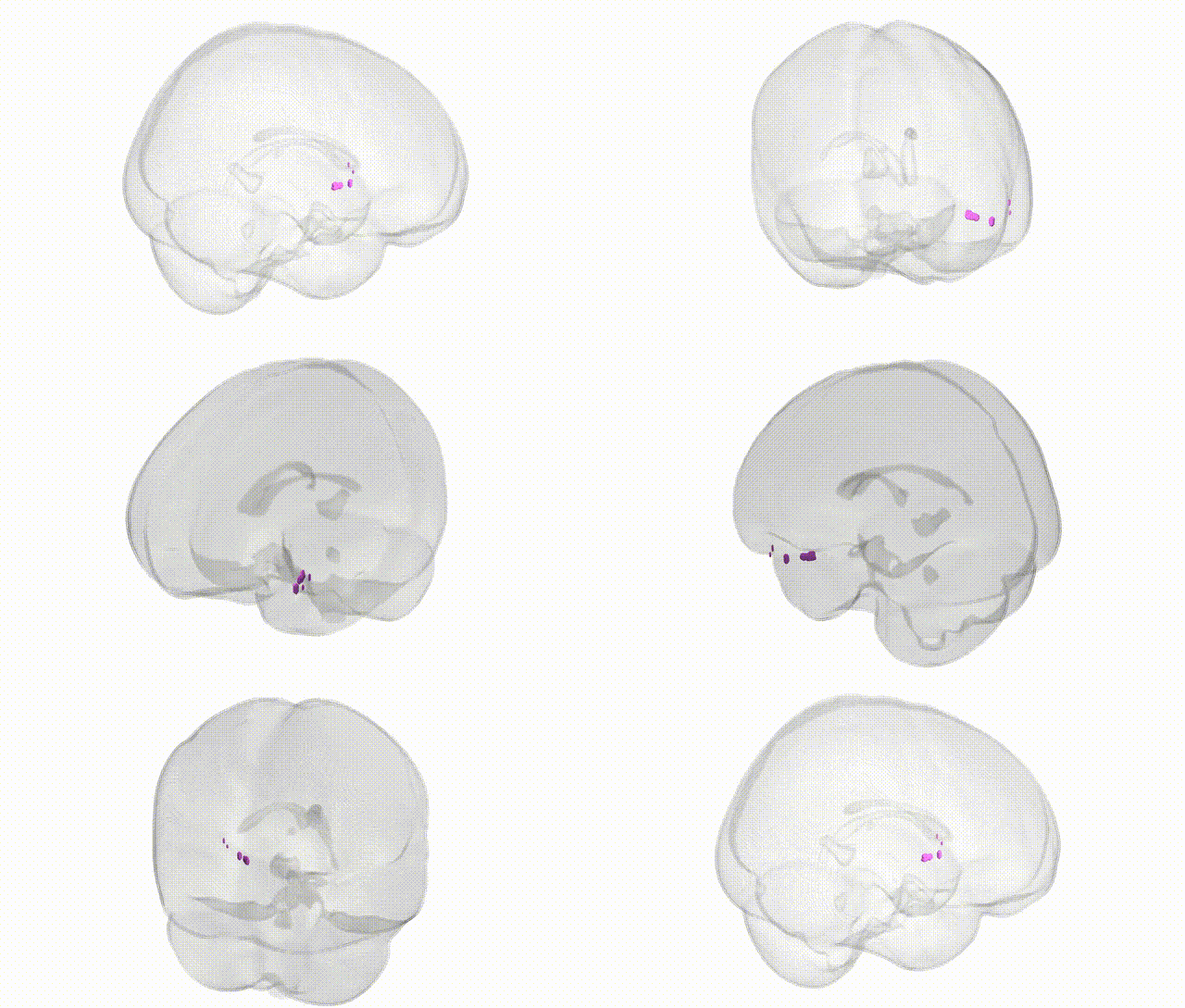
Full Quality Version: Download MP4
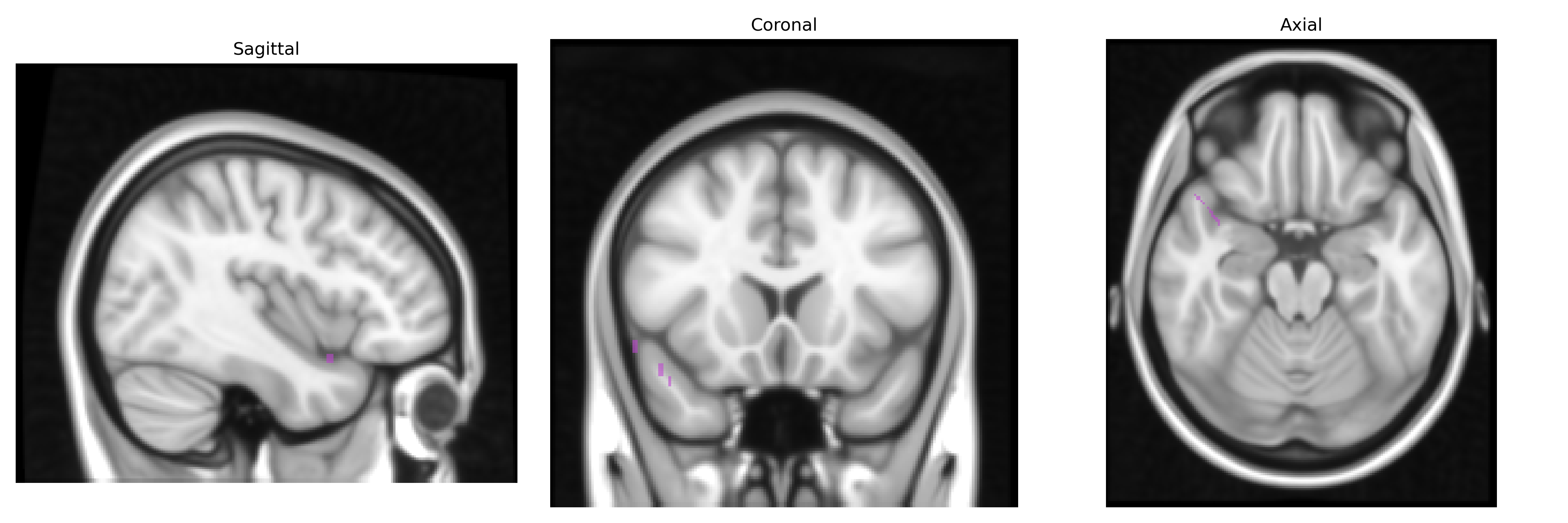
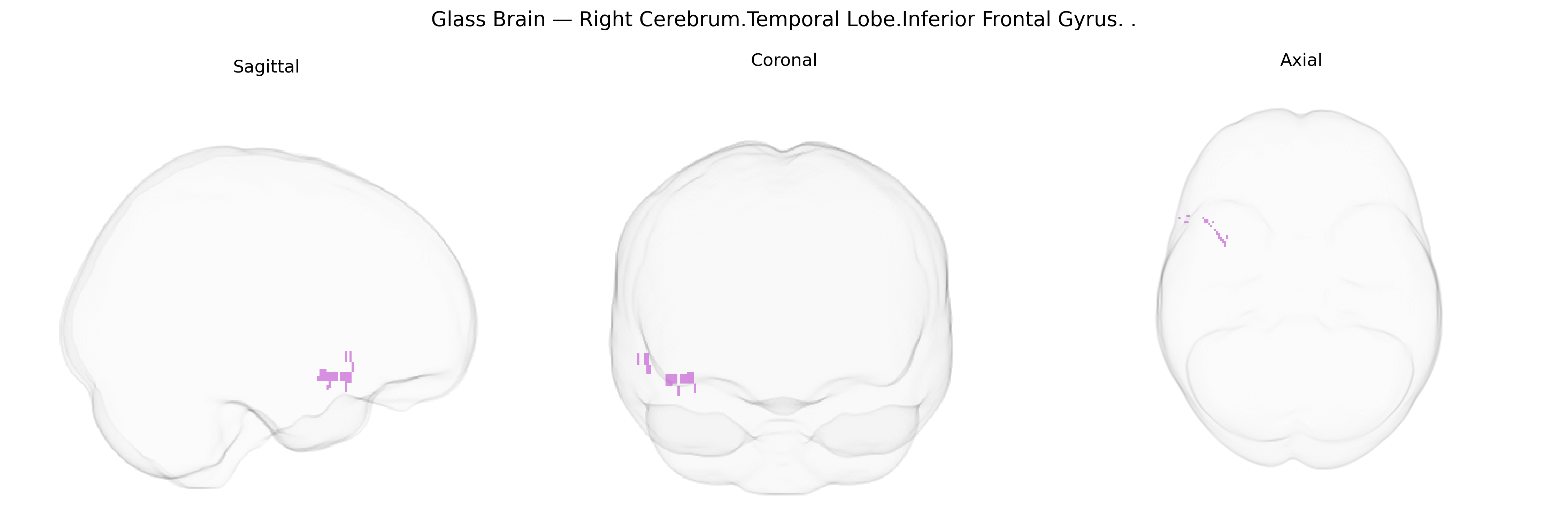
Wali Sidiqyar*, Gaurav Rudravaram*, Elyssa M. McMaster, Trent M. Schwartz, Adam M. Saunders, Kurt G. Schilling, Bennett A. Landman "Introducing SPINS: A Shared Public Visualization Library of Neuroanatomical Structures." Medical Imaging with Deep Learning- short paper
This resource is licensed under CC0 1.0 Universal (Public Domain).