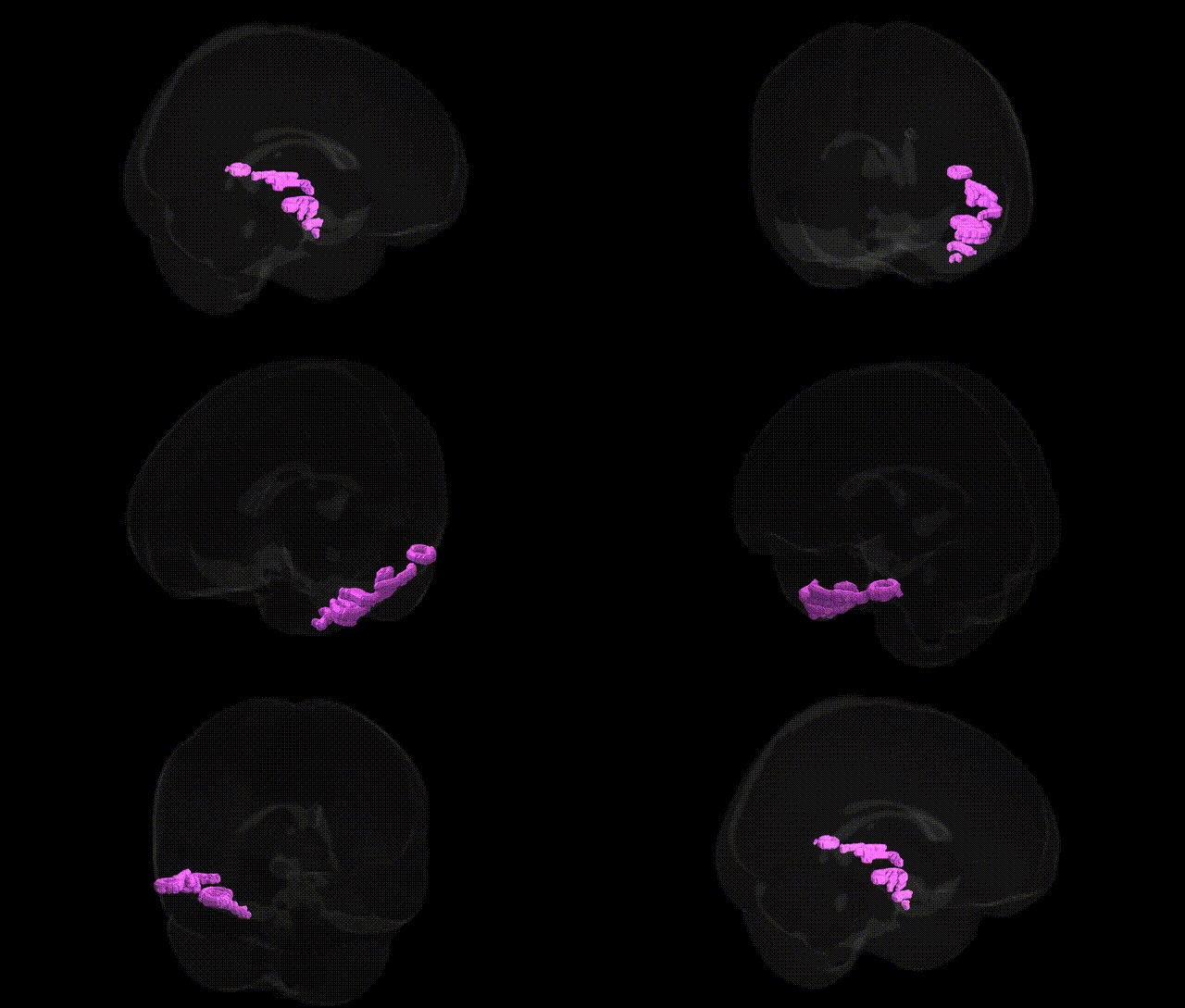
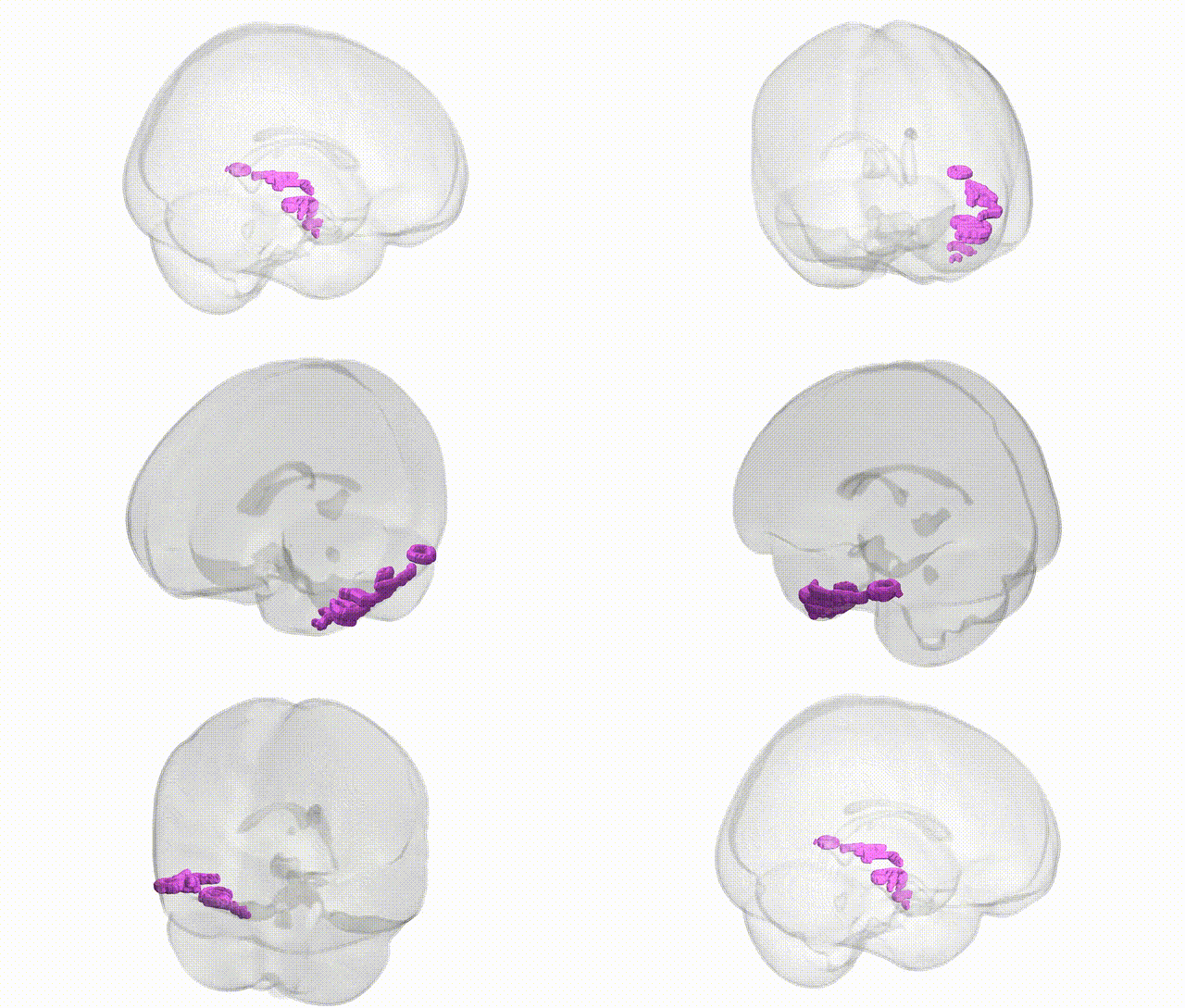
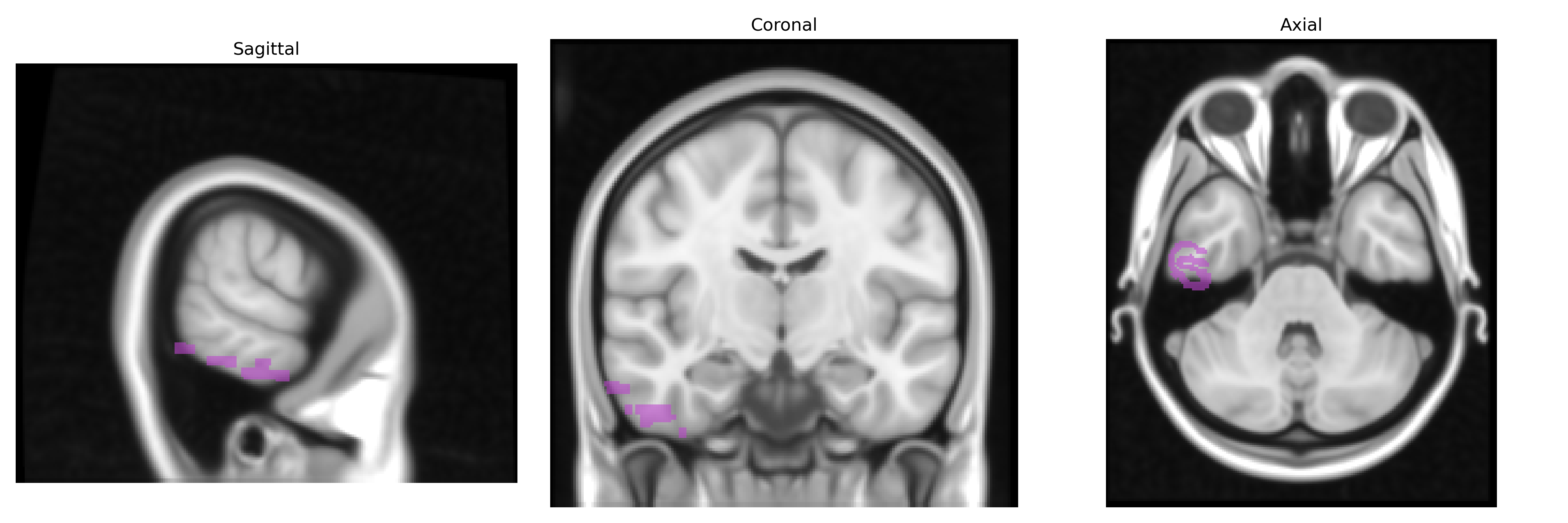
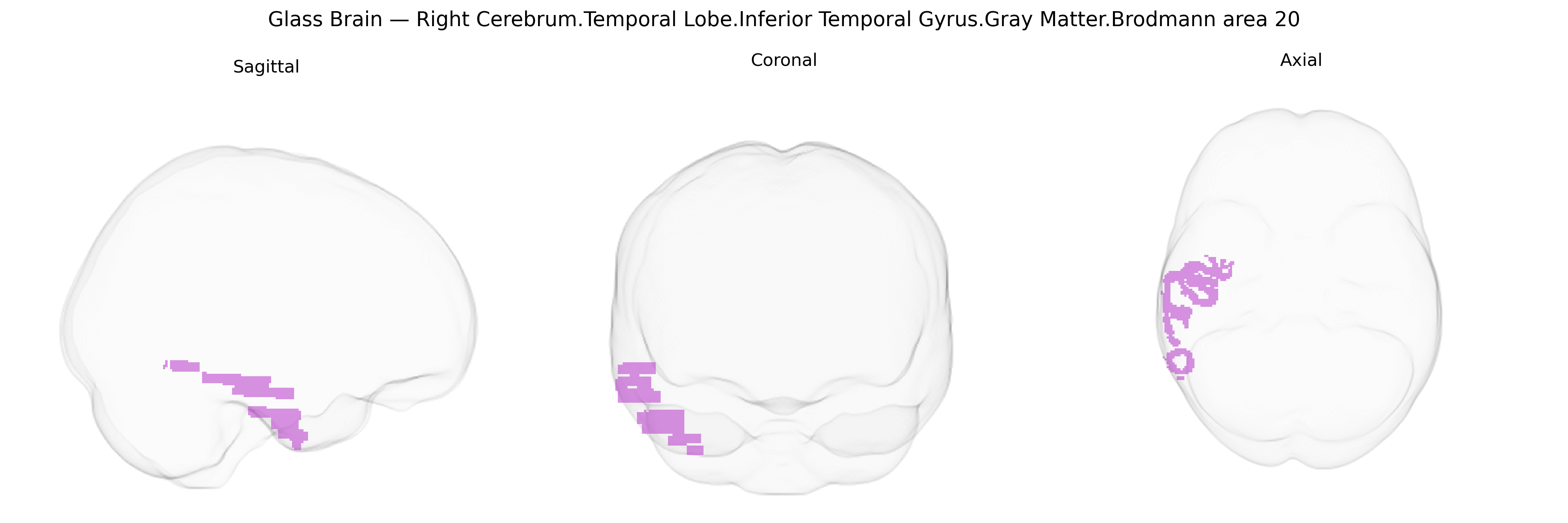
The bilateral Right Cerebrum.Temporal Lobe.Inferior Temporal Gyrus.Gray Matter.Brodmann area 20 corresponds to a ventral temporal cortical region implicated in high‑level visual processing and semantic integration. Situated on the inferior aspect of the temporal lobe, BA20 is involved in object recognition, complex shape and form analysis, and the association of visual stimuli with stored conceptual knowledge, contributing to aspects of visual perception, face and word processing, and multimodal integration. It receives convergent input from earlier visual areas and projects to other temporal and frontal association cortices, supporting higher cognitive functions such as language comprehension and memory retrieval. There is no direct link for this exact Talairach label; a related structure is Brodmann area 20.
The bilateral inferior temporal gyrus (ITG; Brodmann area 20) gray matter, as defined in Talairach 1 mm space, has been implicated in several genetic and genome‑wide association contexts, primarily through imaging‑genetics studies of cortical thickness, surface area, and volume rather than region‑specific candidate genes. Large consortia such as ENIGMA and UK Biobank have identified loci (e.g., near genes involved in neurodevelopment, synaptic function, and cell adhesion such as TBR1, PAX6, SLC39A8, and others) associated with temporal lobe morphology that include or overlap BA20, although the associations are typically reported for broader inferior or lateral temporal regions rather than strictly ITG‑BA20. Polygenic risk scores for schizophrenia, major depressive disorder, bipolar disorder, and autism spectrum disorder have been linked to structural alterations in inferior temporal cortex, and GWAS of Alzheimer’s disease and related endophenotypes (e.g., amyloid and tau load, episodic memory performance) often highlight temporal neocortical regions including ITG as sites where genetically influenced atrophy and metabolic changes occur. Additional associations have been reported between inferior temporal morphology and genetic variants tied to general cognitive ability, reading and language traits, and face/object recognition performance, though these findings are heterogeneous and rarely specific to BA20 alone, instead situating this region within larger genetic networks affecting temporal and ventral visual–semantic systems.
Overview generated by GPT-4o (2026).
Region ID: 13
Hemisphere: bilateral
Atlas: Talairach labels 1mm
Full Quality Version: Download MP4
Full Quality Version: Download MP4
Wali Sidiqyar*, Gaurav Rudravaram*, Elyssa M. McMaster, Trent M. Schwartz, Adam M. Saunders, Kurt G. Schilling, Bennett A. Landman "Introducing SPINS: A Shared Public Visualization Library of Neuroanatomical Structures." Medical Imaging with Deep Learning- short paper
This resource is licensed under CC0 1.0 Universal (Public Domain).