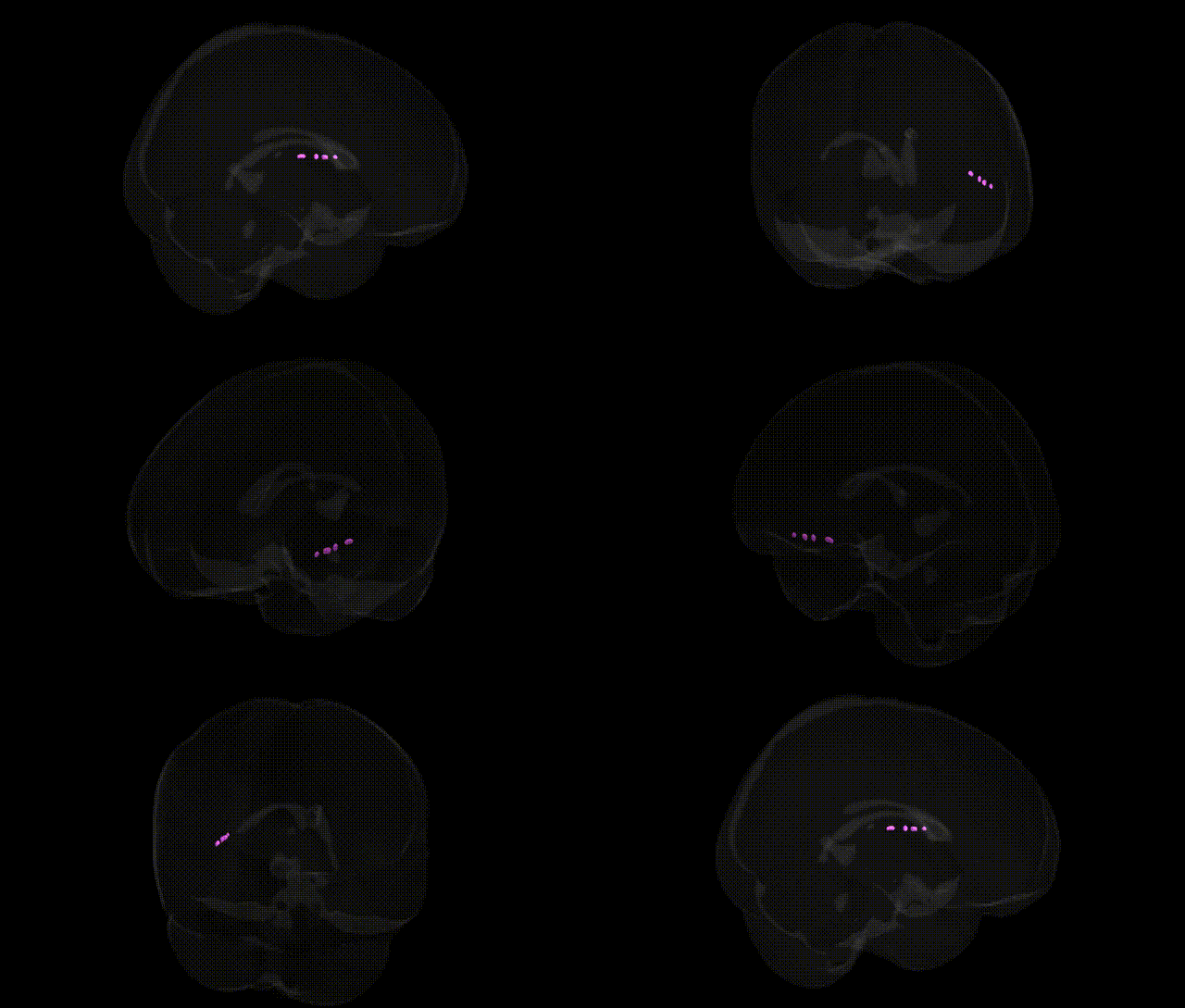
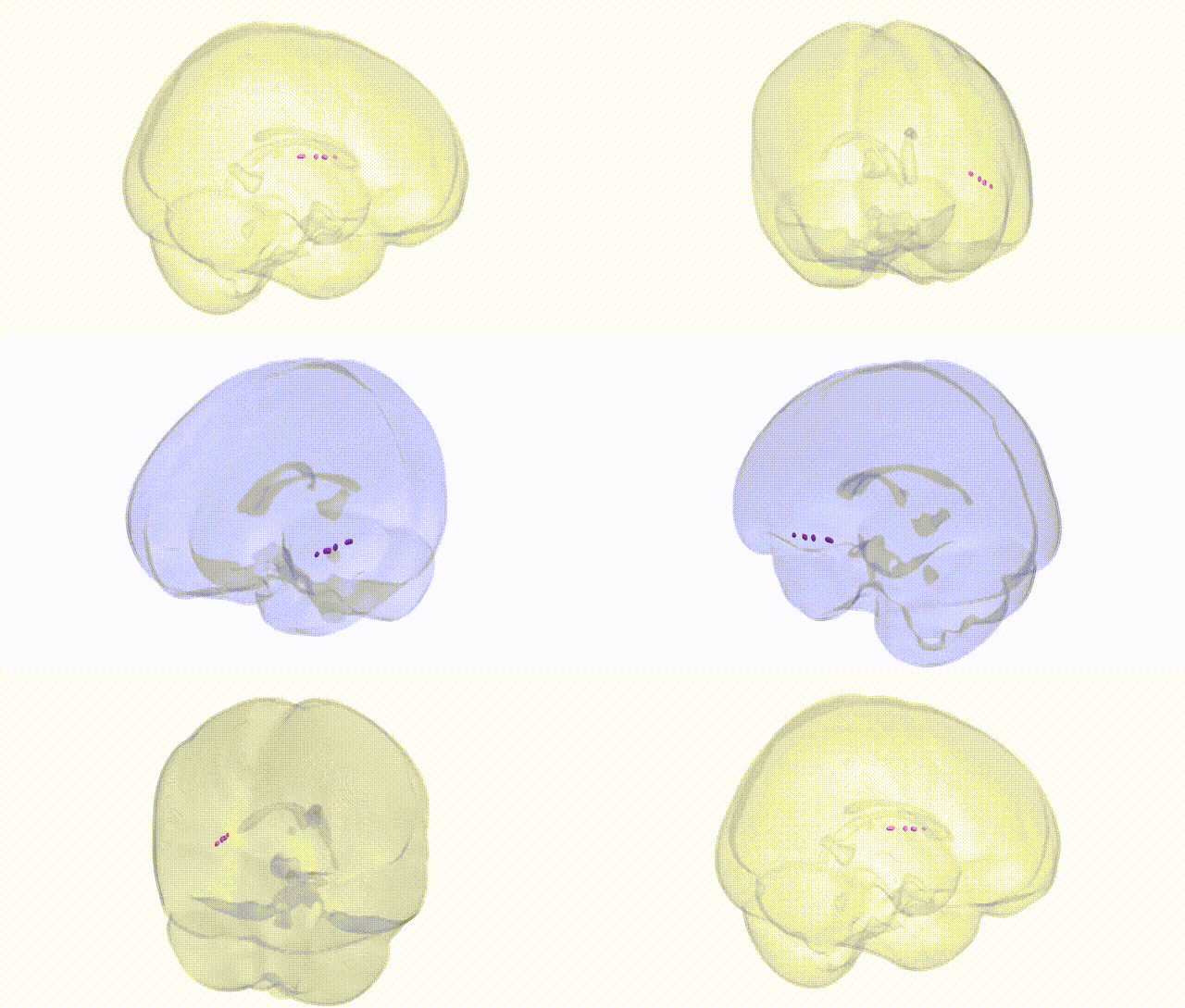
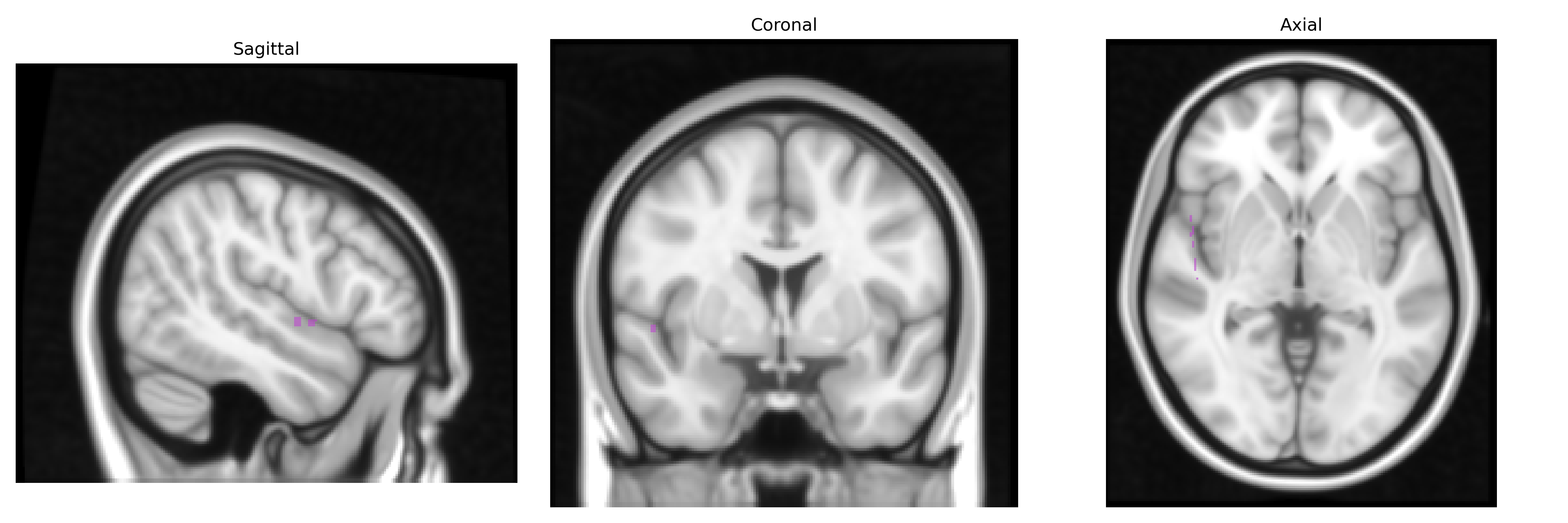
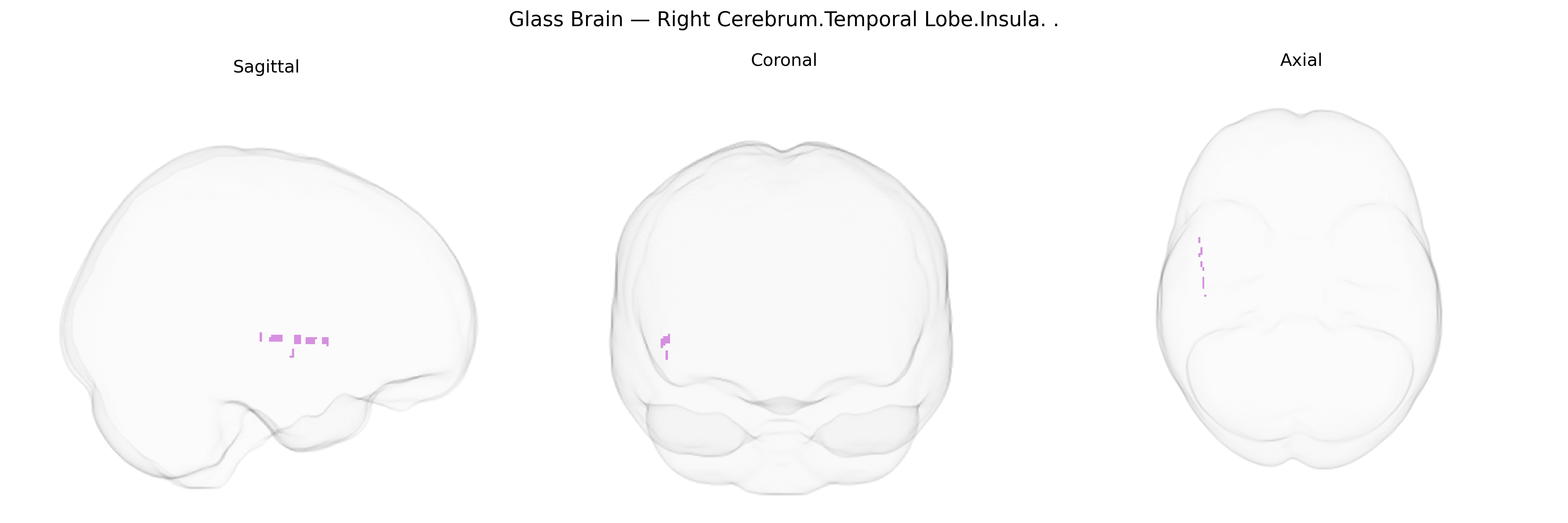
The bilateral Right Cerebrum.Temporal Lobe.Insula, as labeled in the Talairach 1 mm Atlas, refers to insular cortex tissue situated deep within the lateral sulcus beneath the temporal lobe operculum in the right hemisphere, considered here in a temporally associated compartment. The insula is a multimodal integration hub that participates in interoceptive awareness (visceral sensation, autonomic regulation), emotional and affective processing (including aspects of pain perception and disgust), gustatory processing, and components of auditory and language networks, while also contributing to salience detection and switching between default-mode and executive-control networks. Its cytoarchitecture is heterogeneous, typically divided into anterior agranular and posterior granular fields, and it maintains dense reciprocal connections with frontal, temporal, limbic, and subcortical structures, allowing coordination of sensory, affective, and cognitive functions. Insular cortex
The bilateral right temporal lobe insula, as defined in the Talairach labels 1 mm atlas, has been implicated indirectly in genetic studies through its roles in interoception, salience processing, and emotional regulation rather than via region-specific GWAS hits, since most large-scale imaging genetics consortia (e.g., ENIGMA, UK Biobank) analyze insular and temporal subregions using other parcellations. Polygenic influences on insular and temporal cortical thickness and surface area have been reported, with notable contributions from genes related to neurodevelopment (e.g., variants near HMGA2, IGF1, and microtubule- or synapse-related loci) in large GWAS of cortical morphology. The insula and adjacent temporal cortex show structural or functional alterations linked to polygenic risk for schizophrenia, major depressive disorder, bipolar disorder, and autism spectrum disorder, and structural imaging GWAS have associated insular and temporal measures with common variants near genes implicated in neuronal migration, glutamatergic signaling, and synaptic plasticity, supporting a distributed genetic architecture. Additionally, insula- and temporal-related networks are repeatedly implicated in GWAS of traits such as risk-taking, substance use, and anxiety, where polygenic risk scores for these behaviors correlate with insular volume or activity, and lesion and functional connectivity studies provide convergent evidence that genetic risk for addiction, affective disorders, and psychosis partly manifests via altered development and connectivity of the insula and temporal lobe, including the right hemisphere.
Overview generated by GPT-4o (2026).
Region ID: 463
Hemisphere: bilateral
Atlas: Talairach labels 1mm
Full Quality Version: Download MP4
Full Quality Version: Download MP4
Wali Sidiqyar*, Gaurav Rudravaram*, Elyssa M. McMaster, Trent M. Schwartz, Adam M. Saunders, Kurt G. Schilling, Bennett A. Landman "Introducing SPINS: A Shared Public Visualization Library of Neuroanatomical Structures." Medical Imaging with Deep Learning- short paper
This resource is licensed under CC0 1.0 Universal (Public Domain).