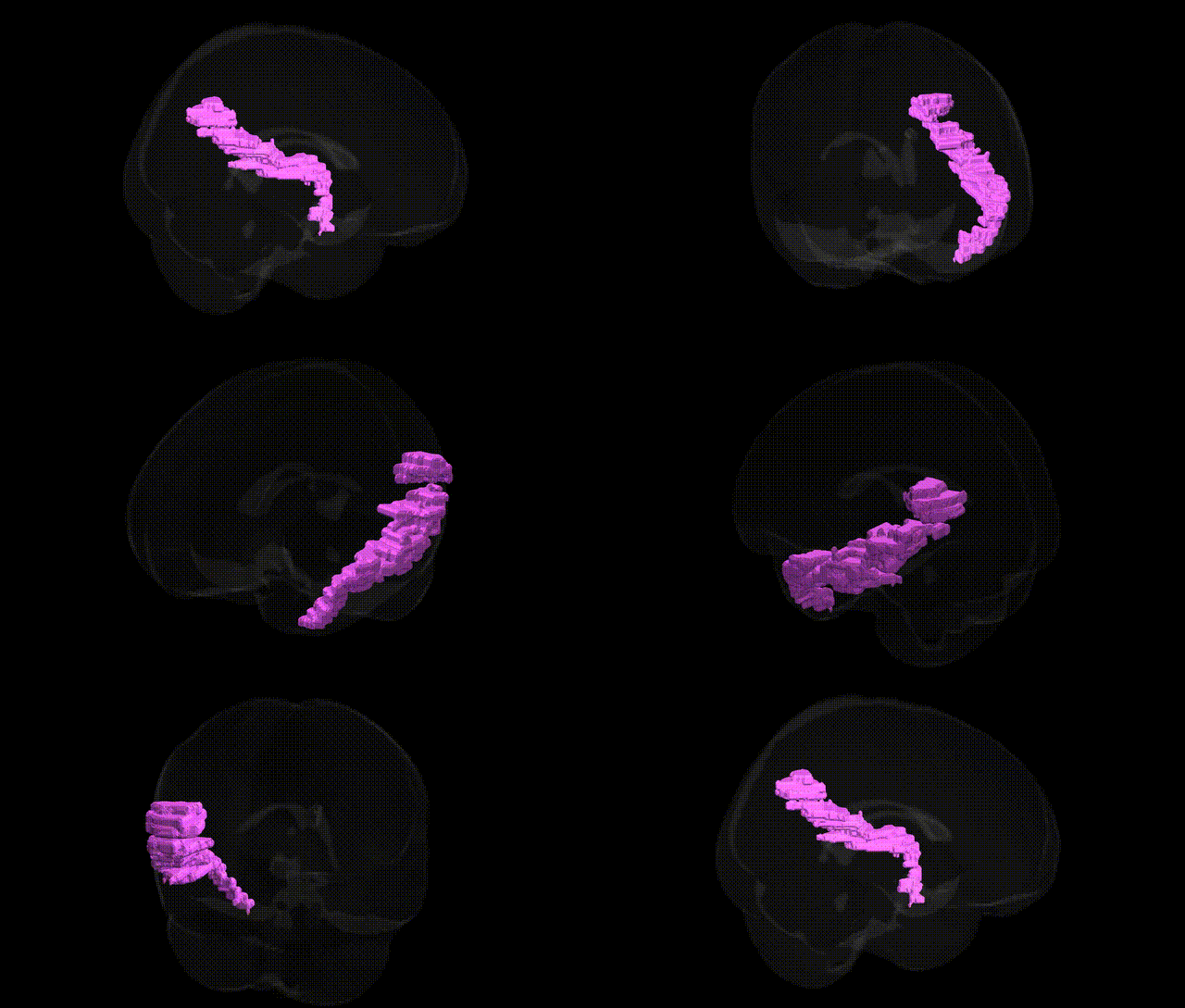
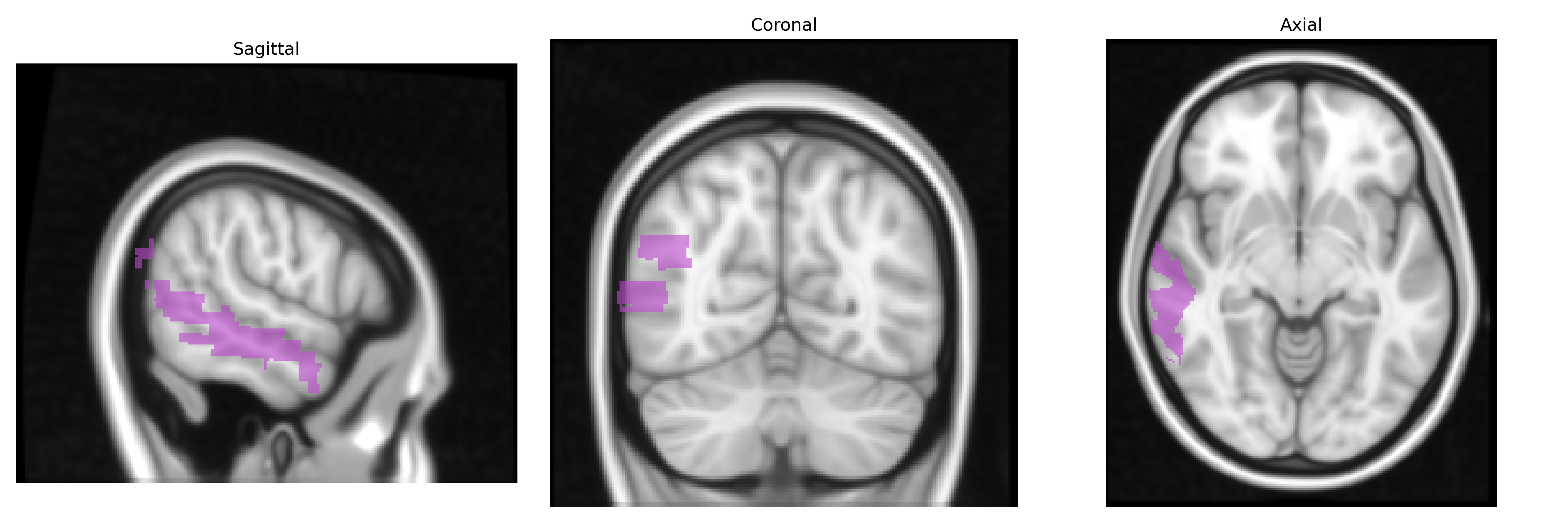
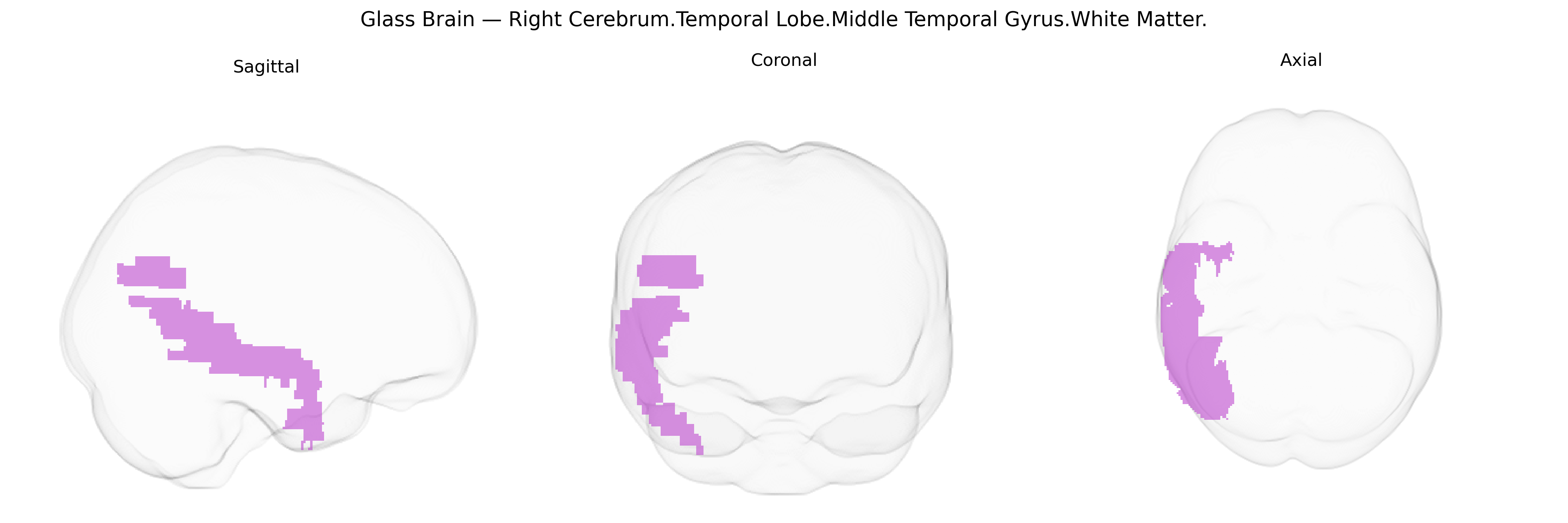
The bilateral right cerebrum temporal lobe middle temporal gyrus white matter corresponds to the deep medullary fiber systems underlying the middle temporal gyrus in the right temporal lobe, serving as a major conduit for association and projection pathways that interconnect temporal neocortex with other cortical and subcortical regions. These fibers include components of the inferior longitudinal fasciculus and inferior fronto-occipital fasciculus, which link temporal regions with occipital and frontal areas, as well as cortico-cortical connections that support semantic processing, language comprehension, visual object recognition, and aspects of social cognition. This white matter compartment lies lateral to the temporal horn of the lateral ventricle and medial to the cortical ribbon of the middle temporal gyrus, contributing structurally to the integration of auditory, visual, and higher-order associative information within the temporal lobe network. There is no direct link for this exact white matter subdivision; see the related cortical region: Middle temporal gyrus.
The white matter of the bilateral right middle temporal gyrus (MTG) has been implicated in several genetic and GWAS-based associations, largely via its role in language, semantic processing, and social cognition networks rather than through region-specific single-gene effects. Polygenic influences on white matter microstructure in temporal lobe tracts (e.g., superior longitudinal fasciculus, inferior longitudinal fasciculus, and arcuate-related fibers traversing or adjacent to MTG) have been identified in large diffusion MRI GWAS, with common variants in loci related to axon guidance, myelination, and neurodevelopment (such as genes in the NETRIN, ROBO/SLIT, and oligodendrocyte function pathways) contributing to interindividual differences in temporal white matter integrity. Temporal white matter, including MTG pathways, shows genetic correlations with cognitive ability and educational attainment, as well as polygenic risk for schizophrenia, bipolar disorder, and major depression, where reduced fractional anisotropy or altered connectivity in right temporal association fibers has been linked to common risk alleles in genes such as ZNF804A, DISC1-related networks, CACNA1C, and loci identified in large psychiatric GWAS. Additionally, genetic risk for autism spectrum disorder and language-related phenotypes (e.g., dyslexia and specific language impairment) has been associated with structural and connectivity differences in temporal white matter tracts overlapping the right MTG, with candidate and GWAS-identified genes involved in synaptic plasticity and cortical patterning (e.g., CNTNAP2, FOXP2 pathways, and general neurodevelopmental risk loci) contributing to these phenotypes; however, current evidence points to diffuse polygenic effects across distributed white matter networks rather than a unique, strongly region-specific genetic association for the right middle temporal gyrus white matter in isolation.
Overview generated by GPT-4o (2026).
Region ID: 28
Hemisphere: bilateral
Atlas: Talairach labels 1mm
Full Quality Version: Download MP4
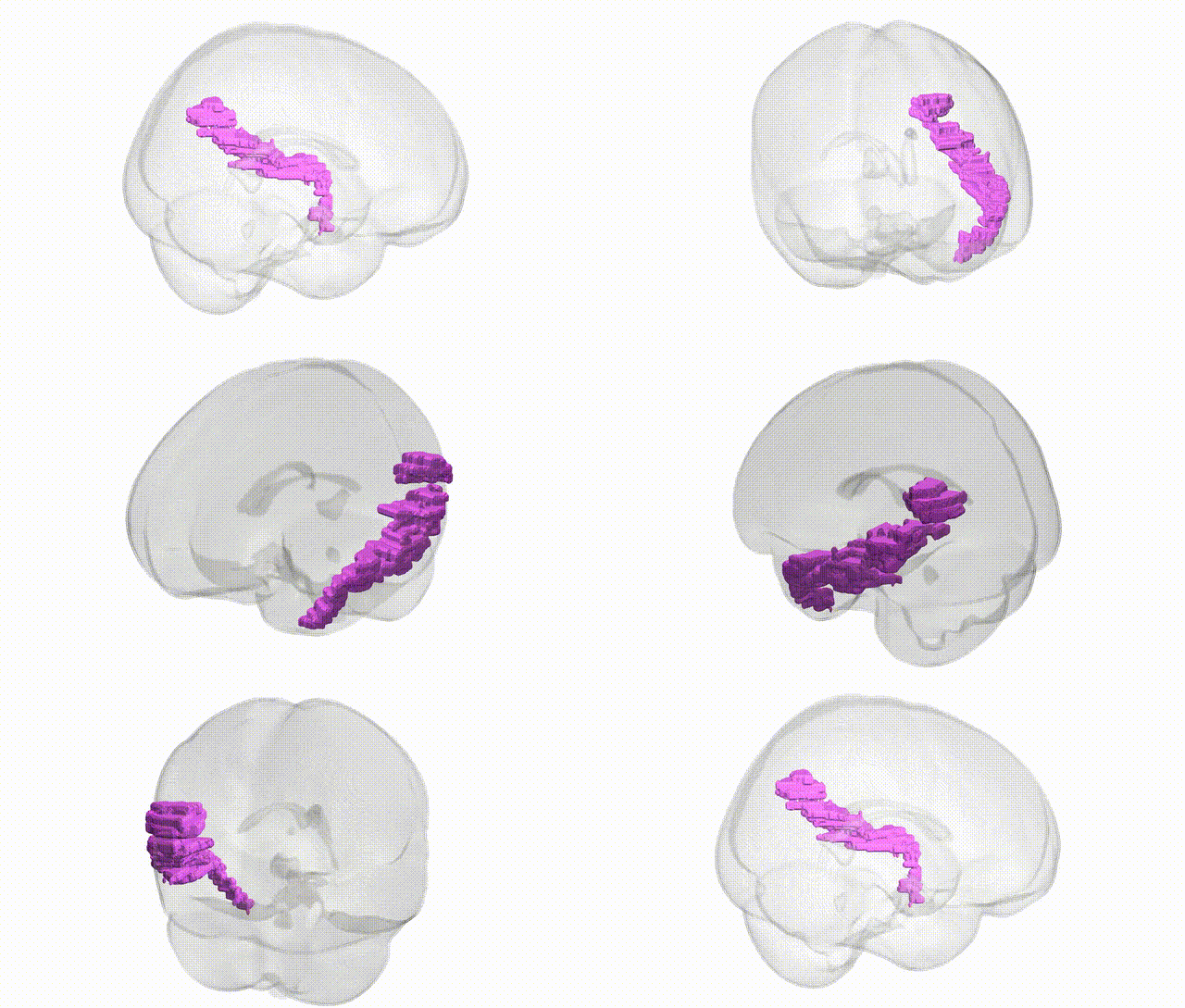
Full Quality Version: Download MP4
Wali Sidiqyar*, Gaurav Rudravaram*, Elyssa M. McMaster, Trent M. Schwartz, Adam M. Saunders, Kurt G. Schilling, Bennett A. Landman "Introducing SPINS: A Shared Public Visualization Library of Neuroanatomical Structures." Medical Imaging with Deep Learning- short paper
This resource is licensed under CC0 1.0 Universal (Public Domain).