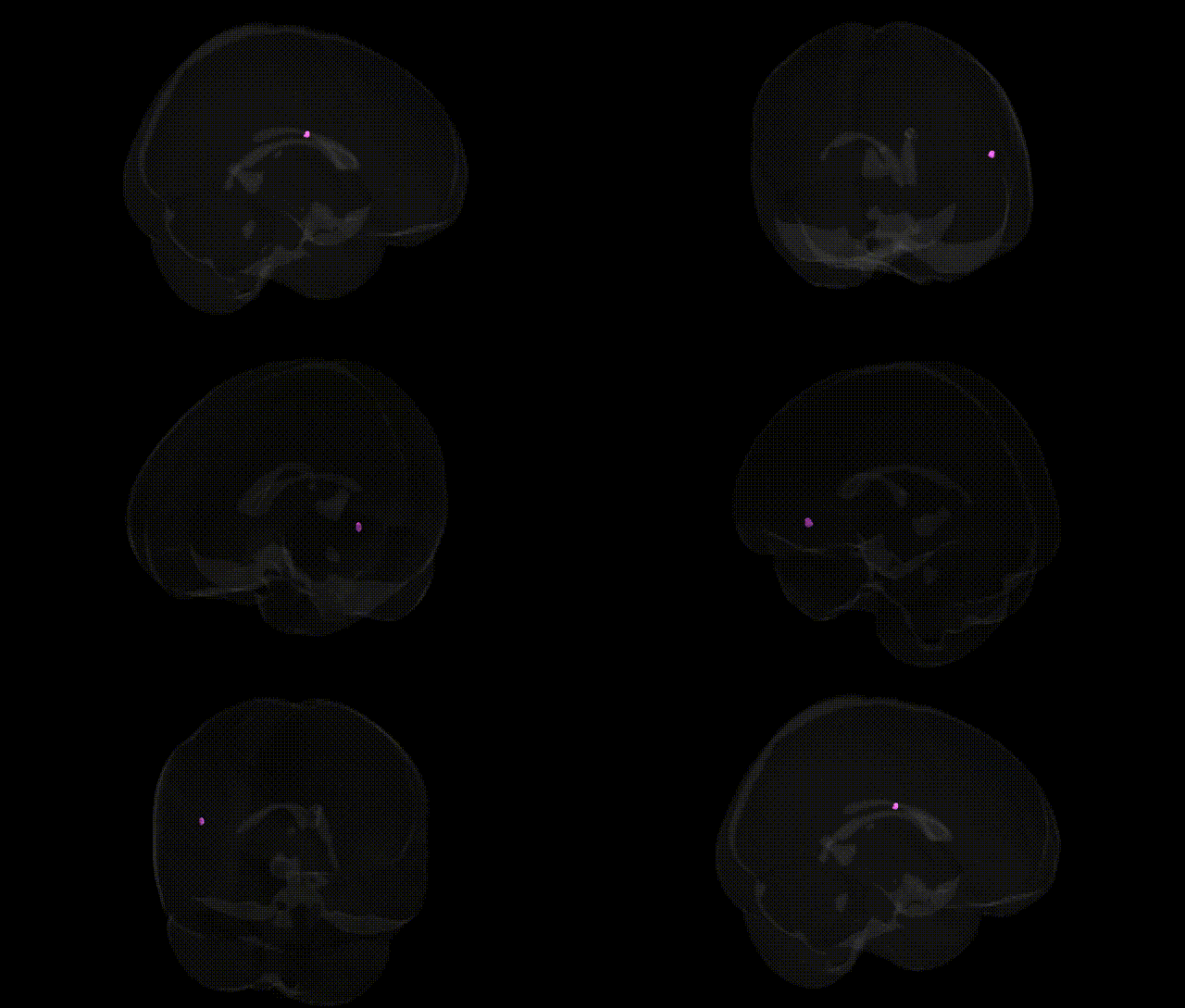
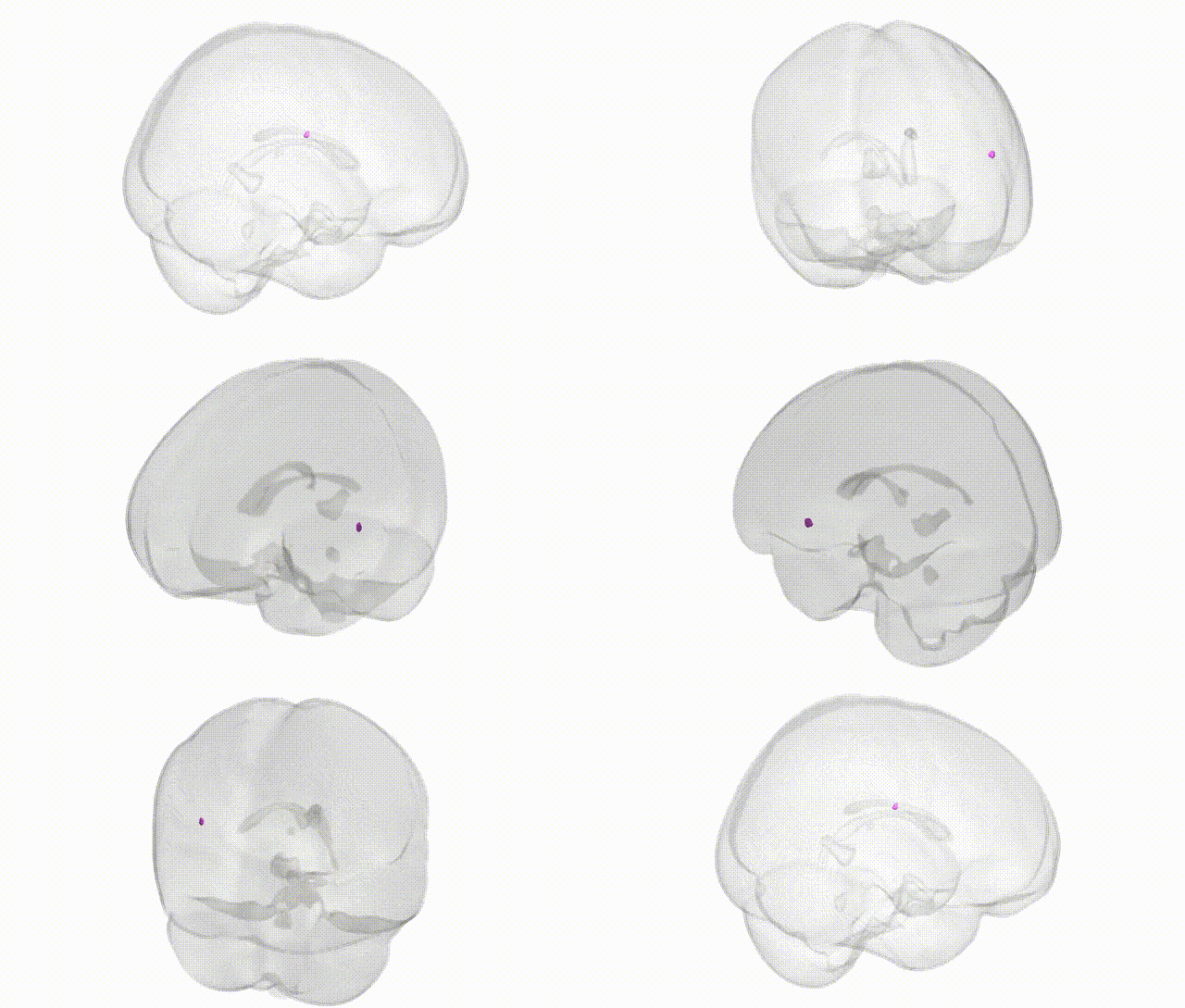
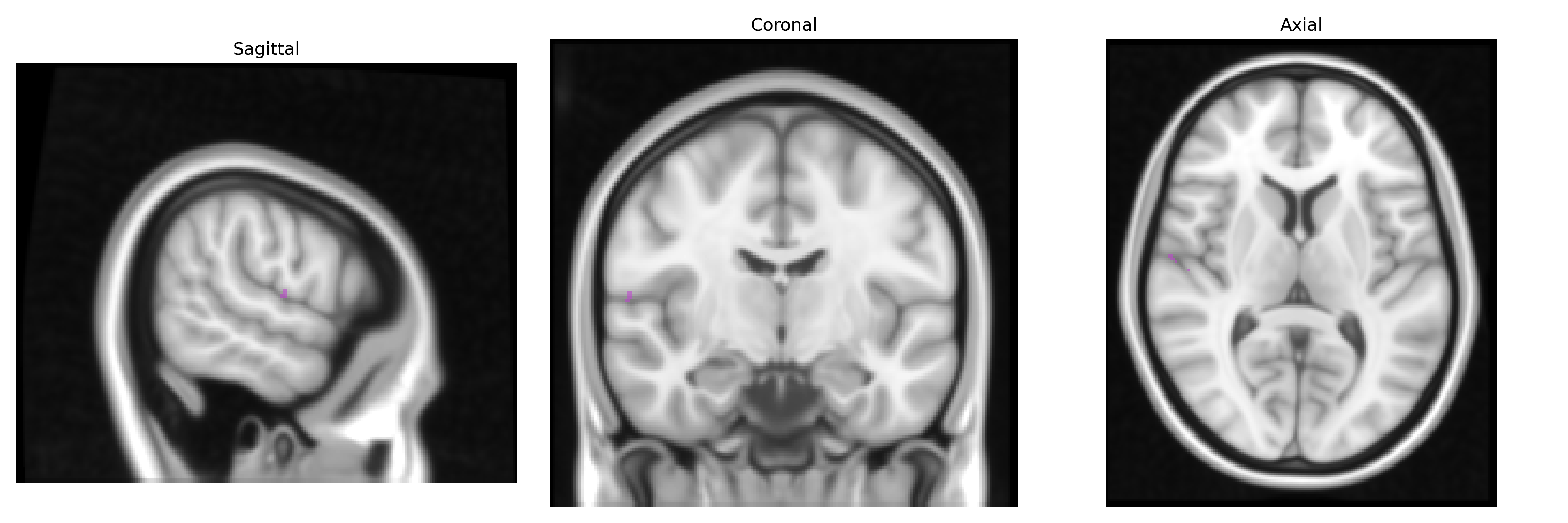
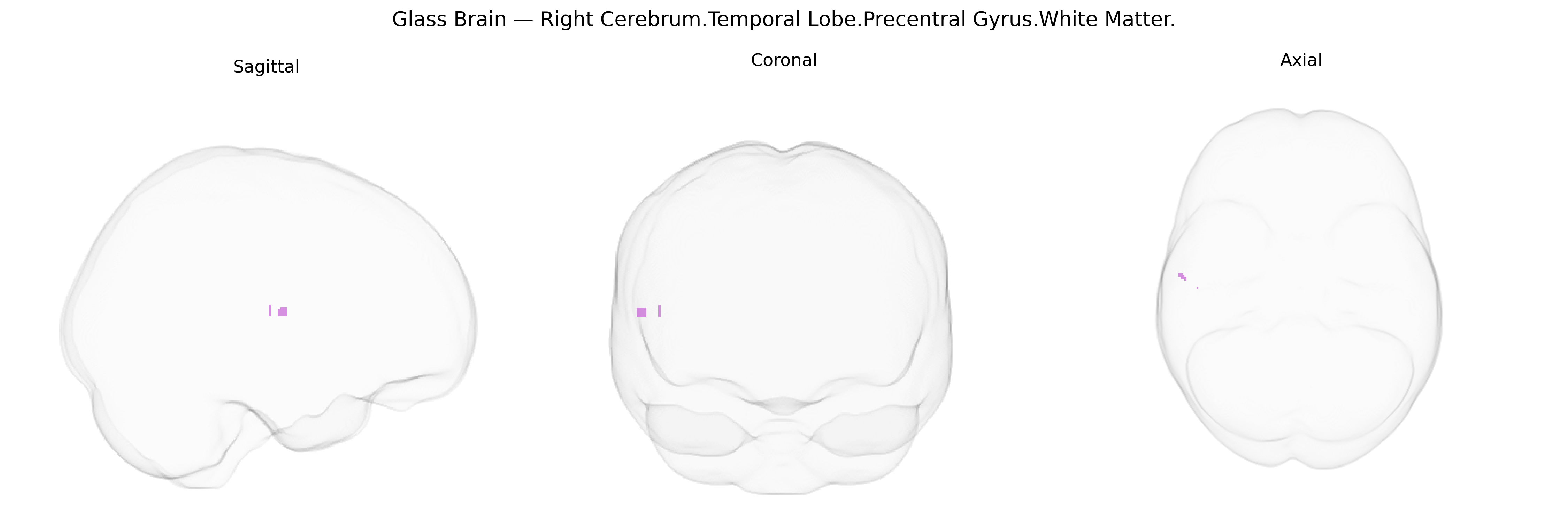
The bilateral Right Cerebrum.Temporal Lobe.Precentral Gyrus.White Matter, as labeled in the Talairach 1 mm Atlas, refers to subcortical white matter tracts situated deep to the cortical precentral gyrus in the right hemisphere but extending into the temporal lobe region in the atlas’ parcellation scheme. This white matter contains descending corticospinal and corticobulbar fibers originating from primary motor and adjacent premotor cortices, as well as association and projection fibers interconnecting frontal and temporal areas, including components of the superior longitudinal fasciculus and related pathways. Functionally, these tracts support voluntary motor control, motor planning, and integration of motor signals with higher-order auditory, language, and multimodal processing in temporal regions, and they serve as critical conduits linking cortical motor areas with subcortical nuclei and spinal cord. There is no direct Wikipedia article for this exact labeled region; a closely related structure is the Precentral gyrus.
Genetic associations specifically annotated to the bilateral Right Cerebrum.Temporal Lobe.Precentral Gyrus.White Matter label from the Talairach 1 mm atlas are not well resolved at the single-parcel level, but GWAS and imaging-genetics studies have repeatedly implicated genes and loci influencing precentral gyrus and adjacent temporal–frontal white-matter microstructure, corticospinal tracts, and related motor and language networks. Large-scale ENIGMA and UK Biobank analyses have identified heritable variation in fractional anisotropy and other diffusion MRI measures in precentral and temporal white matter linked to common variants in genes involved in axon guidance, myelination, and neurodevelopment (for example, NTRK1/2, CNTN4, MAG, and multiple oligodendrocyte-related loci), with polygenic overlap for traits such as general cognitive ability, educational attainment, motor coordination, and handedness. Disease-focused GWAS and imaging-genetics work further connect precentral/temporal white-matter alterations to risk loci for schizophrenia, bipolar disorder, major depressive disorder, autism spectrum disorder, and ADHD, where carriers of higher genetic risk often show reduced integrity of frontotemporal and precentral tracts. In neurodegenerative and motor disorders, genes such as C9orf72, SOD1, and other ALS- and frontotemporal dementia–related loci, as well as Parkinson’s disease polygenic risk, have been associated with degeneration or microstructural changes in precentral and adjacent temporal white matter, consistent with corticospinal and motor-network involvement.
Overview generated by GPT-4o (2026).
Region ID: 731
Hemisphere: bilateral
Atlas: Talairach labels 1mm
Full Quality Version: Download MP4
Full Quality Version: Download MP4
Wali Sidiqyar*, Gaurav Rudravaram*, Elyssa M. McMaster, Trent M. Schwartz, Adam M. Saunders, Kurt G. Schilling, Bennett A. Landman "Introducing SPINS: A Shared Public Visualization Library of Neuroanatomical Structures." Medical Imaging with Deep Learning- short paper
This resource is licensed under CC0 1.0 Universal (Public Domain).