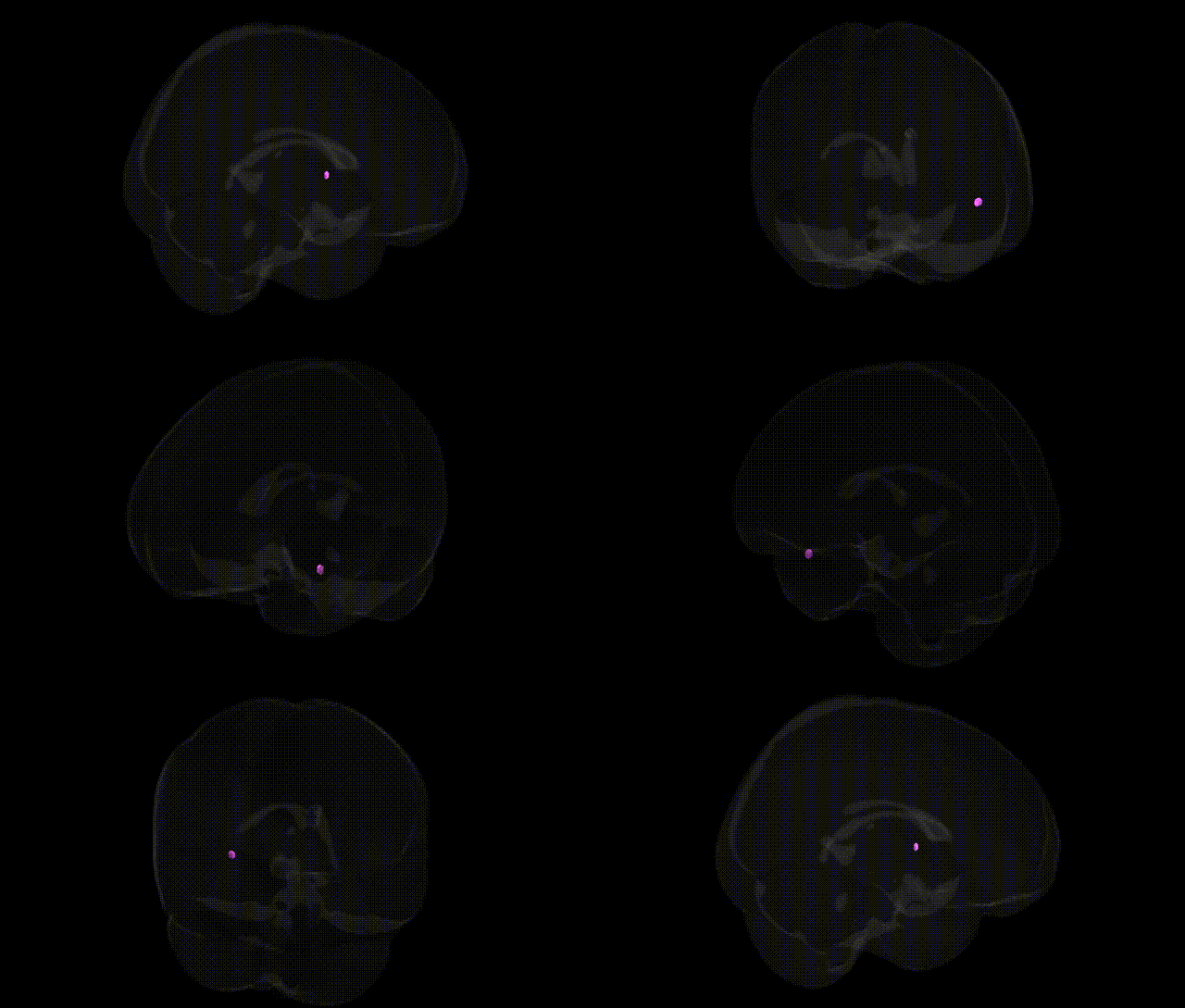
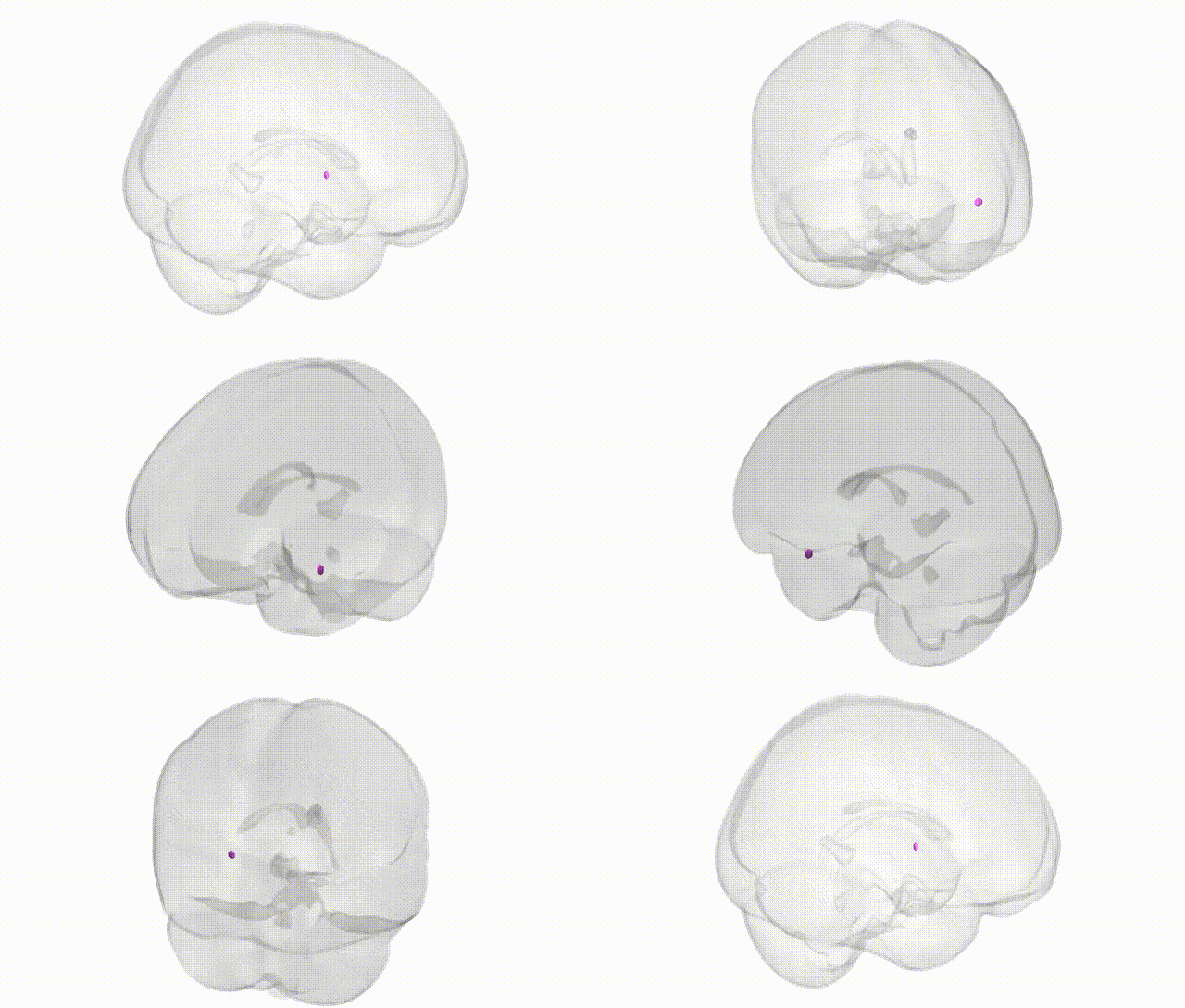
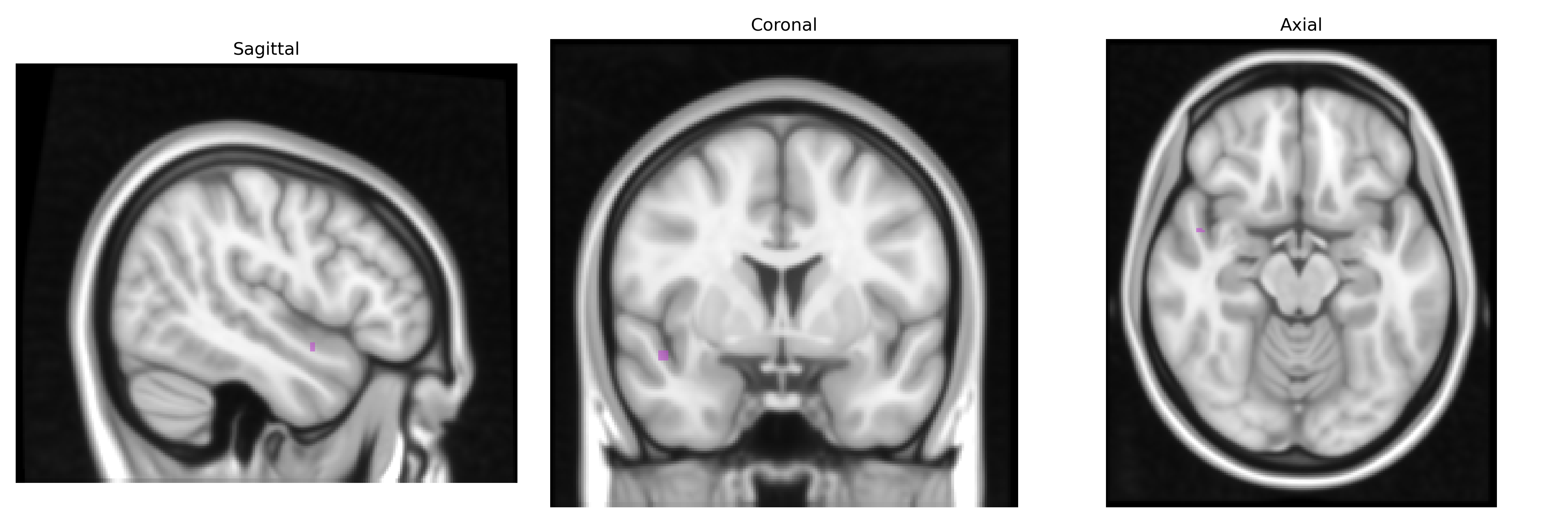
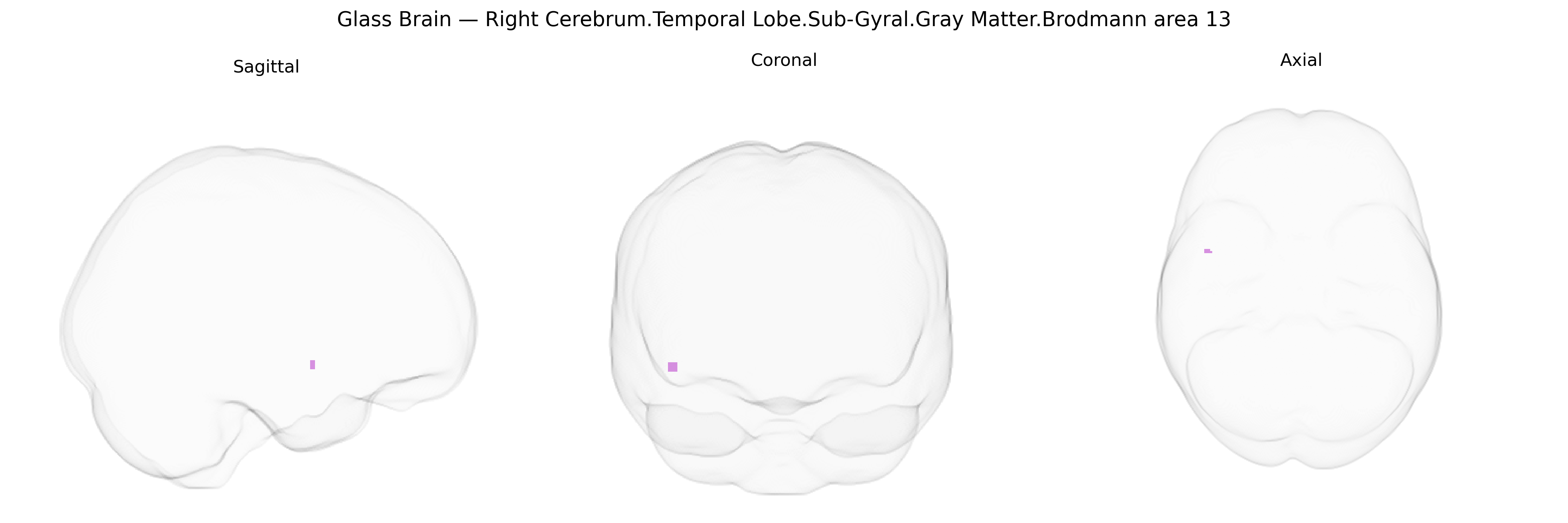
The bilateral Right Cerebrum.Temporal Lobe.Sub-Gyral.Gray Matter.Brodmann area 13 corresponds primarily to cortex within the insular region and adjacent ventral temporal–limbic areas that participate in multimodal integration, interoception, and affective processing. Brodmann area 13 lies deep to the lateral sulcus, often considered part of the insular cortex, and exhibits granular to dysgranular cytoarchitecture suited for integrating visceral, somatosensory, and emotional inputs. Functionally, this region is implicated in autonomic regulation, taste and visceral sensation, awareness of internal bodily states, and components of social and emotional cognition, including evaluation of salient stimuli and integration of contextual information with internal drives. As defined in the Talairach 1 mm Atlas, the “sub-gyral” designation reflects its location beneath the cortical surface of the temporal lobe, with gray matter that contributes to networks linking limbic, frontal, and sensory association areas. There is no direct link for this exact Talairach label; a closely related structure is the Insular cortex.
The bilateral right cerebrum temporal lobe sub-gyral gray matter Brodmann area 13, part of the insular/opercular region and anterior temporal–limbic circuitry, has been implicated in several genetic and GWAS-based associations through its roles in interoception, emotional processing, and salience detection. Large neuroimaging–genetics consortia (e.g., ENIGMA, UK Biobank) have identified common variants in genes related to neurodevelopment and synaptic signaling—such as BDNF, NTRK2, GRM3, CACNA1C, and MIR137-regulated loci—that show associations with temporal/insular cortical thickness, surface area, or volume that include or overlap BA13. Polygenic risk scores for schizophrenia, bipolar disorder, major depressive disorder, and autism spectrum disorder have been linked to structural and functional alterations in anterior temporal and insular regions encompassing BA13, and GWAS of traits like neuroticism, risk-taking, and anxiety sensitivity report overlapping genetic architectures with networks in which BA13 is a hub. Insula/BA13-adjacent atrophy or volume variation has been reported in Alzheimer’s disease, frontotemporal dementia, and addiction-related phenotypes, with genetic risk loci (e.g., APOE for Alzheimer’s, and dopaminergic/opioidergic genes for substance use) influencing morphology or connectivity in this territory, though often at the level of broader temporal–insular regions rather than BA13 in isolation.
Overview generated by GPT-4o (2026).
Region ID: 368
Hemisphere: bilateral
Atlas: Talairach labels 1mm
Full Quality Version: Download MP4
Full Quality Version: Download MP4
Wali Sidiqyar*, Gaurav Rudravaram*, Elyssa M. McMaster, Trent M. Schwartz, Adam M. Saunders, Kurt G. Schilling, Bennett A. Landman "Introducing SPINS: A Shared Public Visualization Library of Neuroanatomical Structures." Medical Imaging with Deep Learning- short paper
This resource is licensed under CC0 1.0 Universal (Public Domain).