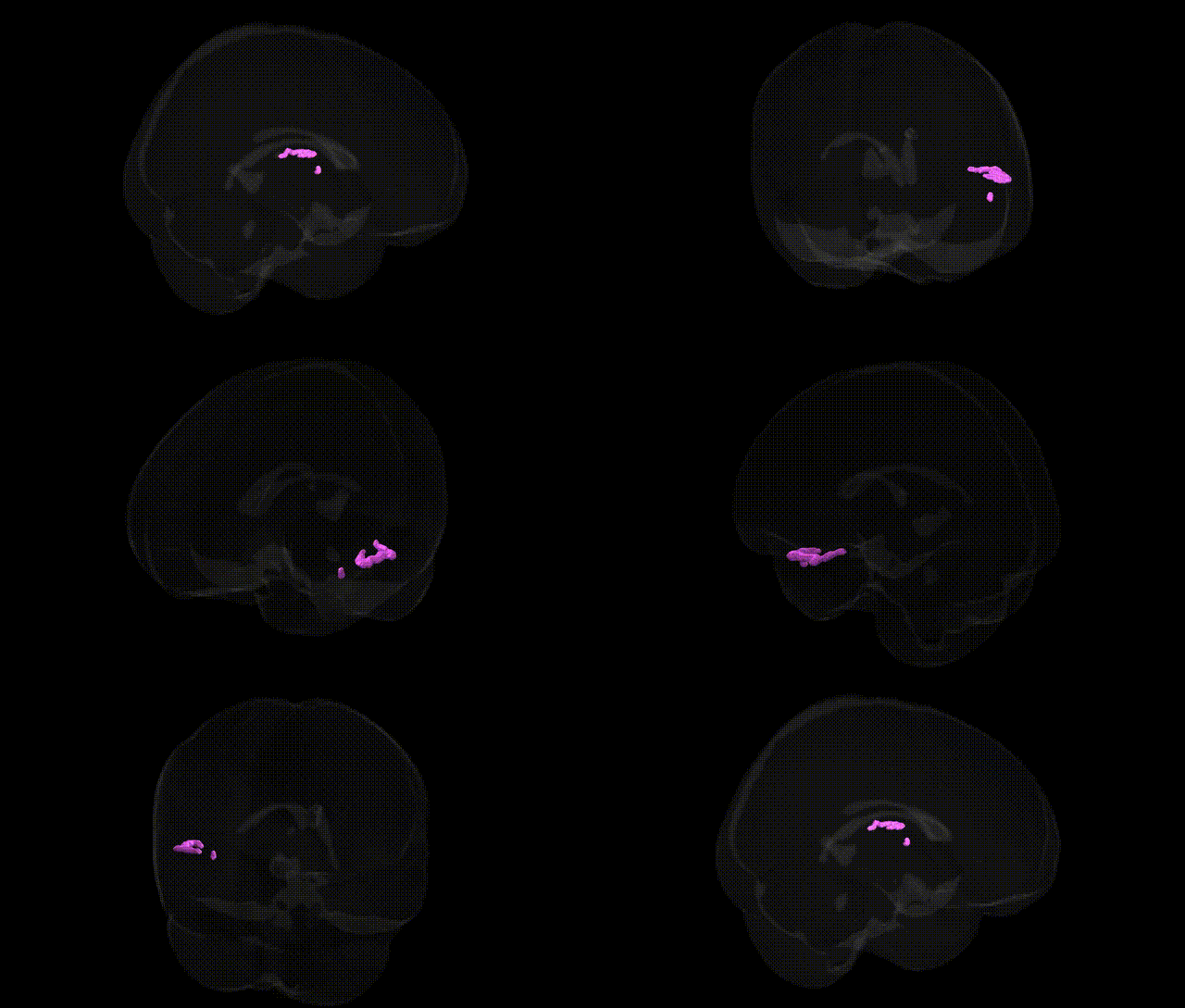
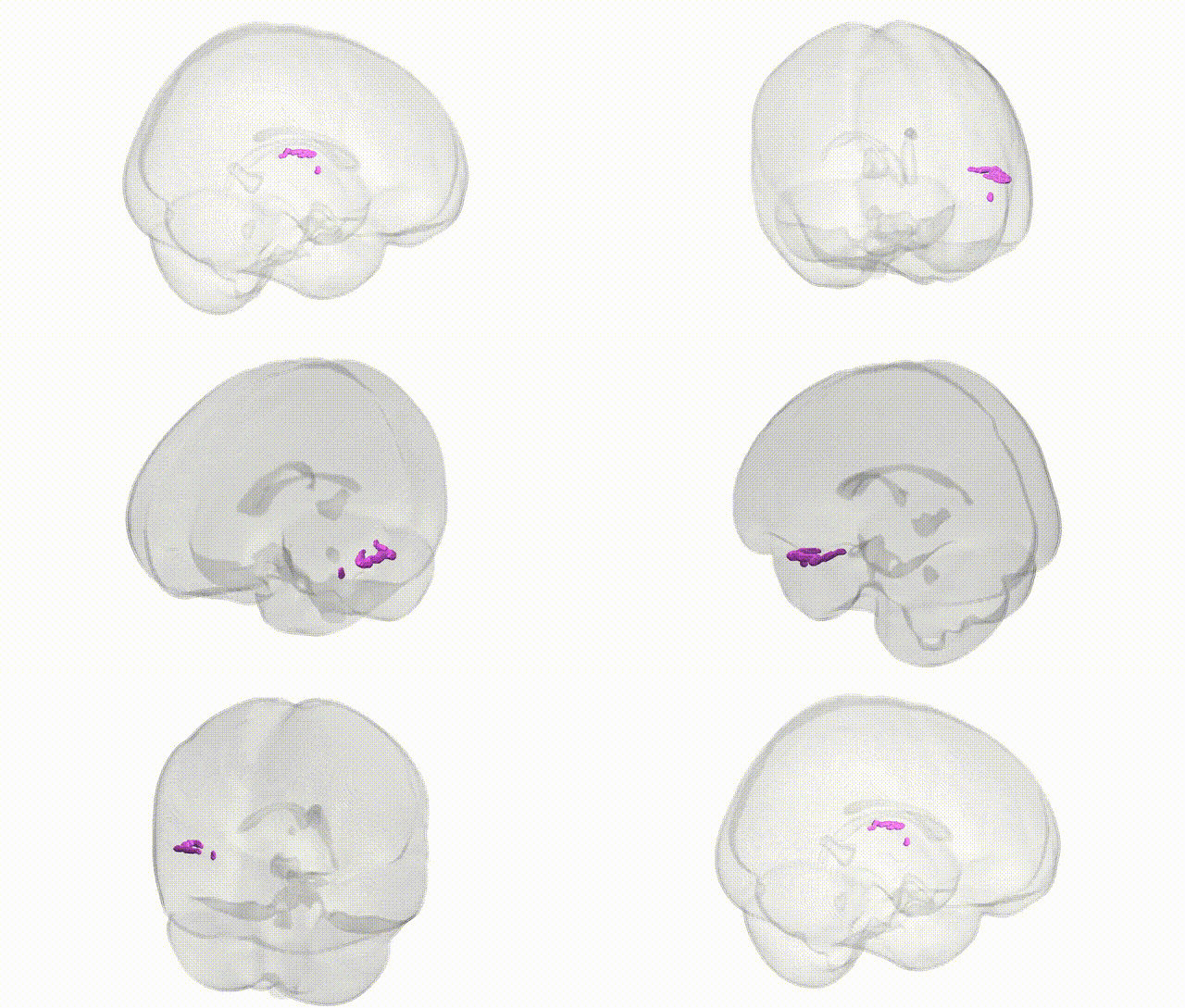
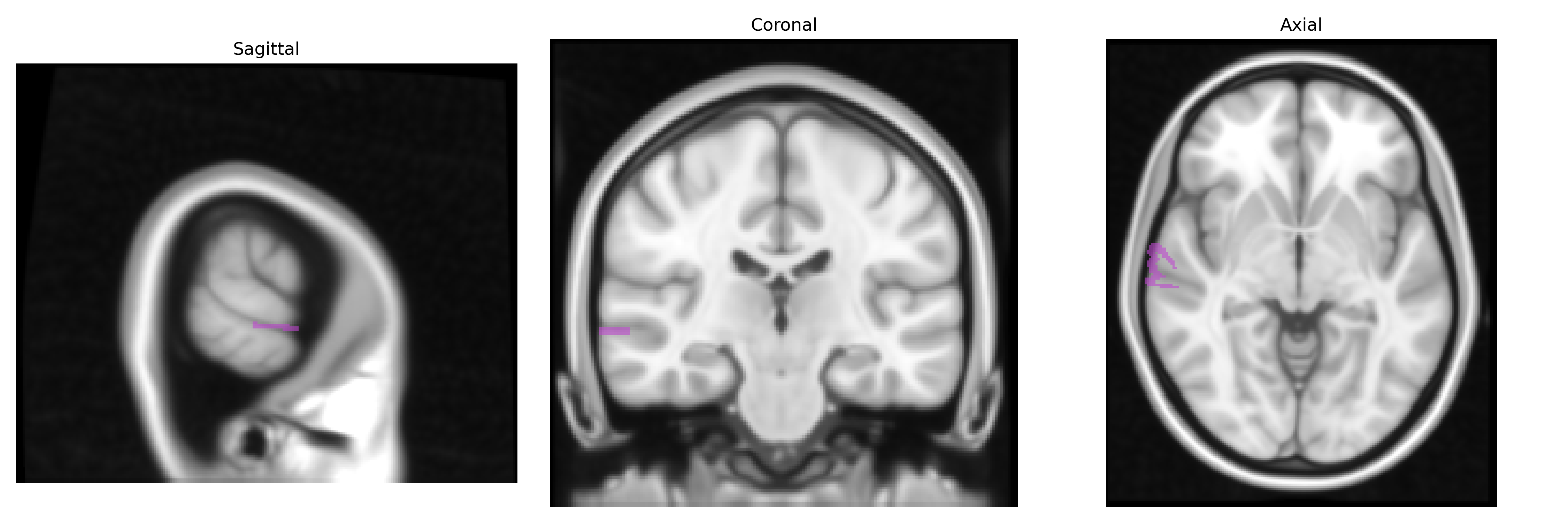
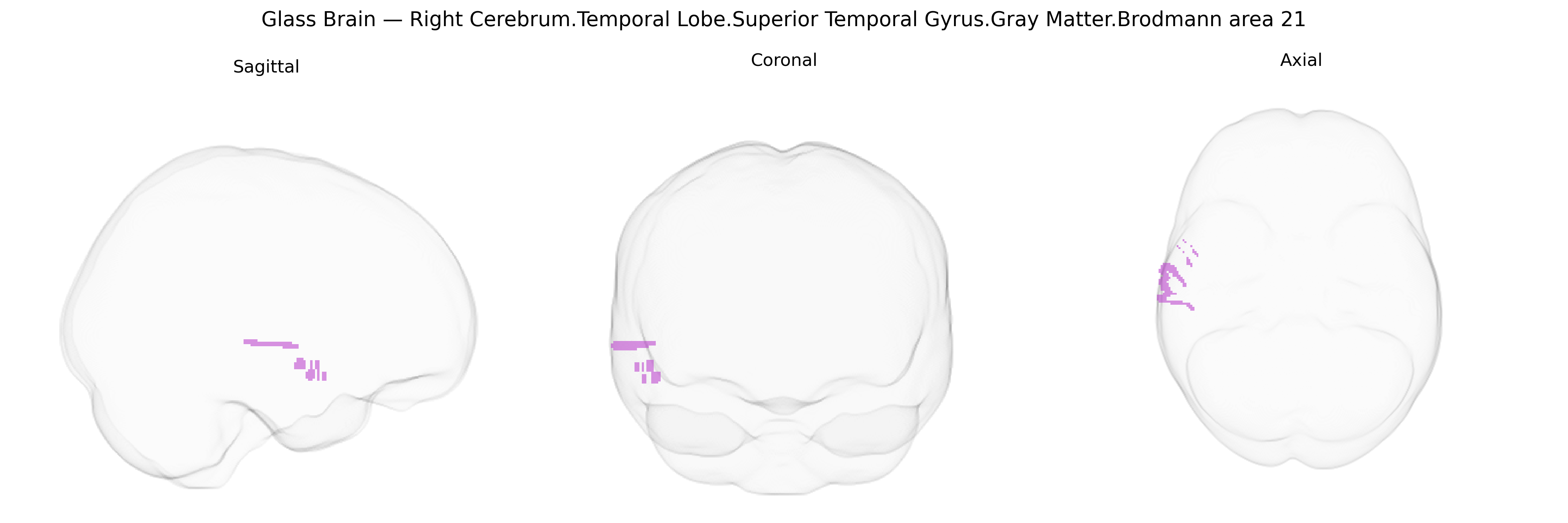
The bilateral Right Cerebrum.Temporal Lobe.Superior Temporal Gyrus.Gray Matter.Brodmann area 21 corresponds to a portion of the middle to posterior superior temporal cortex involved in higher-order auditory and language processing, semantic memory, and multimodal integration. Brodmann area 21 is characterized cytoarchitectonically by a well-developed granular layer and prominent pyramidal neurons in layers III and V, supporting extensive cortico-cortical connectivity with temporal, parietal, and frontal association areas. Functionally, this region participates in the analysis of complex sounds and speech, lexical-semantic processing, and aspects of social cognition, while also contributing to visual–auditory integration and object recognition via connections with ventral temporal pathways. Clinically, lesions or dysfunction in this area have been associated with language comprehension deficits, semantic dementia, and certain forms of auditory agnosia. Brodmann area 21
The bilateral right superior temporal gyrus gray matter (Brodmann area 21) has been implicated in several genetically influenced traits and disorders, primarily through imaging genetics and GWAS of cortical morphology and neuropsychiatric phenotypes. Large-scale GWAS of cortical thickness and surface area (e.g., ENIGMA and UK Biobank) have identified multiple loci—often involving genes related to neurodevelopment and synaptic function such as MAPT, TBR1, DLG2, and other neuronal transcription and adhesion genes—associated with temporal lobe and superior temporal cortical measures that encompass BA21. Variants in FOXP2 and CNTNAP2, among other language-related genes, have been associated with structural and functional differences in temporal regions including the superior temporal gyrus, consistent with this area’s role in language and semantic processing. Genetic risk for schizophrenia and bipolar disorder (polygenic risk scores and specific loci such as CACNA1C, GRIN2A, and complement pathway genes like C4) has been linked to altered gray matter volume and cortical thickness in superior and middle temporal gyri, including BA21, while autism spectrum disorder risk loci (e.g., variants in NRXN1, SHANK3 and other synaptic genes) have been associated with atypical temporal lobe development and connectivity affecting this region. GWAS of hallucinations, psychosis-related traits, and social communication have also highlighted right temporal regions, with implicated genes frequently converging on glutamatergic signaling, synaptic scaffolding, and neurodevelopmental pathways. Overall, genetic associations for BA21 largely emerge through its inclusion in temporal lobe and superior temporal cortex measures, language and social cognition networks, and structural or functional endophenotypes of major psychiatric and neurodevelopmental disorders.
Overview generated by GPT-4o (2026).
Region ID: 276
Hemisphere: bilateral
Atlas: Talairach labels 1mm
Full Quality Version: Download MP4
Full Quality Version: Download MP4
Wali Sidiqyar*, Gaurav Rudravaram*, Elyssa M. McMaster, Trent M. Schwartz, Adam M. Saunders, Kurt G. Schilling, Bennett A. Landman "Introducing SPINS: A Shared Public Visualization Library of Neuroanatomical Structures." Medical Imaging with Deep Learning- short paper
This resource is licensed under CC0 1.0 Universal (Public Domain).