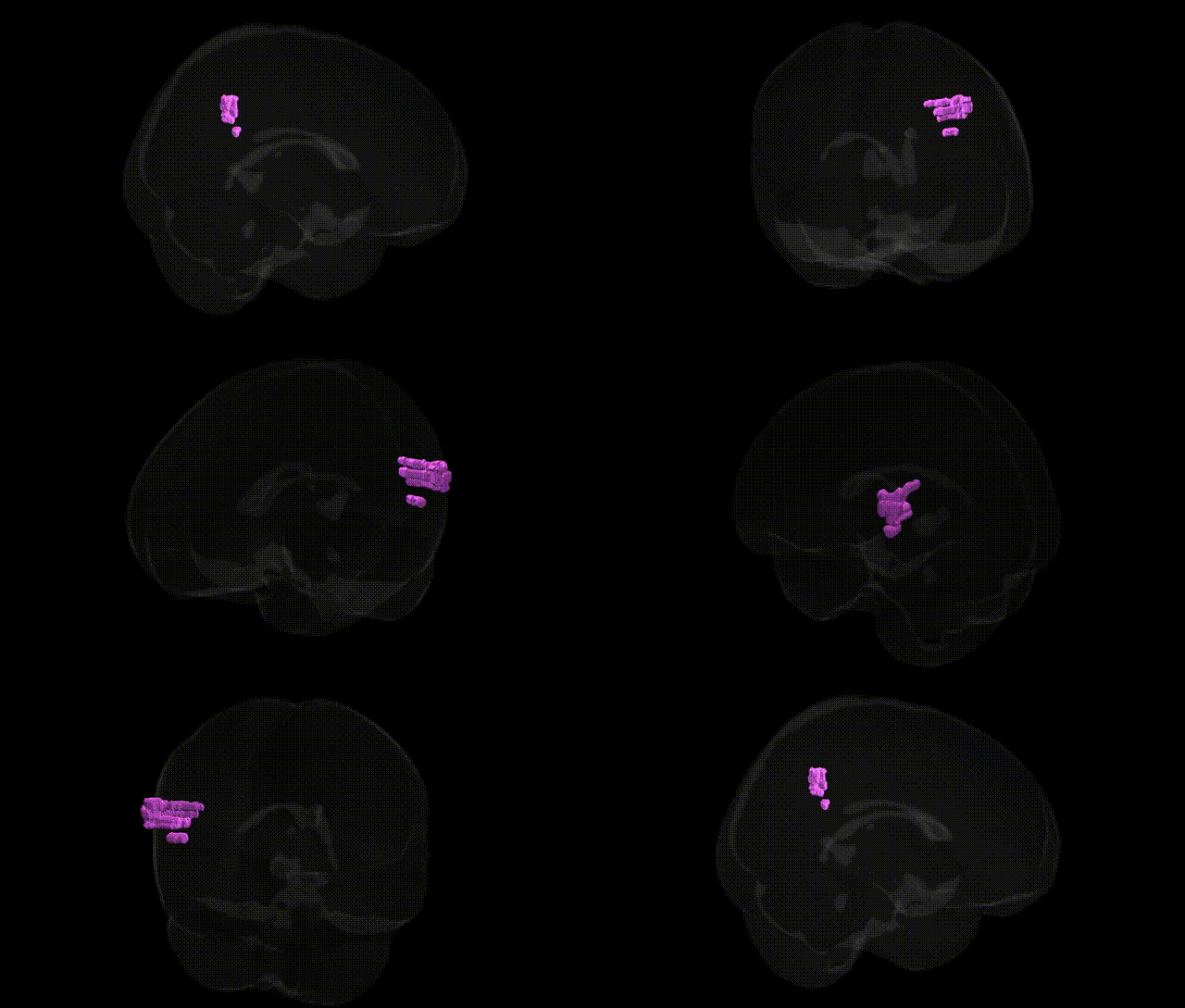
The bilateral Right Cerebrum.Temporal Lobe.Superior Temporal Gyrus.Gray Matter.Brodmann area 39 corresponds primarily to the right angular gyrus region, situated at the junction of the temporal, parietal, and occipital lobes, usually within the inferior parietal lobule extending into the posterior superior and middle temporal gyri. In the Talairach 1 mm Atlas, this region is characterized as heteromodal association cortex, integrating auditory, visual, and somatosensory information and contributing to complex cognitive functions including language comprehension (especially prosody and aspects of semantic processing), spatial cognition, number processing, theory of mind, and aspects of memory retrieval. Functionally, the right BA39 is often implicated in non-dominant hemisphere roles such as attention to extrapersonal space, interpretation of contextual and social cues, and integration of multimodal sensory inputs into coherent percepts, and it maintains extensive connectivity with other association areas and subcortical structures. There is no direct link for this exact Talairach label; a closely related structure is the Angular gyrus.
The bilateral right superior temporal gyrus gray matter in Brodmann area 39 (angular gyrus region of the temporal–parietal junction) has been implicated by genetic and imaging-genetics studies in language, social cognition, and neuropsychiatric phenotypes, though most work is not restricted strictly to BA39 at 1 mm Talairach resolution. GWAS and polygenic risk score studies in schizophrenia, autism spectrum disorder, and bipolar disorder have linked common variants in synaptic and neurodevelopmental genes (e.g., CACNA1C, GRIN2A, CNTNAP2, FOXP2-related pathways) to structural and functional alterations in temporo-parietal regions encompassing BA39, including reduced cortical thickness or gray-matter volume and atypical activation during language or social processing tasks. Large-scale neuroimaging GWAS (such as ENIGMA and UK Biobank) have reported heritable variation in superior temporal gyrus and angular gyrus morphology associated with loci near genes involved in cortical development and axon guidance (e.g., multiple MAPT/H1 haplotype–related and WNT pathway signals), as well as genetic correlations between BA39-adjacent cortical measures and cognitive traits like educational attainment and general intelligence. Genetic studies of developmental dyslexia, specific language impairment, and aphasia-related recovery have associated variants in KIAA0319, DCDC2, and other neurodevelopmental genes with altered structure and activation in the left and right angular/superior temporal gyrus regions, consistent with the role of BA39 in multimodal language and reading networks. Additionally, autism and social cognition GWAS and imaging-genetics analyses have linked polygenic load for social-communication traits to atypical activity and connectivity of the temporo-parietal junction, including BA39, particularly in theory-of-mind, perspective-taking, and empathy tasks, suggesting that genetic influences on social brain networks partly converge on this region.
Overview generated by GPT-4o (2026).
Region ID: 709
Hemisphere: bilateral
Atlas: Talairach labels 1mm
Full Quality Version: Download MP4
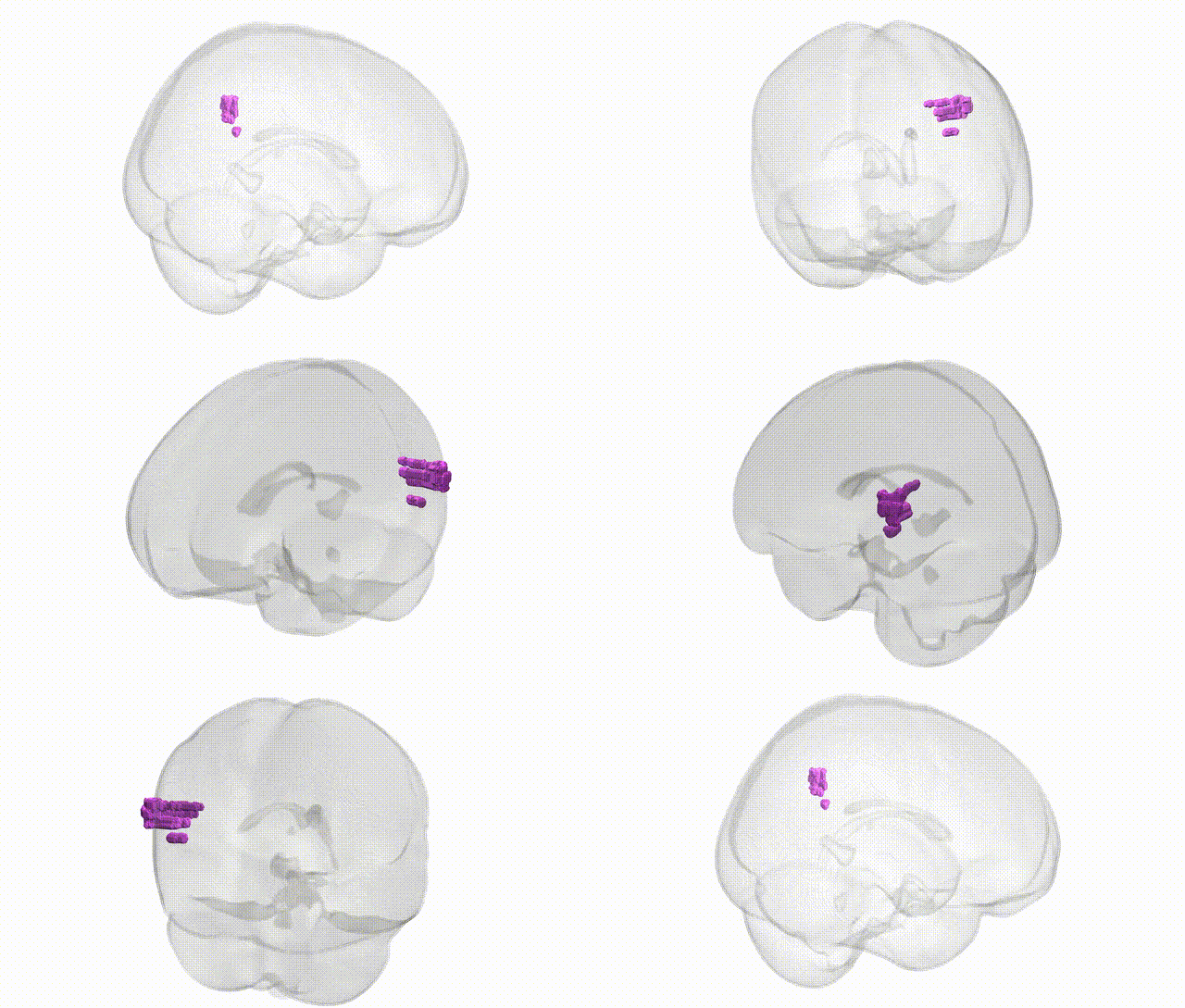
Full Quality Version: Download MP4
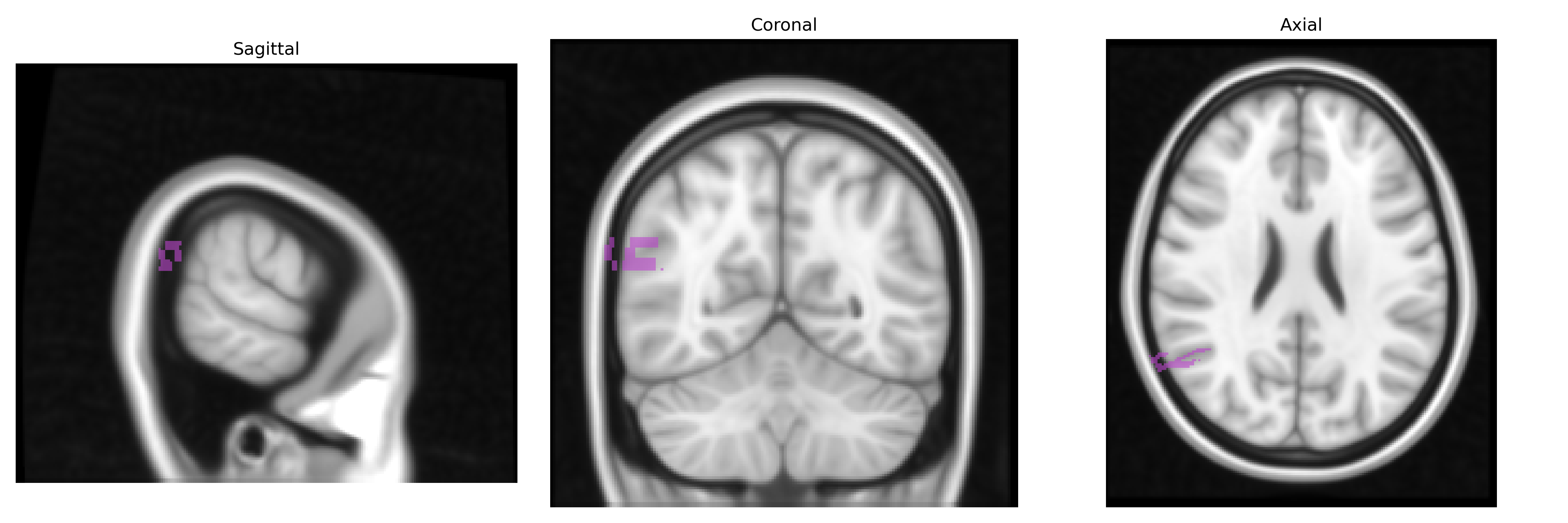
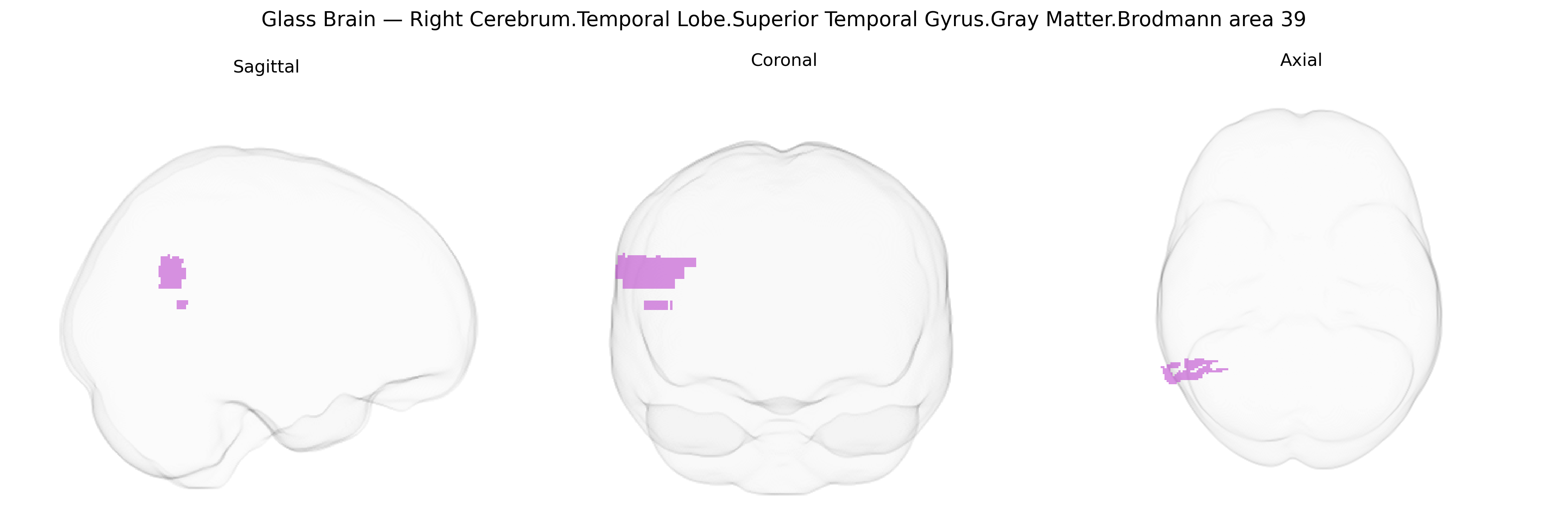
Wali Sidiqyar*, Gaurav Rudravaram*, Elyssa M. McMaster, Trent M. Schwartz, Adam M. Saunders, Kurt G. Schilling, Bennett A. Landman "Introducing SPINS: A Shared Public Visualization Library of Neuroanatomical Structures." Medical Imaging with Deep Learning- short paper
This resource is licensed under CC0 1.0 Universal (Public Domain).