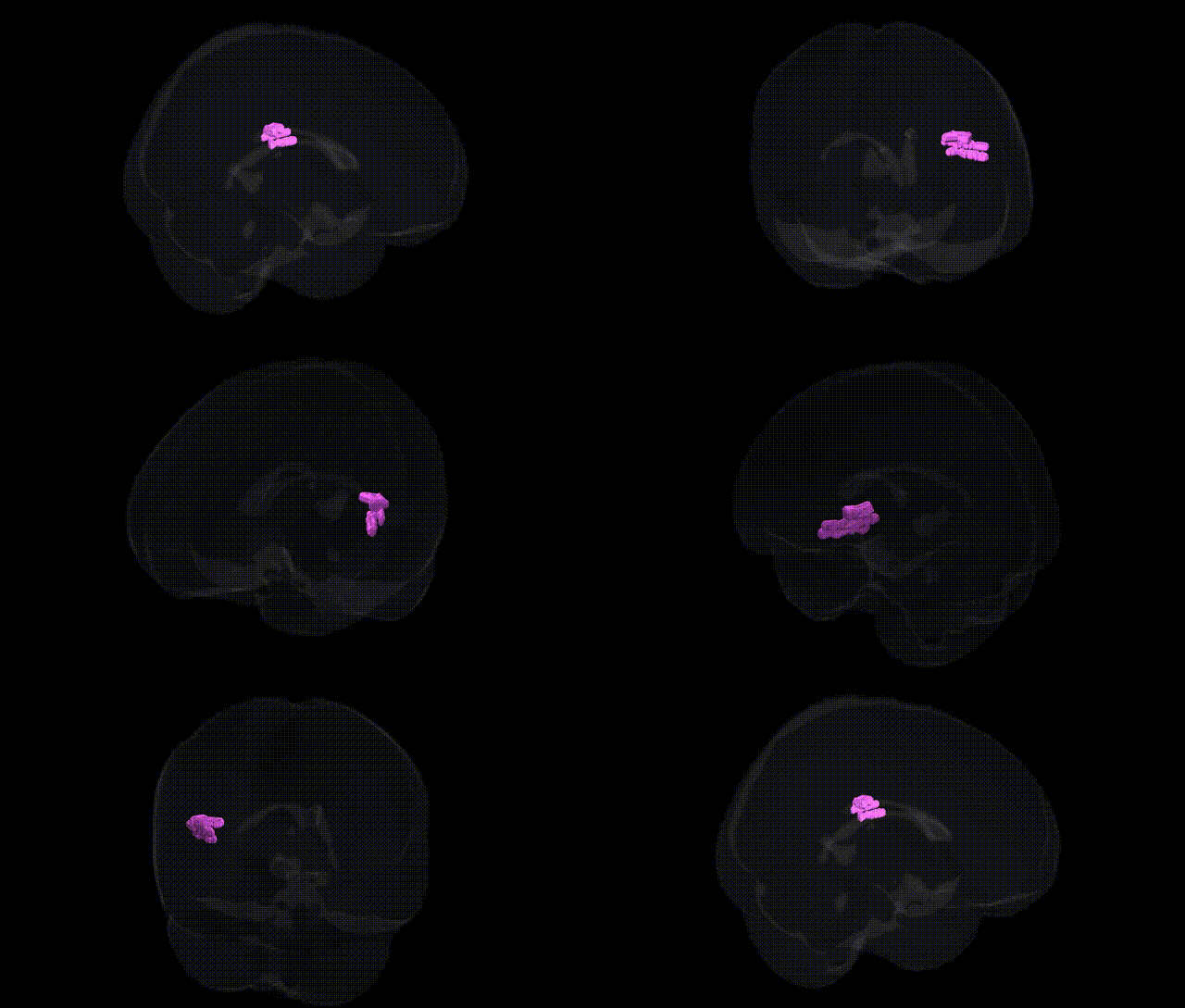
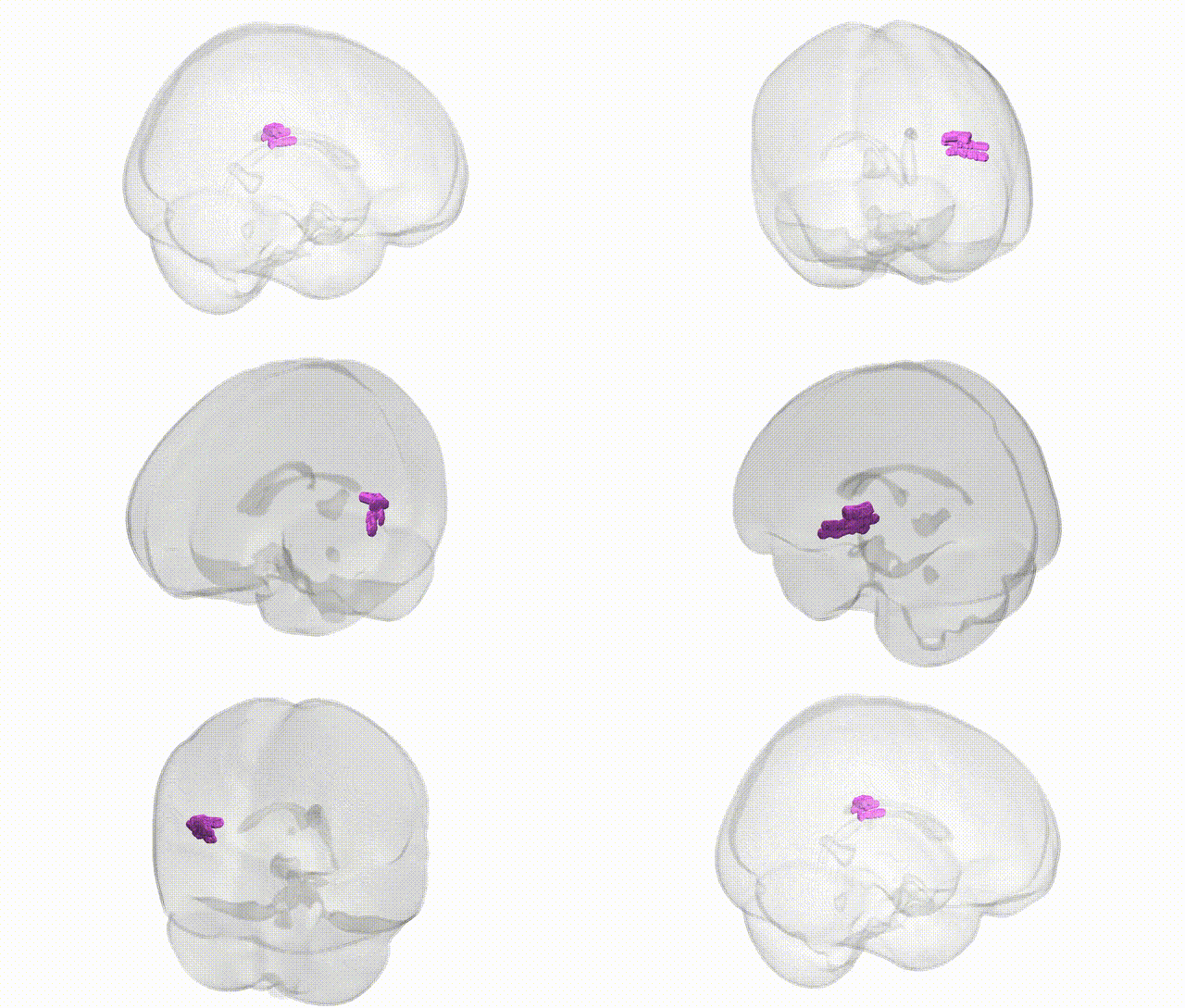
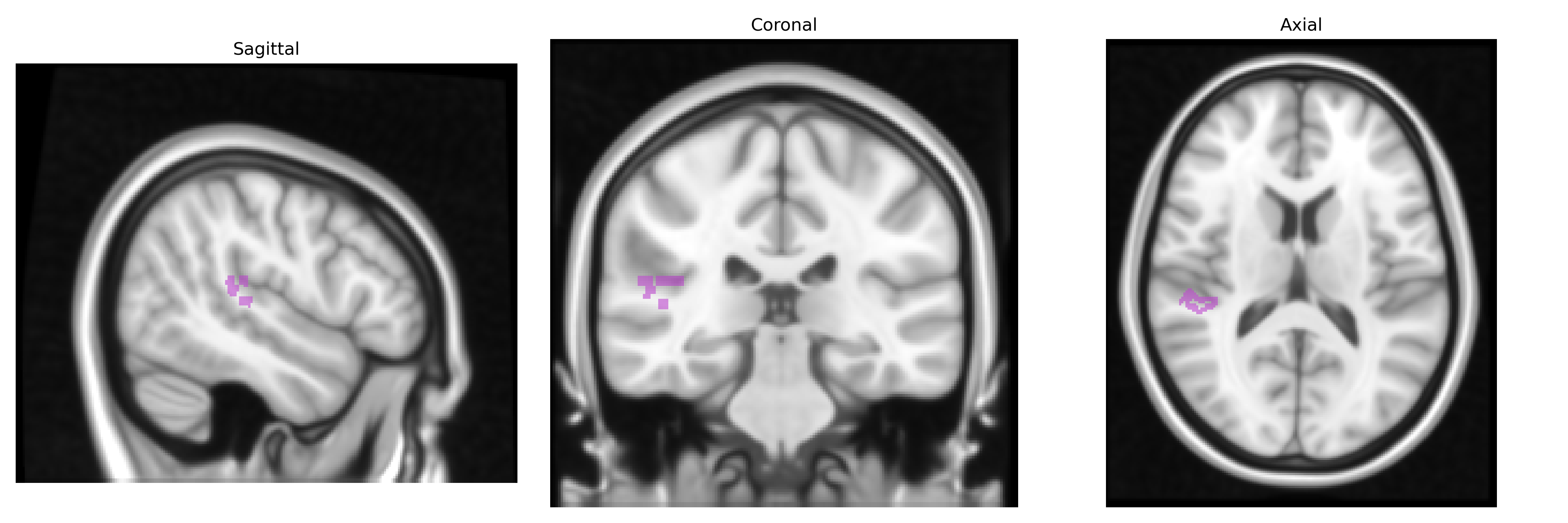
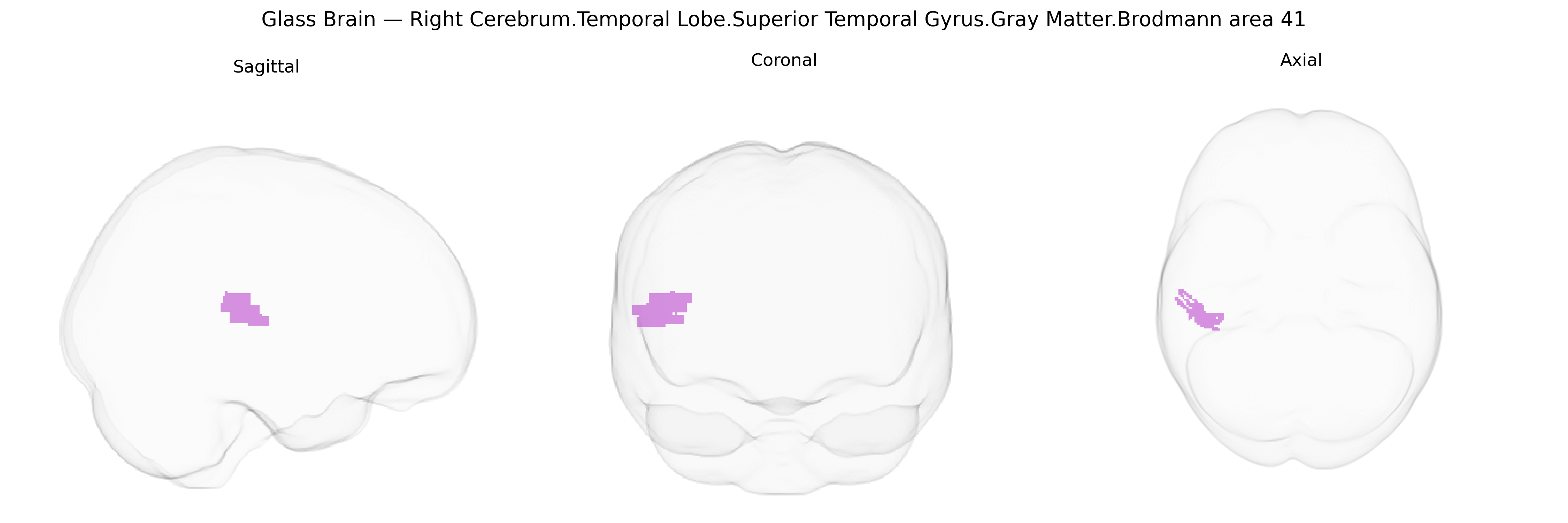
The bilateral Right Cerebrum.Temporal Lobe.Superior Temporal Gyrus.Gray Matter.Brodmann area 41 corresponds to the primary auditory cortex located in the transverse temporal (Heschl’s) gyrus of the superior temporal region, specialized for the initial cortical processing of acoustic information. Neurons in this cytoarchitectonically defined field receive dense input from the medial geniculate nucleus of the thalamus and are tonotopically organized, enabling the spatial mapping of sound frequencies and contributing to the detection of basic auditory features such as intensity, pitch, and temporal patterns. This region serves as a crucial gateway for transforming sensory auditory signals into higher-order perceptual representations in surrounding auditory association cortices (e.g., Brodmann areas 42 and 22), and is fundamental for normal hearing, speech perception, and environmental sound recognition.
The bilateral superior temporal gyrus gray matter in Brodmann area 41 (primary auditory cortex) has been implicated in several genetically influenced traits and disorders, though findings are generally indirect and regionally broad. Large-scale brain MRI GWAS (e.g., ENIGMA, UK Biobank) have identified common variants in genes involved in neurodevelopment (such as MIR137, LRRC4B, and DLG2) and synaptic function that associate with temporal lobe cortical thickness and surface area, with some peak signals mapping to superior temporal regions that include or border BA41; these genes often overlap with risk loci for schizophrenia, autism spectrum disorder, and cognitive ability. Schizophrenia GWAS loci in or near genes like GRIN2A, CACNA1C, and others affecting glutamatergic and calcium-channel signaling have been linked to altered superior temporal gyrus volume, auditory processing anomalies, and susceptibility to hallucinations, consistent with structural and functional abnormalities in BA41. In autism, polygenic risk and rare variants in genes such as CNTNAP2, SHANK family genes, and other synaptic scaffolding genes have been associated with atypical superior temporal gyrus development and altered auditory/social communication processing. Hearing-related GWAS have identified variants near genes important for cochlear and central auditory pathway development (e.g., PCDH15, CLDN14 and additional loci for age-related hearing loss) that may influence structural and functional properties of primary auditory cortex, including BA41, although direct regional associations are less commonly resolved. More generally, polygenic scores for educational attainment, intelligence, and language-related traits show associations with temporal lobe morphometry, suggesting that BA41 is part of a genetically modulated network for auditory, language, and higher cognitive functions, but the genetic architecture appears highly polygenic and not specific to this single Brodmann area.
Overview generated by GPT-4o (2026).
Region ID: 673
Hemisphere: bilateral
Atlas: Talairach labels 1mm
Full Quality Version: Download MP4
Full Quality Version: Download MP4
Wali Sidiqyar*, Gaurav Rudravaram*, Elyssa M. McMaster, Trent M. Schwartz, Adam M. Saunders, Kurt G. Schilling, Bennett A. Landman "Introducing SPINS: A Shared Public Visualization Library of Neuroanatomical Structures." Medical Imaging with Deep Learning- short paper
This resource is licensed under CC0 1.0 Universal (Public Domain).