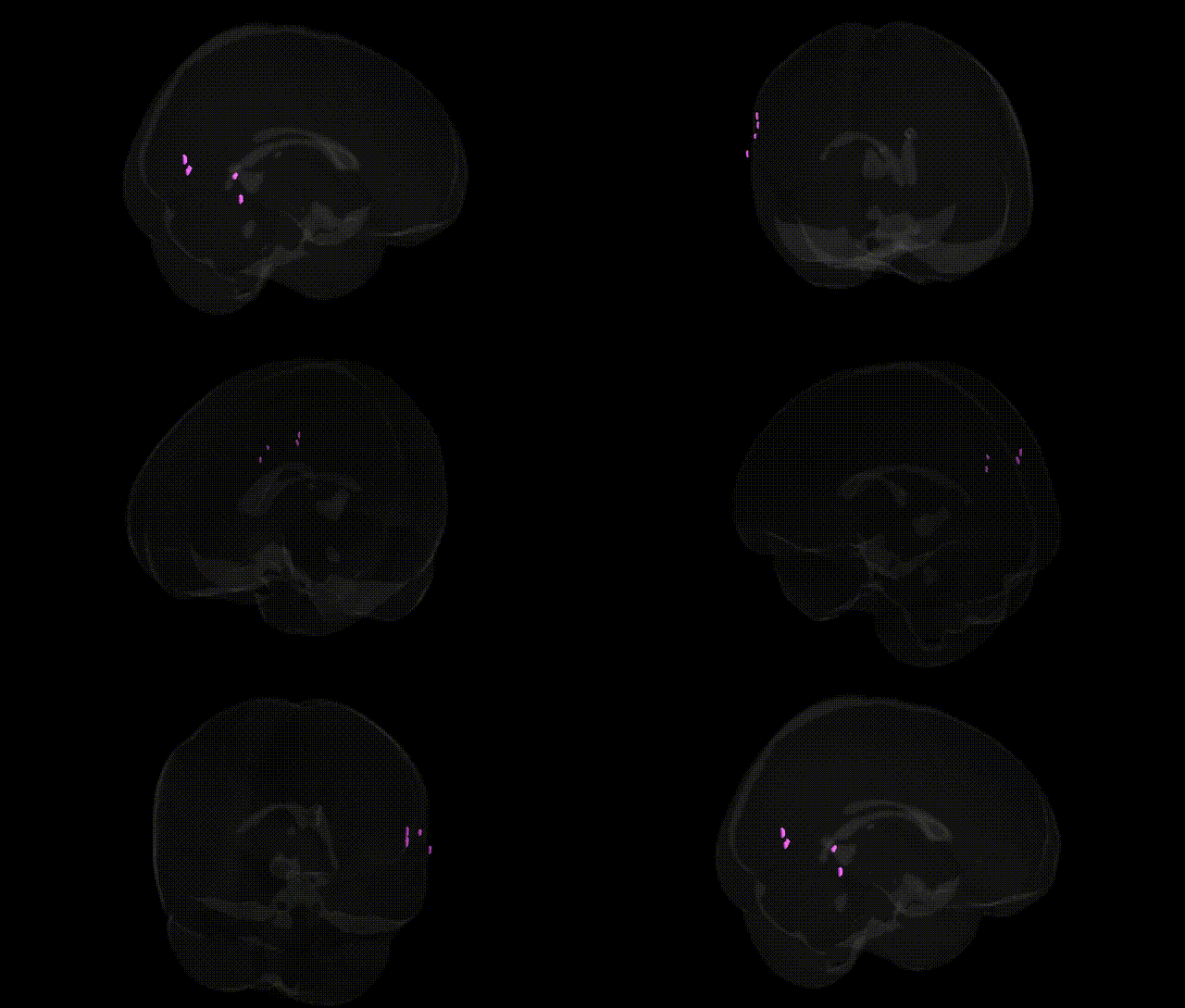
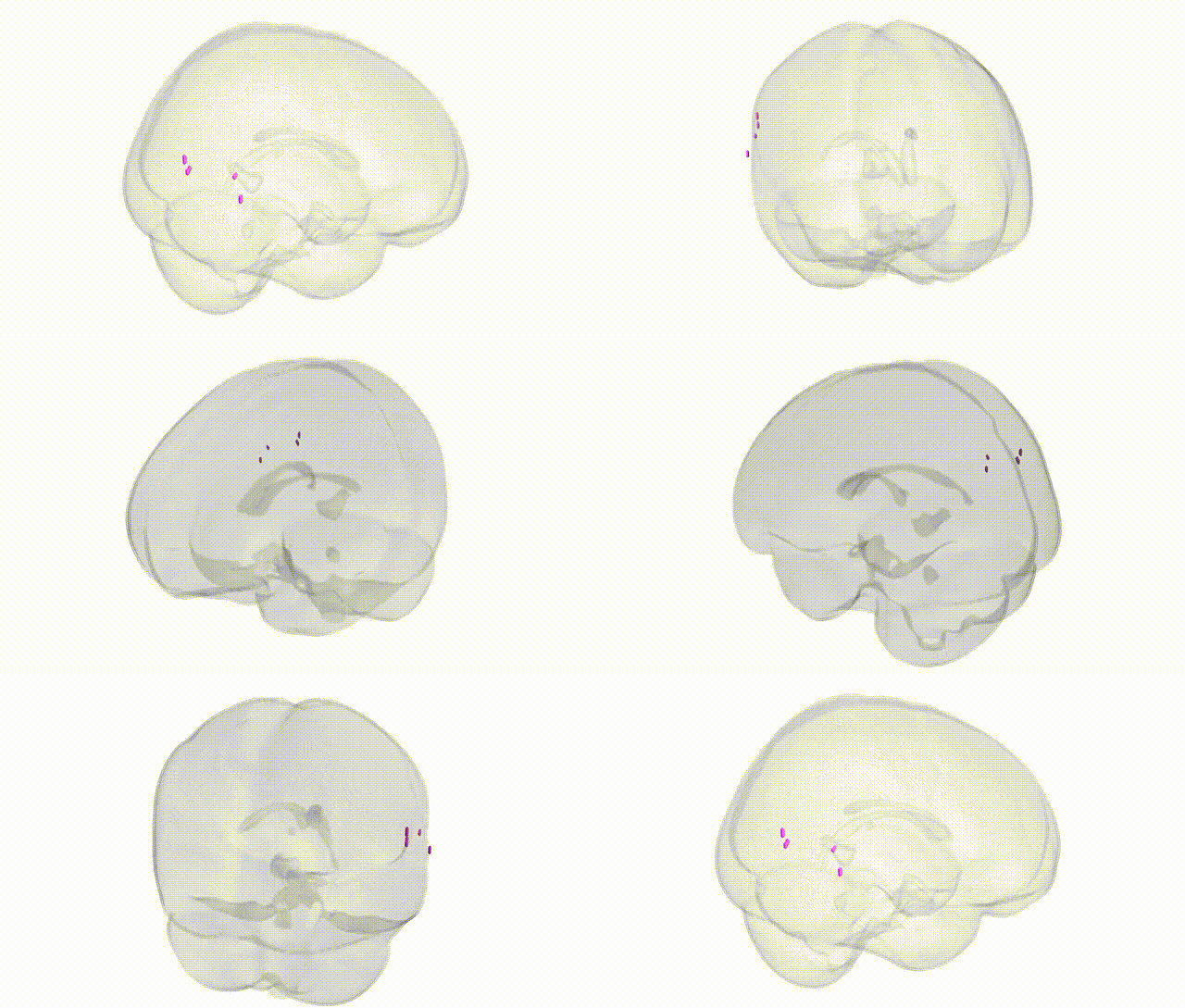
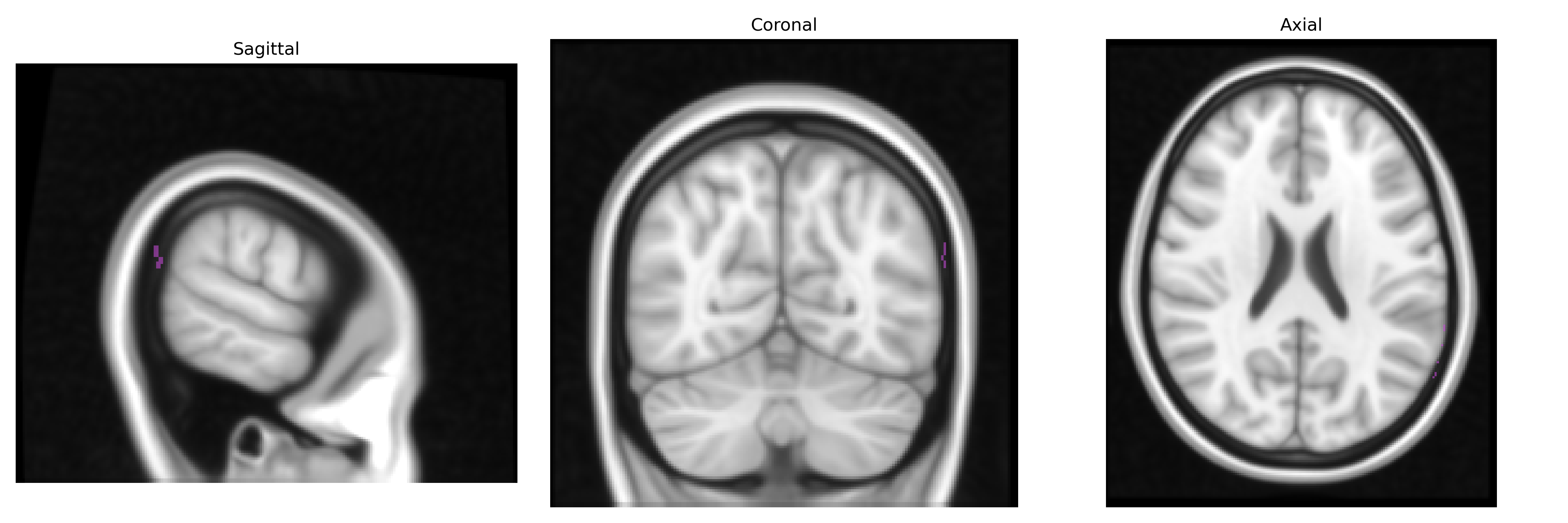
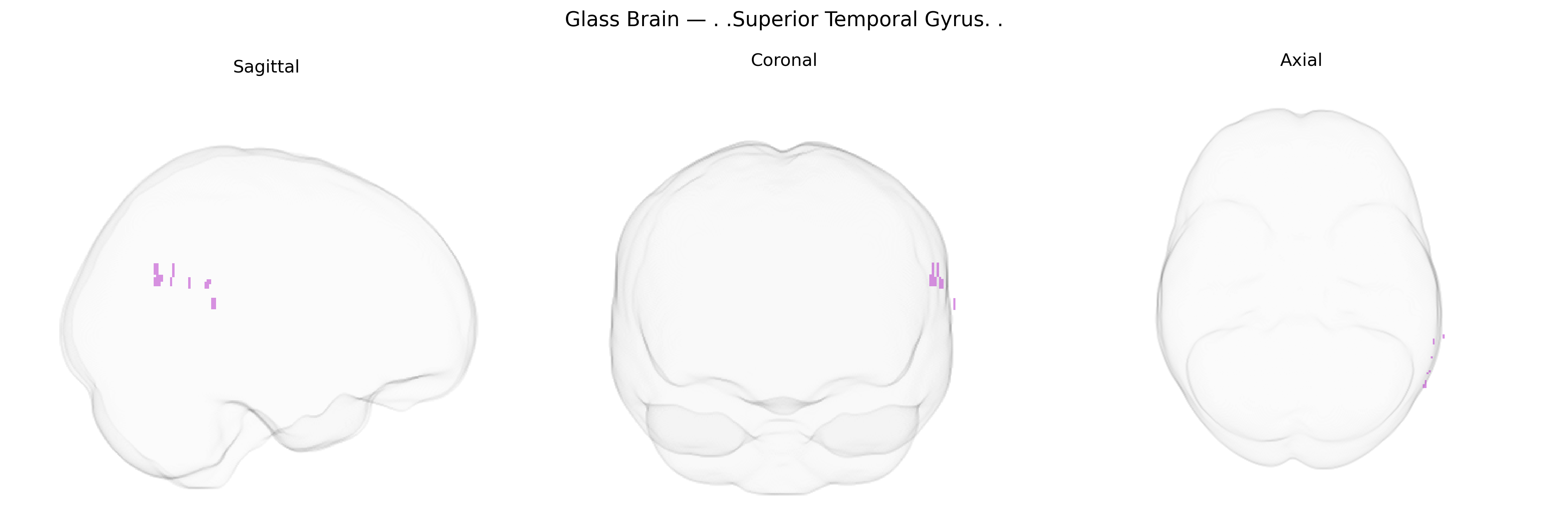
The bilateral Superior Temporal Gyrus (STG) is a neocortical structure located in the temporal lobe, extending along the superior aspect of the temporal cortex between the lateral (Sylvian) fissure and the superior temporal sulcus, and encompassing primary and higher-order auditory association areas. In Talairach space, it spans portions of Brodmann areas 22, 41, and 42, integrating auditory perception with complex language and social-cognitive processing. The STG plays a critical role in the analysis of sound features, speech perception, phonological processing, and aspects of auditory scene analysis, and it contributes to multimodal integration with visual and somatosensory inputs. Lateralization within this region is notable, with the left STG more strongly implicated in language comprehension and the right STG more involved in prosody, music perception, and aspects of social-emotional processing. Structurally, the STG is highly interconnected with frontal (e.g., inferior frontal gyrus), parietal, and limbic regions via association pathways such as the arcuate and superior longitudinal fasciculi.
The bilateral Superior Temporal Gyrus (STG), as defined in the Talairach labels 1 mm atlas, has been implicated in multiple genetically influenced traits and disorders, particularly those involving language, social cognition, and psychosis-related phenotypes. GWAS and imaging–genetics studies consistently link STG structure and function to schizophrenia and psychotic-spectrum disorders, with associations reported for complement component 4 (C4) variation, NRG1/ERBB4 signaling, and common risk loci such as those in the major histocompatibility complex (MHC) region that affect cortical thickness and gray matter volume in temporal association cortex. STG morphometry and activation have also been related to polygenic risk scores for schizophrenia, autism spectrum disorder, and major depression. Candidate gene and GWAS-based imaging studies indicate that language- and reading-related traits (e.g., dyslexia, specific language impairment) show associations between temporal lobe variants—such as in DCDC2, KIAA0319, and FOXP2-related networks—and altered STG asymmetry, volume, or activation during phonological and auditory processing. In addition, large-scale neuroimaging GWAS consortia (e.g., ENIGMA, UK Biobank) report heritable variation in STG thickness and surface area, with temporally expressed genes involved in synaptic development, glutamatergic signaling, and neuronal migration contributing to interindividual differences in this region that underlie risk for hallucinations, language impairment, and broader cognitive and psychiatric phenotypes.
Overview generated by GPT-4o (2026).
Region ID: 716
Hemisphere: bilateral
Atlas: Talairach labels 1mm
Full Quality Version: Download MP4
Full Quality Version: Download MP4
Wali Sidiqyar*, Gaurav Rudravaram*, Elyssa M. McMaster, Trent M. Schwartz, Adam M. Saunders, Kurt G. Schilling, Bennett A. Landman "Introducing SPINS: A Shared Public Visualization Library of Neuroanatomical Structures." Medical Imaging with Deep Learning- short paper
This resource is licensed under CC0 1.0 Universal (Public Domain).