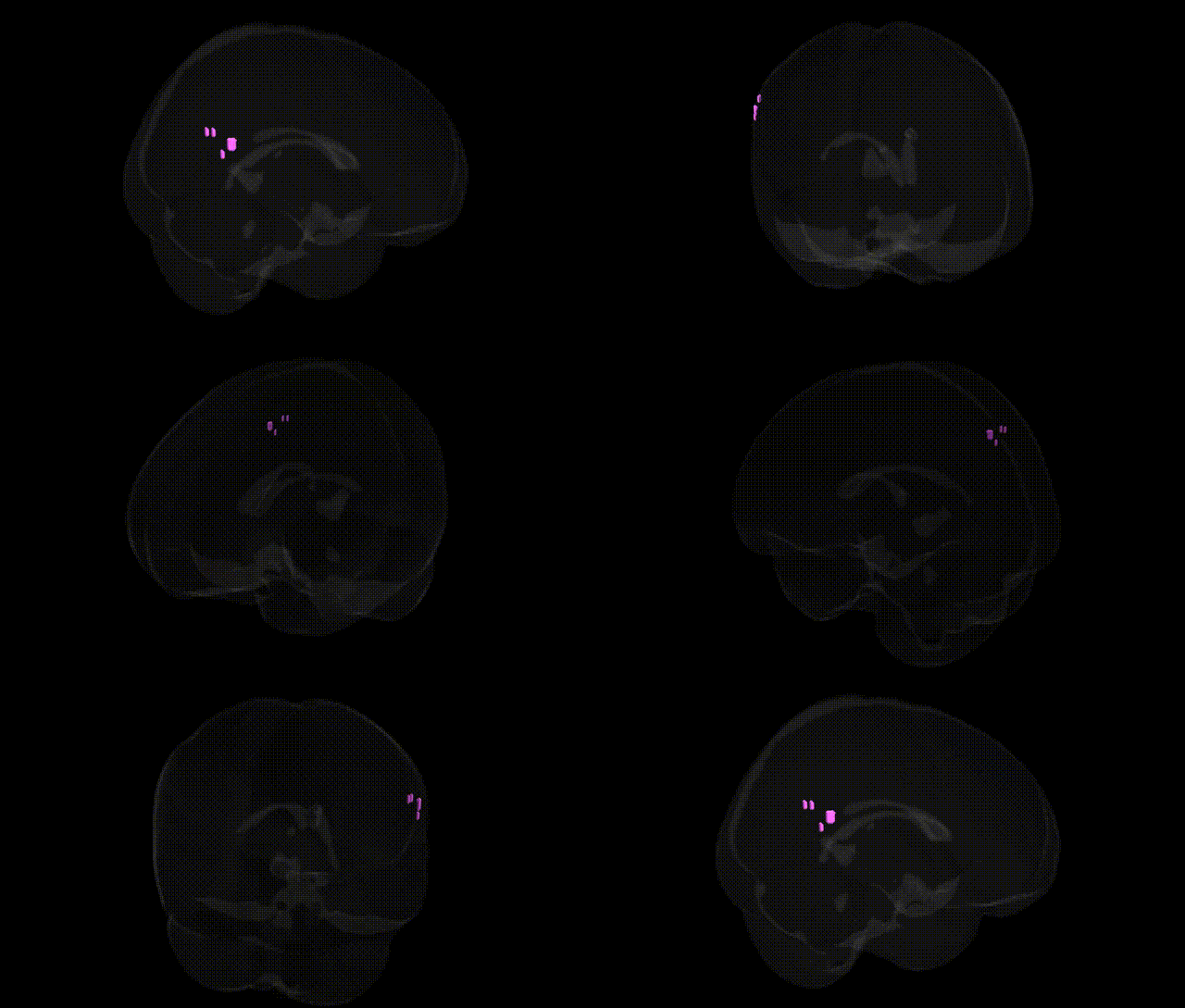
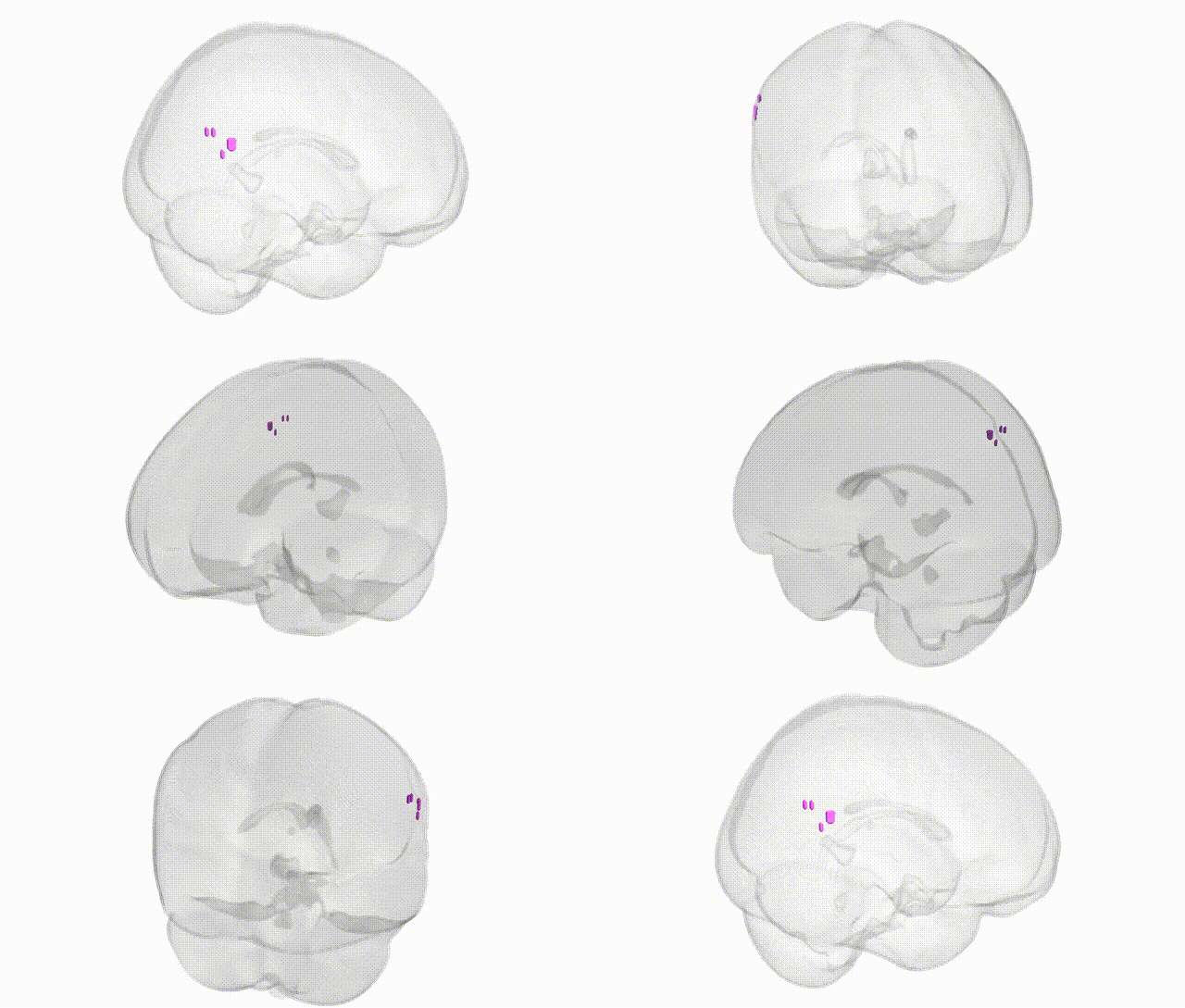
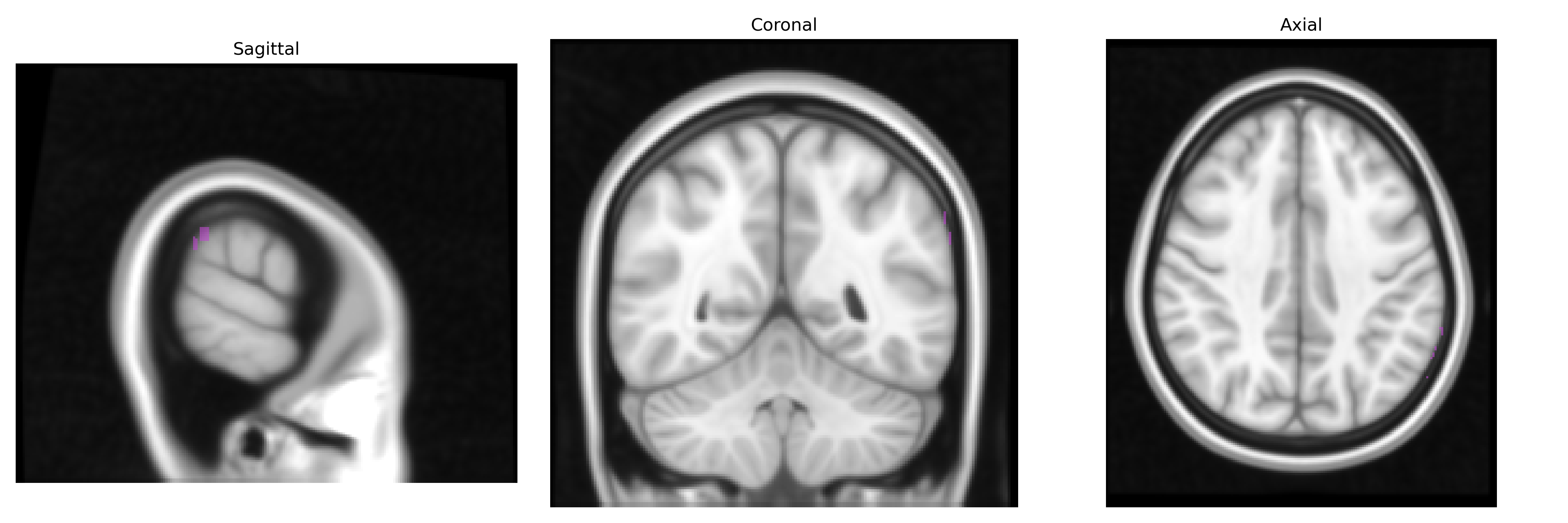
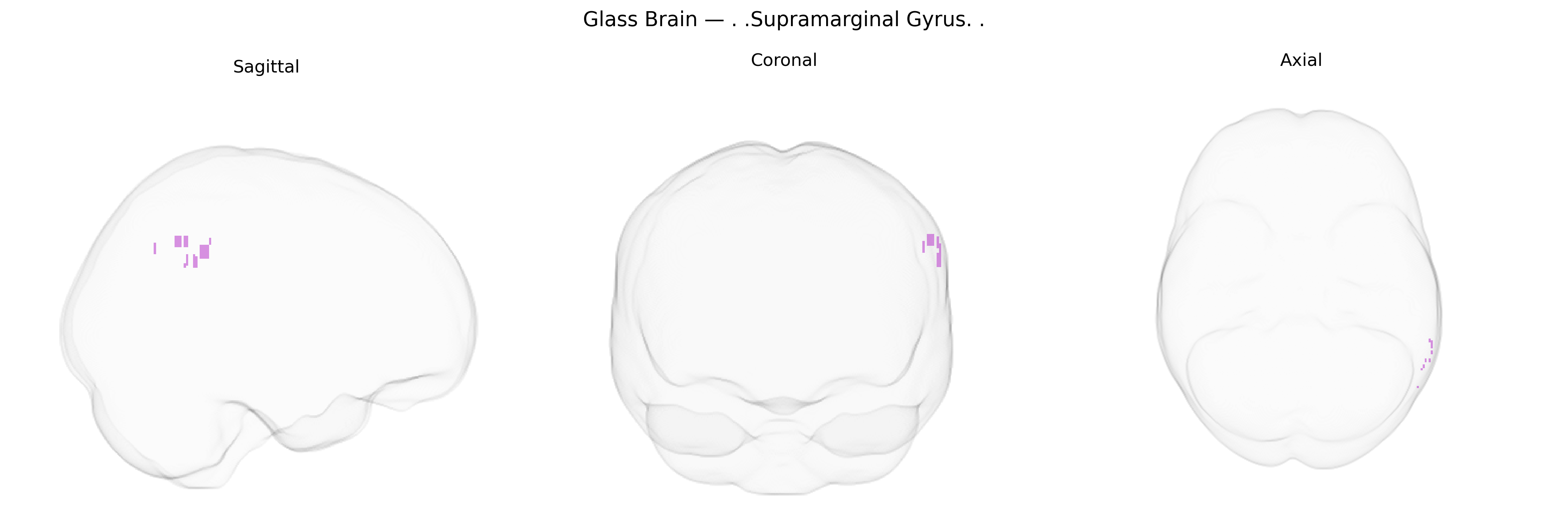
The bilateral supramarginal gyrus is a cortical region located in the inferior parietal lobule, arching around the posterior end of the lateral (Sylvian) fissure and bordering the superior temporal gyrus and angular gyrus. It is cytoarchitectonically associated with parietal areas involved in multisensory integration and higher-order association processing. Functionally, the supramarginal gyrus contributes to phonological processing, language comprehension, and reading, as well as aspects of working memory, praxis, and spatial attention. It also participates in social cognition and empathy-related processes, likely via integration of somatosensory, auditory, and visual inputs. Lateralization is often observed, with the left supramarginal gyrus more strongly implicated in language and the right in spatial and attentional functions.
The bilateral supramarginal gyrus (SMG), a key inferior parietal region implicated in language, phonological processing, social cognition, and sensorimotor integration, has been linked through imaging-genetics and GWAS-related work to multiple traits and disorders rather than a single dominant genetic signal. Large-scale ENIGMA and UK Biobank studies have reported common variants in or near genes involved in neurodevelopment, synaptic function, and axon guidance (for example, CNTNAP2, DCC, and genes in the cadherin and neurexin families) associated with parietal and temporoparietal cortical thickness and surface area, including SMG portions. SMG structural and functional measures show polygenic influences overlapping with risk architectures for schizophrenia, autism spectrum disorder, and major depressive disorder, consistent with its role in social and language networks; several schizophrenia and ASD risk loci exhibit downstream effects on temporoparietal regions in imaging-genetics mediation analyses. Variants influencing reading and language-related traits (such as dyslexia-linked loci near KIAA0319 and DCDC2, and polygenic scores for educational attainment and cognitive ability) have also been associated with altered SMG morphology or activation, aligning with its role in phonological and lexical processing. Additionally, SMG involvement appears in GWAS-informed studies of chronic pain, attention-deficit/hyperactivity disorder, and risk-taking or impulsivity, where polygenic scores and specific loci modulate SMG activation during attentional, pain, or decision-making tasks, underscoring that genetic effects on this region are highly polygenic and shared across multiple cognitive and psychiatric dimensions rather than region-specific.
Overview generated by GPT-4o (2026).
Region ID: 931
Hemisphere: bilateral
Atlas: Talairach labels 1mm
Full Quality Version: Download MP4
Full Quality Version: Download MP4
Wali Sidiqyar*, Gaurav Rudravaram*, Elyssa M. McMaster, Trent M. Schwartz, Adam M. Saunders, Kurt G. Schilling, Bennett A. Landman "Introducing SPINS: A Shared Public Visualization Library of Neuroanatomical Structures." Medical Imaging with Deep Learning- short paper
This resource is licensed under CC0 1.0 Universal (Public Domain).