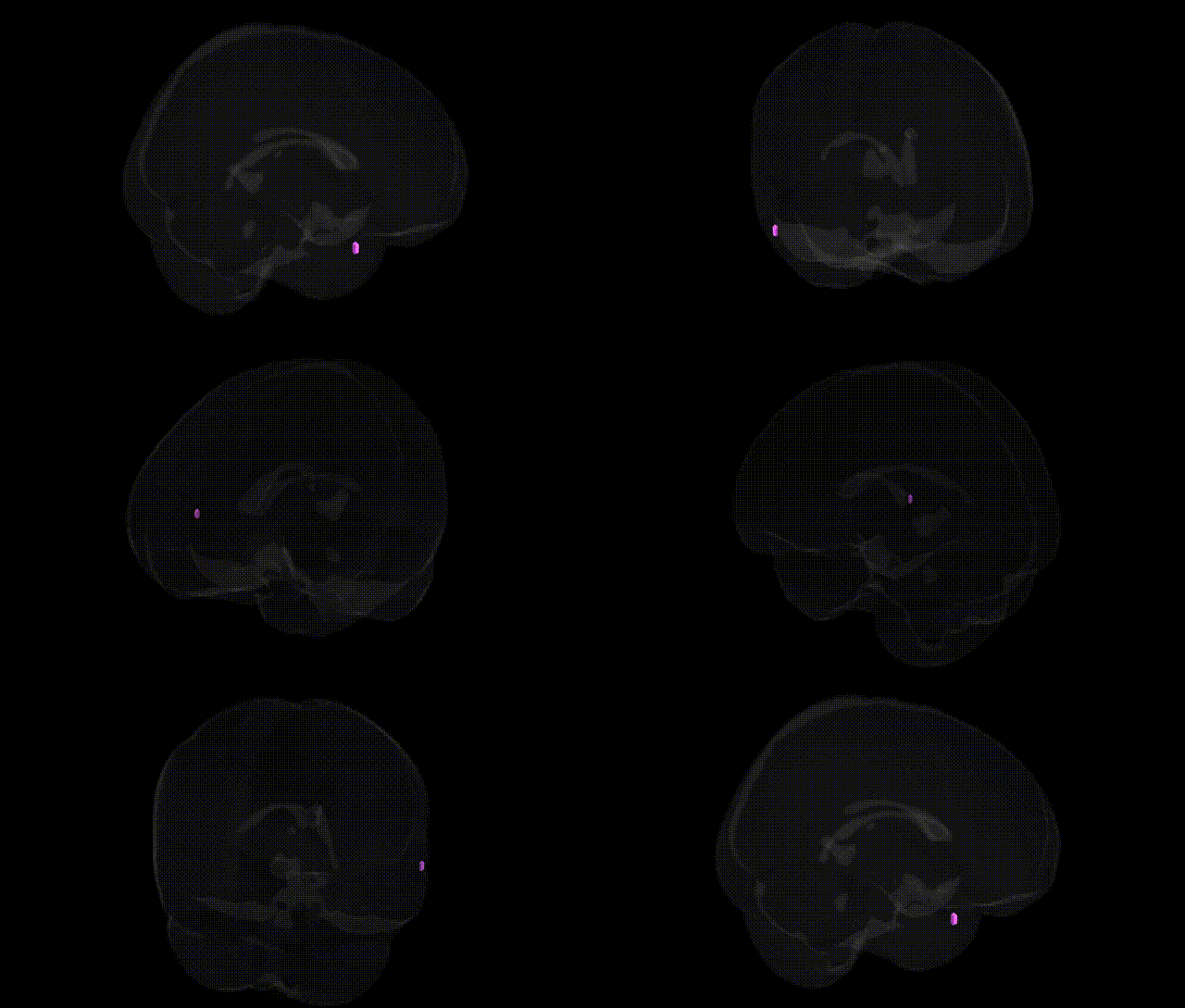
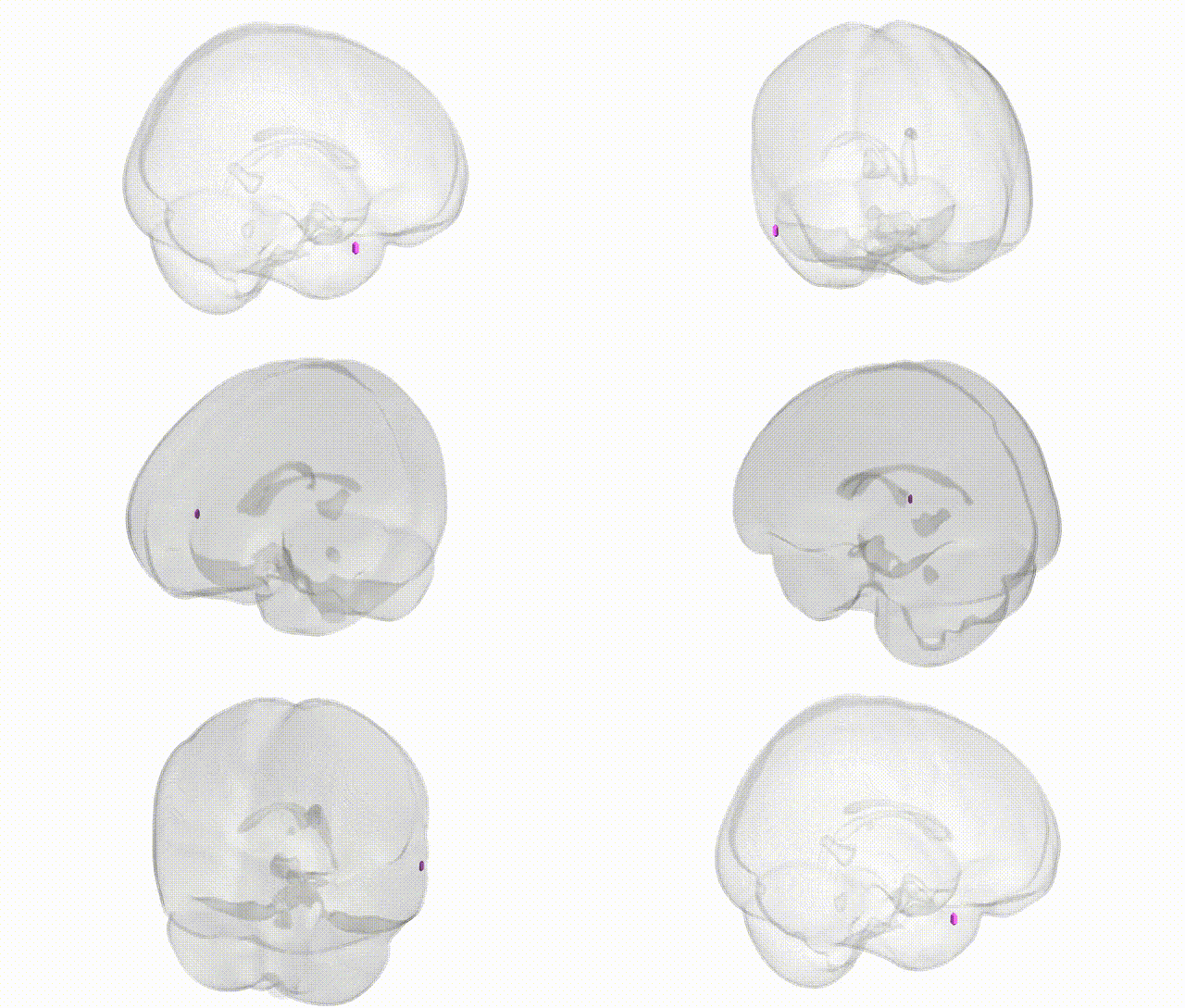
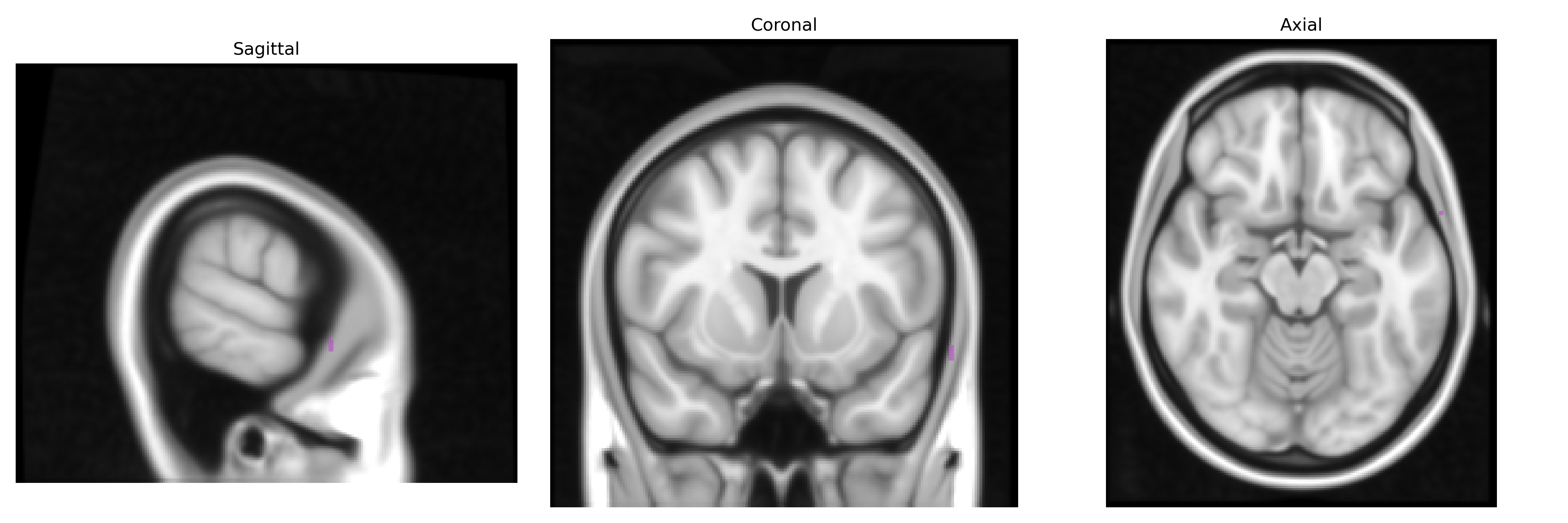
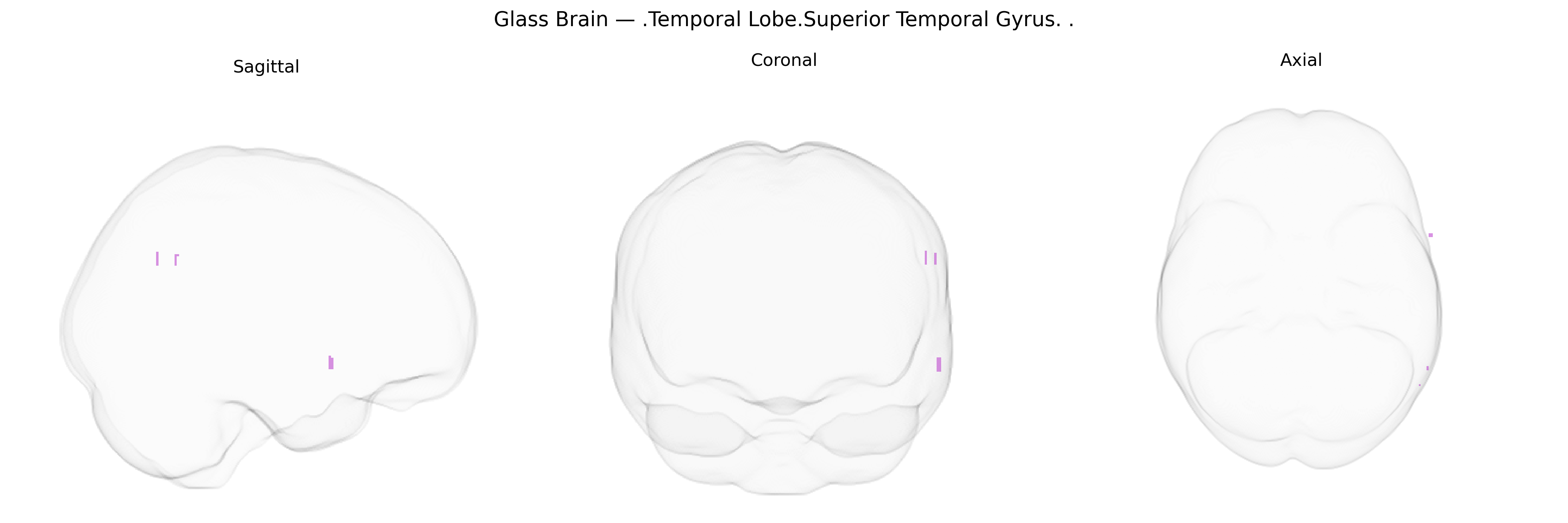
The bilateral superior temporal gyrus (STG) of the temporal lobe is a neocortical region situated on the dorsal surface of the temporal lobe, bounded superiorly by the lateral (Sylvian) fissure and inferiorly by the superior temporal sulcus. It encompasses primary and secondary auditory cortex (including Heschl’s gyrus on the transverse temporal plane), and plays critical roles in processing basic acoustic features, complex sounds, speech perception, and aspects of language comprehension, particularly in the dominant hemisphere. The STG also contributes to audiovisual integration, social cognition (such as perception of biological motion and voices), and aspects of memory and attention related to auditory information. Bilaterally, this region exhibits hemispheric specialization, with the left STG more involved in linguistic processing and the right STG more engaged in prosody, music perception, and certain nonverbal auditory functions.
The bilateral Superior Temporal Gyrus (STG) has been implicated in multiple genetic and genome-wide association studies, particularly in relation to language, social cognition, and psychiatric and neurodevelopmental disorders. Variants in genes involved in synaptic function and neurodevelopment, such as CNTNAP2, FOXP2, GRIN2A, and NRGN, have been associated with altered STG structure or activation, often in the context of language impairment, autism spectrum disorder, and schizophrenia. Large-scale imaging–genetics consortia (e.g., ENIGMA) have identified SNP-based heritability of STG volume and cortical thickness, with loci in or near genes related to neuronal migration, myelination, and glutamatergic signaling contributing to inter-individual differences. GWAS of schizophrenia, bipolar disorder, and major depression have linked polygenic risk scores to STG gray matter reductions and functional dysconnectivity, while GWAS of reading ability, dyslexia, and speech/language traits have tied risk alleles to structural and functional differences in the left STG, a core region for phonological and auditory-language processing. Additional associations include STG alterations linked to genetic risk for Alzheimer’s disease (e.g., APOE ε4 status), where carriers often show earlier or more pronounced temporal lobe atrophy, and to genes affecting auditory processing and hallucinations in psychosis, underscoring the STG as a key genetically influenced hub in language, perception, and higher-order cognitive networks.
Overview generated by GPT-4o (2026).
Region ID: 387
Hemisphere: bilateral
Atlas: Talairach labels 1mm
Full Quality Version: Download MP4
Full Quality Version: Download MP4
Wali Sidiqyar*, Gaurav Rudravaram*, Elyssa M. McMaster, Trent M. Schwartz, Adam M. Saunders, Kurt G. Schilling, Bennett A. Landman "Introducing SPINS: A Shared Public Visualization Library of Neuroanatomical Structures." Medical Imaging with Deep Learning- short paper
This resource is licensed under CC0 1.0 Universal (Public Domain).