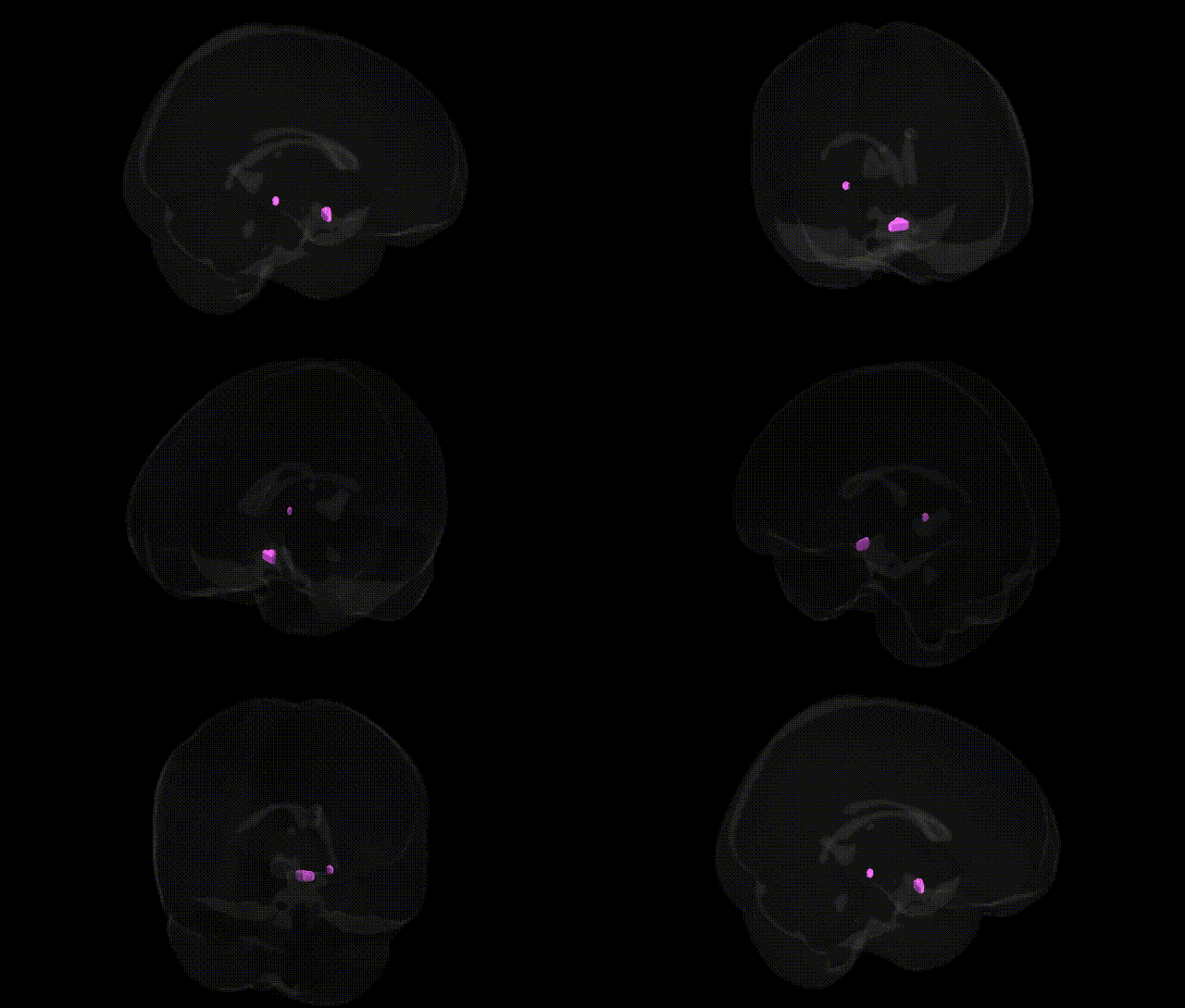
White matter refers to the myelinated axonal tracts that connect different gray matter regions of the brain, enabling efficient long-distance neural communication and integration of information across cortical and subcortical structures. Bilateral white matter encompasses these fiber pathways in both hemispheres, including association fibers that connect regions within the same hemisphere, commissural fibers such as the corpus callosum that link homologous areas across hemispheres, and projection fibers that connect the cortex with deeper structures like the thalamus, brainstem, and spinal cord. Its primary roles include rapid signal conduction, coordination of distributed neural networks, and support of cognitive, sensory, and motor functions; damage to white matter is implicated in a variety of neurological and psychiatric disorders. There is no single article for “bilateral white matter,” but it is part of cerebral white matter: White matter.
The bilateral white matter, as defined in the Talairach 1 mm atlas, has been implicated in multiple genetic studies linking common and rare variants to structural connectivity, myelination, and vulnerability to neuropsychiatric and neurodegenerative disorders. Large-scale GWAS of white matter microstructure and integrity (often measured via diffusion tensor imaging) have repeatedly identified associations with genes involved in myelination and oligodendrocyte function (e.g., MAG, MOG, MBP), axonal guidance and cytoskeletal organization (e.g., ROBO1/2, CNTN4, L1CAM), and neuroinflammation (e.g., HLA region). Polygenic influences on global and regional white matter volume and fractional anisotropy overlap strongly with genetic risk architectures for schizophrenia, bipolar disorder, major depressive disorder, autism spectrum disorder, ADHD, and Alzheimer’s disease, with loci such as CACNA1C, ZNF804A, and APOE frequently highlighted in imaging-genetics work. White matter–focused GWAS also show enrichment in genes linked to lipid metabolism and cholesterol homeostasis (e.g., CLU, ABCA7), consistent with oligodendroglial and myelin biology. Moreover, variants influencing white matter integrity co-localize with genetic determinants of cognitive traits (including general intelligence, processing speed, and educational attainment) and with genes affecting vascular risk factors and small-vessel disease (e.g., COL4A1/2, NOTCH3), indicating that bilateral white matter structure is a convergent substrate for genetic effects on cognitive performance, psychiatric liability, and cerebrovascular pathology.
Overview generated by GPT-4o (2026).
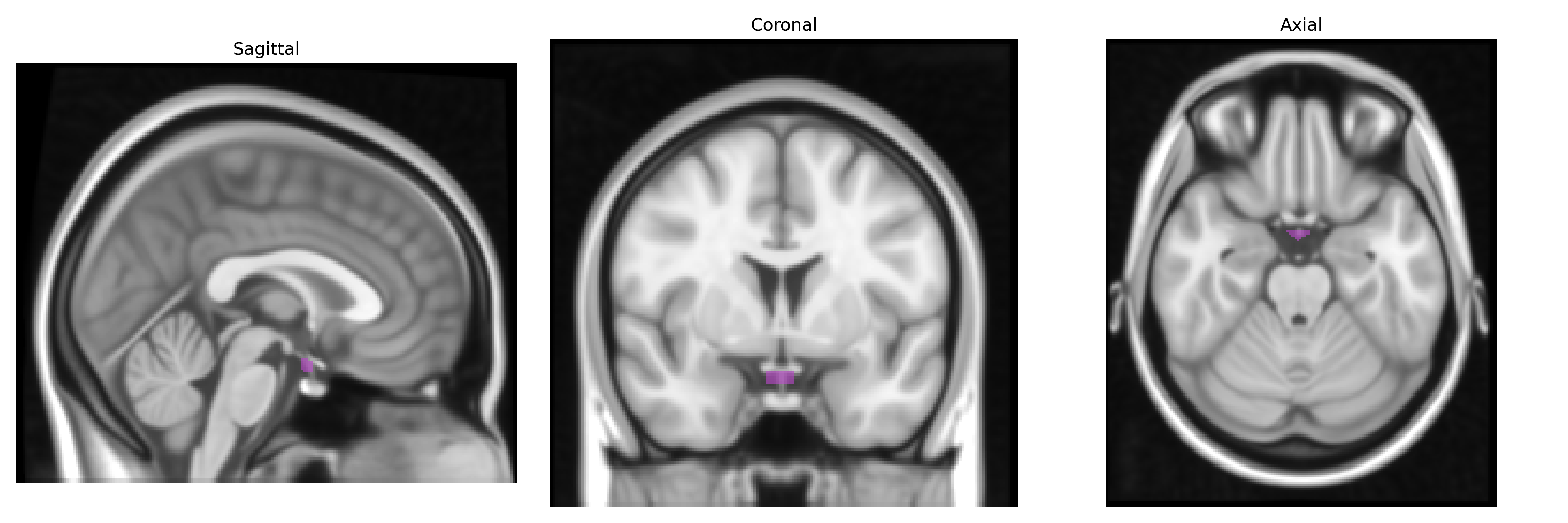
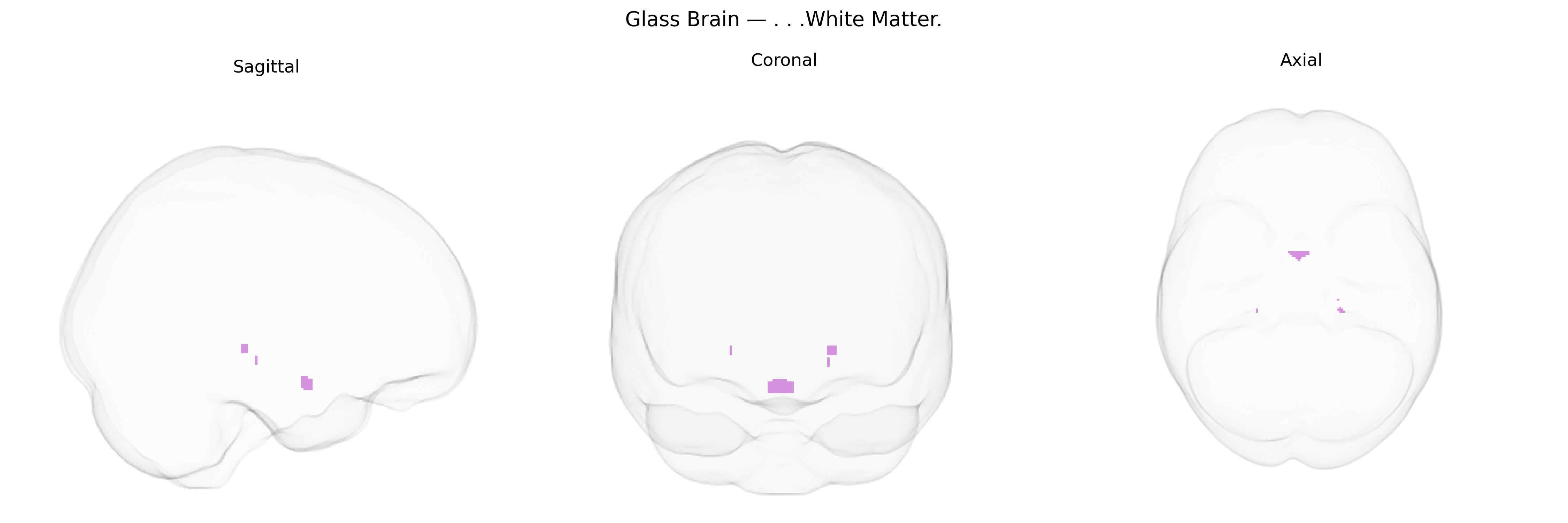
Region ID: 220
Hemisphere: bilateral
Atlas: Talairach labels 1mm
Full Quality Version: Download MP4
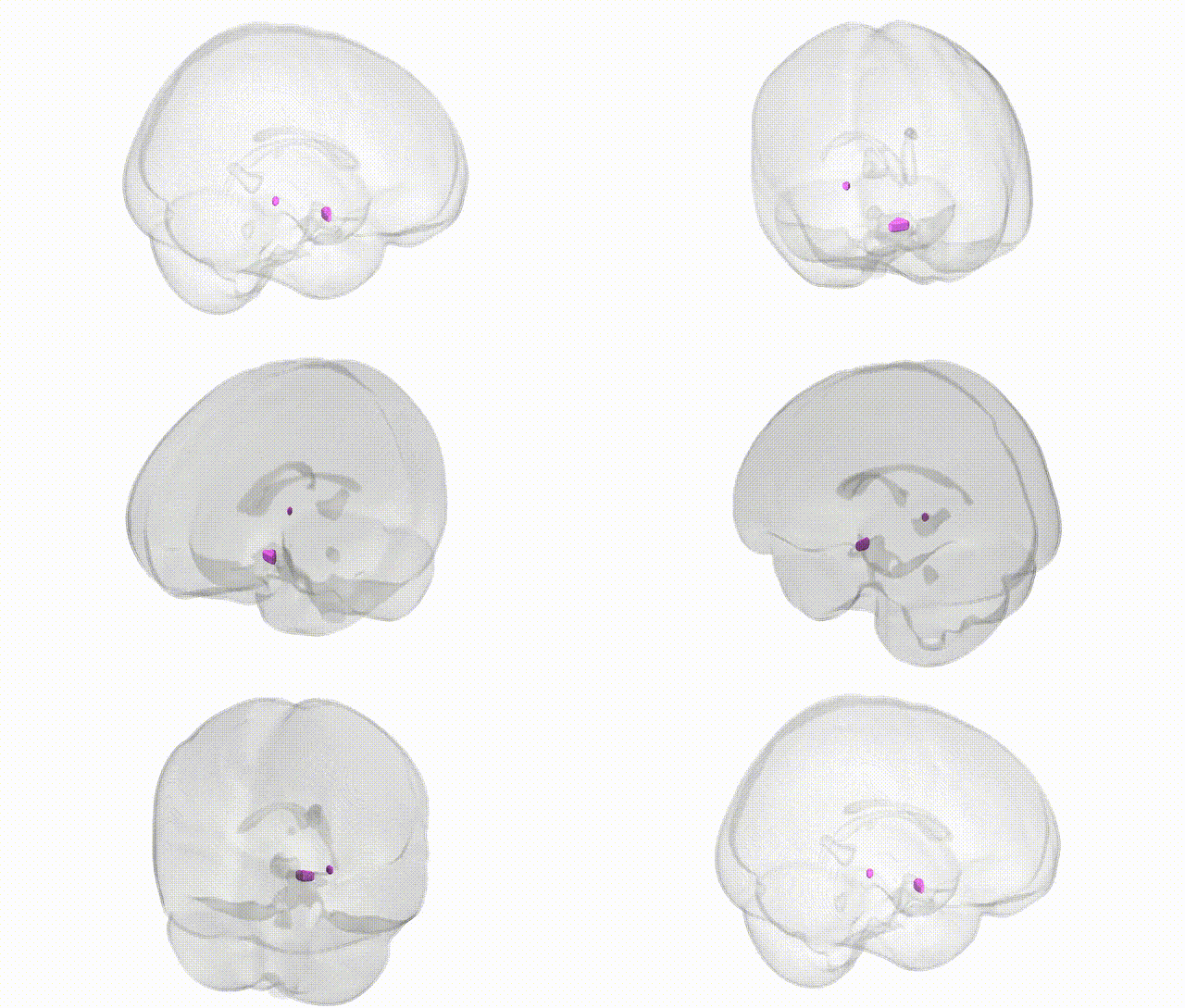
Full Quality Version: Download MP4
Wali Sidiqyar*, Gaurav Rudravaram*, Elyssa M. McMaster, Trent M. Schwartz, Adam M. Saunders, Kurt G. Schilling, Bennett A. Landman "Introducing SPINS: A Shared Public Visualization Library of Neuroanatomical Structures." Medical Imaging with Deep Learning- short paper
This resource is licensed under CC0 1.0 Universal (Public Domain).