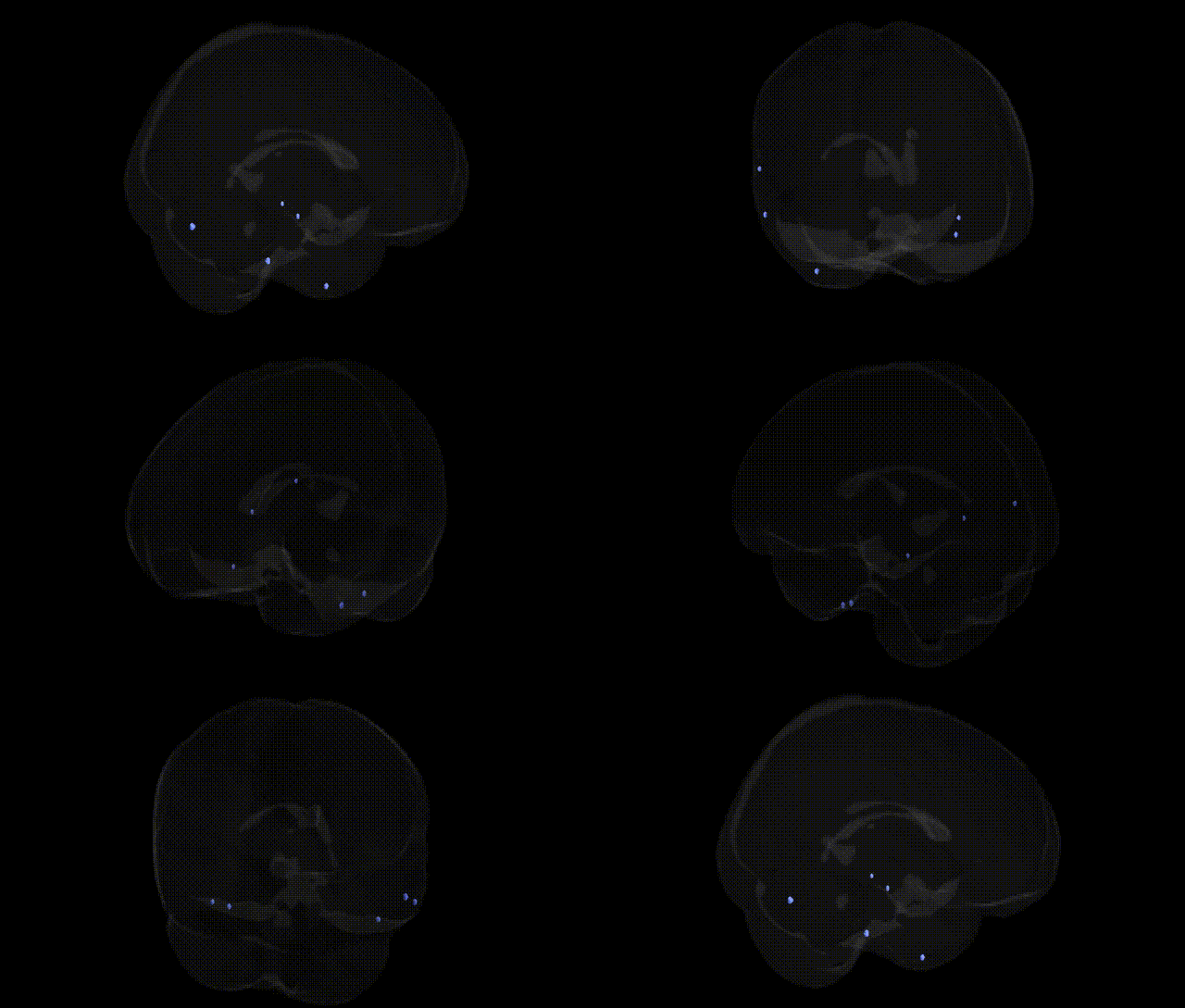
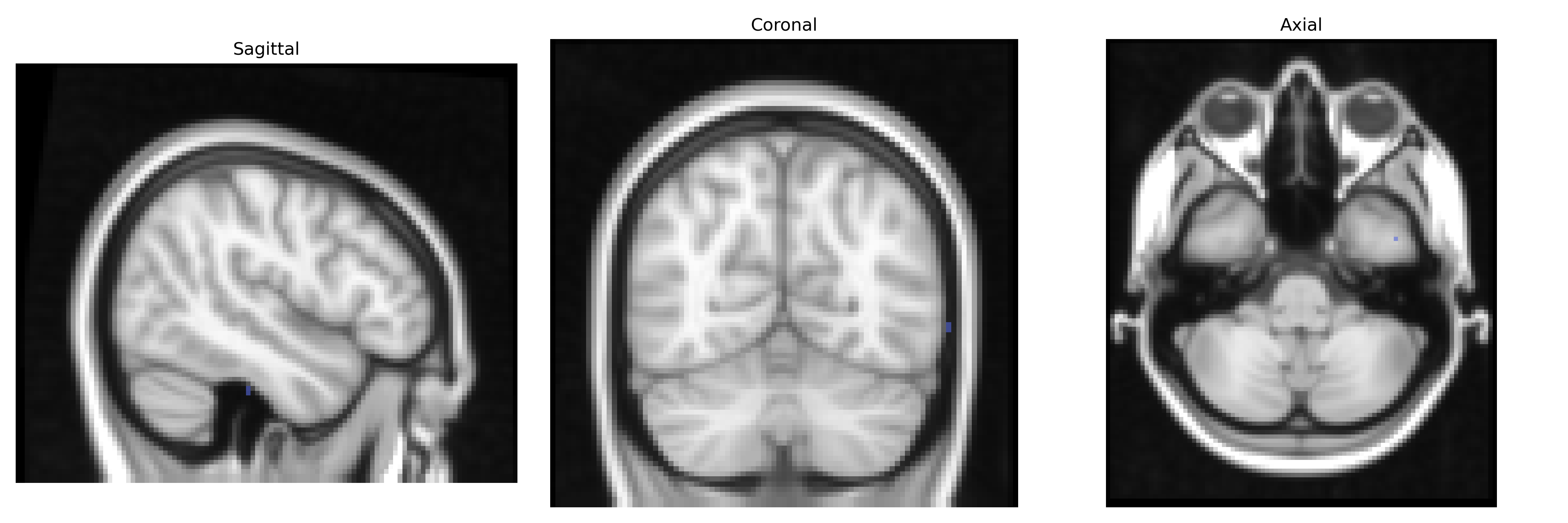
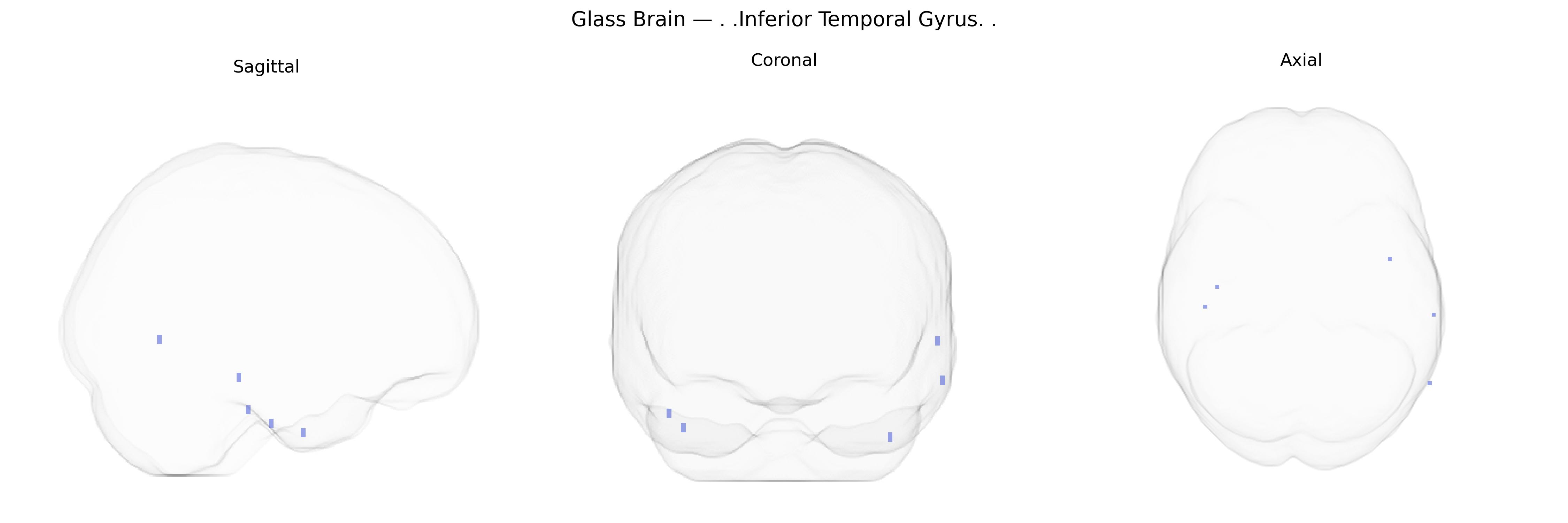
The bilateral Inferior Temporal Gyrus is a lateral temporal lobe structure located inferior to the middle temporal gyrus and superior to the occipitotemporal (fusiform) gyrus, extending from the temporal pole posteriorly toward the occipital lobe. In the Talairach 2 mm atlas, it encompasses cortical areas involved in high-level visual processing, particularly object recognition, complex shape and pattern analysis, and aspects of visual memory. Neurons in this region participate in the ventral visual stream (“what” pathway), integrating inputs from earlier visual areas to form invariant representations of objects and faces. Functionally, the inferior temporal gyrus is critical for visual perception and semantic associations of visual stimuli, and lesions can lead to deficits such as visual agnosia or impairments in recognizing objects and complex scenes.
Inferior temporal gyrus
The bilateral inferior temporal gyrus (ITG), a key ventral visual and semantic processing region, has been implicated indirectly in genetic studies through its structure and function rather than via ITG-specific loci. Large imaging-genetics GWAS (e.g., ENIGMA, UK Biobank) have identified multiple common variants influencing cortical thickness, surface area, and volume in temporal association cortex, including the ITG, with notable signals in genes involved in neurodevelopment and synaptic plasticity such as BDNF, GRIN2B, CNTNAP2, and DLG2, though these typically affect broader temporal or occipitotemporal regions rather than the ITG alone. ITG morphology and connectivity show heritability and have been associated with polygenic risk scores for schizophrenia, autism spectrum disorder, and major depression, consistent with functional findings of ITG involvement in social cognition, language, and visual processing. GWAS of Alzheimer’s disease and other dementias have implicated temporal lobe atrophy patterns overlapping the ITG; risk genes including APOE, CLU, and BIN1 are associated with accelerated temporal cortical thinning and hypometabolism that often encompass inferior temporal territories. Additionally, genetic studies of reading and language-related traits (e.g., dyslexia, specific language impairment) report associations between variants in FOXP2-related pathways, KIAA0319, and other neurodevelopmental genes and functional activation differences in ventral temporal regions including the ITG, supporting a role for genetically influenced ITG structure and function in higher-order cognition and neuropsychiatric disease, even though no major GWAS has isolated the inferior temporal gyrus as a uniquely and specifically associated locus.
Overview generated by GPT-4o (2026).
Region ID: 7
Hemisphere: bilateral
Atlas: Talairach labels 2mm
Full Quality Version: Download MP4
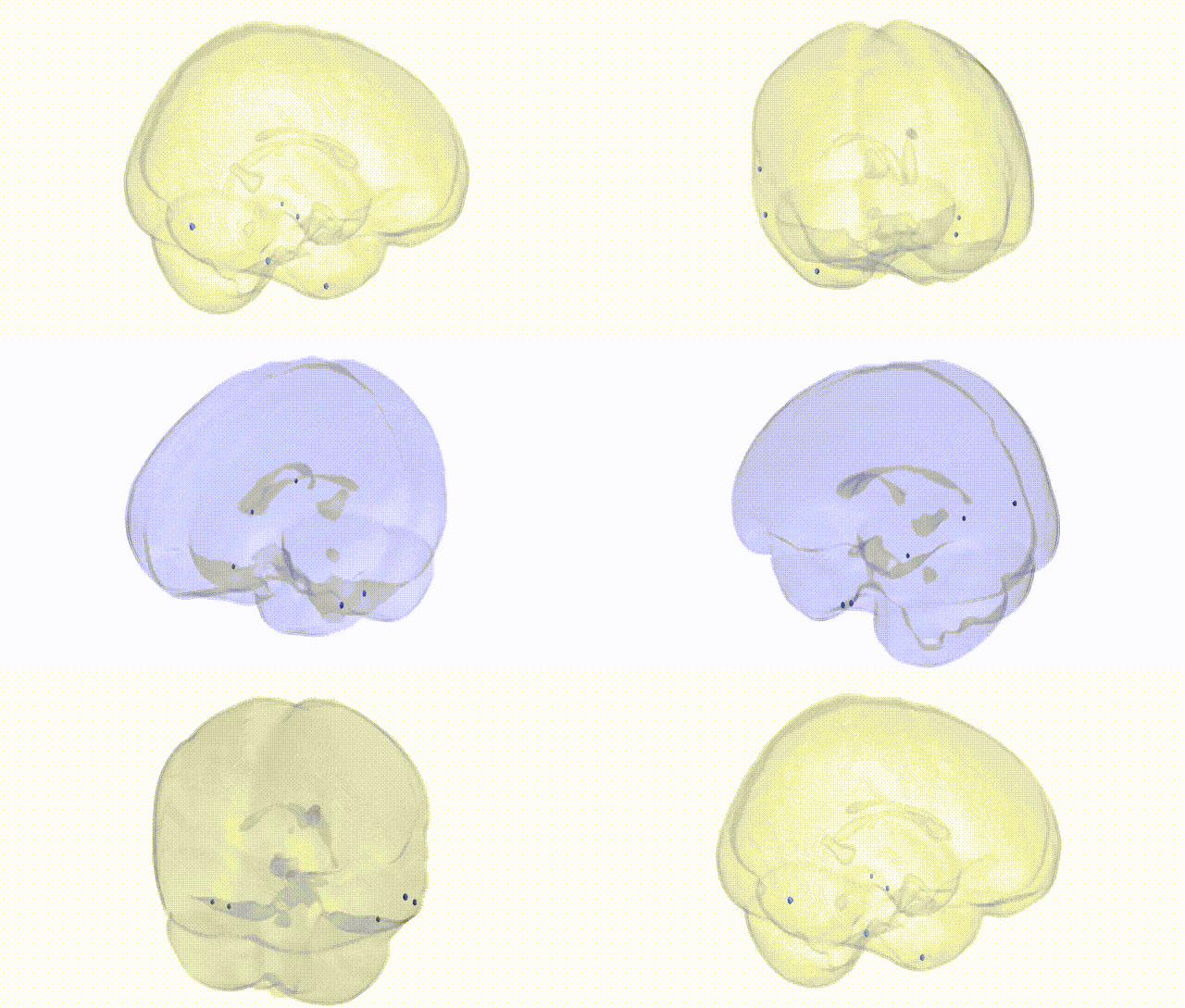
Full Quality Version: Download MP4
Wali Sidiqyar*, Gaurav Rudravaram*, Elyssa M. McMaster, Trent M. Schwartz, Adam M. Saunders, Kurt G. Schilling, Bennett A. Landman "Introducing SPINS: A Shared Public Visualization Library of Neuroanatomical Structures." Medical Imaging with Deep Learning- short paper
This resource is licensed under CC0 1.0 Universal (Public Domain).