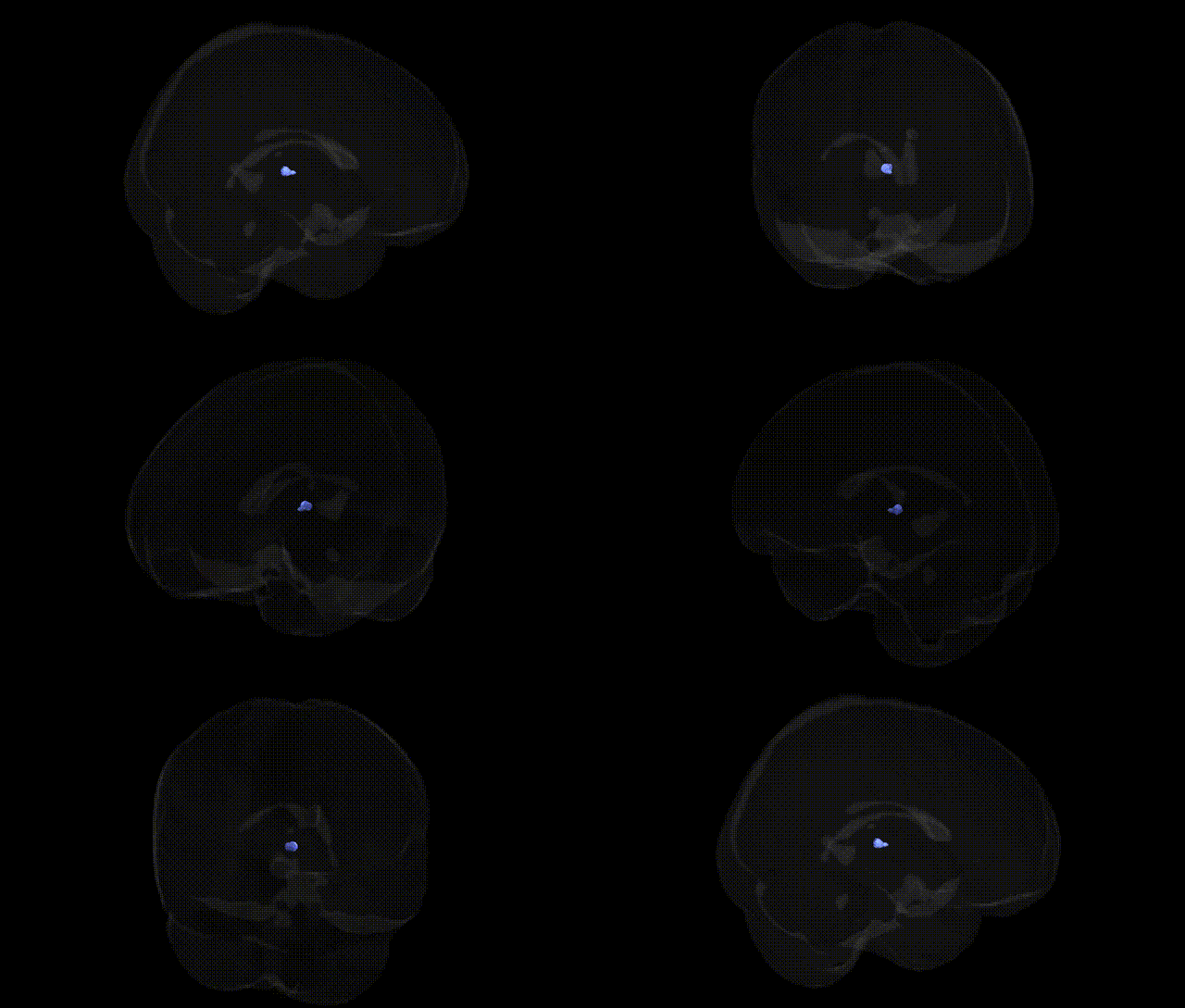
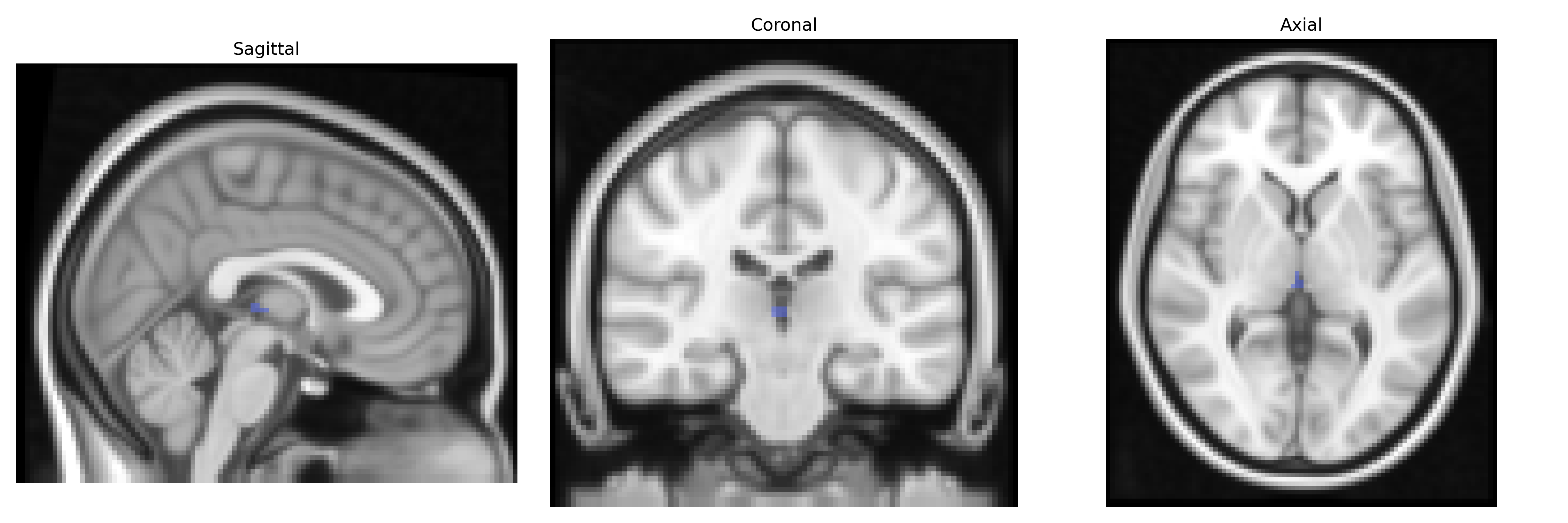
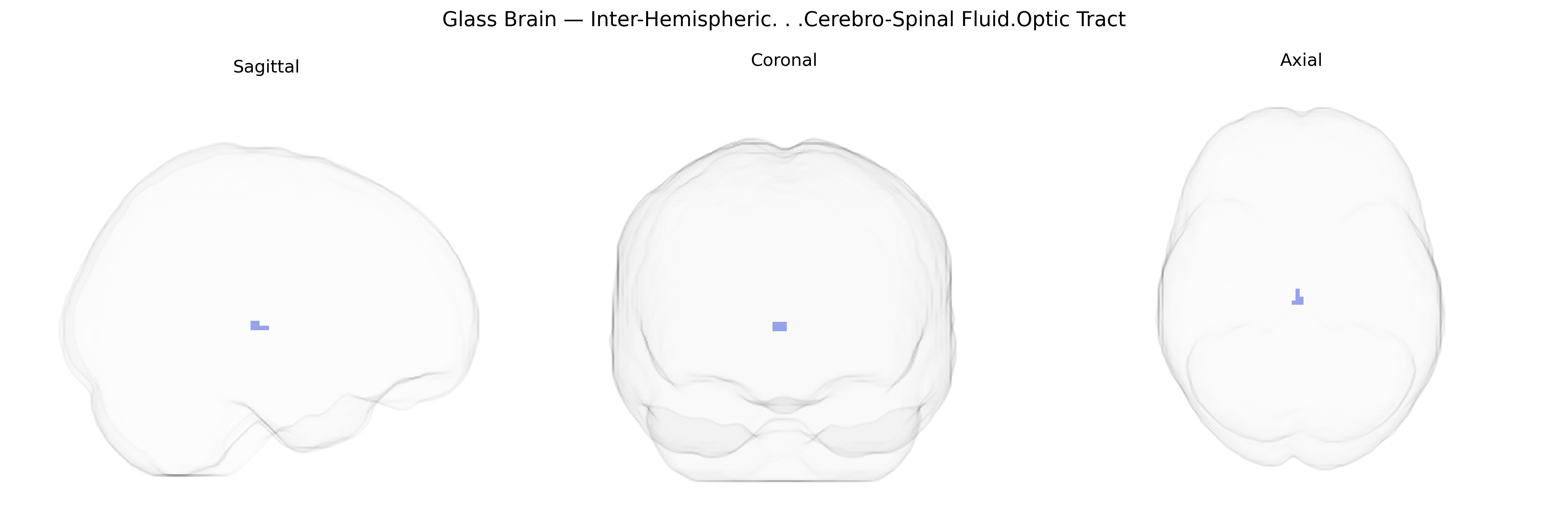
The bilateral Inter-Hemispheric Cerebro-Spinal Fluid Optic Tract region in the Talairach 2 mm Atlas refers to a composite label spanning midline and periventricular spaces containing cerebrospinal fluid (CSF), along with the anatomical vicinity of the optic tracts that course from the optic chiasm toward the lateral geniculate nuclei. Functionally, this grouping intersects structures involved in visual signal transmission and non-neural CSF spaces that contribute to buoyancy, metabolic waste clearance, and homeostatic regulation of the brain environment, rather than constituting a single, discrete gray-matter nucleus. As there is no direct Wikipedia article for this composite Talairach label, an anatomically related structure is the optic tract: Optic tract.
The bilateral inter-hemispheric cerebro-spinal fluid/optic tract region in the Talairach 2 mm atlas lies along the midline CSF spaces and the optic pathways, rather than being a discrete cortical or subcortical gray-matter structure, so direct genetic associations to this specific atlas-defined region are limited. However, GWAS and imaging-genetics studies have linked genetic variation to structural and functional measures involving nearby or overlapping optic pathways and midline CSF spaces. For example, variants in genes such as APOE, TREM2, and other Alzheimer’s disease–related loci influence ventricular and CSF space enlargement and midline atrophy patterns that intersect inter-hemispheric CSF regions, while loci like SIX6, CDKN2B-AS1, and MYOC are associated with optic nerve and optic tract integrity in glaucoma and related optic neuropathies. Neurodevelopmental and neurodegenerative GWAS have identified polygenic influences on global white-matter microstructure and midline connectivity (e.g., corpus callosum and adjacent CSF spaces), implicating genes involved in axon guidance, myelination, and synaptic function (such as CNTNAP2, NRXN1, and multiple oligodendrocyte-related loci), which indirectly affect measures derived from atlas regions that include inter-hemispheric CSF and optic tracts. Overall, genetic findings relate more to the diseases and global structural phenotypes that encompass this atlas label—such as glaucoma, multiple sclerosis, Alzheimer’s disease, and brain aging—than to the specific “bilateral Inter-Hemispheric CSF/Optic Tract” region as an independently studied phenotype.
Overview generated by GPT-4o (2026).
Region ID: 624
Hemisphere: bilateral
Atlas: Talairach labels 2mm
Full Quality Version: Download MP4
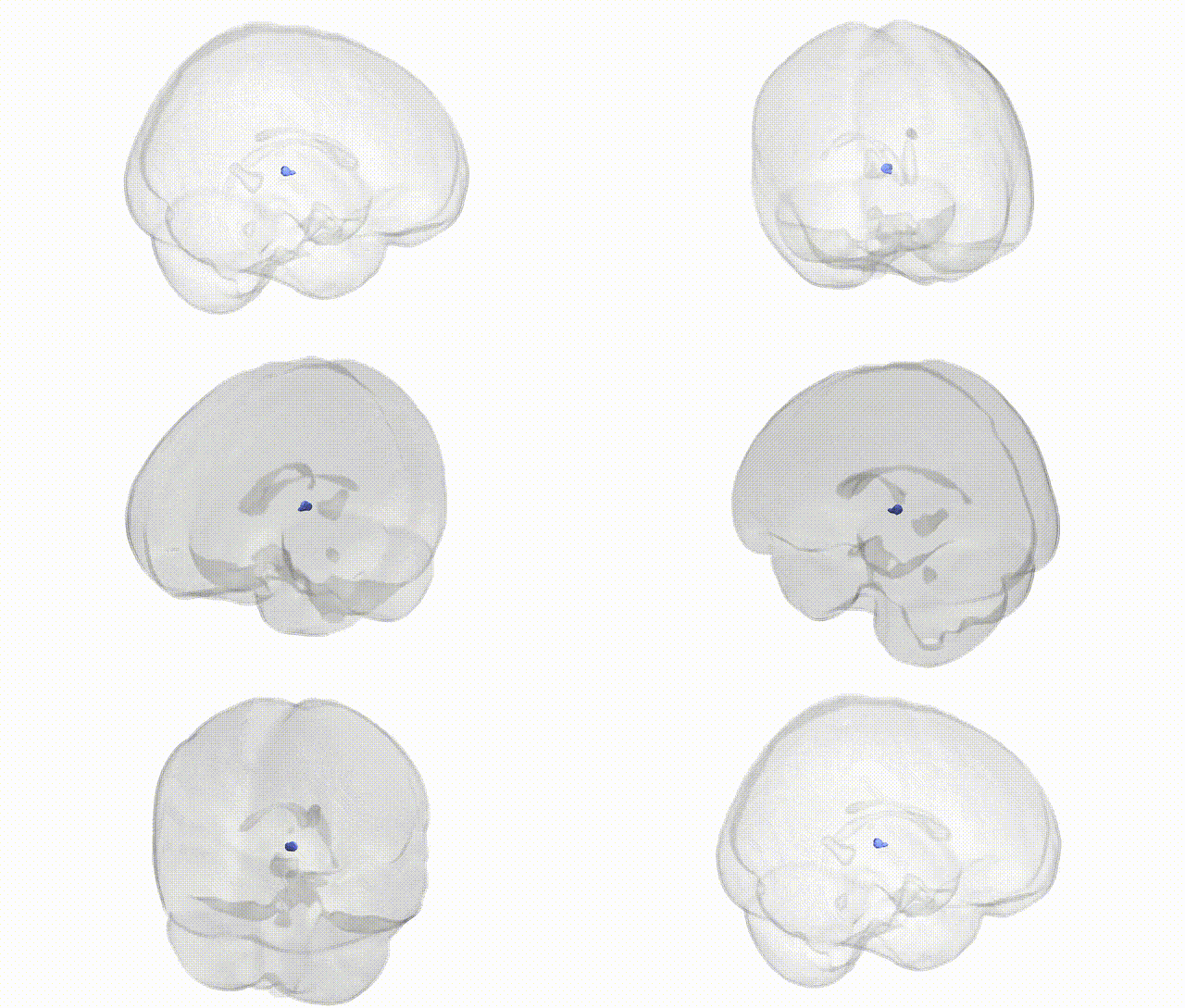
Full Quality Version: Download MP4
Wali Sidiqyar*, Gaurav Rudravaram*, Elyssa M. McMaster, Trent M. Schwartz, Adam M. Saunders, Kurt G. Schilling, Bennett A. Landman "Introducing SPINS: A Shared Public Visualization Library of Neuroanatomical Structures." Medical Imaging with Deep Learning- short paper
This resource is licensed under CC0 1.0 Universal (Public Domain).