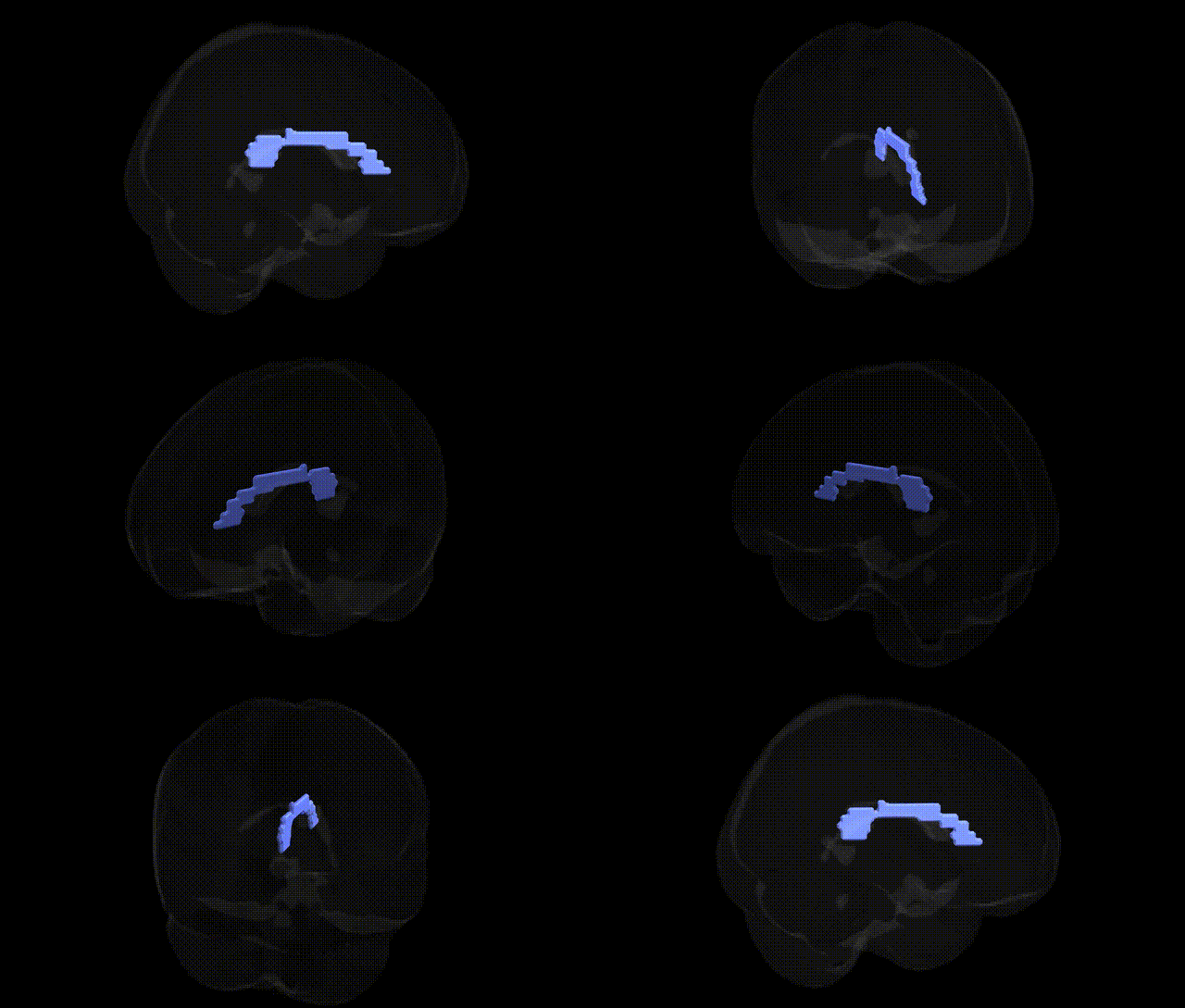
The bilateral inter-hemispheric white matter of the corpus callosum is a major commissural fiber tract of the brain that connects homologous regions of the left and right cerebral hemispheres, enabling rapid integration and coordination of sensory, motor, and cognitive information across the midline. Composed of heavily myelinated axons, it is organized into subregions (rostrum, genu, body, splenium) that interconnect frontal, parietal, temporal, and occipital cortices, respectively. This structure is essential for coherent bilateral processing, including bimanual motor control, language lateralization, and unified perception; disruption or agenesis of the corpus callosum can lead to split-brain phenomena, impaired inter-hemispheric transfer, and diverse neurodevelopmental and neuropsychiatric manifestations. Corpus callosum
Genetic associations with the bilateral inter‑hemispheric white matter of the corpus callosum, as defined in the Talairach labels 2 mm atlas, primarily emerge from imaging genetics and GWAS of callosal morphology, microstructure (e.g., fractional anisotropy), and related neurodevelopmental and neuropsychiatric traits. Variants in genes involved in axon guidance and midline crossing (such as ROBO1/2, SLIT2, DCC, and L1CAM) and broader neurodevelopmental pathways (including CNTNAP2, NRXN1, and NRG1) have been linked to corpus callosum structure and disorders featuring callosal abnormalities, notably agenesis of the corpus callosum, autism spectrum disorder, schizophrenia, bipolar disorder, and attention‑deficit/hyperactivity disorder. Large consortia GWAS (e.g., ENIGMA and UK Biobank–based studies) have implicated loci near genes such as CADM2, VAC14, and others in individual differences in callosal thickness, area, and diffusion metrics, which in turn correlate genetically with cognitive performance, processing speed, and general intelligence, as well as with risk for major depressive disorder and schizophrenia. In neurodevelopmental cohorts, rare variants and copy number variants affecting corpus callosum–related genes are enriched among individuals with intellectual disability, epilepsy, and midline brain malformations, underscoring a shared genetic architecture that influences callosal connectivity, cognition, and vulnerability to neuropsychiatric disease.
Overview generated by GPT-4o (2026).
Region ID: 509
Hemisphere: bilateral
Atlas: Talairach labels 2mm
Full Quality Version: Download MP4
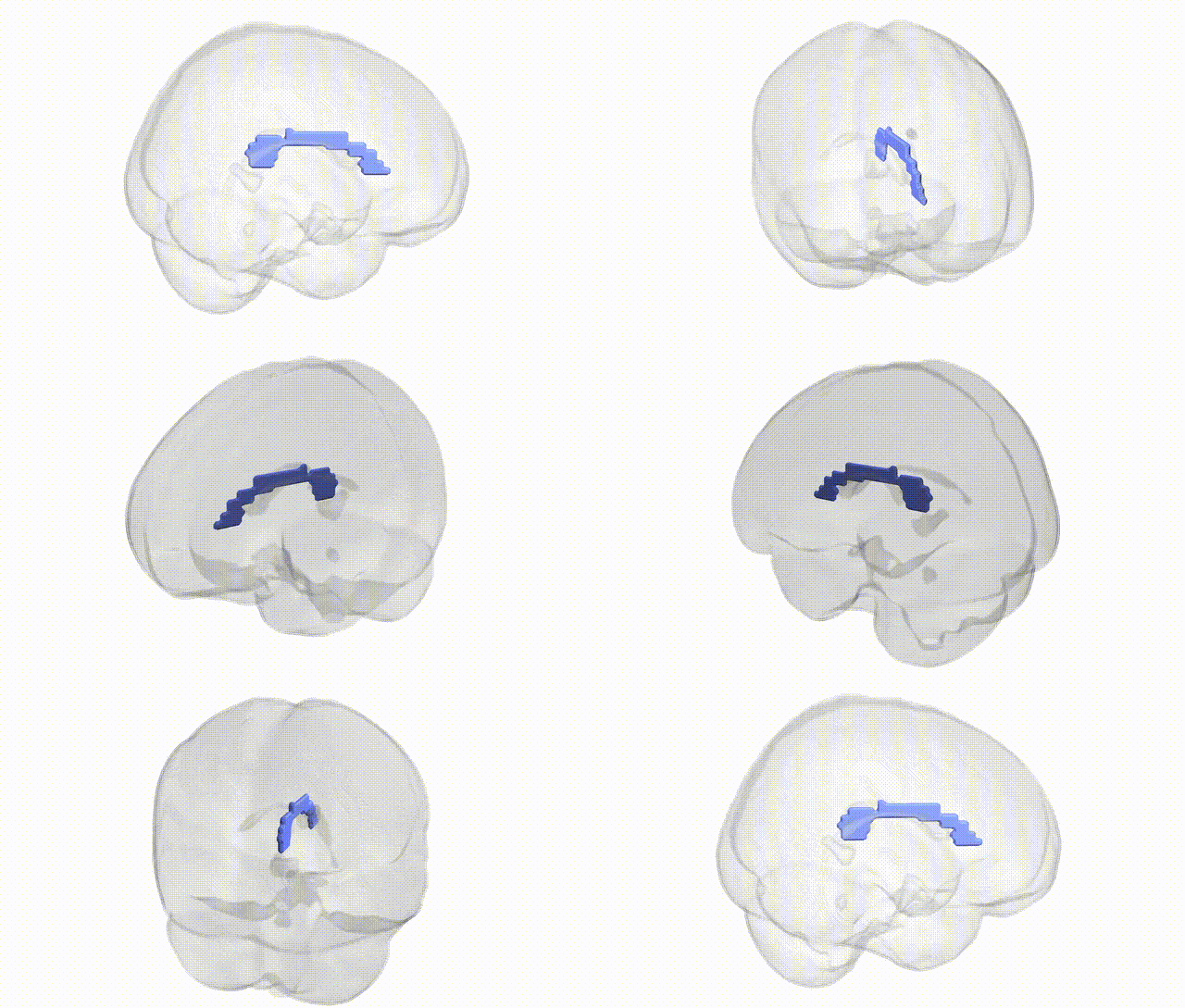
Full Quality Version: Download MP4
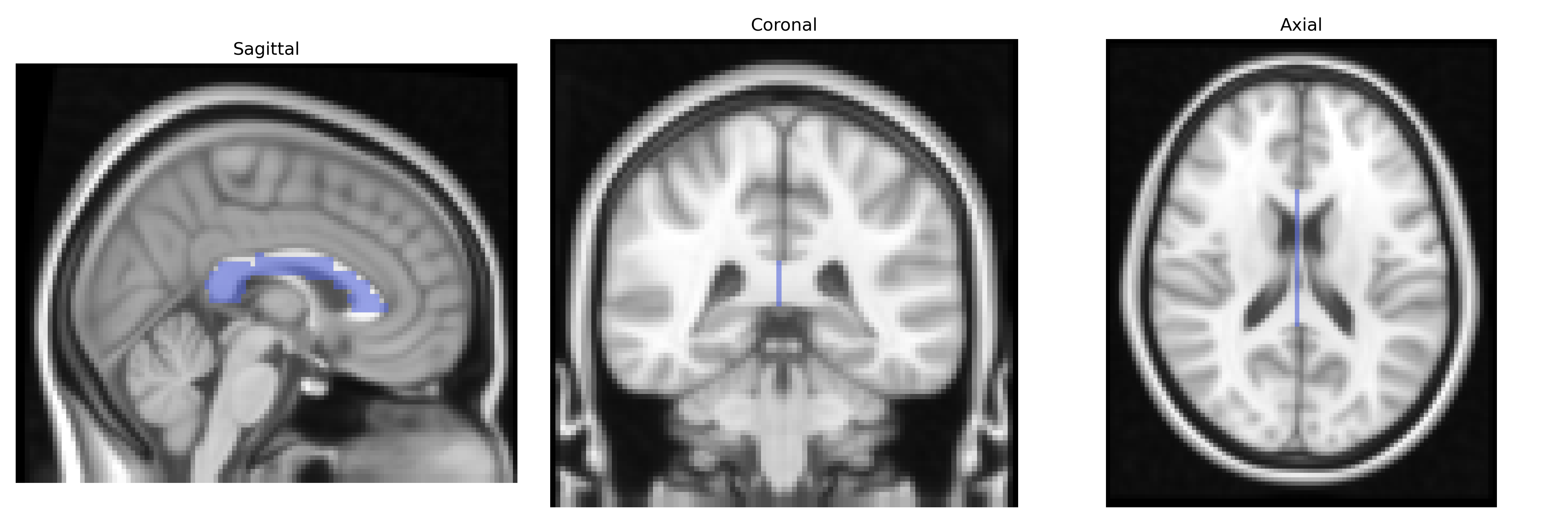
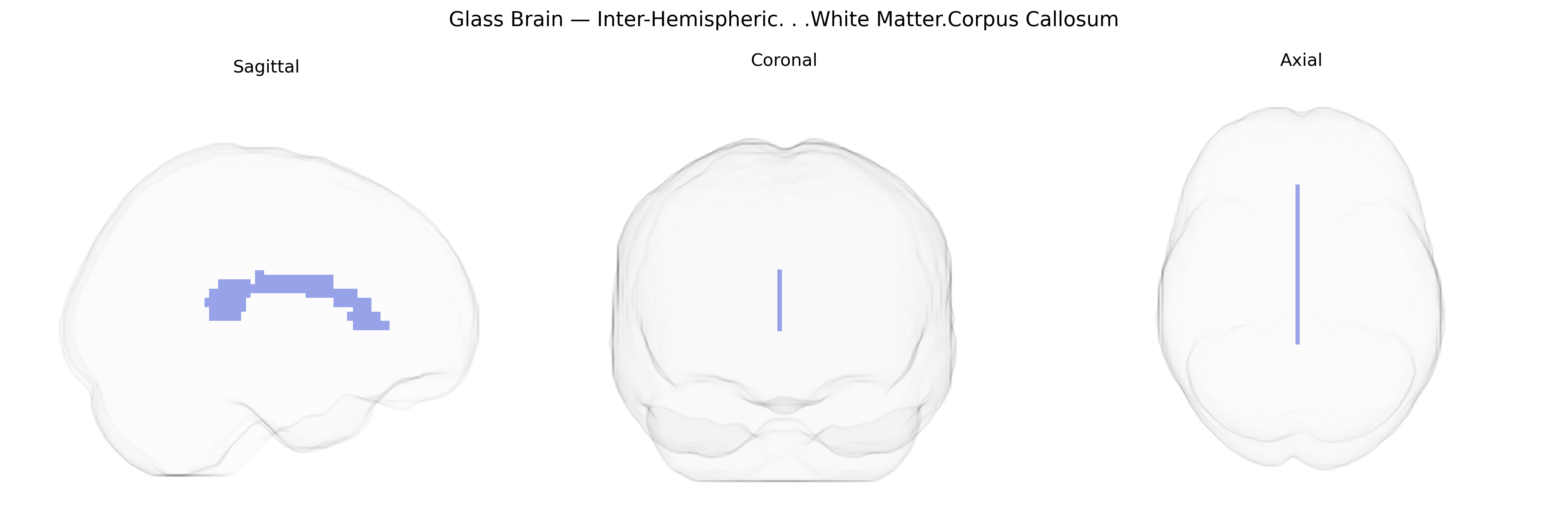
Wali Sidiqyar*, Gaurav Rudravaram*, Elyssa M. McMaster, Trent M. Schwartz, Adam M. Saunders, Kurt G. Schilling, Bennett A. Landman "Introducing SPINS: A Shared Public Visualization Library of Neuroanatomical Structures." Medical Imaging with Deep Learning- short paper
This resource is licensed under CC0 1.0 Universal (Public Domain).