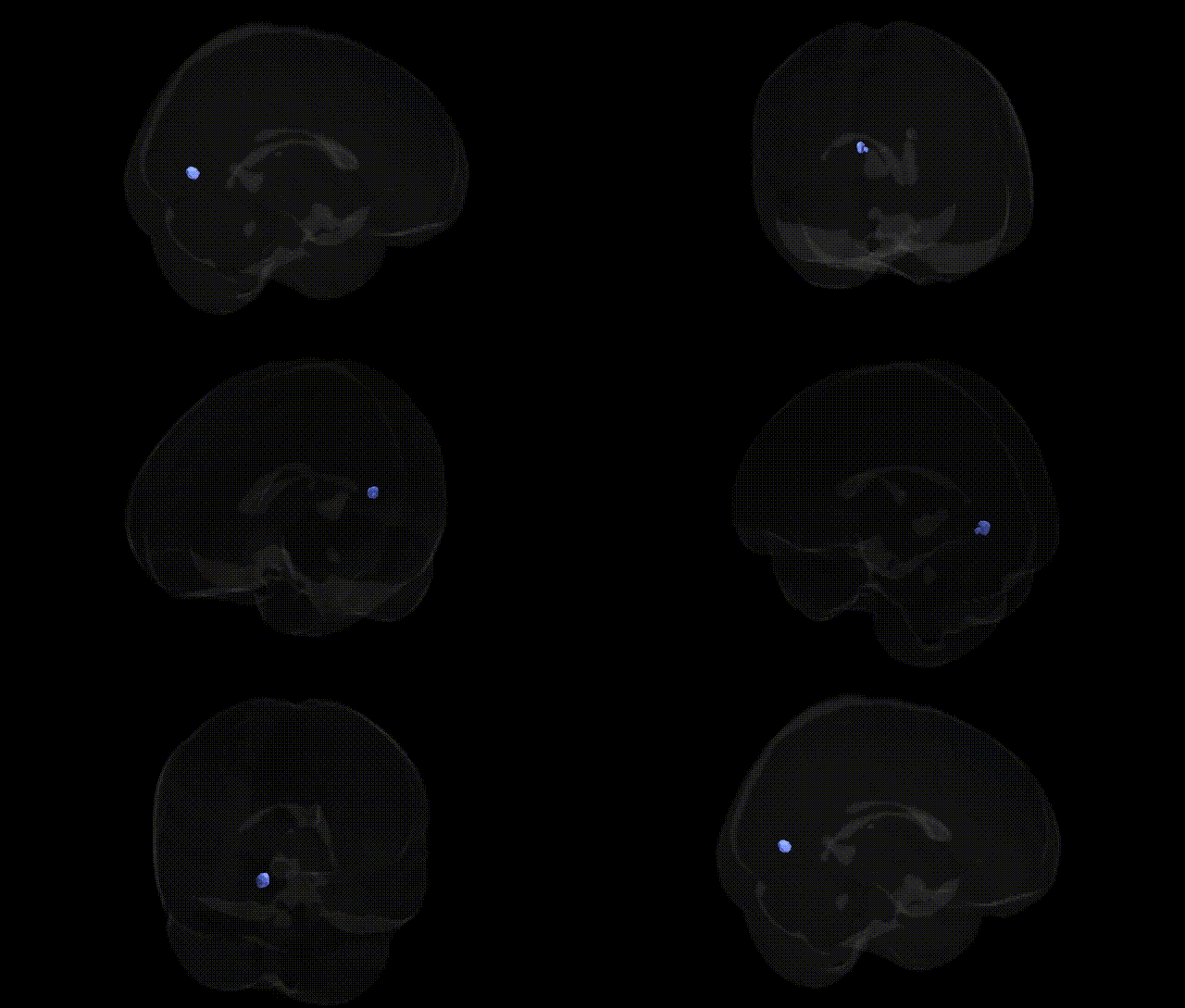
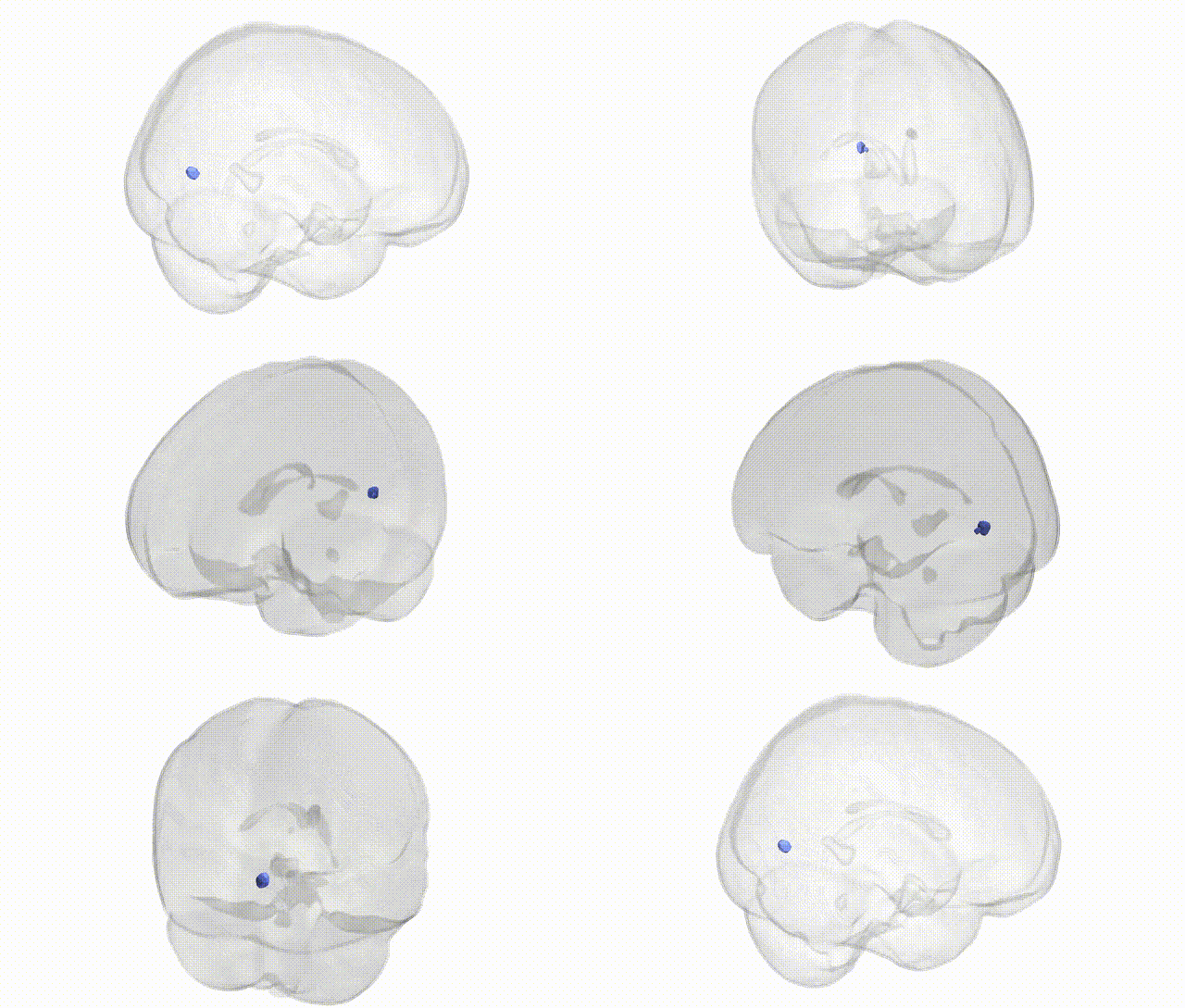
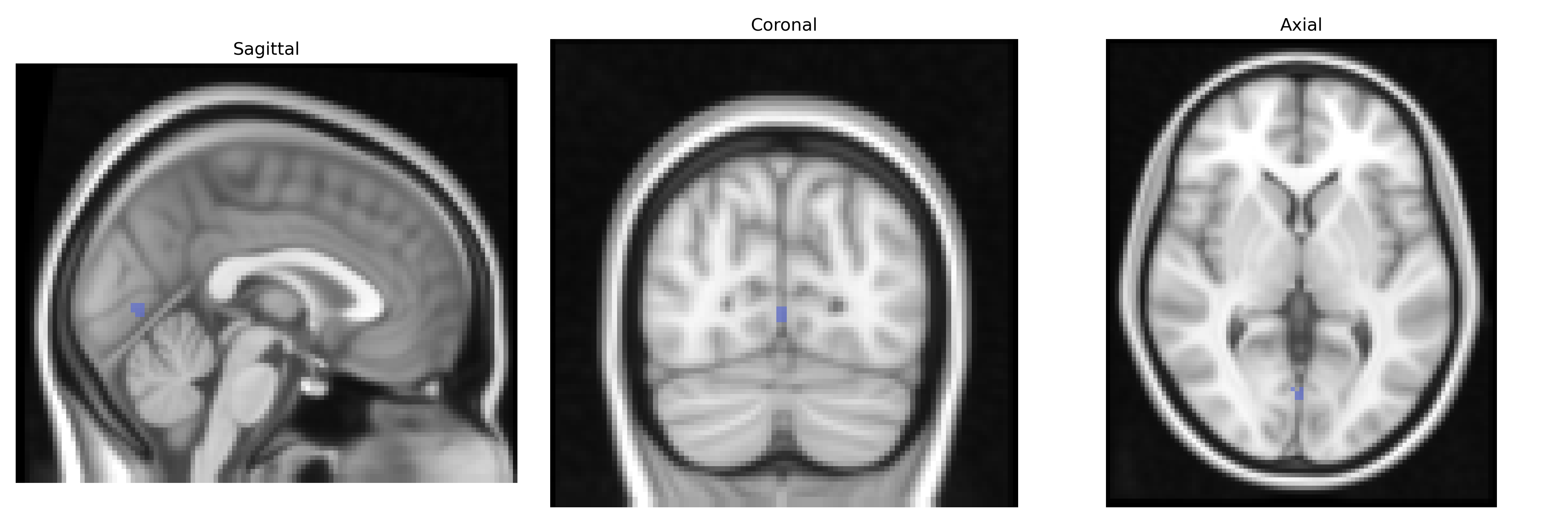
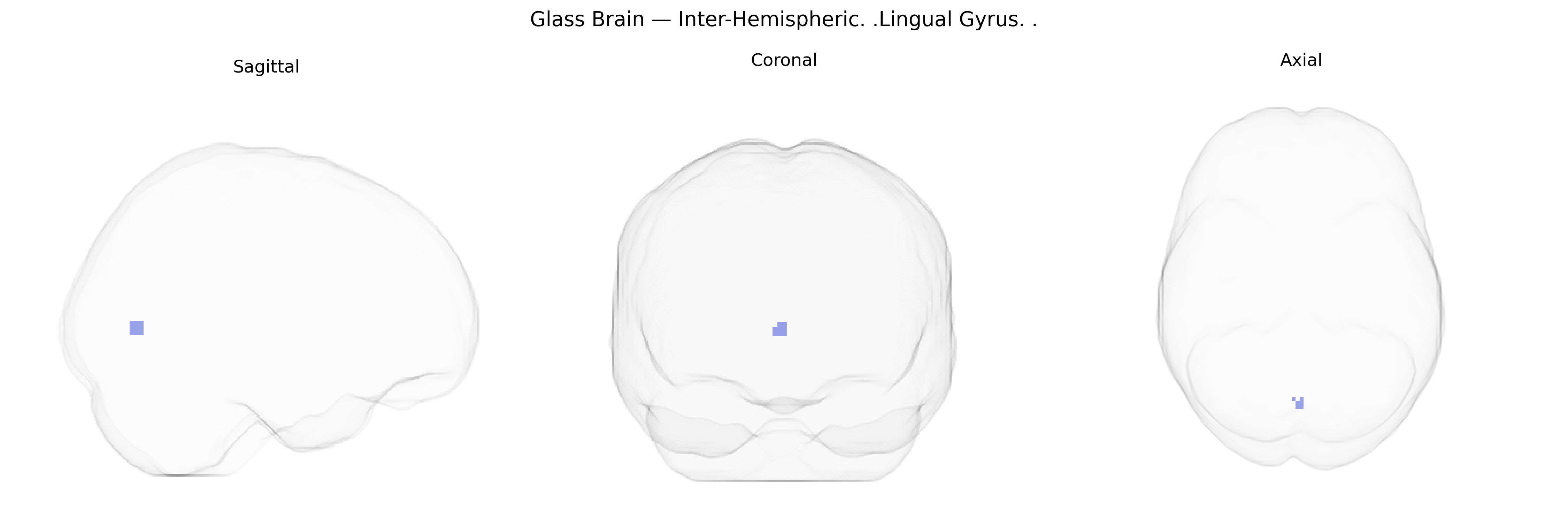
The bilateral inter-hemispheric lingual gyrus is a medial occipital cortical region spanning both hemispheres along the calcarine fissure, implicated primarily in visual processing, particularly of complex shapes, letters, and visual scenes. It contributes to early-stage visual analysis, integration of visual information with higher-order processes such as visual memory, and is often involved in tasks related to reading, word recognition, and visuospatial imagery. Functionally, the lingual gyrus participates in the ventral visual stream and shows activation in response to both low-level visual features and more abstract visual stimuli. There is no direct link for “Inter-Hemispheric Lingual Gyrus”; a closely related structure is the Lingual gyrus.
The bilateral inter-hemispheric lingual gyrus, a midline occipital structure implicated in visual processing, has been indirectly associated with several genetic influences through imaging genetics and GWAS of brain structure and function. Large-scale neuroimaging GWAS (e.g., ENIGMA, UK Biobank) have identified variants in genes related to neurodevelopment and synaptic functioning (such as those near HMGA2, IGF1, and multiple glutamatergic and GABAergic pathway genes) that influence occipital and visual cortex volume and cortical thickness, often including lingual and adjacent regions. Functional imaging genetics studies have linked allelic variation in genes involved in serotonergic and dopaminergic signaling (e.g., 5-HTTLPR/SLC6A4, COMT) to altered activation patterns in occipital areas, including lingual gyrus, during visual, emotional, and memory tasks. GWAS of psychiatric and neurodevelopmental disorders—particularly schizophrenia, major depressive disorder, bipolar disorder, autism spectrum disorder, and ADHD—have shown that risk polygenic scores correlate with structural and functional alterations in visual association cortices, including lingual regions, although these effects are typically modest and distributed rather than region-specific. In addition, genetic studies of traits such as reading ability, face and scene recognition, and visual working memory have reported associations between polygenic load or specific loci and differential activation or morphology in occipital regions encompassing the lingual gyrus, supporting a role for common neurodevelopmental and synaptic gene networks in shaping the structure–function profile of this inter-hemispheric area.
Overview generated by GPT-4o (2026).
Region ID: 524
Hemisphere: bilateral
Atlas: Talairach labels 2mm
Full Quality Version: Download MP4
Full Quality Version: Download MP4
Wali Sidiqyar*, Gaurav Rudravaram*, Elyssa M. McMaster, Trent M. Schwartz, Adam M. Saunders, Kurt G. Schilling, Bennett A. Landman "Introducing SPINS: A Shared Public Visualization Library of Neuroanatomical Structures." Medical Imaging with Deep Learning- short paper
This resource is licensed under CC0 1.0 Universal (Public Domain).