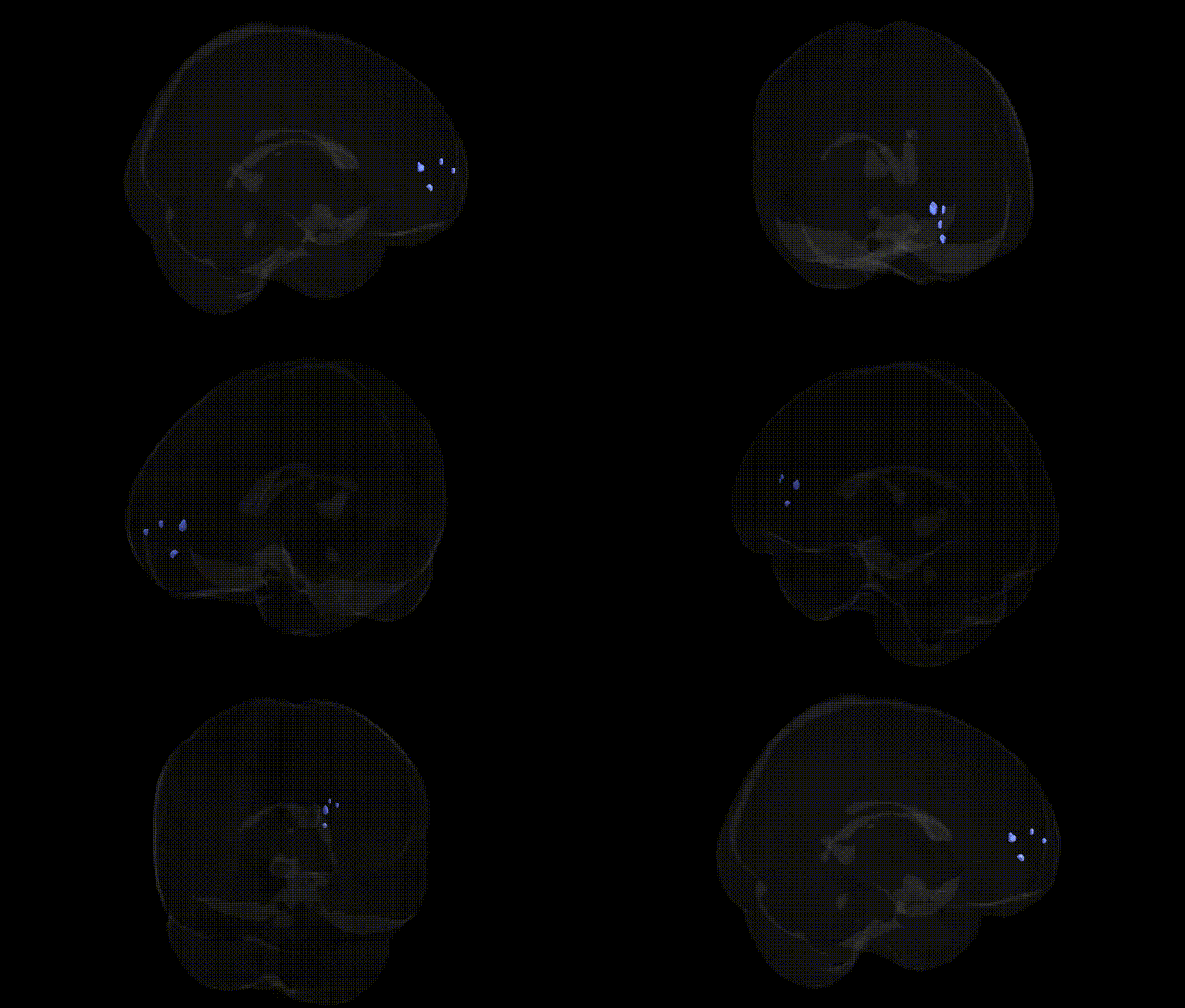
The bilateral Inter-Hemispheric Frontal Lobe refers to the midline portions of the frontal lobes situated around and between the two cerebral hemispheres, including cortex adjacent to the longitudinal fissure and commonly encompassing medial frontal regions such as parts of the premotor and supplementary motor areas, medial prefrontal cortex, and cingulate-related frontal territories. Functionally, this interhemispheric frontal territory is implicated in high-order executive processes, voluntary motor initiation and coordination, action planning, conflict monitoring, and aspects of motivation and affect regulation, often serving as an integrative hub between motor, cognitive, and limbic networks. There is no direct Wikipedia article for “Inter-Hemispheric Frontal Lobe”; a closely related structure is the medial prefrontal cortex: Medial prefrontal cortex.
The bilateral inter-hemispheric frontal lobe region, encompassing medial prefrontal and anterior cingulate territories, has been implicated in numerous genetic association studies, particularly GWAS of psychiatric and cognitive phenotypes. Common variants in genes related to synaptic function and neurodevelopment (such as CACNA1C, GRIN2A, and DRD2) have been linked to structural and functional alterations in medial frontal circuitry and to disorders including schizophrenia, bipolar disorder, major depressive disorder, and attention-deficit/hyperactivity disorder, often via intermediate phenotypes such as cortical thickness, surface area, and task-related activation in these areas. Large-scale imaging genetics consortia (e.g., ENIGMA, UK Biobank studies) have identified polygenic influences on frontal midline morphology and connectivity, showing that frontal inter-hemispheric regions are sensitive to polygenic risk scores for psychiatric illness, cognitive performance, and educational attainment. Variants in genes regulating white matter development and myelination (such as those affecting oligodendrocyte function) have also been associated with callosal and medial frontal integrity, relevant to inter-hemispheric communication. While the Talairach 2 mm atlas label “Inter-Hemispheric.Frontal Lobe” is an anatomical convention rather than a specific functional parcel, convergent genetic evidence points to this medial frontal corridor as a key substrate through which neurodevelopmental and neuropsychiatric risk genes exert effects on decision-making, emotion regulation, and higher-order cognition.
Overview generated by GPT-4o (2026).
Region ID: 619
Hemisphere: bilateral
Atlas: Talairach labels 2mm
Full Quality Version: Download MP4
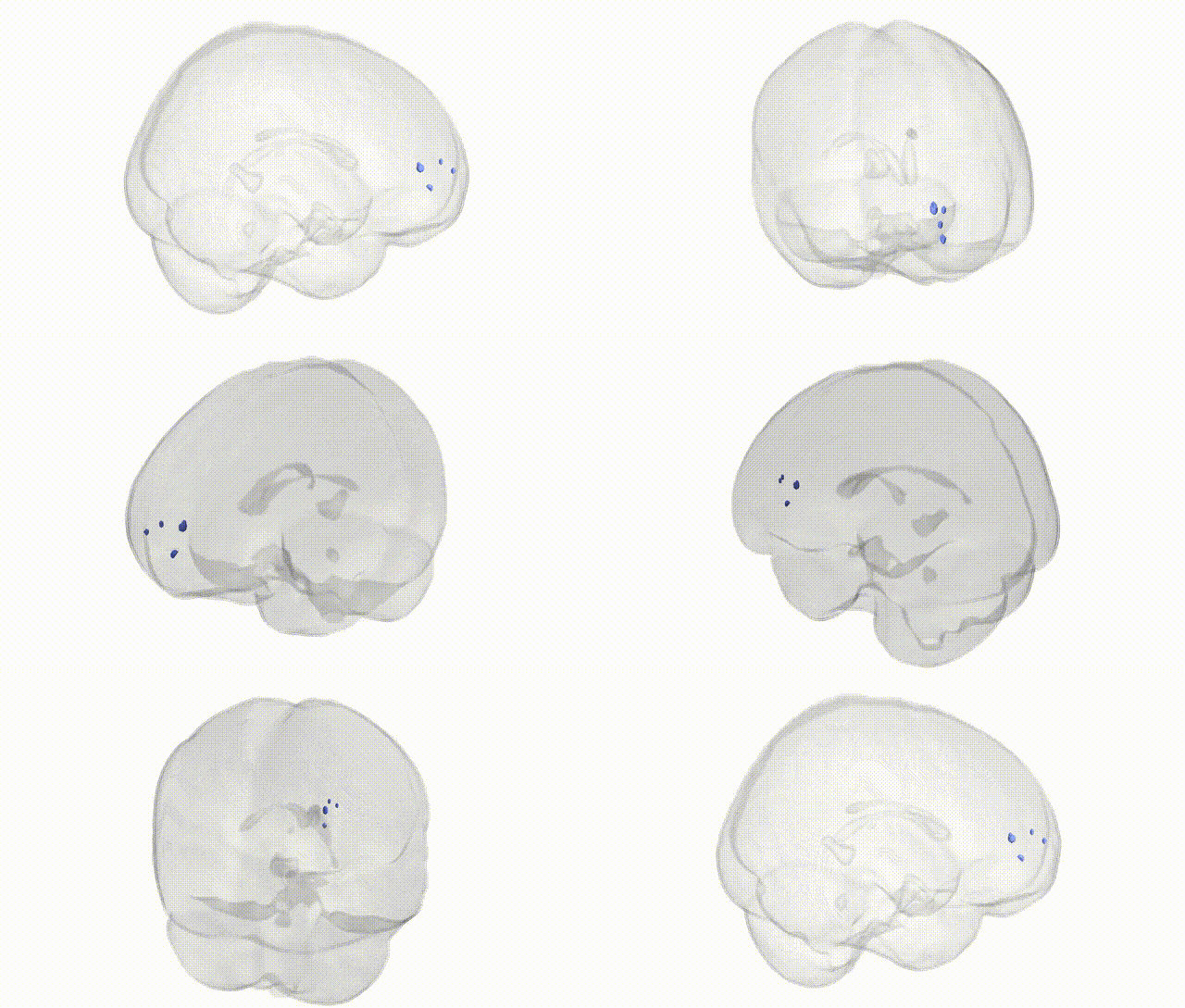
Full Quality Version: Download MP4
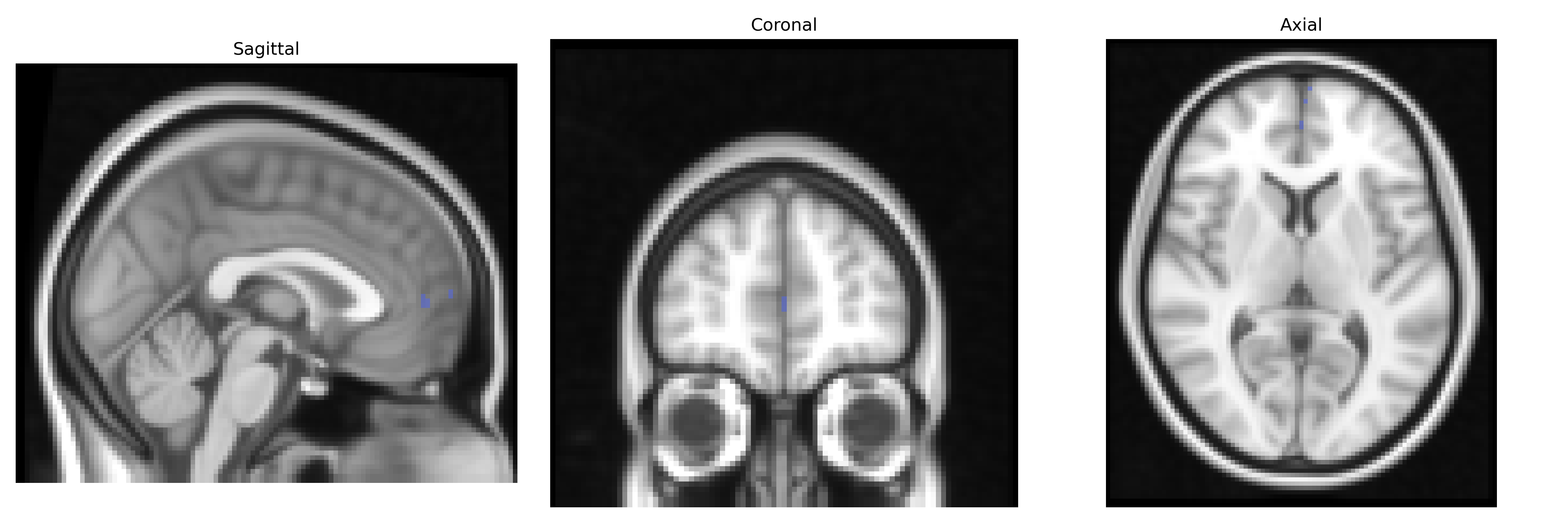
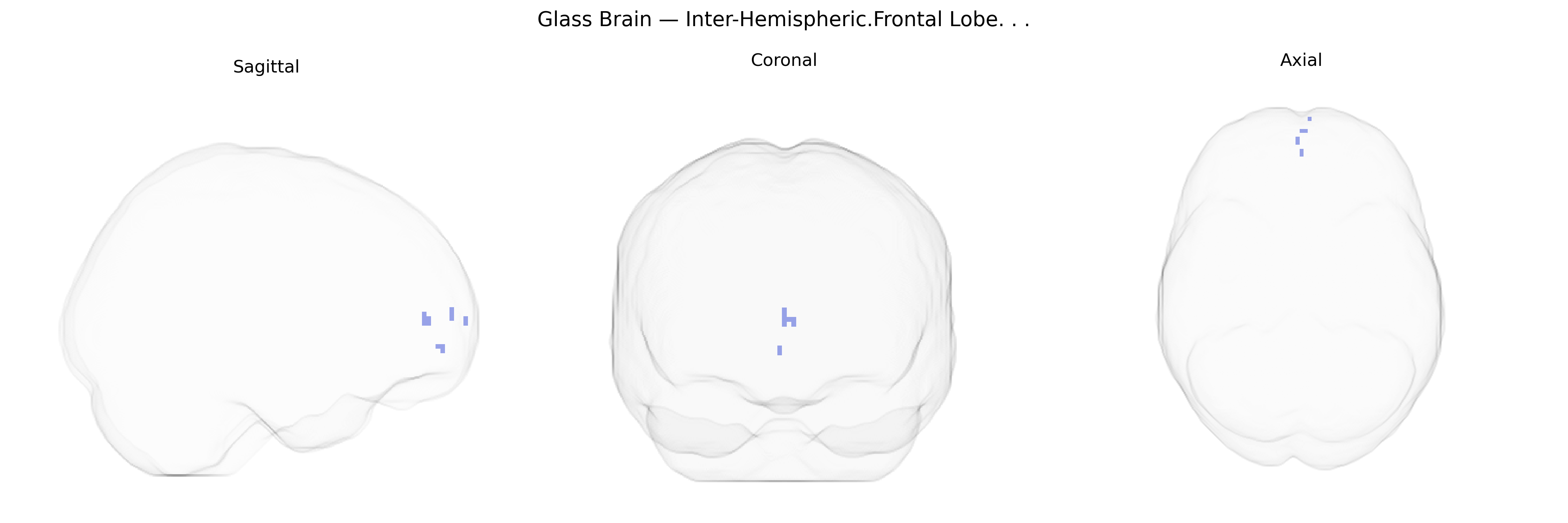
Wali Sidiqyar*, Gaurav Rudravaram*, Elyssa M. McMaster, Trent M. Schwartz, Adam M. Saunders, Kurt G. Schilling, Bennett A. Landman "Introducing SPINS: A Shared Public Visualization Library of Neuroanatomical Structures." Medical Imaging with Deep Learning- short paper
This resource is licensed under CC0 1.0 Universal (Public Domain).