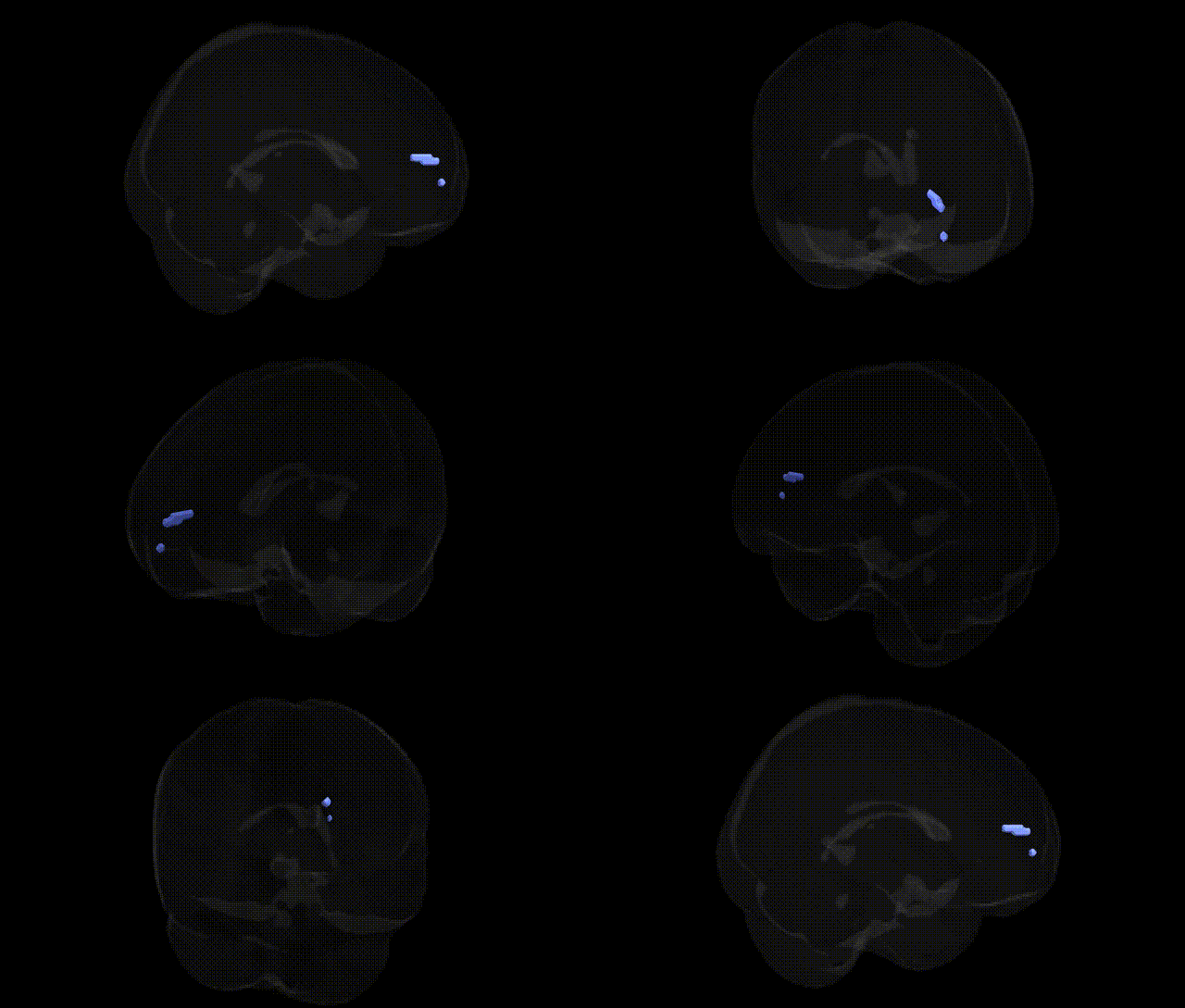
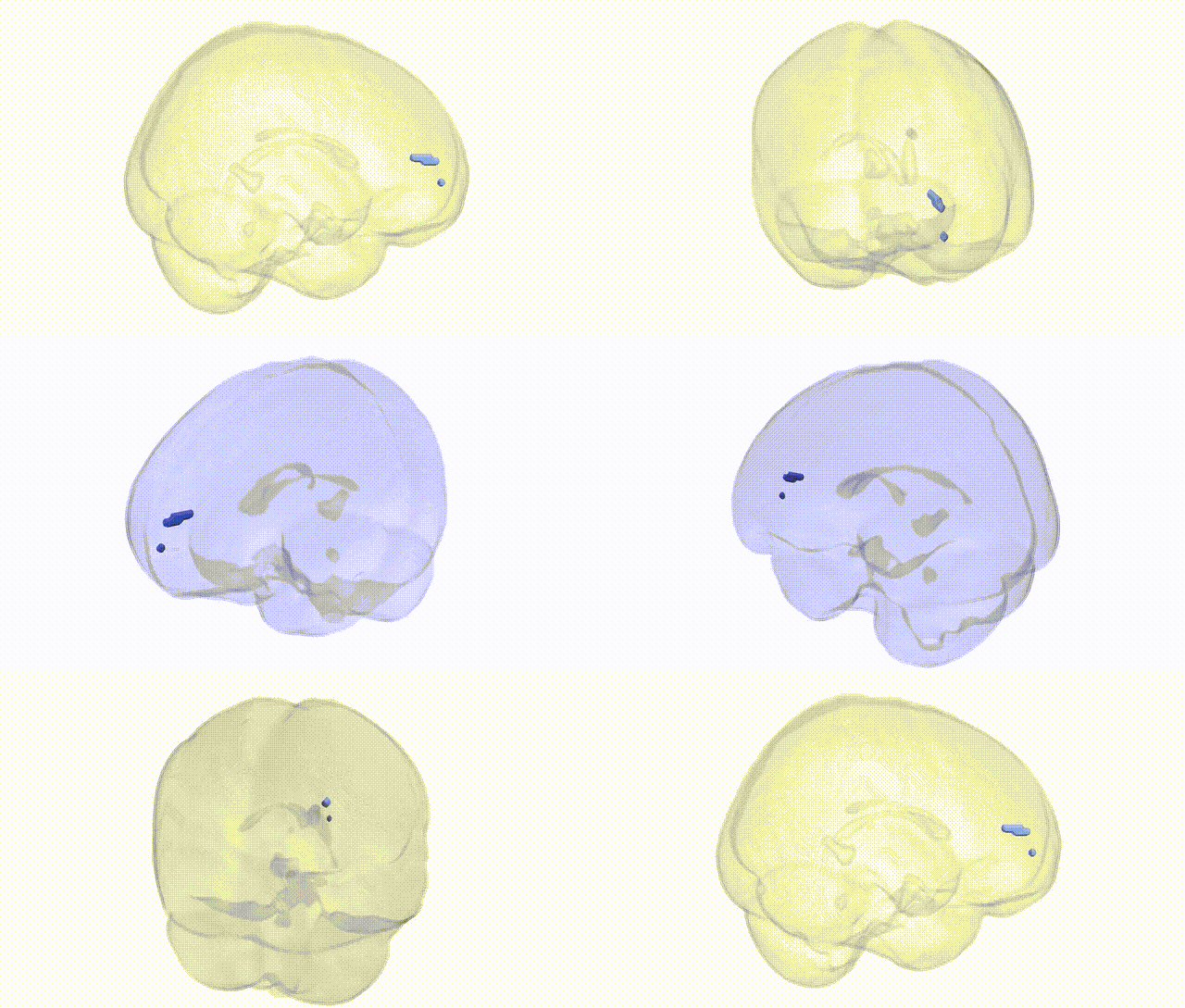
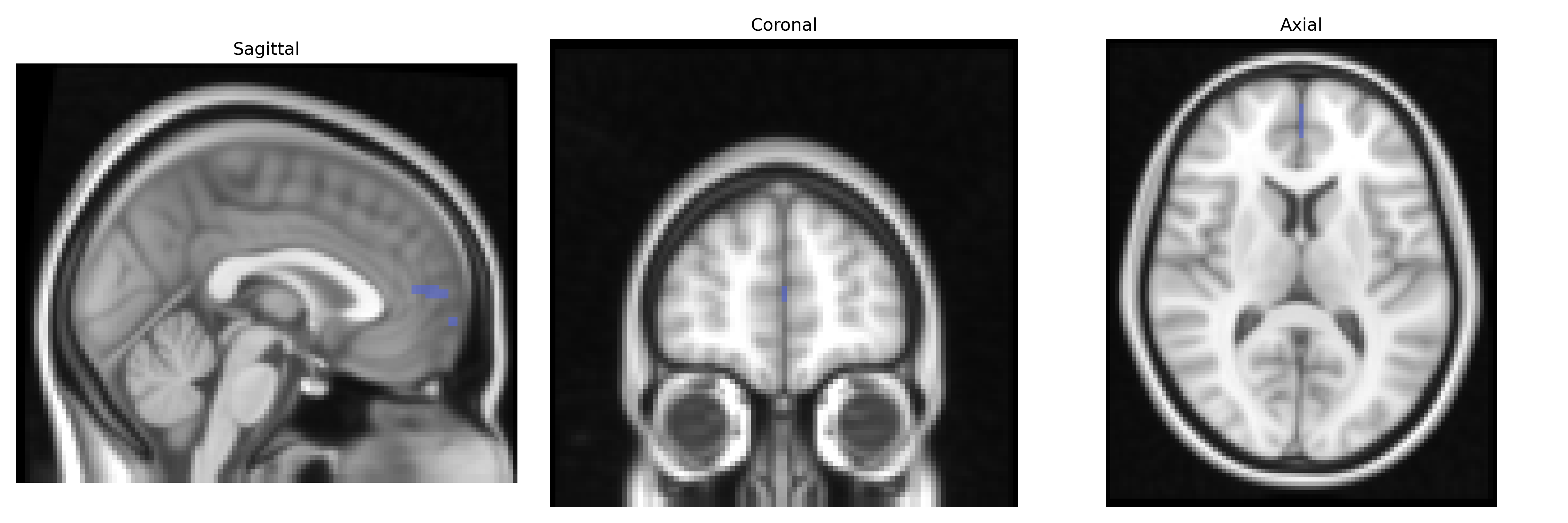
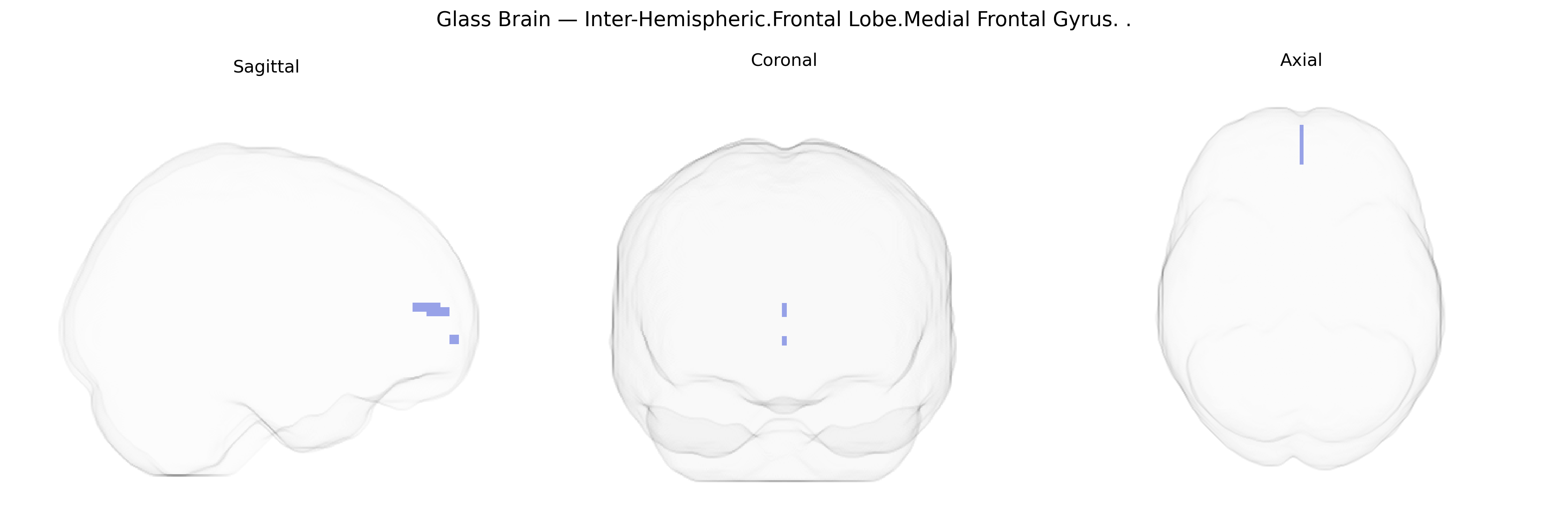
The bilateral Inter-Hemispheric Frontal Lobe Medial Frontal Gyrus, as defined in the Talairach 2 mm Atlas, corresponds largely to the medial portions of the superior frontal gyrus along the interhemispheric fissure, encompassing parts of the medial prefrontal cortex and supplementary motor areas. This region is implicated in high-level executive functions, including decision-making, action monitoring, and cognitive control, as well as aspects of self-referential processing and social cognition. It contributes to motor planning and the regulation of voluntary actions, often in concert with dorsal anterior cingulate and other frontal regions, and plays a role in integrating internal goals with externally guided behavior. There is no direct link for this precise Talairach label; it is closely related to the Superior frontal gyrus.
The medial frontal gyrus, particularly in its bilateral inter-hemispheric (mesial) aspect, has been repeatedly implicated in genetic studies of psychiatric, cognitive, and behavioral traits, although most findings come from imaging genetics and GWAS of related phenotypes rather than direct association with the Talairach 2 mm atlas label. Polygenic risk scores and GWAS for schizophrenia, bipolar disorder, and major depressive disorder have been linked to structural and functional alterations in medial frontal regions, with genes involved in synaptic signaling, glutamatergic transmission, and neurodevelopment (e.g., CACNA1C, ZNF804A, GRM3, and others) showing associations with anterior/medial frontal morphology, resting-state activity, and task-related activation. GWAS of cortical thickness and surface area have identified multiple loci influencing medial frontal cortex anatomy, including variants near genes such as PAX6 and TBR1 that regulate cortical development, and large consortia (e.g., ENIGMA) report heritable patterns of volume and thickness in medial frontal regions that overlap with genetic risk for psychiatric disorders. Medial frontal areas, including the anterior cingulate and adjacent medial frontal gyrus, feature in imaging-genetic work on anxiety, obsessive-compulsive traits, impulsivity, and personality dimensions, where variants in serotonin and dopamine-related genes (e.g., SLC6A4, DRD2, COMT) modulate activation during conflict monitoring, error processing, and reward-based decision-making. Cognitive GWAS and imaging genetics also tie polygenic scores for educational attainment, general cognitive ability, and executive function to features of medial frontal circuitry, supporting a role for widespread, small-effect variants in shaping this region’s structure and function. Overall, the medial frontal gyrus emerges as a genetically sensitive hub for neuropsychiatric risk and higher-order cognition, with its characteristics largely governed by highly polygenic influences rather than single-gene effects.
Overview generated by GPT-4o (2026).
Region ID: 659
Hemisphere: bilateral
Atlas: Talairach labels 2mm
Full Quality Version: Download MP4
Full Quality Version: Download MP4
Wali Sidiqyar*, Gaurav Rudravaram*, Elyssa M. McMaster, Trent M. Schwartz, Adam M. Saunders, Kurt G. Schilling, Bennett A. Landman "Introducing SPINS: A Shared Public Visualization Library of Neuroanatomical Structures." Medical Imaging with Deep Learning- short paper
This resource is licensed under CC0 1.0 Universal (Public Domain).