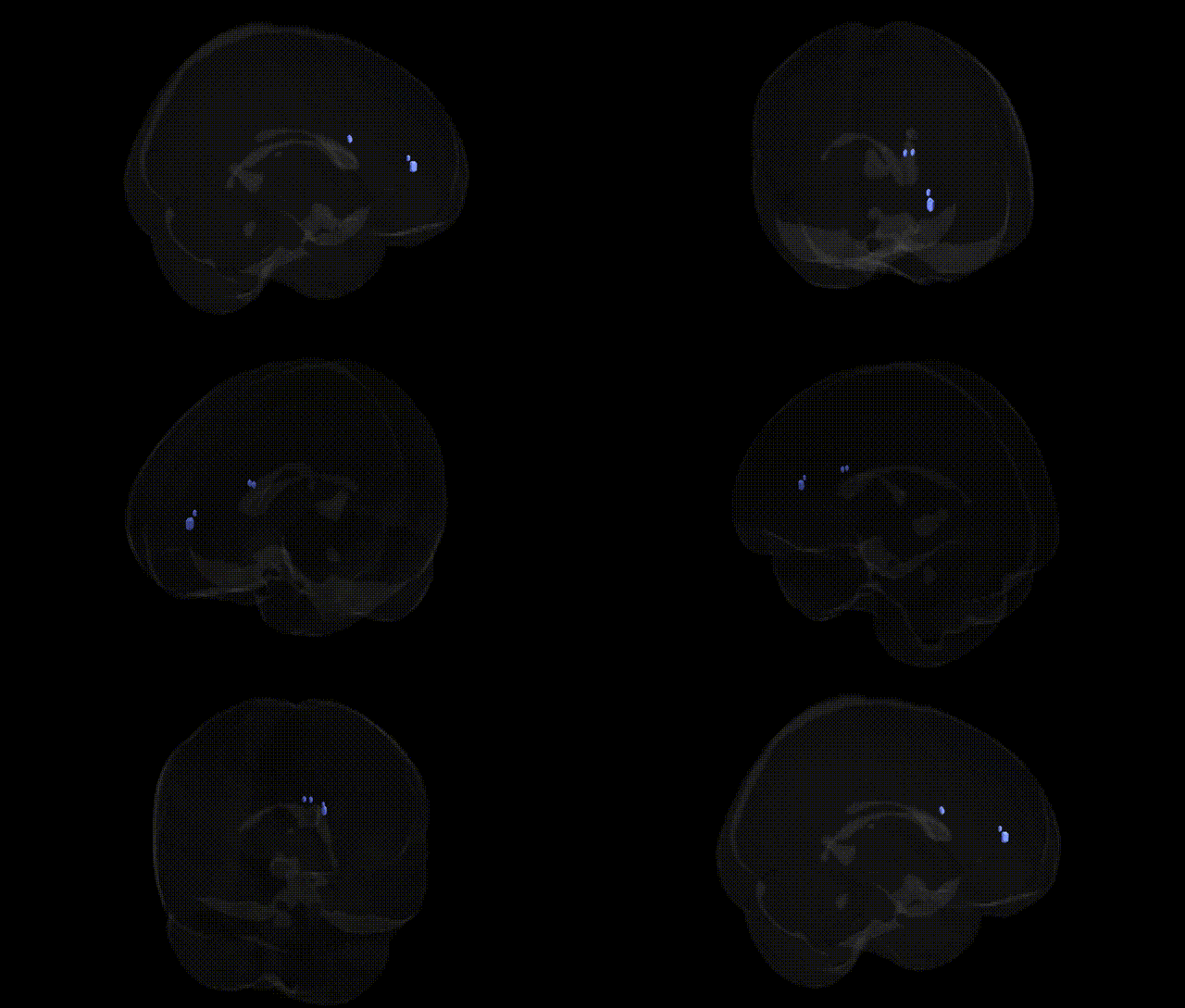
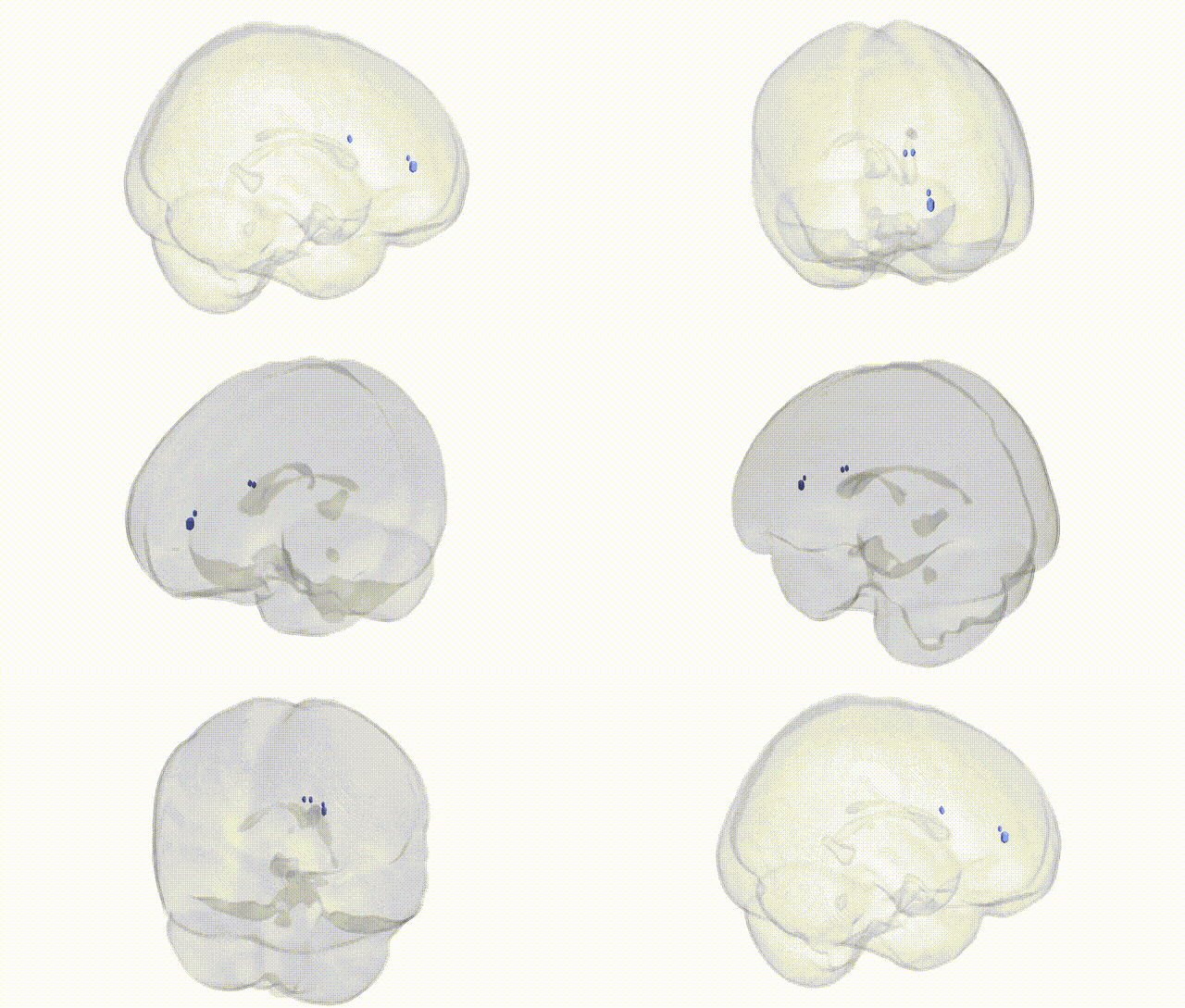
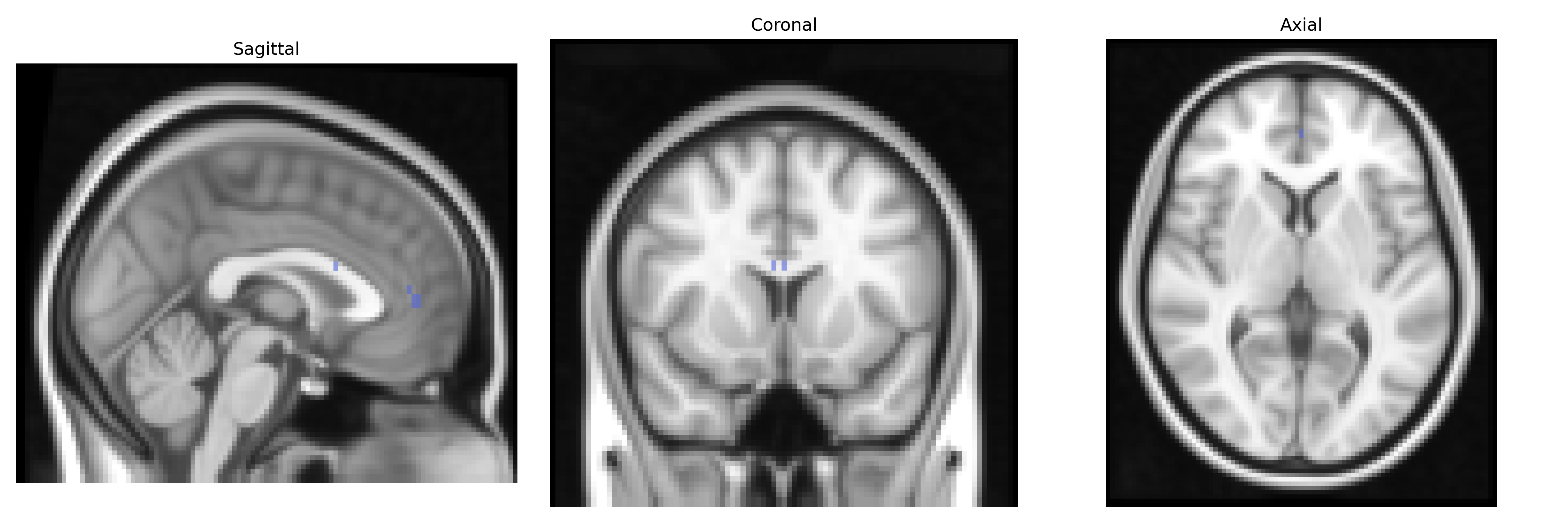
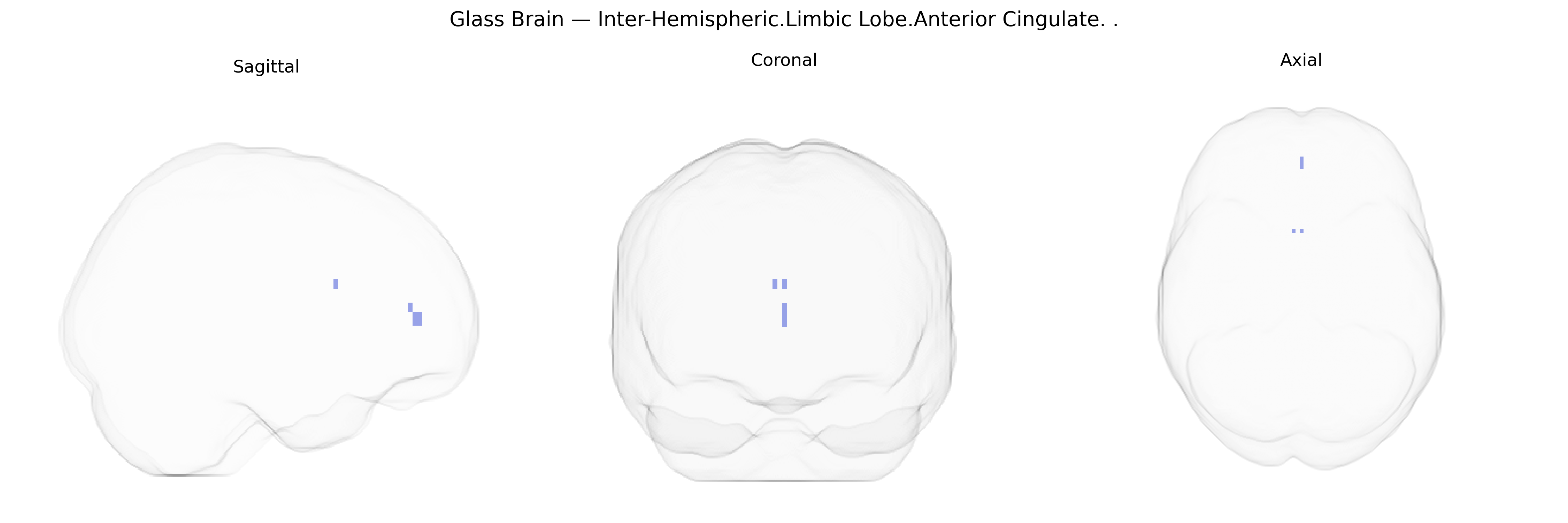
The bilateral inter-hemispheric limbic lobe anterior cingulate corresponds to the anterior portion of the cingulate gyrus located on the medial surface of both cerebral hemispheres, forming part of the limbic lobe and arching around the corpus callosum. This region is heavily interconnected with prefrontal, limbic, and autonomic centers and is implicated in emotional processing, motivation, conflict monitoring, decision-making, pain perception, and regulation of autonomic responses. Cytoarchitectonically, it includes Brodmann areas primarily in the 24/32 range, with functional specialization across dorsal (cognitive) and ventral (affective) divisions. The anterior cingulate participates in integrating motivational and cognitive information to influence behavior, and abnormalities in its structure or function have been associated with mood and anxiety disorders, addiction, and chronic pain syndromes.
Anterior cingulate cortex
The bilateral inter-hemispheric limbic lobe anterior cingulate (ACC), as defined in the Talairach 2 mm atlas, has been repeatedly implicated in genetic studies of psychiatric, cognitive, and pain-related traits, although most findings concern functional or structural phenotypes rather than direct region-specific SNP associations. GWAS and imaging‑genetics work indicate that ACC volume, cortical thickness, and activity are heritable and influenced by variants in genes involved in synaptic signaling, neurodevelopment, and monoamine transmission, including COMT (dopamine catabolism), SLC6A4 (serotonin transporter), BDNF (neurotrophic signaling), and CACNA1C (L‑type calcium channels), all of which have been linked to ACC morphometry or activation patterns in tasks involving emotion regulation, cognitive control, and reward processing. Large consortia such as ENIGMA have shown polygenic influences on ACC structure associated with major depressive disorder, schizophrenia, bipolar disorder, and ADHD, and ACC measures often appear as intermediate endophenotypes in these conditions. Genetic variants in opioid- and pain‑related pathways (e.g., OPRM1) and broader polygenic risk scores for chronic pain and migraine have been associated with ACC activation and connectivity, consistent with its role in affective pain processing. Additionally, GWAS of traits like neuroticism, generalized anxiety, and stress reactivity have implicated loci whose effects on brain function are partly mediated through ACC circuitry, further underscoring this region as a key genetically modulated hub for emotional and cognitive control across multiple neuropsychiatric and behavioral phenotypes.
Overview generated by GPT-4o (2026).
Region ID: 752
Hemisphere: bilateral
Atlas: Talairach labels 2mm
Full Quality Version: Download MP4
Full Quality Version: Download MP4
Wali Sidiqyar*, Gaurav Rudravaram*, Elyssa M. McMaster, Trent M. Schwartz, Adam M. Saunders, Kurt G. Schilling, Bennett A. Landman "Introducing SPINS: A Shared Public Visualization Library of Neuroanatomical Structures." Medical Imaging with Deep Learning- short paper
This resource is licensed under CC0 1.0 Universal (Public Domain).