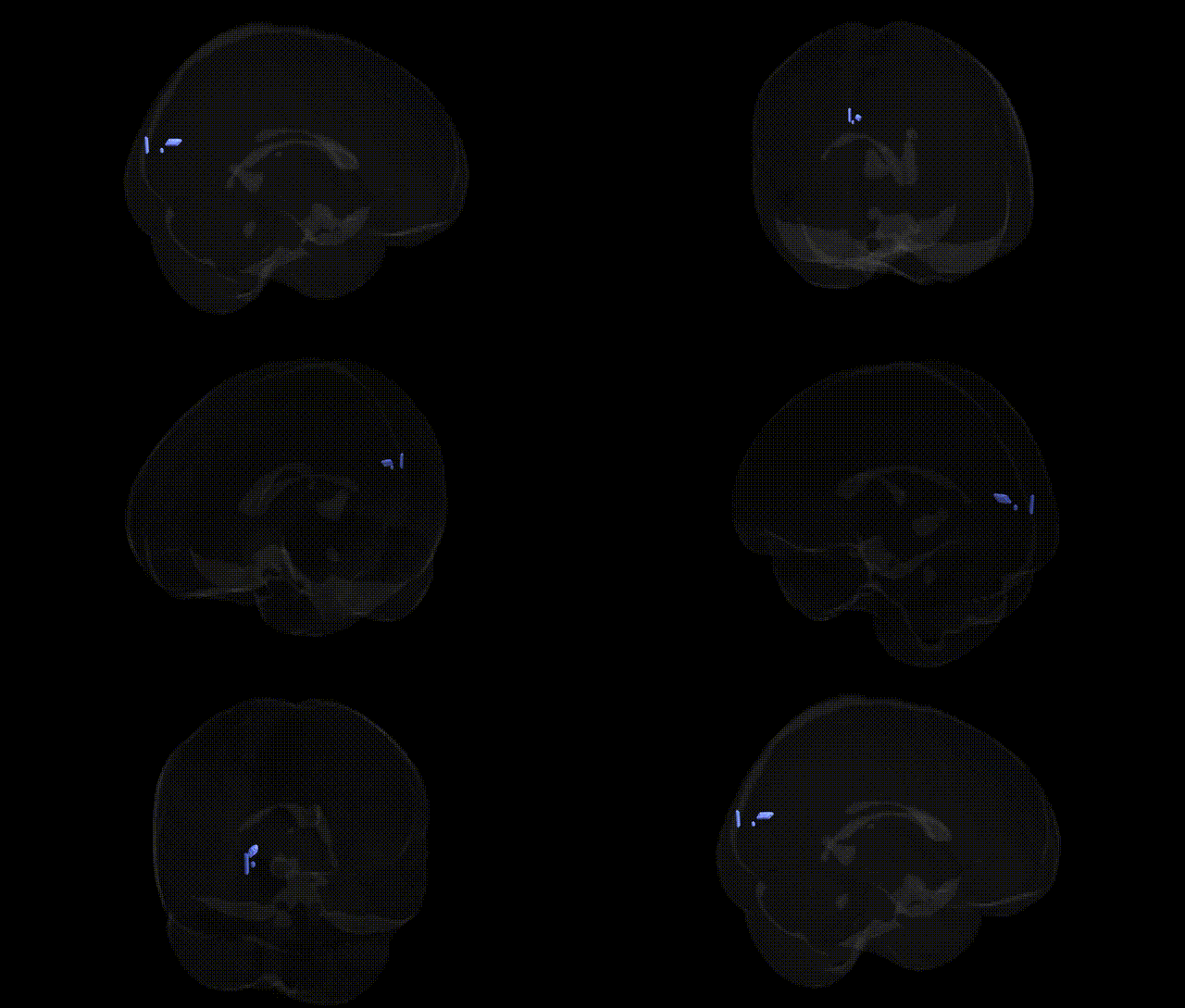
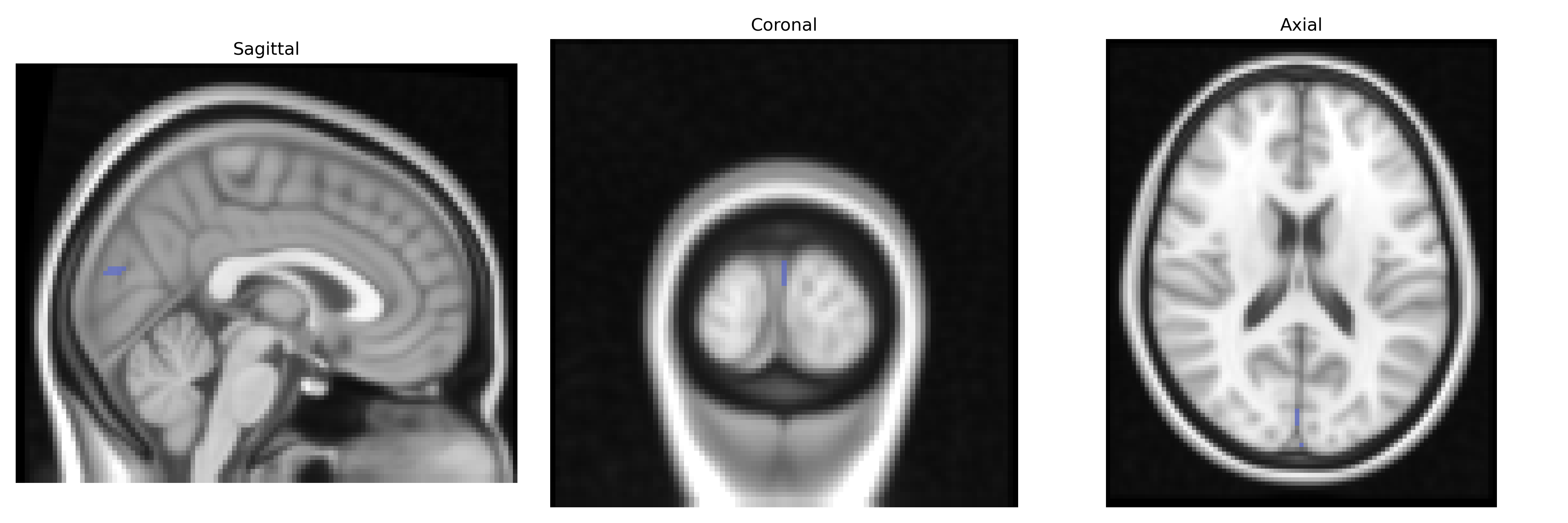
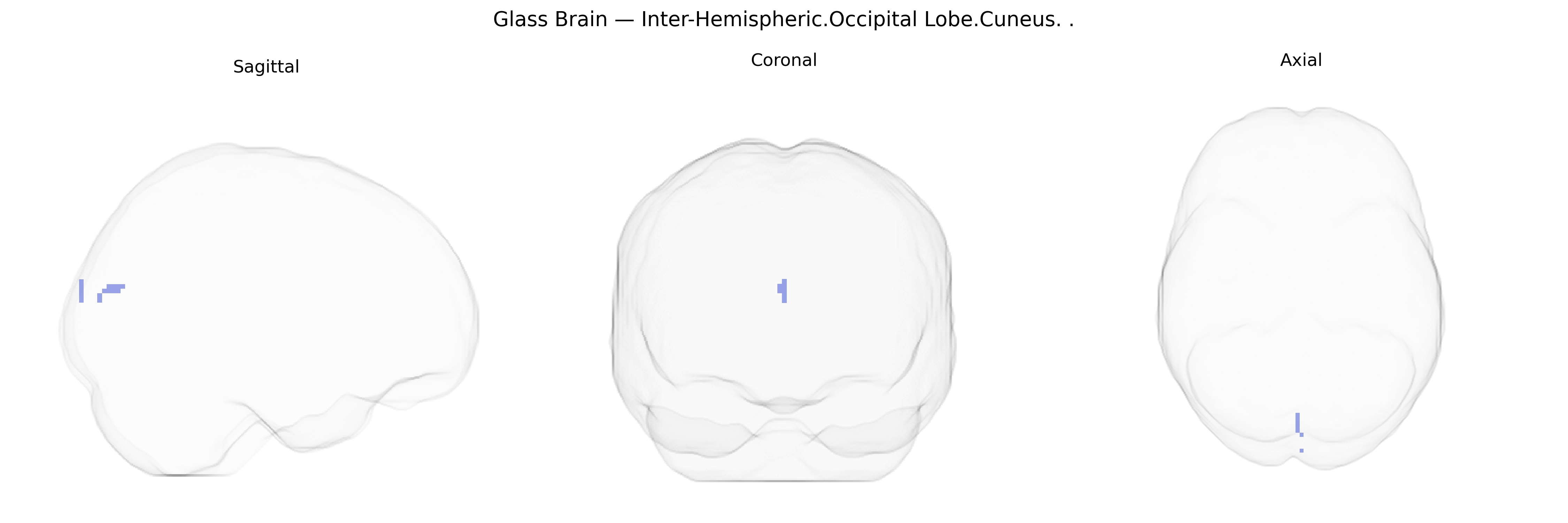
The bilateral Inter-Hemispheric Occipital Lobe Cuneus refers to the midline portion of the cuneus, a wedge-shaped region of the medial occipital cortex located between the parieto-occipital sulcus and the calcarine sulcus in both hemispheres. This area belongs to the primary and associative visual cortex and is heavily involved in processing basic visual features such as orientation, spatial frequency, and visual motion, as well as contributing to visual attention and higher-order visuospatial integration. The cuneus receives projections from the lateral geniculate nucleus via the optic radiations and participates in dorsal visual stream processing, integrating visual information for perception and visually guided behavior. There is no direct Wikipedia article specifically for the “Inter-Hemispheric Occipital Lobe Cuneus” label; a related and encompassing structure is the Cuneus.
The cuneus, an occipital lobe region involved in visual processing, has been implicated in several genetic association studies, particularly through imaging genetics and large-scale GWAS of brain structure and function. Variants near and within genes involved in synaptic development, axon guidance, and neurogenesis (for example, loci in and around genes such as BDNF, GRIN2B, and common neurodevelopmental pathways like WNT and MAPK signaling) have been associated with cortical thickness, surface area, and functional activation of the cuneus in population-based neuroimaging cohorts. GWAS of resting-state functional connectivity and visual network organization have identified polygenic influences on activity and connectivity patterns involving the bilateral cuneus, often overlapping with loci that also confer risk for psychiatric and neurodevelopmental disorders. In particular, schizophrenia, major depressive disorder, bipolar disorder, autism spectrum disorder, and attention-deficit/hyperactivity disorder show reproducible structural and functional alterations in the cuneus, and polygenic risk scores for these conditions correlate with cuneus morphology or activation in several studies. Furthermore, cuneus structure and function show genetic correlations with cognitive traits such as general intelligence, visual memory, and processing speed, as well as with migraine and certain sleep-related phenotypes. Overall, the bilateral inter-hemispheric cuneus emerges as a genetically influenced hub of visual and higher-order processing, where shared polygenic architecture links brain morphology and connectivity to psychiatric risk and cognitive performance, although specific loci tied uniquely to this Talairach-defined subregion remain incompletely resolved and are largely inferred from broader occipital and cortical GWAS.
Overview generated by GPT-4o (2026).
Region ID: 543
Hemisphere: bilateral
Atlas: Talairach labels 2mm
Full Quality Version: Download MP4
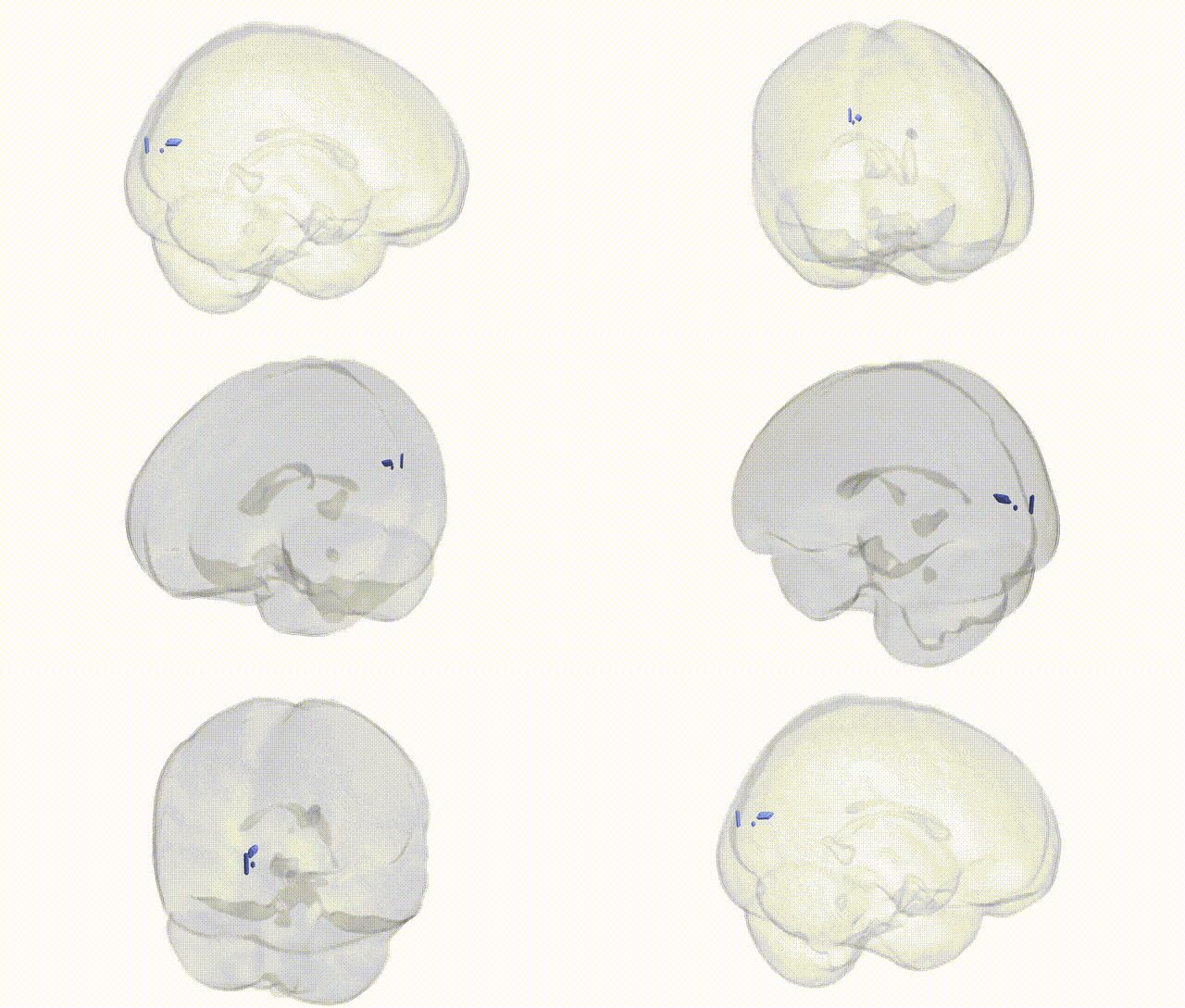
Full Quality Version: Download MP4
Wali Sidiqyar*, Gaurav Rudravaram*, Elyssa M. McMaster, Trent M. Schwartz, Adam M. Saunders, Kurt G. Schilling, Bennett A. Landman "Introducing SPINS: A Shared Public Visualization Library of Neuroanatomical Structures." Medical Imaging with Deep Learning- short paper
This resource is licensed under CC0 1.0 Universal (Public Domain).