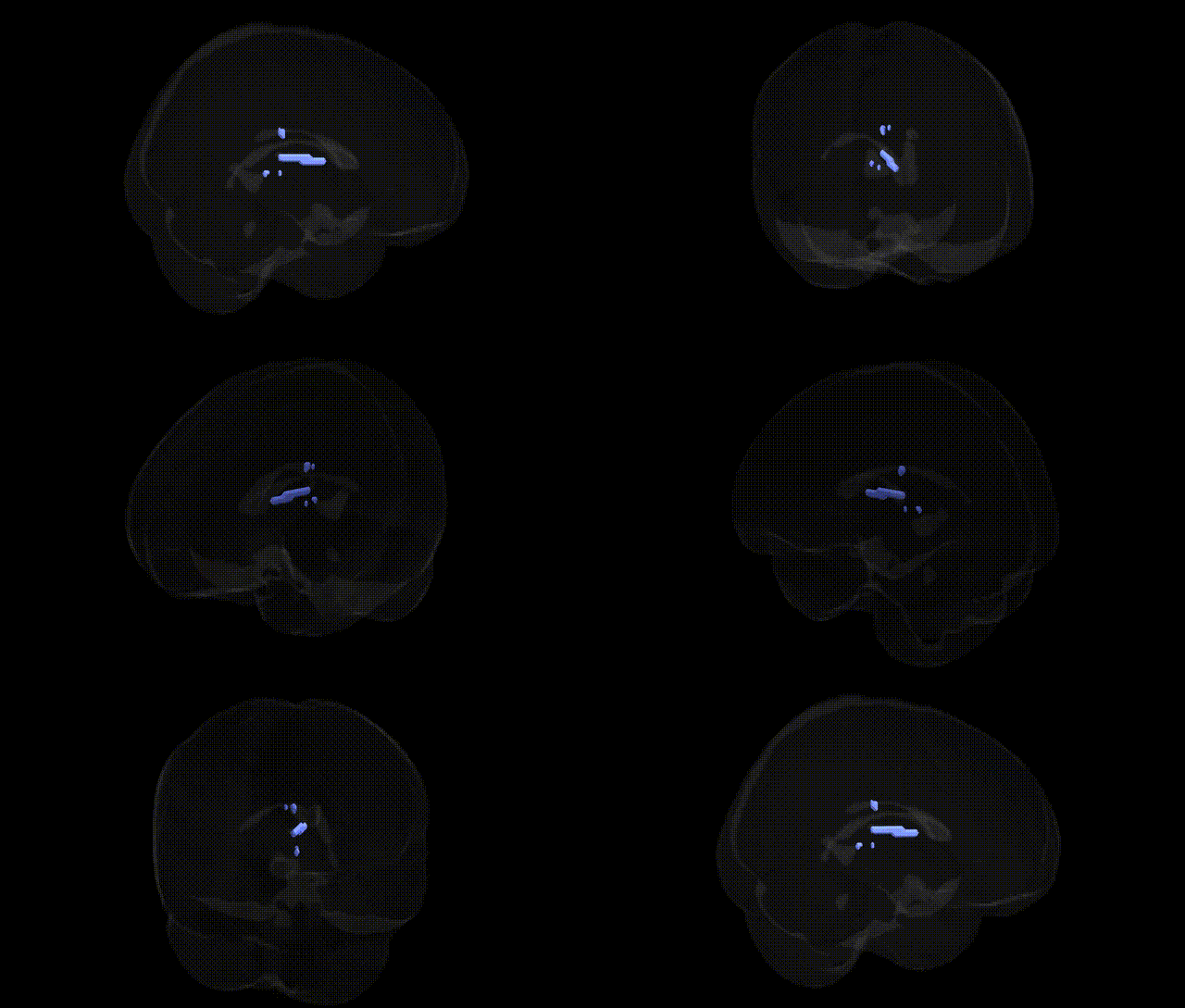
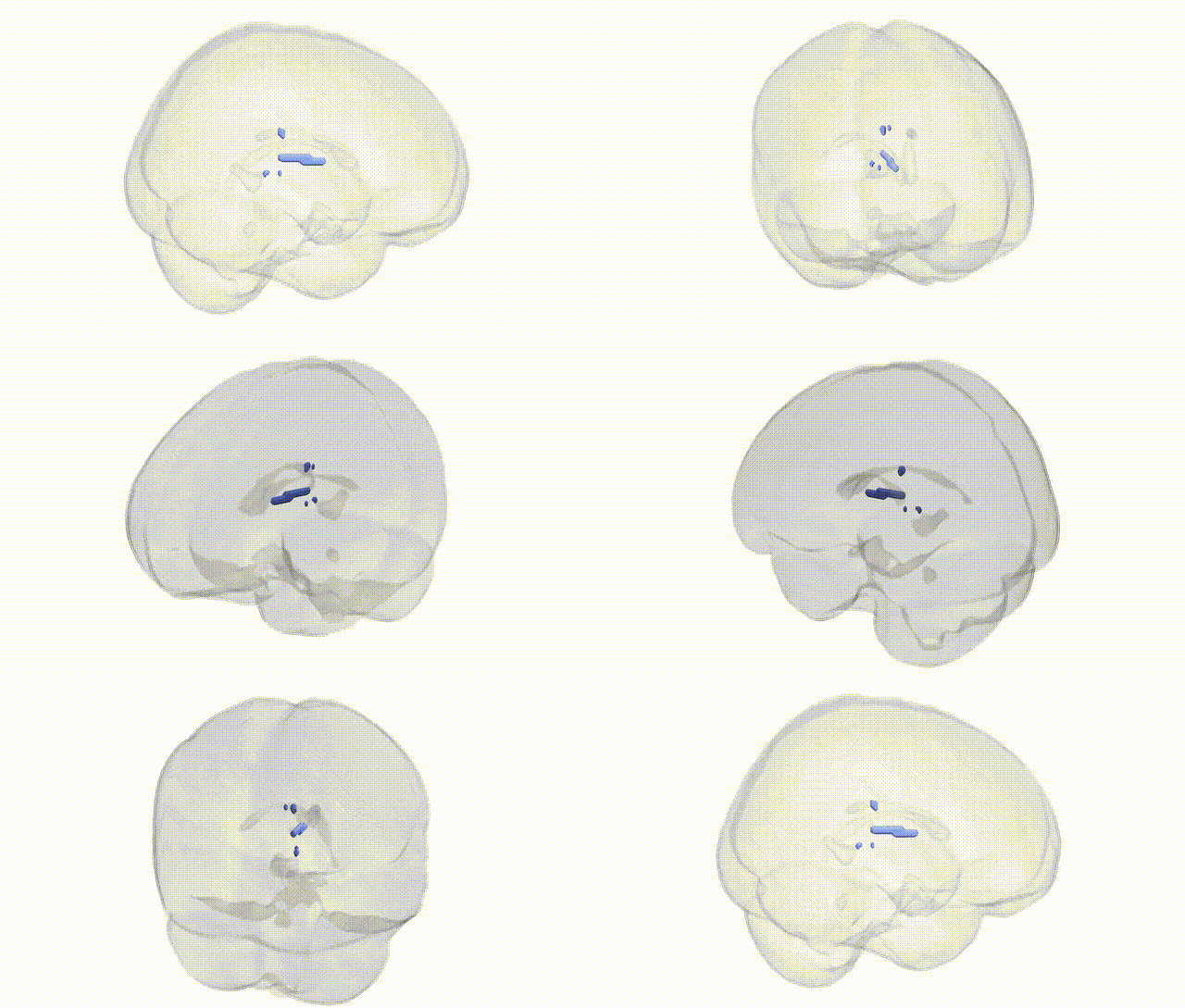
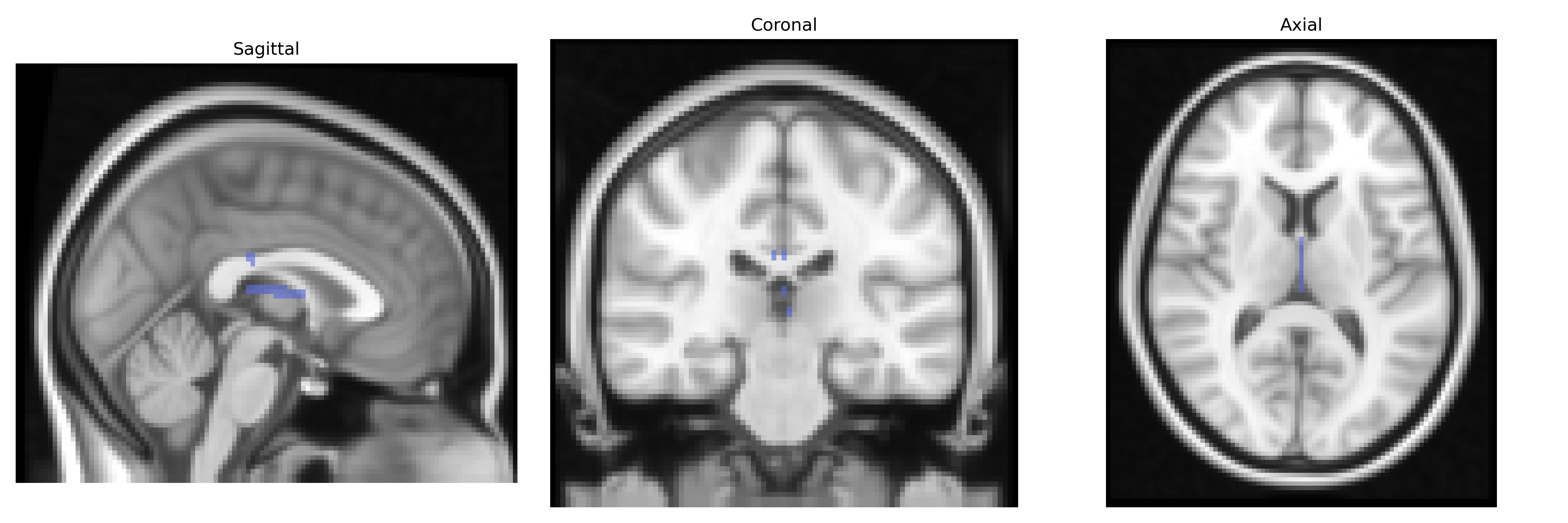
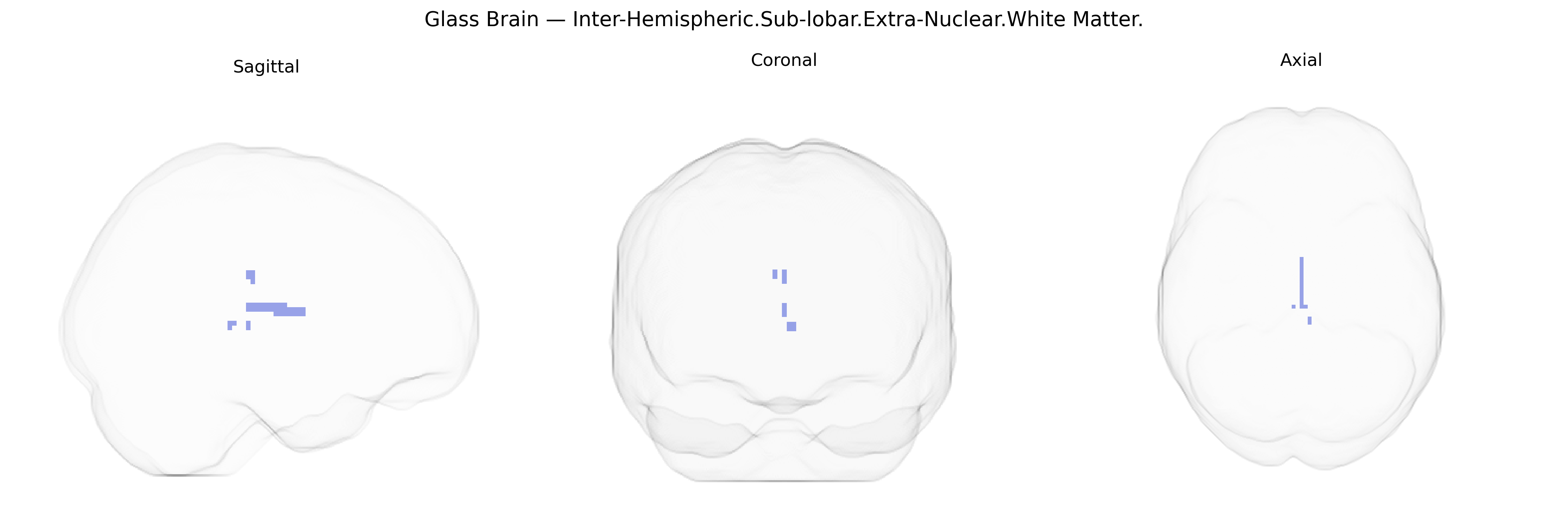
The bilateral Inter-Hemispheric Sub-lobar Extra-Nuclear White Matter, as defined in the Talairach 2 mm Atlas, refers to deep, non-cortical white matter tracts located beneath the cerebral cortex in both hemispheres, outside of the major nuclear (gray matter) structures such as the basal ganglia and thalamus. These regions comprise bundles of myelinated axons that facilitate long-range communication between cortical and subcortical areas, as well as inter-hemispheric integration via commissural and association fibers. Functionally, this white matter supports efficient signal transmission underlying higher-order cognitive processes, sensorimotor coordination, and integration of distributed neural networks. There is no direct link for this specific atlas label; see the related structure: White matter.
The bilateral Inter-Hemispheric Sub-lobar Extra-Nuclear White Matter region, essentially encompassing interhemispheric white matter tracts such as portions of the corpus callosum and adjacent deep fibers, has been implicated in genetic studies largely through imaging genetics and GWAS of white matter microstructure rather than Talairach-specific analyses. Large-scale diffusion MRI GWAS have shown that white matter integrity in callosal and interhemispheric regions is highly heritable and associated with variants in genes involved in axon guidance, myelination, and oligodendrocyte function, including loci near or within CNTN4, NRXN1, MAG, MOBP, and other myelin-related genes, as well as polygenic influences from general brain-size and neurodevelopmental loci. These interhemispheric fibers are frequently implicated in GWAS of neurodevelopmental and psychiatric disorders (e.g., autism spectrum disorder, schizophrenia, ADHD, bipolar disorder, and major depression), where risk alleles and polygenic risk scores correlate with altered callosal and deep white matter structure, suggesting that genetic vulnerability partially manifests through disrupted interhemispheric connectivity. In addition, GWAS of cognitive traits and intelligence, processing speed, and educational attainment have identified associations with callosal and deep white matter integrity, indicating that common genetic variants influencing this region contribute to individual differences in cognitive performance. While no GWAS directly targets the Talairach-defined “Inter-Hemispheric.Sub-lobar.Extra-Nuclear.White Matter” label, convergent evidence from corpus callosum and global white matter studies supports a strong genetic contribution to the structure and function of these interhemispheric pathways, with shared polygenic architectures across neurodevelopmental, psychiatric, and cognitive phenotypes.
Overview generated by GPT-4o (2026).
Region ID: 621
Hemisphere: bilateral
Atlas: Talairach labels 2mm
Full Quality Version: Download MP4
Full Quality Version: Download MP4
Wali Sidiqyar*, Gaurav Rudravaram*, Elyssa M. McMaster, Trent M. Schwartz, Adam M. Saunders, Kurt G. Schilling, Bennett A. Landman "Introducing SPINS: A Shared Public Visualization Library of Neuroanatomical Structures." Medical Imaging with Deep Learning- short paper
This resource is licensed under CC0 1.0 Universal (Public Domain).