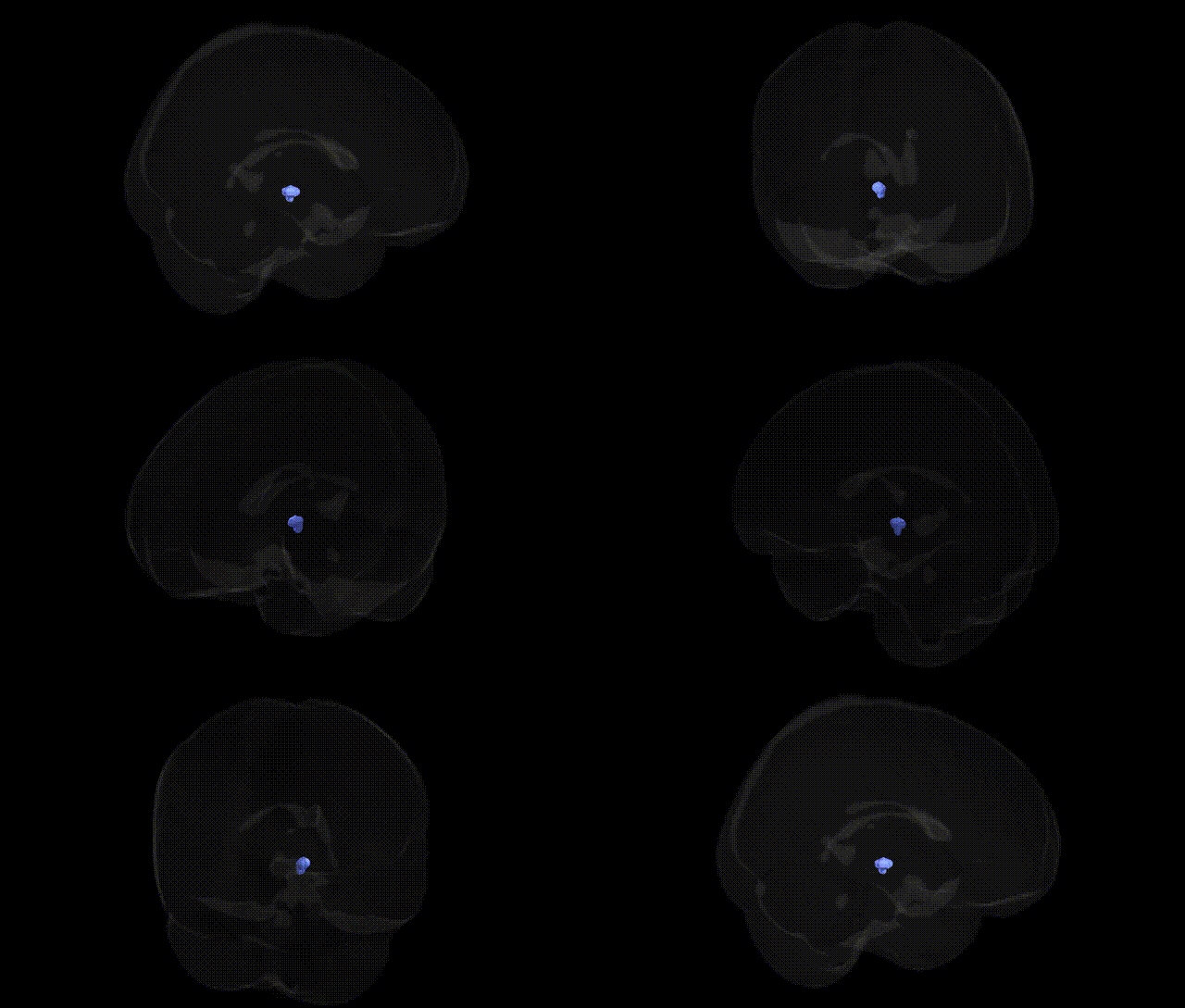
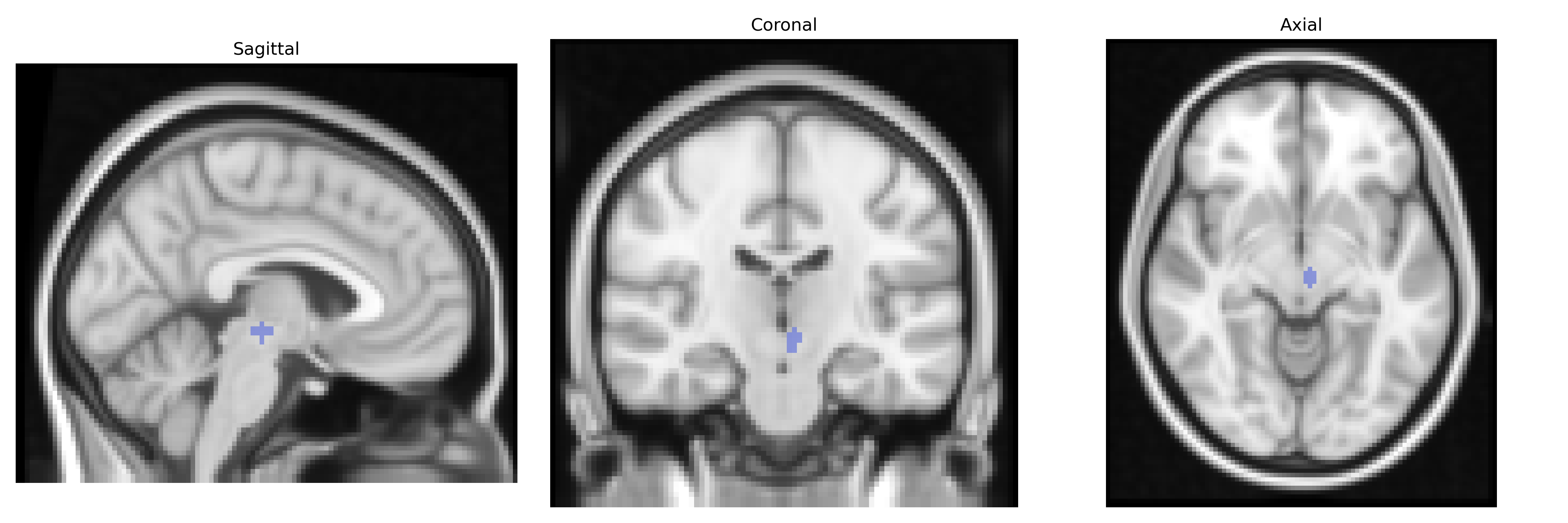
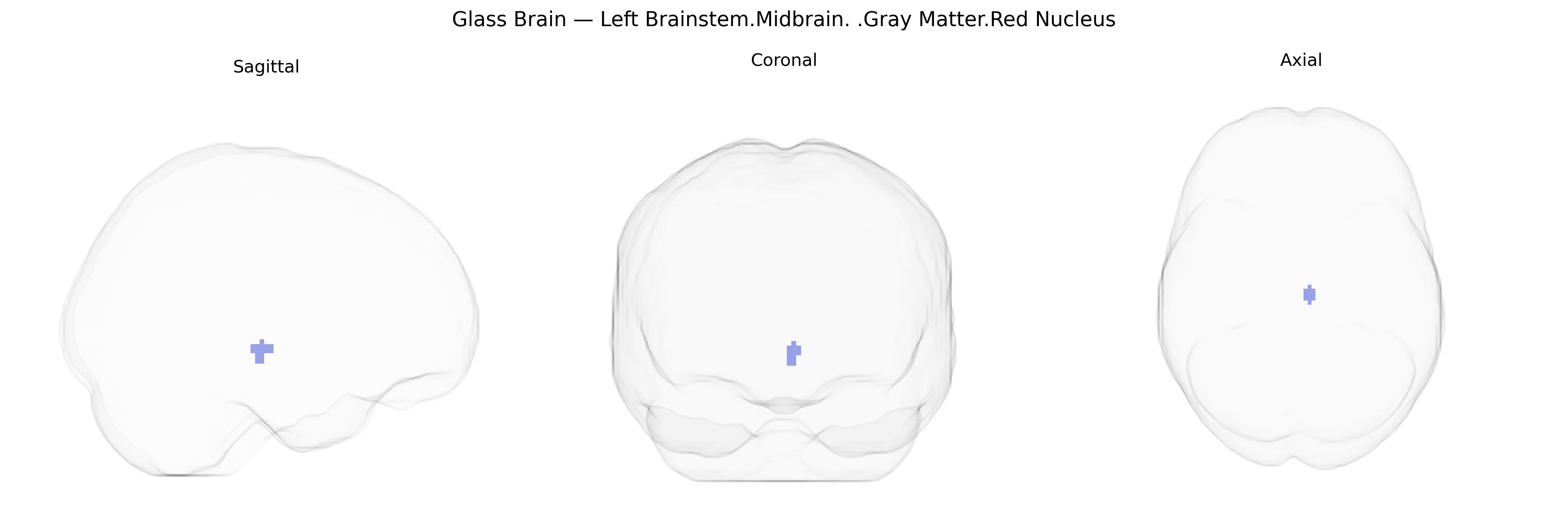
The bilateral Left Brainstem.Midbrain.Gray Matter.Red Nucleus corresponds to the paired red nuclei located in the rostral midbrain tegmentum, a key hub in motor coordination and sensorimotor integration. Composed of magnocellular and parvocellular subregions, the red nucleus receives input from the motor cortex and cerebellum and contributes to motor control via the rubrospinal tract (more prominent in non-human mammals) and cerebellar relay pathways. It is involved in the regulation of limb movements, motor learning, and the fine-tuning of voluntary actions, and is closely associated with extrapyramidal motor circuitry. Functionally, the red nucleus participates in integrating proprioceptive and motor signals, modulating muscle tone and posture, and coordinating complex movements, with its activity linked to both motor execution and error correction in movement. Red nucleus
The bilateral red nucleus, a midbrain gray-matter structure involved in motor coordination and cerebellar communication, has been indirectly implicated in genetic studies primarily through imaging genetics and GWAS of related motor, neurodevelopmental, and neurodegenerative traits rather than through region-specific association tests. Variants in genes affecting motor circuitry and cerebellar-thalamo-cortical pathways—including genes associated with Parkinson’s disease (e.g., LRRK2, SNCA), essential tremor (e.g., STK32B, TENM4), and dystonia (e.g., TOR1A)—are linked to functional and structural changes in interconnected motor networks that include the red nucleus, though its specific volumetric or functional alterations are less consistently reported than for basal ganglia or cortical motor areas. Neuroimaging genetic studies of cerebellar and brainstem structures sometimes show heritable variability and polygenic influences on volumes and connectivity involving the midbrain tegmentum, but do not yet highlight robust, replicated SNPs or genes uniquely tied to red nucleus morphology. GWAS of traits such as motor performance, gait, and balance, as well as disorders like multiple sclerosis and spinocerebellar ataxias, implicate genes involved in axonal guidance, myelination, and synaptic function that could affect pathways traversing or synapsing in the red nucleus, but current evidence remains largely circuit-level and indirect. Overall, genetic associations to this Talairach-defined bilateral Left Brainstem.Midbrain.Gray Matter.Red Nucleus region are inferred from broader motor and cerebellar network genetics rather than from dedicated GWAS pinpointing this nucleus as a primary locus of genetic risk.
Overview generated by GPT-4o (2026).
Region ID: 343
Hemisphere: bilateral
Atlas: Talairach labels 2mm
Full Quality Version: Download MP4
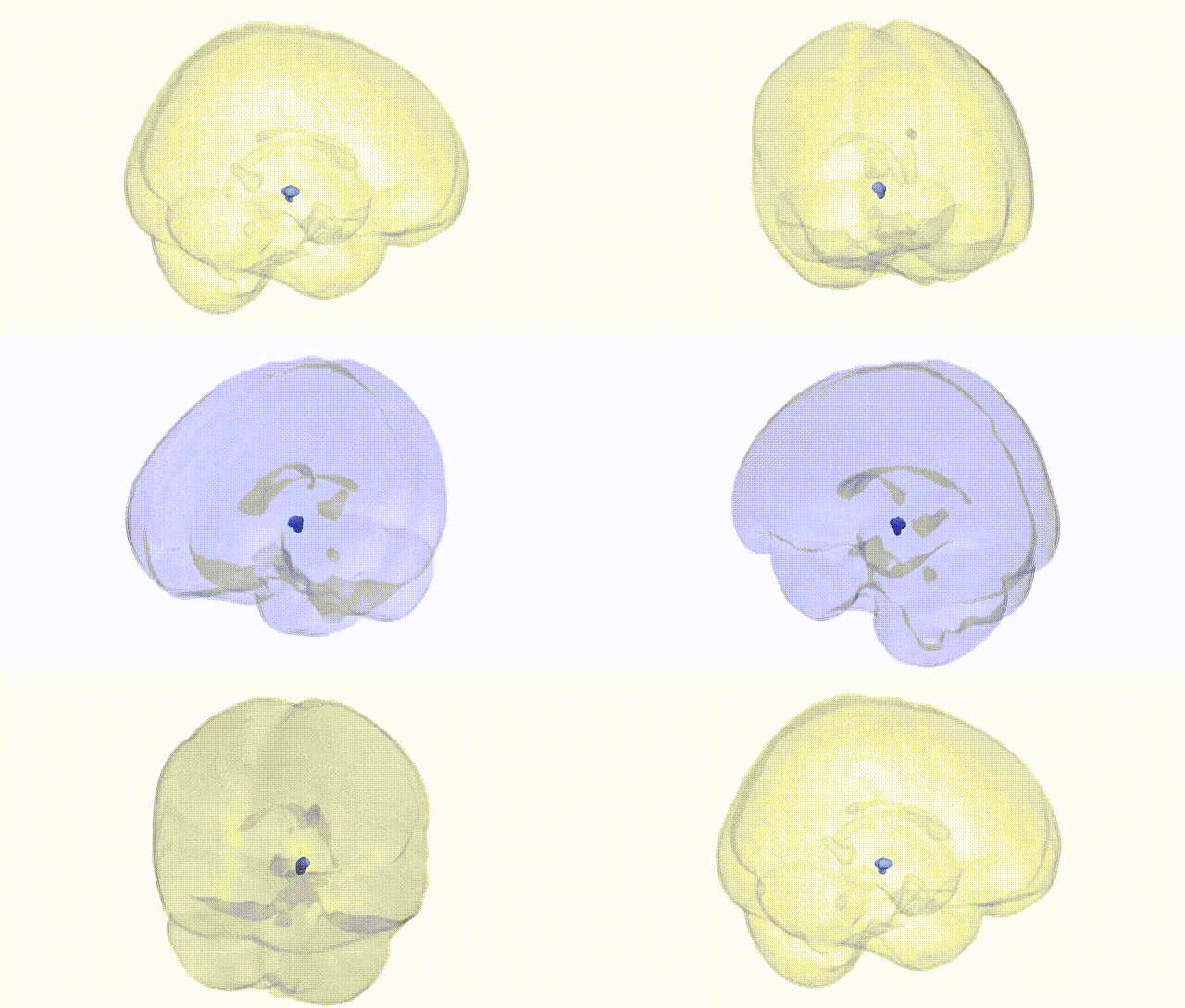
Full Quality Version: Download MP4
Wali Sidiqyar*, Gaurav Rudravaram*, Elyssa M. McMaster, Trent M. Schwartz, Adam M. Saunders, Kurt G. Schilling, Bennett A. Landman "Introducing SPINS: A Shared Public Visualization Library of Neuroanatomical Structures." Medical Imaging with Deep Learning- short paper
This resource is licensed under CC0 1.0 Universal (Public Domain).