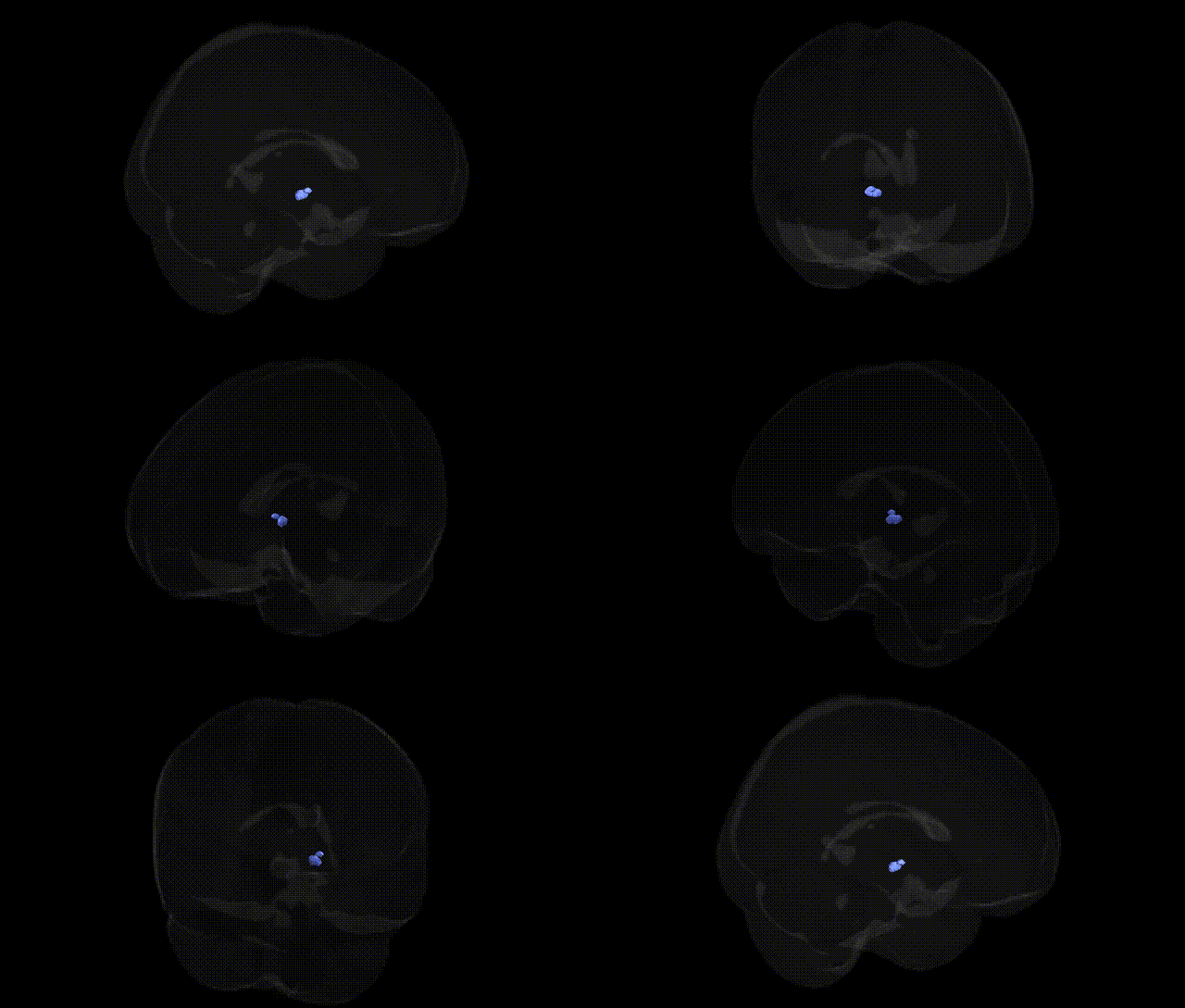
The bilateral Left Brainstem.Midbrain.Gray Matter.Subthalamic Nucleus refers to paired subthalamic nuclei located within the ventral diencephalon, bordering the midbrain, and composed primarily of gray matter containing densely packed glutamatergic projection neurons and local interneurons. This structure is a key component of the basal ganglia circuitry, forming part of the indirect and hyperdirect pathways that modulate motor output, action selection, and aspects of cognitive and limbic processing. The subthalamic nucleus receives excitatory input from the cortex and inhibitory input from the external segment of the globus pallidus, and sends excitatory projections mainly to the internal segment of the globus pallidus and substantia nigra pars reticulata, thereby influencing thalamocortical activity. Dysfunction of this region is strongly implicated in movement disorders such as Parkinson’s disease, hemiballismus, and dystonia, and it is a major target for deep brain stimulation therapy. Subthalamic nucleus
The subthalamic nucleus, a key node within the basal ganglia circuitry located in the midbrain/brainstem region, has been implicated in several genetically influenced movement and neuropsychiatric disorders, although direct GWAS-based regional associations are relatively sparse and usually inferred from circuitry-level findings rather than Talairach-based parcellations. Monogenic forms of Parkinson’s disease (e.g., variants in LRRK2, SNCA, PARKIN, PINK1, DJ-1) and risk variants identified in large PD GWAS (such as loci near SNCA, GBA, MAPT, TMEM175) affect the integrity and function of basal ganglia loops in which the subthalamic nucleus is a central excitatory hub, and the success of deep brain stimulation targeting this nucleus in PD and dystonia underscores its role in genetically mediated motor circuit dysfunction. In hyperkinetic disorders like hemiballismus and some forms of dystonia, pathogenic variants in genes affecting basal ganglia development, synaptic transmission, or excitability (e.g., TOR1A, GNAL, ATP1A3) are thought to influence subthalamic nucleus activity indirectly through network-level effects. Psychiatric and cognitive traits, such as obsessive–compulsive disorder (with GWAS loci including genes involved in cortico-striato-thalamo-cortical circuits) and impulse control disorders, have also been linked to basal ganglia and subthalamic circuitry, though regional specificity at the level of the bilateral “Left Brainstem.Midbrain.Gray Matter.Subthalamic Nucleus” Talairach 2 mm label is not yet well established. Overall, genetic associations are best characterized for diseases (especially Parkinson’s disease and dystonia) whose pathophysiology critically involves the subthalamic nucleus and related basal ganglia networks rather than for this specific atlas-defined region in isolation.
Overview generated by GPT-4o (2026).
Region ID: 453
Hemisphere: bilateral
Atlas: Talairach labels 2mm
Full Quality Version: Download MP4
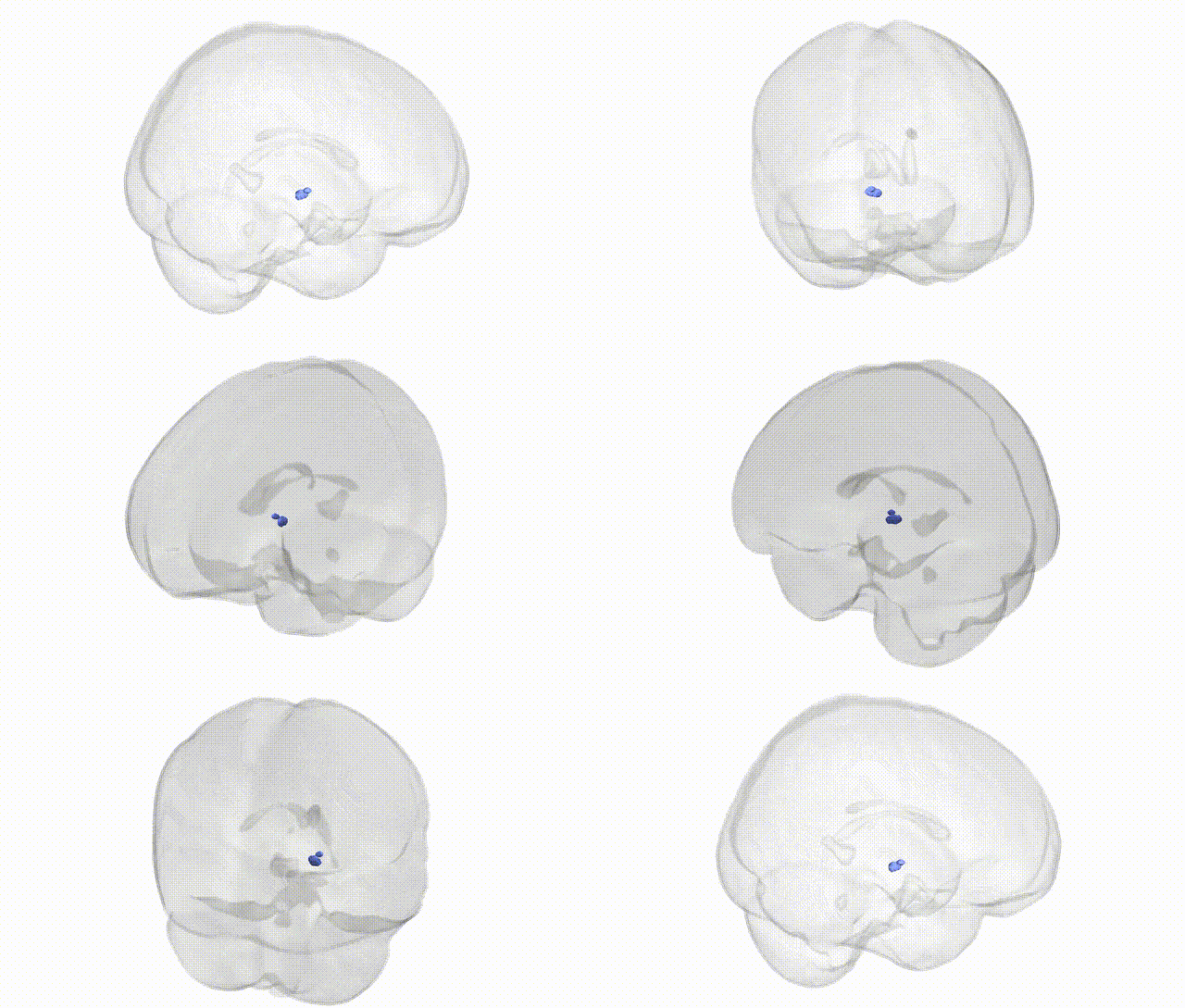
Full Quality Version: Download MP4
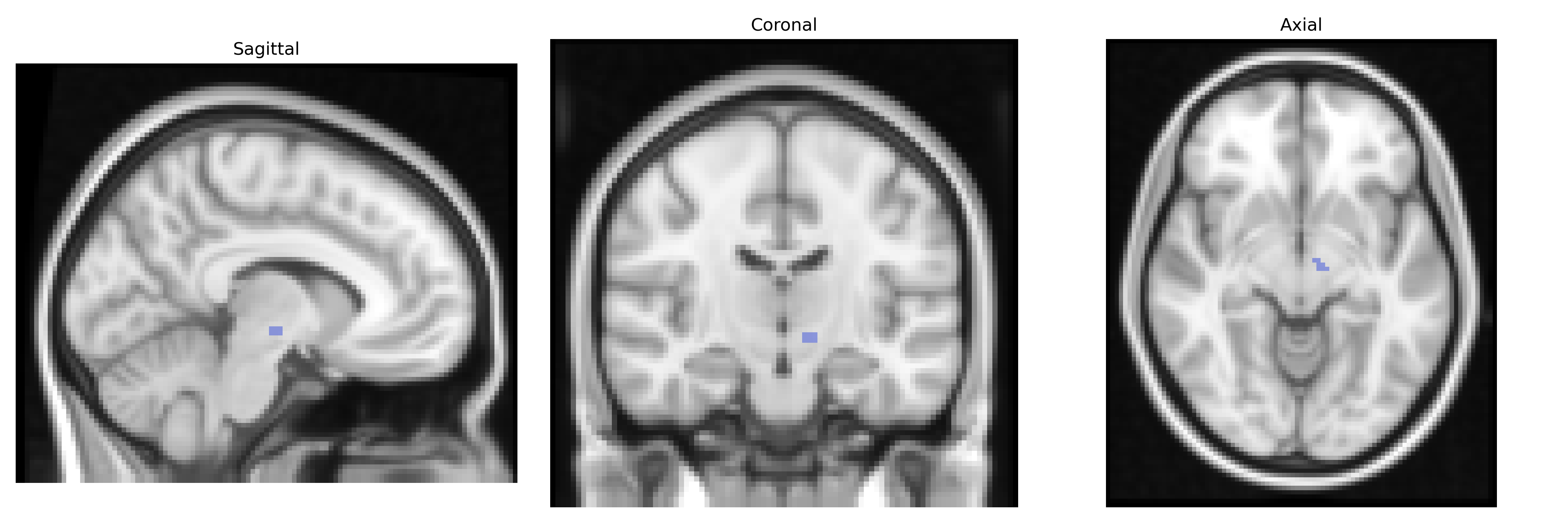
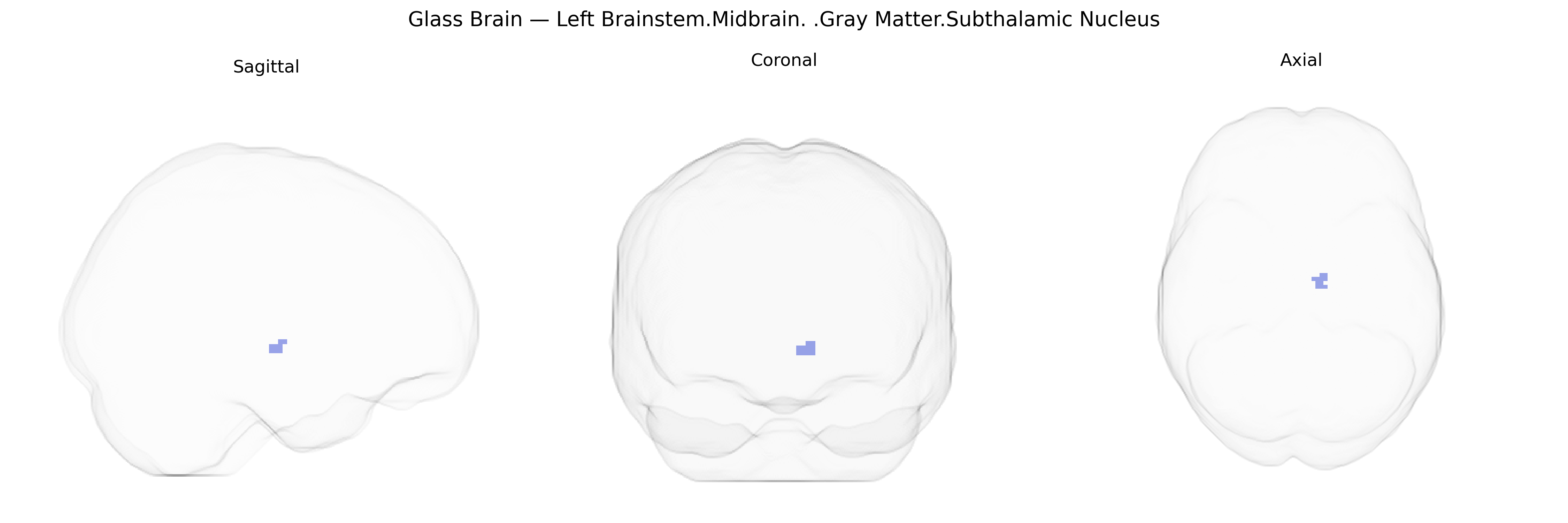
Wali Sidiqyar*, Gaurav Rudravaram*, Elyssa M. McMaster, Trent M. Schwartz, Adam M. Saunders, Kurt G. Schilling, Bennett A. Landman "Introducing SPINS: A Shared Public Visualization Library of Neuroanatomical Structures." Medical Imaging with Deep Learning- short paper
This resource is licensed under CC0 1.0 Universal (Public Domain).