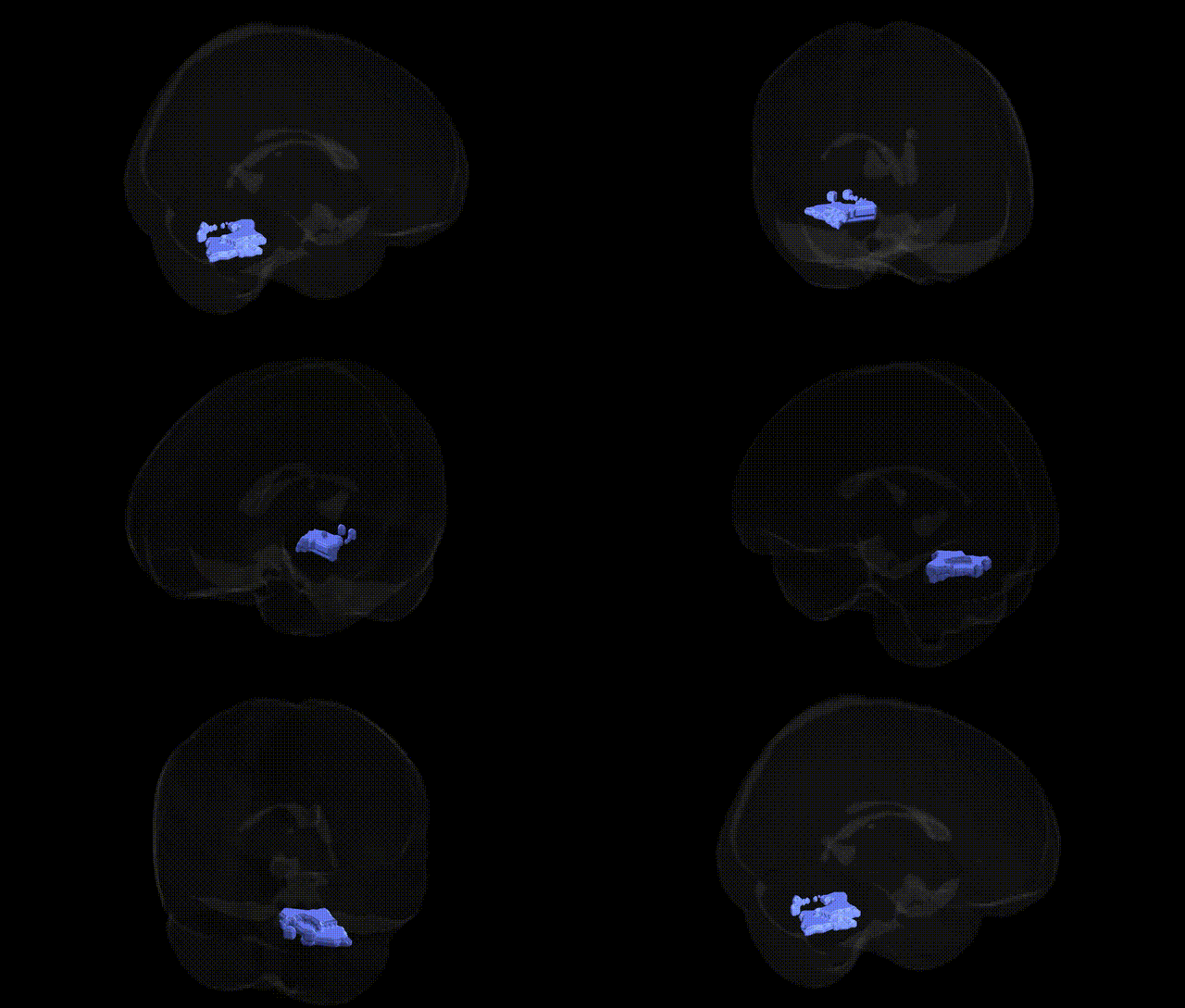
The bilateral Left Cerebellum, Anterior Lobe, Gray Matter corresponds to cerebellar cortex located in the anterior portion of the cerebellum, primarily involved in the regulation of posture, muscle tone, and the coordination of limb movements, especially those of the lower extremities. In the Talairach 2 mm Atlas, this region encompasses folia of the anterior lobe on the left side but is functionally mirrored by homologous structures on both hemispheres, integrating proprioceptive input from spinal pathways and contributing to feed-forward motor control. Cytoarchitectonically, it consists of the trilaminar cerebellar cortex (molecular layer, Purkinje cell layer, and granular layer), with Purkinje cells projecting to deep cerebellar nuclei, notably the fastigial and interposed nuclei, which in turn influence descending motor pathways via thalamic and brainstem relays. There is no direct Wikipedia article for “Left Cerebellum, Anterior Lobe, Gray Matter”; a closely related structure is the Anterior lobe of cerebellum.
The bilateral left cerebellum anterior lobe gray matter, as defined in the Talairach 2 mm atlas, has been implicated in genetic studies primarily through broader cerebellar or regional volumetric GWAS rather than highly specific locus-based analyses. Large neuroimaging genetics consortia (e.g., ENIGMA, UK Biobank) have identified multiple loci influencing total and regional cerebellar volume and cortical thickness, including variants near genes involved in neurodevelopment, synaptic function, and cell adhesion (such as KIAA0319, RELN, and CNTN4), some of which show associations with cerebellar morphology that encompass anterior lobular regions. Polygenic risk for neurodevelopmental and psychiatric disorders—particularly autism spectrum disorder, schizophrenia, attention-deficit/hyperactivity disorder, and major depressive disorder—has been associated with structural and functional differences in cerebellar anterior regions, consistent with the role of the anterior cerebellum in motor coordination, cognitive control, and affect regulation. Rare variants and Mendelian mutations affecting cerebellar development and ataxia genes (e.g., CACNA1A, ITPR1, ATXN genes in spinocerebellar ataxias) often produce pronounced anterior lobe involvement, including gray matter loss, though these findings are typically reported at the level of the cerebellum or vermis rather than Talairach-defined subregions. Additionally, GWAS of motor performance, gait, and balance have identified genetic influences overlapping with loci affecting cerebellar structure, indirectly linking genetic variation to anterior cerebellar morphology and function, but current evidence does not yet provide highly specific, replicated gene–region mappings for the bilateral left cerebellum anterior lobe gray matter beyond these broader cerebellar and motor-related associations.
Overview generated by GPT-4o (2026).
Region ID: 85
Hemisphere: bilateral
Atlas: Talairach labels 2mm
Full Quality Version: Download MP4
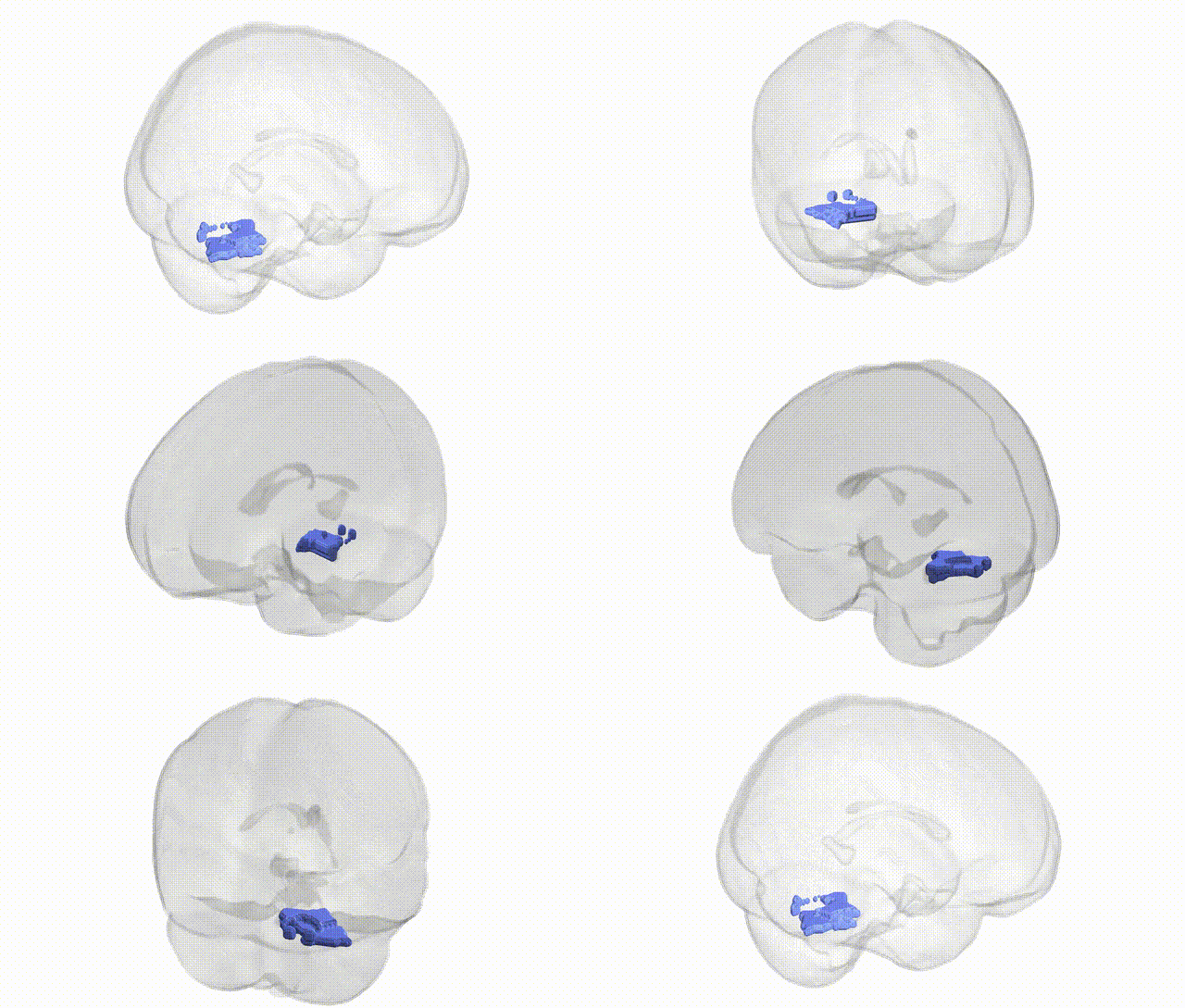
Full Quality Version: Download MP4
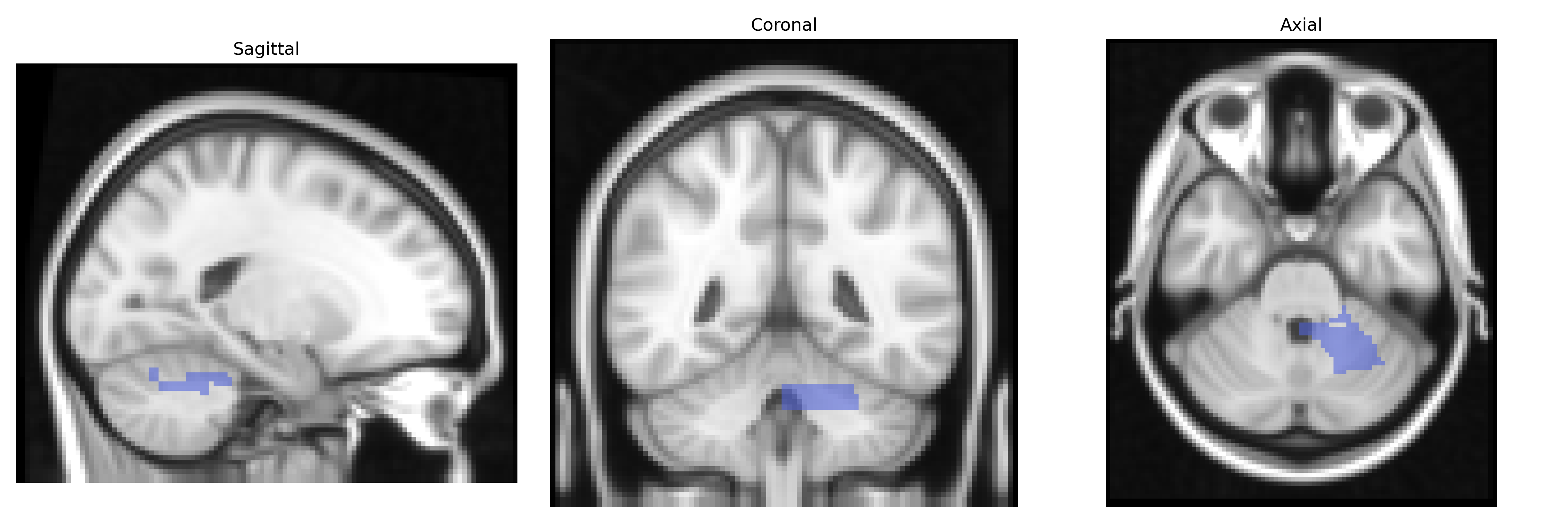
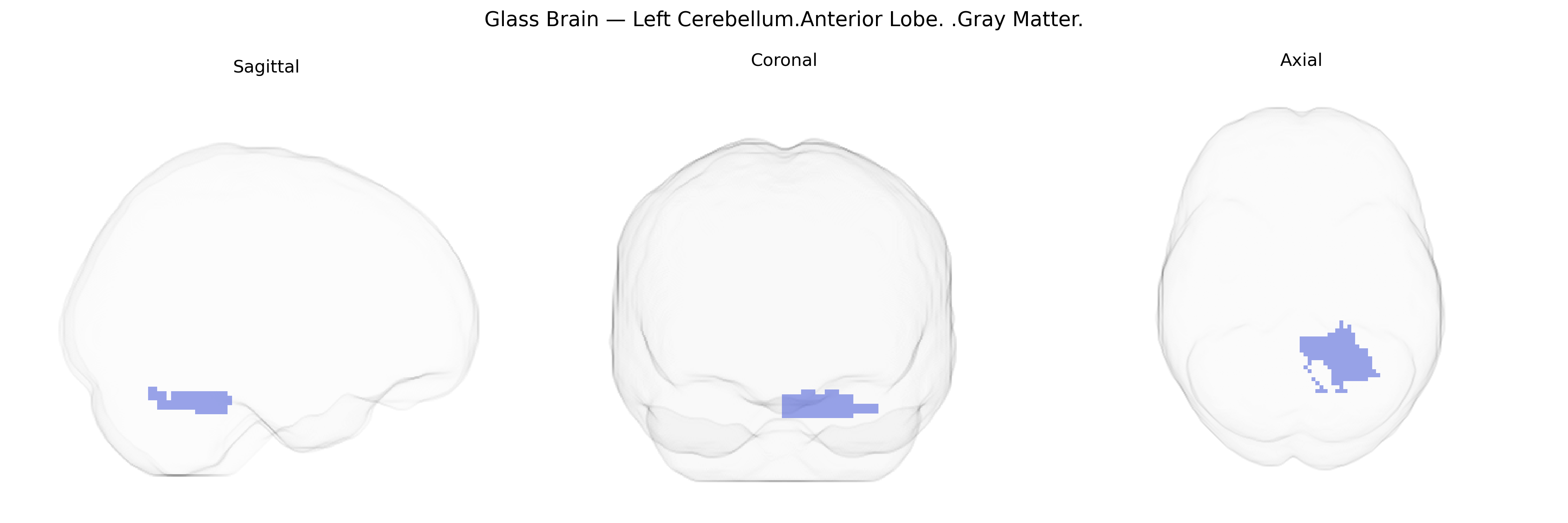
Wali Sidiqyar*, Gaurav Rudravaram*, Elyssa M. McMaster, Trent M. Schwartz, Adam M. Saunders, Kurt G. Schilling, Bennett A. Landman "Introducing SPINS: A Shared Public Visualization Library of Neuroanatomical Structures." Medical Imaging with Deep Learning- short paper
This resource is licensed under CC0 1.0 Universal (Public Domain).