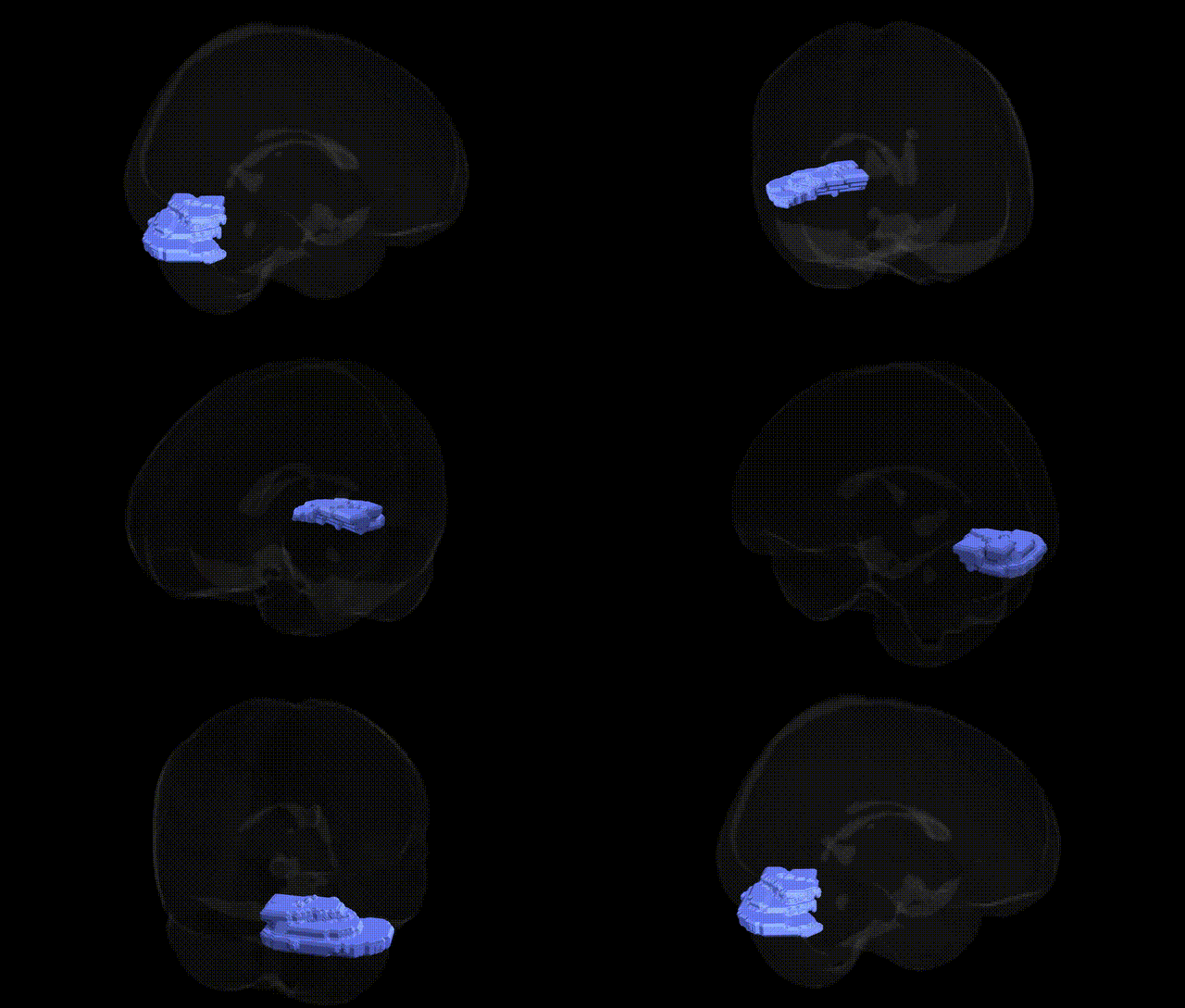
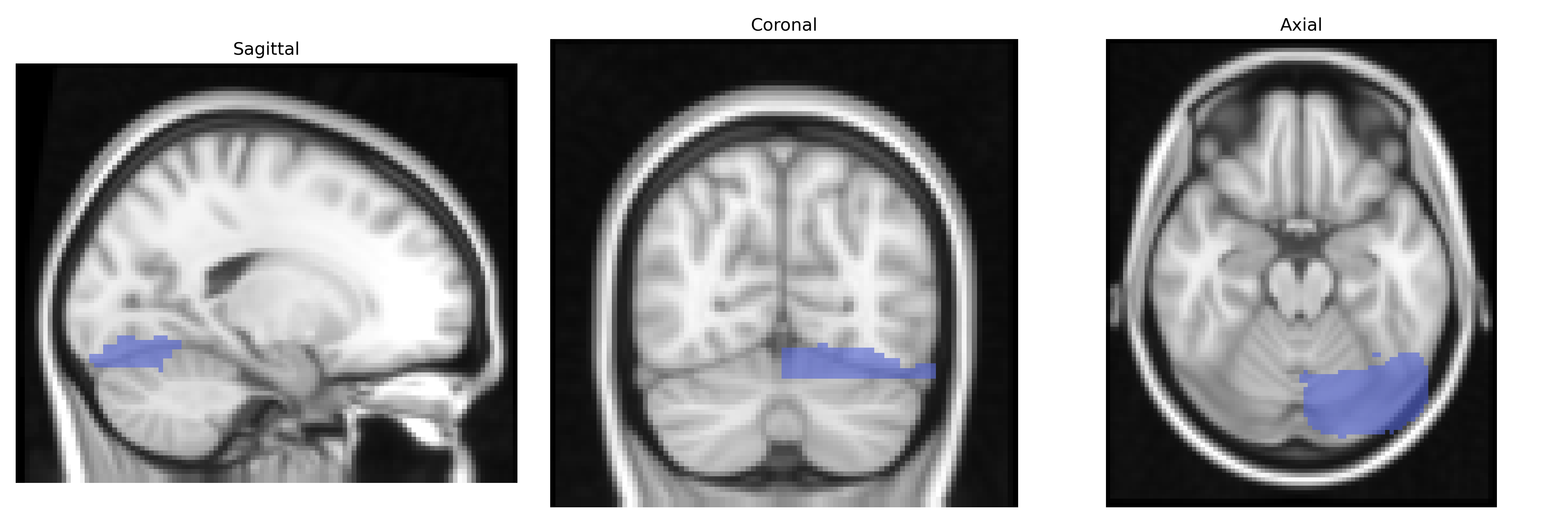
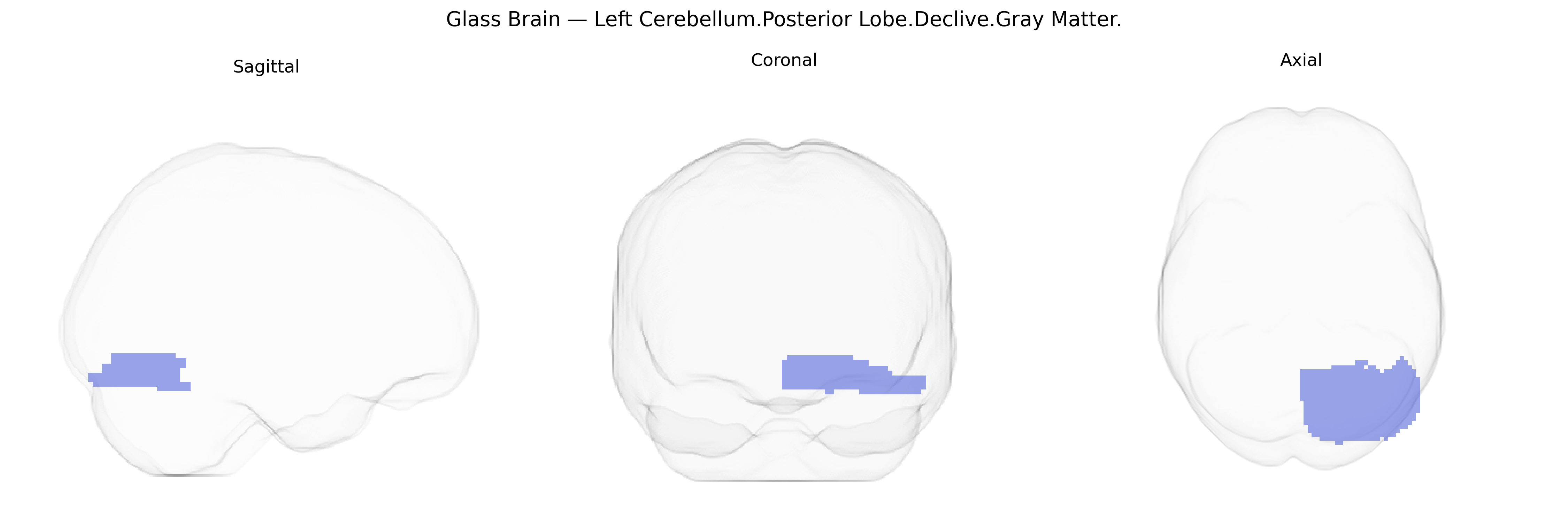
The bilateral Left Cerebellum.Posterior Lobe.Declive.Gray Matter corresponds to the declive (lobule VI) of the posterior lobe of the cerebellum, a cortical gray matter region on the superior surface of the cerebellar hemisphere. This area is part of the spinocerebellum and cerebrocerebellum and is implicated in fine motor coordination, postural control, and the timing and precision of movements, as well as in aspects of cognitive processing such as attention and visuomotor integration through connections with the cerebral cortex and brainstem nuclei. The declive receives input from spinal, vestibular, and cortical pathways and projects via deep cerebellar nuclei (primarily the dentate and interposed nuclei) to thalamic and cortical motor areas, contributing to adaptive motor learning and error correction in movement. There is no direct link for the declive itself; a related structure is the cerebellum: Cerebellum.
The bilateral left cerebellar posterior lobe declive (gray matter), as defined in the Talairach 2 mm atlas, has been indirectly implicated in genetic studies through its involvement in motor coordination, cognitive processing, and affective regulation, but there are no large-scale GWAS that specifically target this subregion by name. Instead, imaging genetics and brain-wide GWAS of cortical and subcortical morphology occasionally report cerebellar posterior lobe volume or thickness associations with common variants in genes related to neurodevelopment (e.g., pathways involving synaptic plasticity, neuronal migration, and axonal guidance), including loci near genes such as CACNA1C, BDNF, and FOXP2, which broadly influence cerebellar structure and function rather than this precise declive parcel. Polygenic risk for psychiatric disorders (schizophrenia, bipolar disorder, major depression, autism spectrum disorder, ADHD) has been associated with alterations in cerebellar morphology and functional connectivity, with some voxel-based morphometry and resting-state fMRI studies localizing effects to posterior cerebellar regions implicated in cognitive and affective networks, but still not resolving to the declive label at Talairach 2 mm resolution. GWAS of motor skills, general cognitive ability, educational attainment, and neuroticism have identified variants that are associated both with these traits and with global or lobular cerebellar measures, suggesting pleiotropic genetic influences on cerebro-cerebellar circuits, yet the declive region remains part of a larger posterior cerebellar network rather than an independently validated GWAS target. Overall, genetic associations relevant to the bilateral left cerebellar posterior lobe declive are inferred from broader cerebellar and brain-wide imaging genetics findings rather than from studies explicitly focused on this Talairach-defined gray-matter region.
Overview generated by GPT-4o (2026).
Region ID: 157
Hemisphere: bilateral
Atlas: Talairach labels 2mm
Full Quality Version: Download MP4
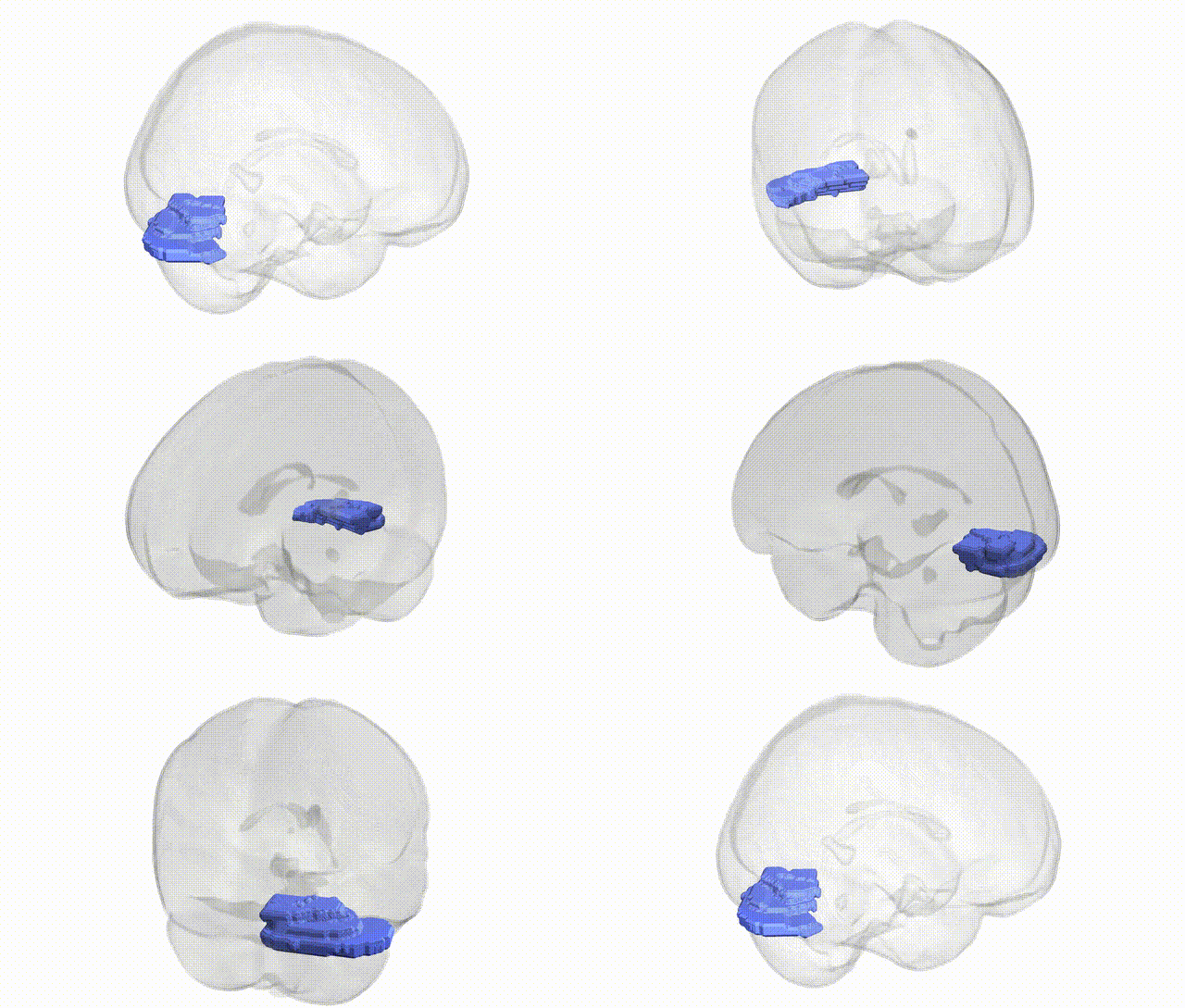
Full Quality Version: Download MP4
Wali Sidiqyar*, Gaurav Rudravaram*, Elyssa M. McMaster, Trent M. Schwartz, Adam M. Saunders, Kurt G. Schilling, Bennett A. Landman "Introducing SPINS: A Shared Public Visualization Library of Neuroanatomical Structures." Medical Imaging with Deep Learning- short paper
This resource is licensed under CC0 1.0 Universal (Public Domain).