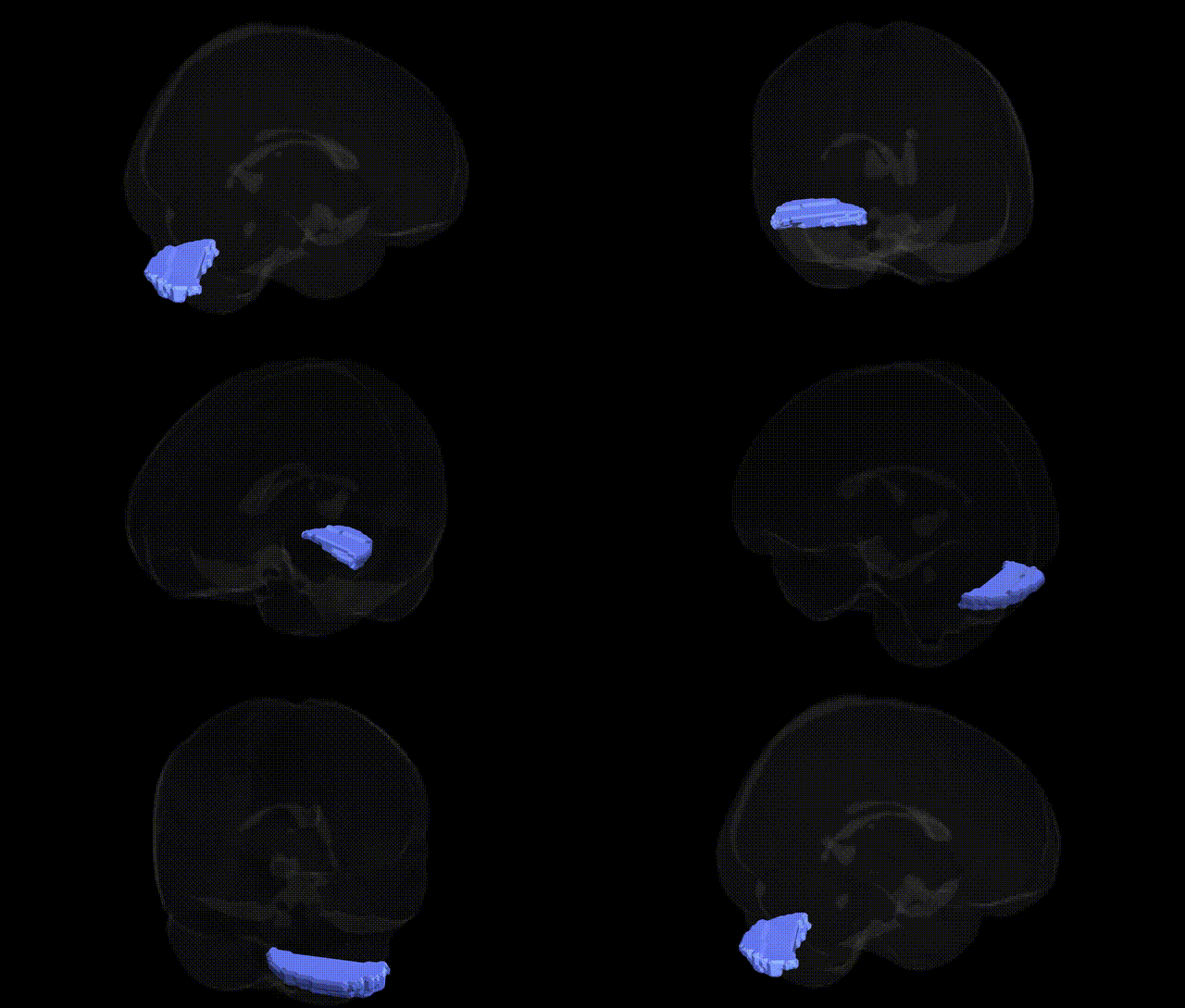
The bilateral Left Cerebellum Posterior Lobe Inferior Semi-Lunar Lobule Gray Matter corresponds to cortical tissue within the inferior semilunar lobule (also known as Crus II) of the posterior lobe of the cerebellum. This region is involved in higher-order cerebellar functions, including coordination of complex voluntary movements, fine motor control, and aspects of cognitive processing such as working memory and executive functions, via extensive connections with the cerebral cortex and brainstem nuclei. Its gray matter contains densely packed cerebellar cortex with Purkinje cells, granule cells, and interneurons that integrate proprioceptive and cortical input to modulate motor output through the deep cerebellar nuclei. There is no direct Wikipedia article for this specific lobule subset; see the related structure: Cerebellum.
The bilateral Left Cerebellum.Posterior Lobe.Inferior Semi-Lunar Lobule.Gray Matter (Talairach 2 mm atlas) lies within cerebellar lobule VIII/Crus II territory, a region increasingly implicated in genetically influenced motor, cognitive, and affective phenotypes, though few studies target this lobule with fine-grained precision. Large GWAS of brain structure (e.g., ENIGMA and UK Biobank) have identified multiple common variants associated with cerebellar gray matter volume and cortical thickness, including loci near genes involved in neurodevelopment (e.g., PAX6, FOXP1, KIAA0319, DLG4-related pathways), synaptic signaling, and axon guidance; some of these associations show spatial peaks in posterior cerebellar regions that overlap the inferior semi-lunar lobule. Polygenic risk scores for schizophrenia, major depression, bipolar disorder, and autism spectrum disorder correlate with altered cerebellar morphology and functional connectivity, with posterior lobules—especially Crus I/II and lobule VIII—frequently highlighted as sites of genetically driven abnormalities in fronto‑cerebellar circuits. Additionally, variants in CACNA1A, ITPR1, and other ion channel or calcium signaling genes linked to spinocerebellar ataxias and episodic ataxias affect posterior cerebellar gray matter, including inferior semi-lunar regions, producing volume loss and microstructural changes detectable in imaging‑genetics studies. GWAS of cognitive traits and educational attainment have also implicated the posterior cerebellum, and mediational analyses suggest that genetically influenced differences in this lobule’s gray matter partly bridge the relationship between polygenic scores for cognition and performance on executive and working memory tasks, although current evidence is based on parcel- or lobule‑level rather than Talairach label‑specific analyses.
Overview generated by GPT-4o (2026).
Region ID: 1
Hemisphere: bilateral
Atlas: Talairach labels 2mm
Full Quality Version: Download MP4
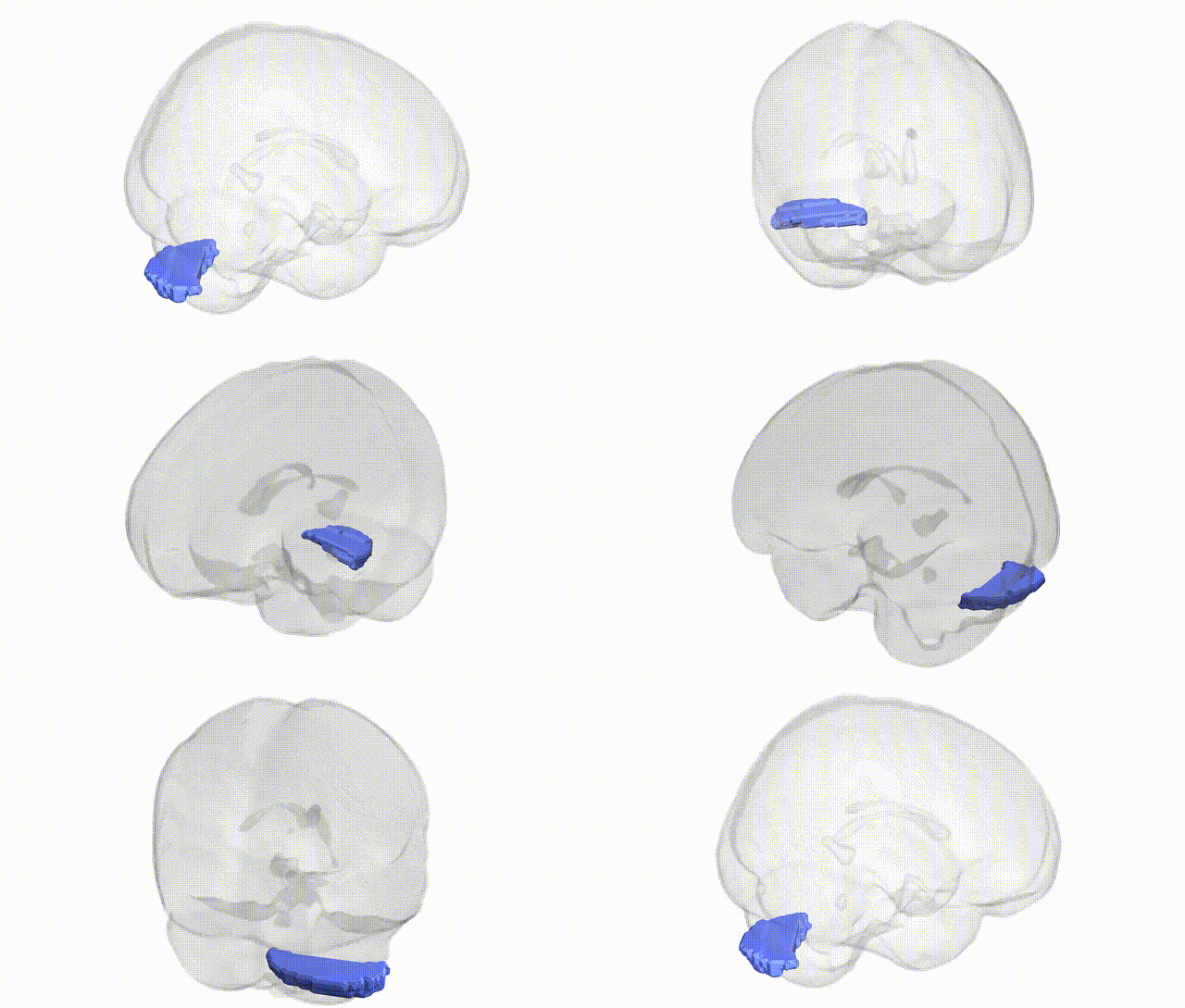
Full Quality Version: Download MP4
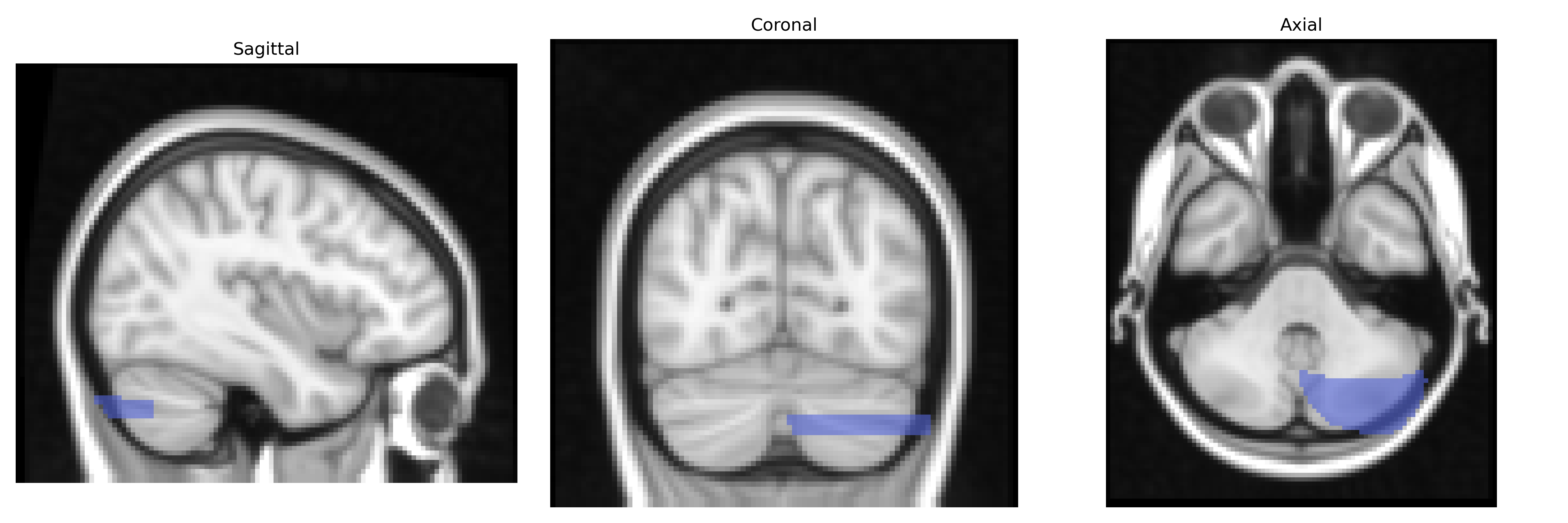
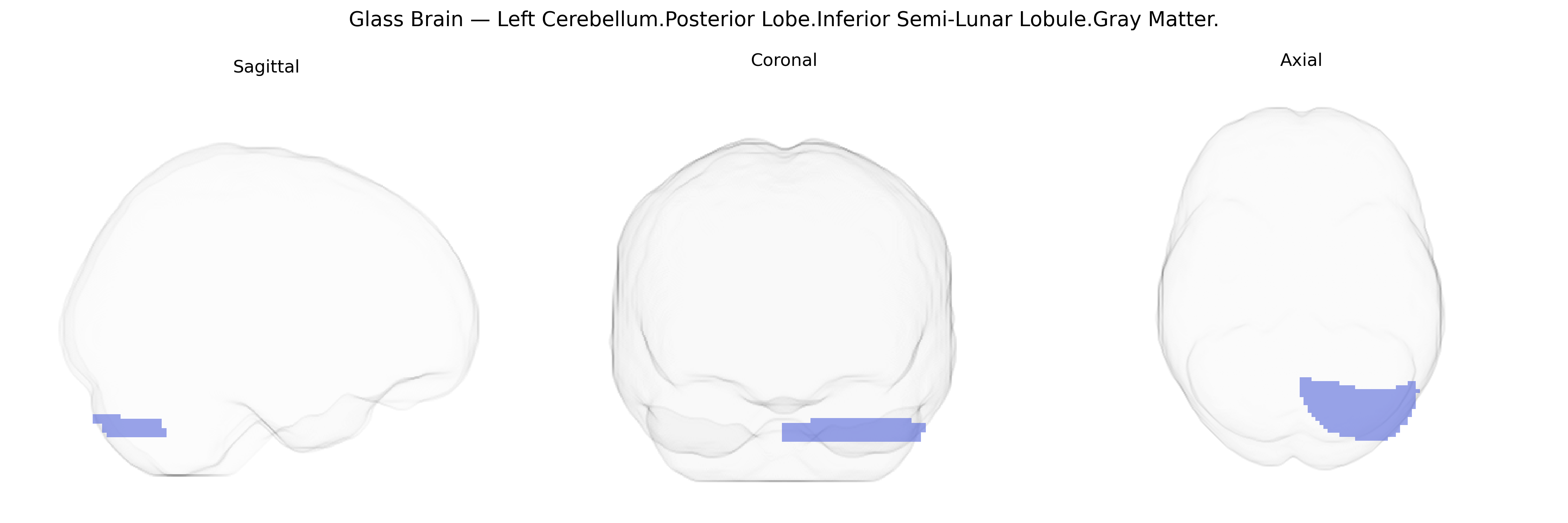
Wali Sidiqyar*, Gaurav Rudravaram*, Elyssa M. McMaster, Trent M. Schwartz, Adam M. Saunders, Kurt G. Schilling, Bennett A. Landman "Introducing SPINS: A Shared Public Visualization Library of Neuroanatomical Structures." Medical Imaging with Deep Learning- short paper
This resource is licensed under CC0 1.0 Universal (Public Domain).