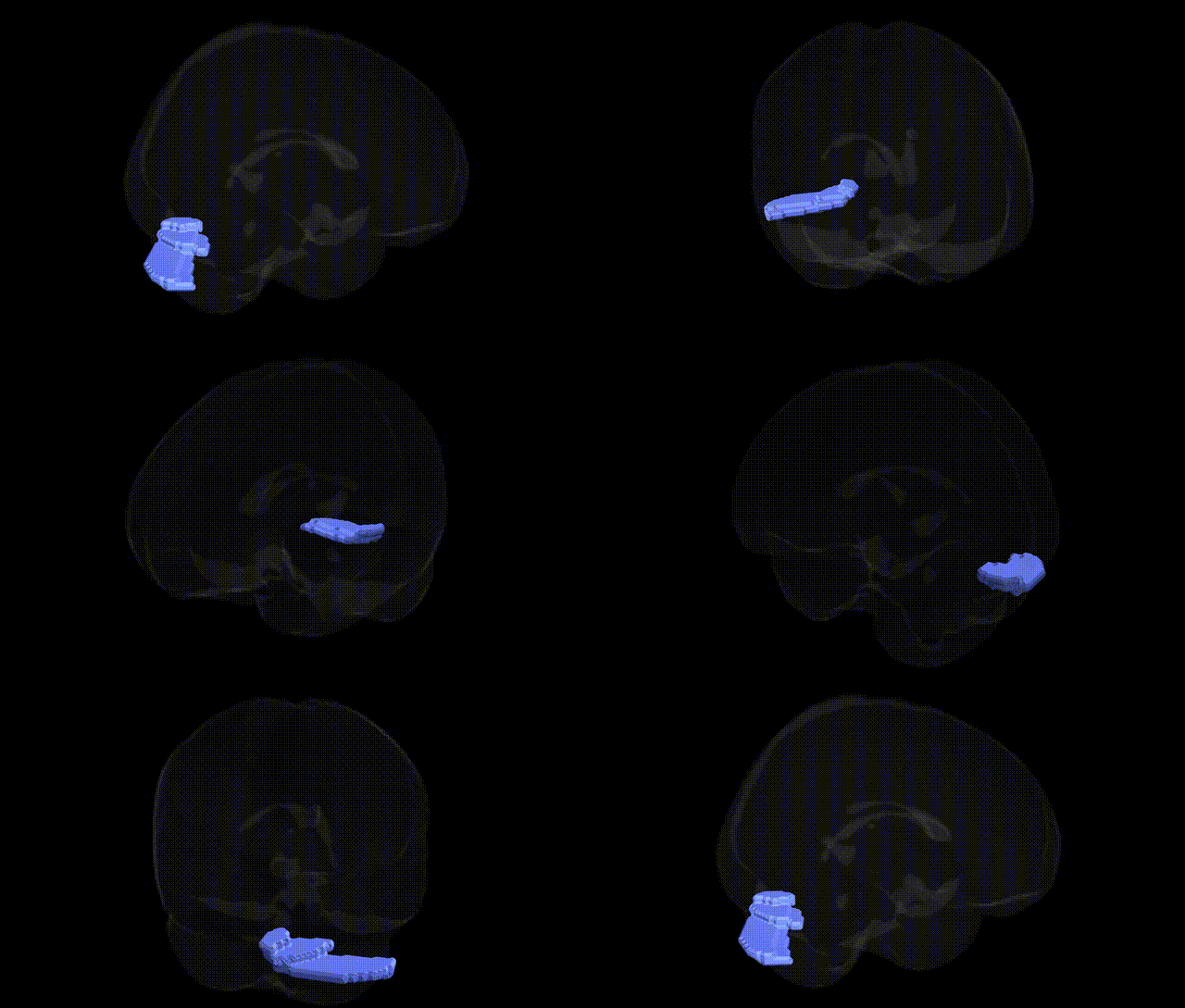
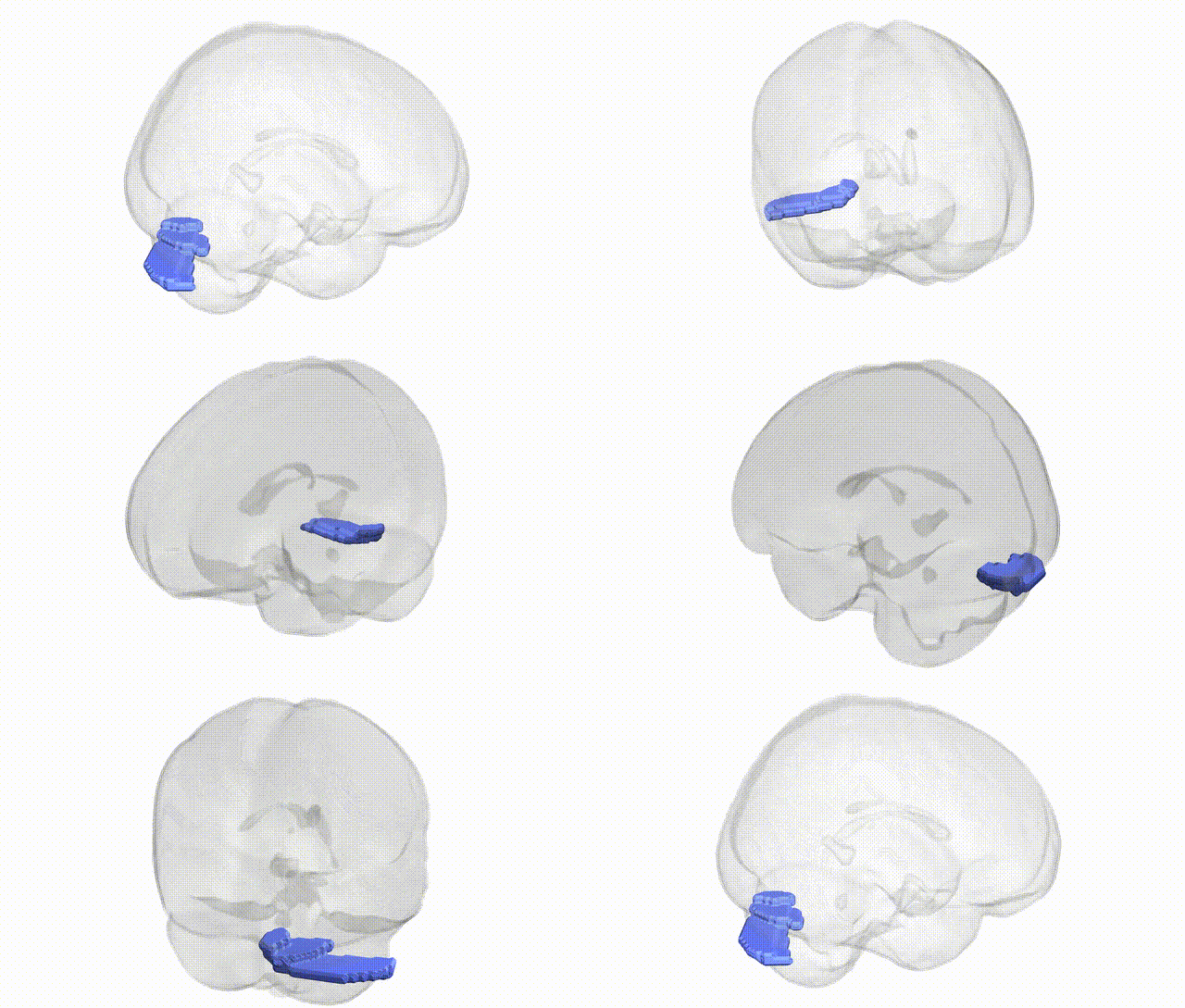
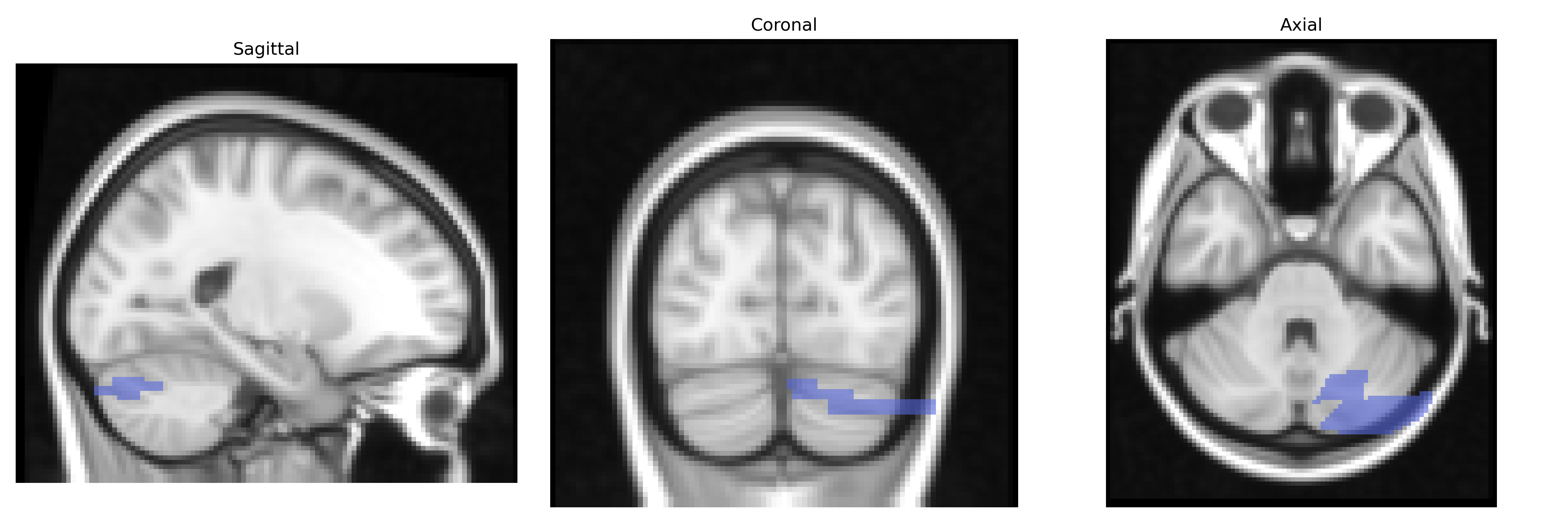
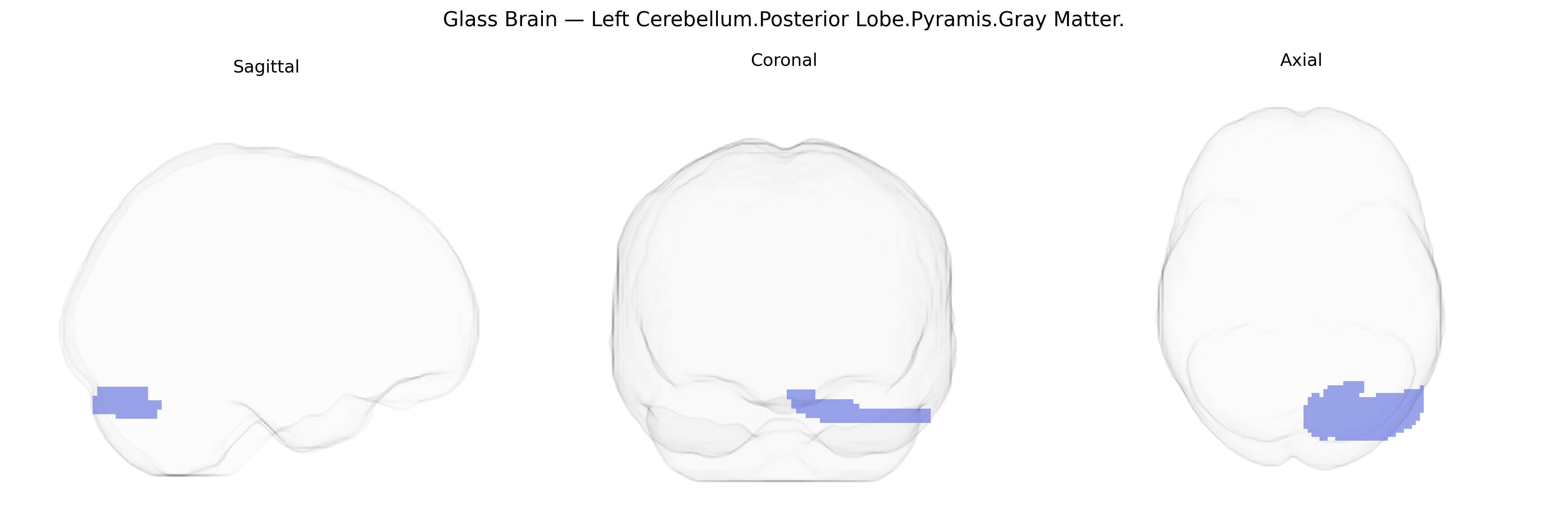
The bilateral Left Cerebellum.Posterior Lobe.Pyramis.Gray Matter corresponds to the gray matter of the pyramis, a midline lobular structure within the posterior lobe of the cerebellum. This region is part of the vermis and contributes to the cerebellum’s role in coordinating posture, balance, and fine motor control by integrating somatosensory and vestibular inputs and modulating descending motor pathways. The gray matter here contains cortical layers and local circuit neurons that project to deep cerebellar nuclei, influencing motor adaptation and timing. There is no direct Wikipedia article for the cerebellar pyramis; a related structure within which it is situated is the Cerebellum.
The bilateral Left Cerebellum.Posterior Lobe.Pyramis.Gray Matter region, part of the midline cerebellar vermis, has not typically been isolated as a distinct target in genome-wide association studies, but genetic findings implicating the cerebellum and vermis more broadly provide relevant context. Variants in genes involved in neurodevelopment, synaptic function, and cerebellar patterning—such as CACNA1A, GRID2, FOXP2, and several autism- and schizophrenia-associated loci—have been associated with structural and functional alterations in cerebellar gray matter, including posterior lobules that encompass the pyramis. GWAS of brain imaging phenotypes (e.g., UK Biobank and ENIGMA) have identified polygenic influences on cerebellar volume and cortical thickness, with cerebellar regions contributing to multivariate signatures associated with general cognitive ability, educational attainment, and psychiatric risk, though these studies typically report lobular or whole-cerebellum measures rather than Talairach-defined subregions like the pyramis. In clinical genetic research, cerebellar vermis abnormalities linked to copy number variants (e.g., 22q11.2 deletion) and monogenic disorders of cerebellar development (e.g., some spinocerebellar ataxias and Dandy–Walker spectrum malformations) frequently involve the posterior vermis, implicating genetic disruption of midline cerebellar circuits in motor coordination, affect regulation, and neurodevelopmental outcomes. Overall, existing genetic evidence supports a polygenic and pleiotropic influence on the structure and function of cerebellar vermis regions that include the pyramis, but direct GWAS-level associations specifically localized to the bilateral Left Cerebellum.Posterior Lobe.Pyramis.Gray Matter label remain limited, and findings are typically inferred from broader cerebellar or vermis-based imaging genetics analyses.
Overview generated by GPT-4o (2026).
Region ID: 61
Hemisphere: bilateral
Atlas: Talairach labels 2mm
Full Quality Version: Download MP4
Full Quality Version: Download MP4
Wali Sidiqyar*, Gaurav Rudravaram*, Elyssa M. McMaster, Trent M. Schwartz, Adam M. Saunders, Kurt G. Schilling, Bennett A. Landman "Introducing SPINS: A Shared Public Visualization Library of Neuroanatomical Structures." Medical Imaging with Deep Learning- short paper
This resource is licensed under CC0 1.0 Universal (Public Domain).