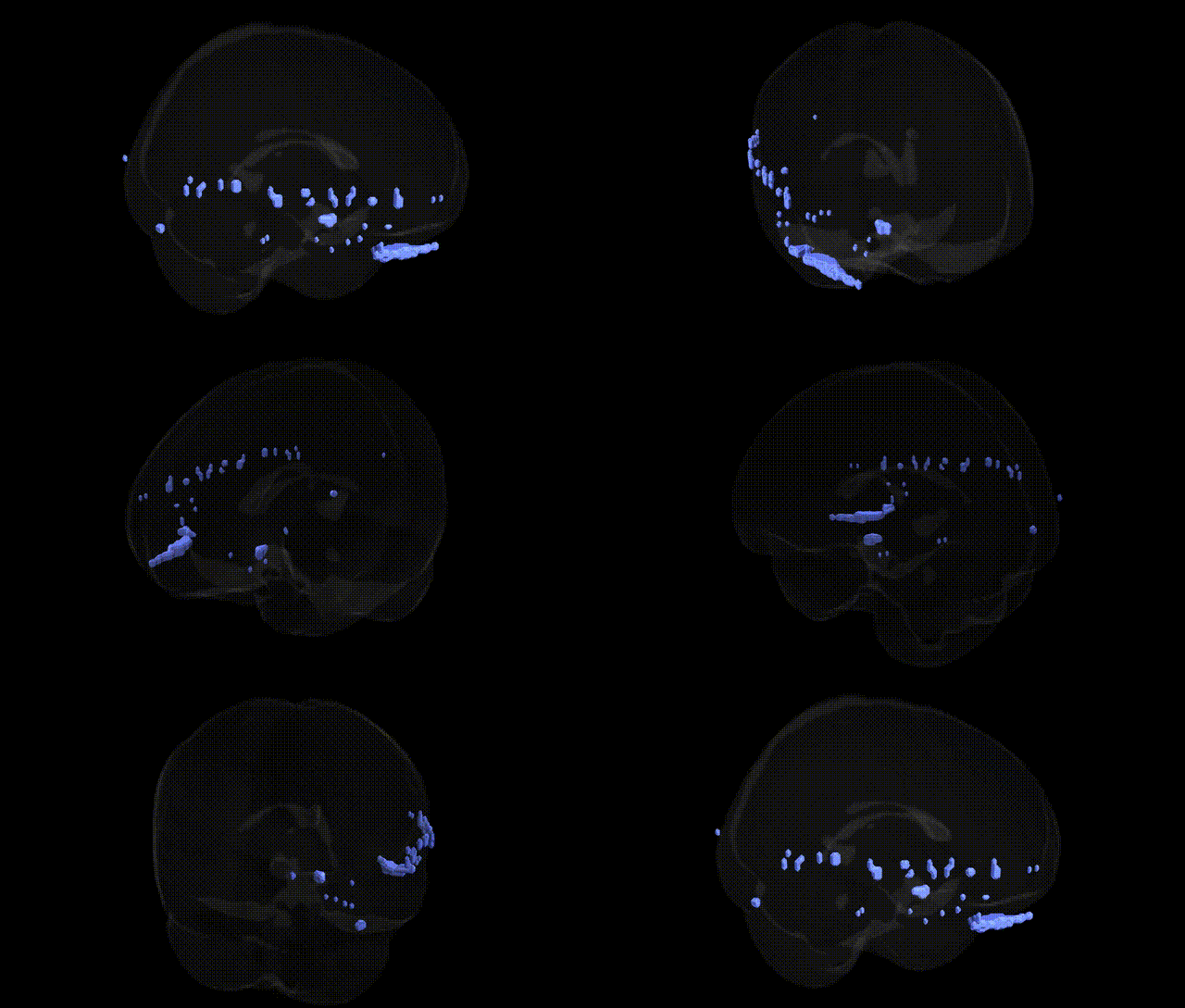
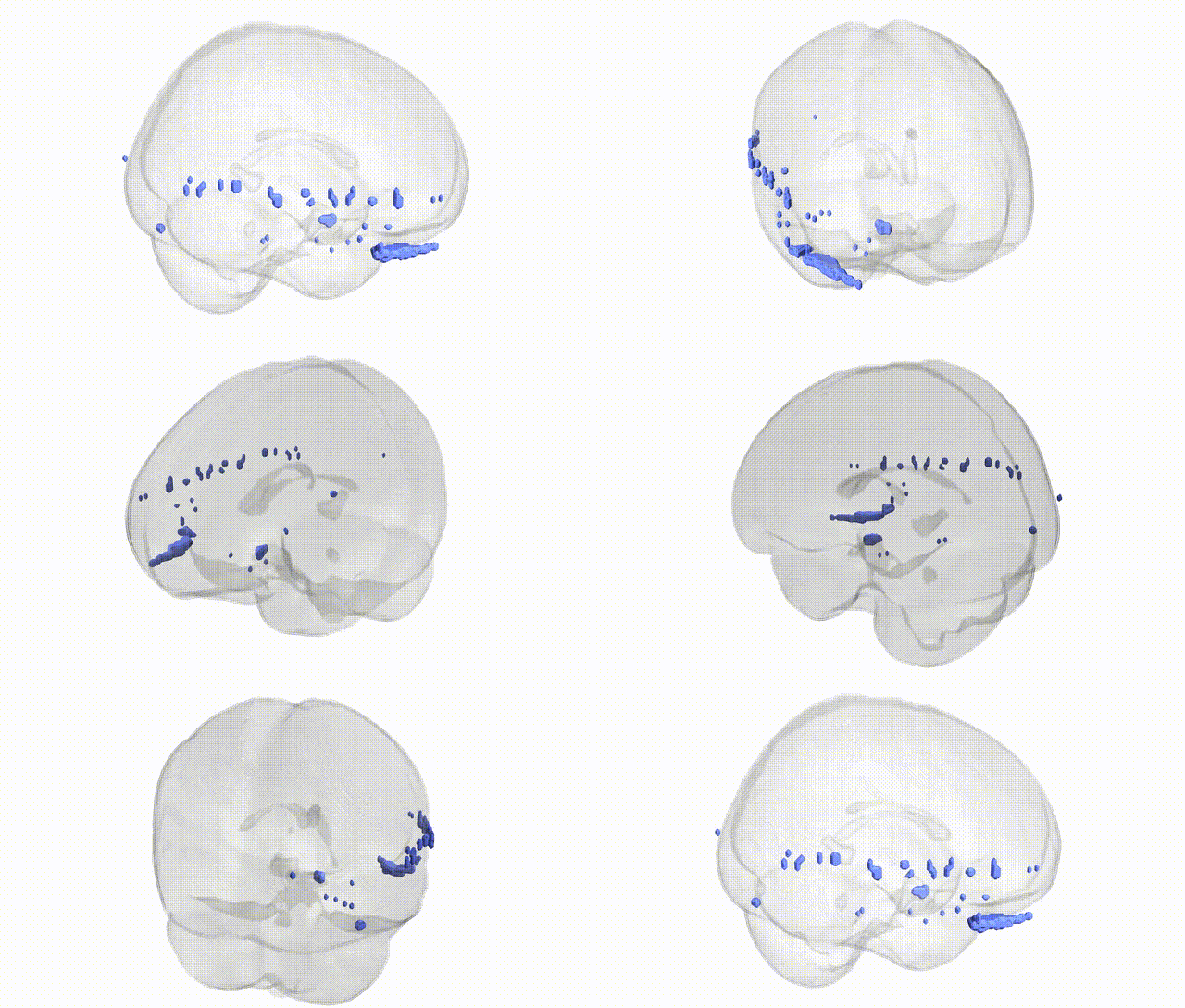
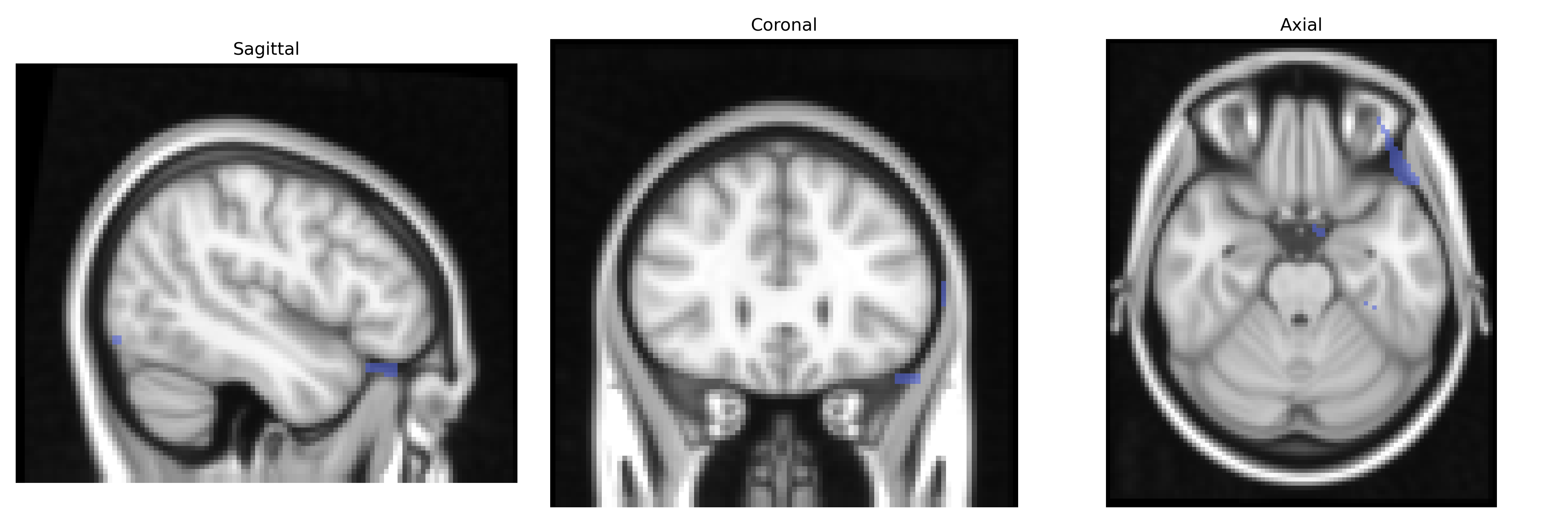
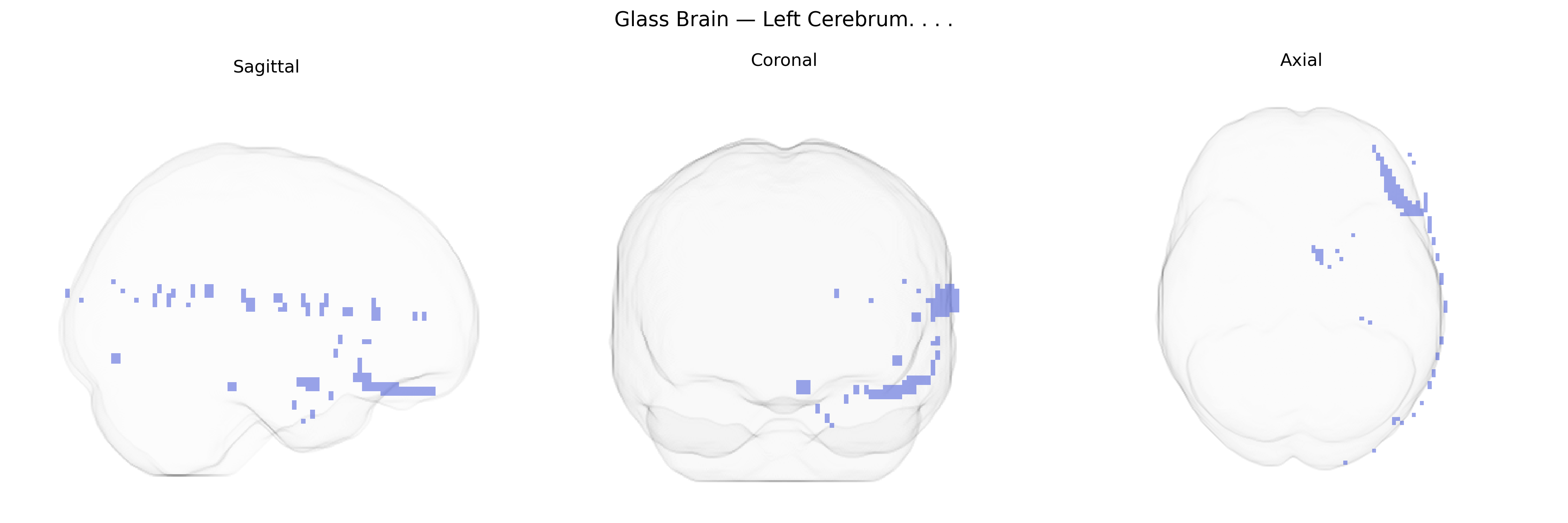
The bilateral left cerebrum refers to the left cerebral hemisphere considered across both its cortical and subcortical territories, encompassing frontal, parietal, temporal, and occipital lobes as well as deep structures such as the basal ganglia and limbic components. Functionally, the left cerebrum is classically associated with language production and comprehension, analytical and logical processing, sequential reasoning, and fine motor control of the contralateral (right) side of the body, although there is substantial interindividual variability and overlap with right-hemispheric functions. Structurally, it consists of gray matter (neuronal cell bodies in the cerebral cortex and nuclei) and white matter tracts that interconnect cortical regions and link them to subcortical and brainstem centers. There is no direct link for “Left Cerebrum” as a standalone article; a closely related structure is the Cerebrum.
Genetic associations specific to the bilateral left cerebrum as a whole are not typically reported, because most neurogenetic and GWAS findings focus on finer parcellations (e.g., cortical thickness, surface area, or volume in defined lobes or functional regions) rather than a hemisphere-level Talairach label. Nonetheless, large-scale imaging genetics consortia such as ENIGMA and UK Biobank have identified numerous loci that broadly influence left-hemispheric cortical metrics, including variants near genes involved in neurodevelopment (e.g., MIR137, GRIN2A, FOXP2, DCDC2, CNTNAP2), synaptic signaling, and axonal guidance. These genes and associated loci have been implicated in traits that show left-lateralized functional specialization—language ability, reading and dyslexia, verbal IQ, and handedness—as well as in neuropsychiatric and neurodevelopmental disorders with known hemispheric asymmetry patterns, including schizophrenia, autism spectrum disorder, and attention-deficit/hyperactivity disorder. Additional GWAS findings link left-hemispheric cortical and subcortical volumes to polygenic architectures shared with educational attainment, cognitive performance, and mood disorders, suggesting that genetic influences on brain structure within the left cerebrum contribute to individual differences in cognition and vulnerability to psychiatric conditions, even though these effects are typically regionally and functionally specific rather than uniform across the entire hemisphere.
Overview generated by GPT-4o (2026).
Region ID: 74
Hemisphere: bilateral
Atlas: Talairach labels 2mm
Full Quality Version: Download MP4
Full Quality Version: Download MP4
Wali Sidiqyar*, Gaurav Rudravaram*, Elyssa M. McMaster, Trent M. Schwartz, Adam M. Saunders, Kurt G. Schilling, Bennett A. Landman "Introducing SPINS: A Shared Public Visualization Library of Neuroanatomical Structures." Medical Imaging with Deep Learning- short paper
This resource is licensed under CC0 1.0 Universal (Public Domain).