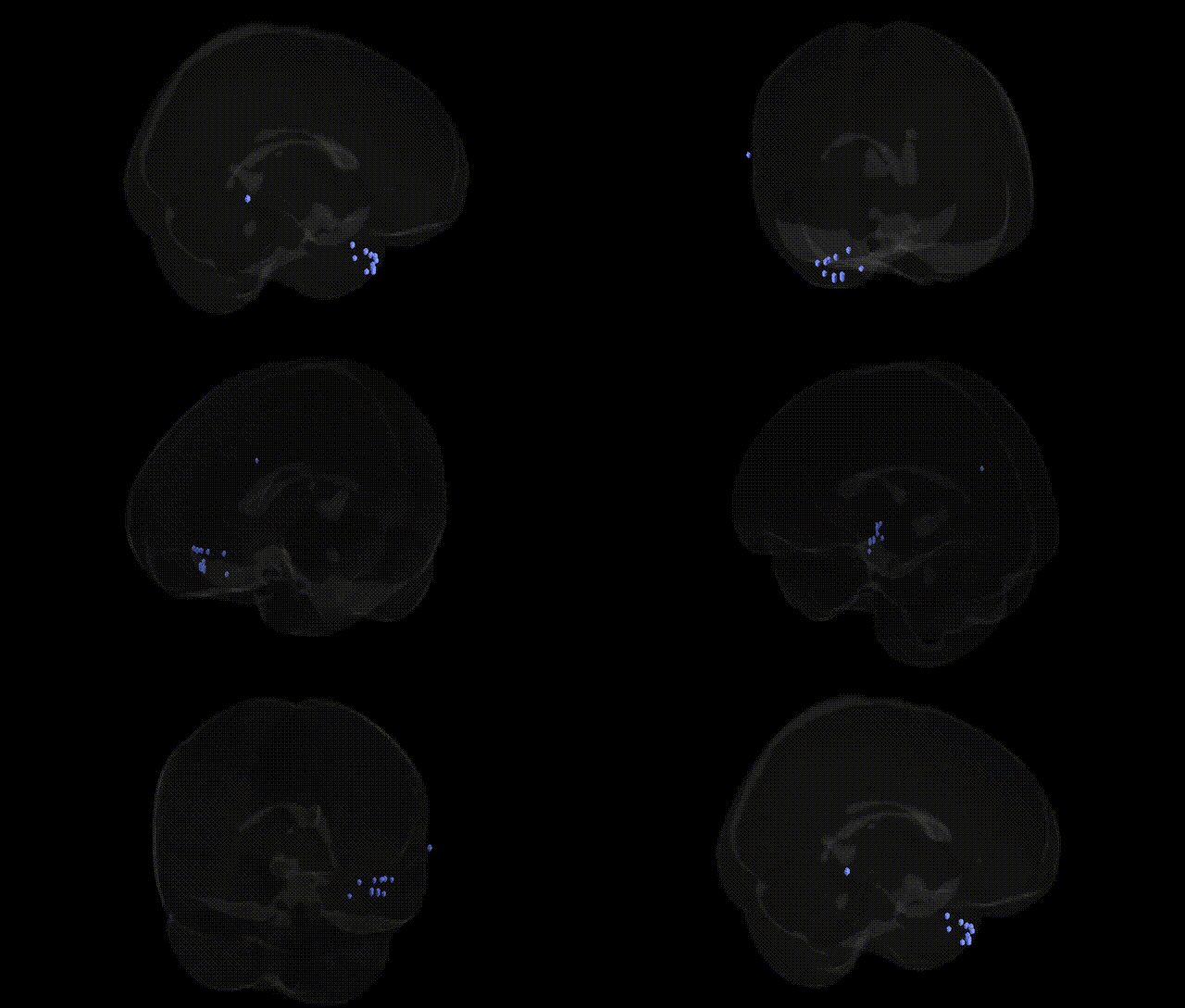
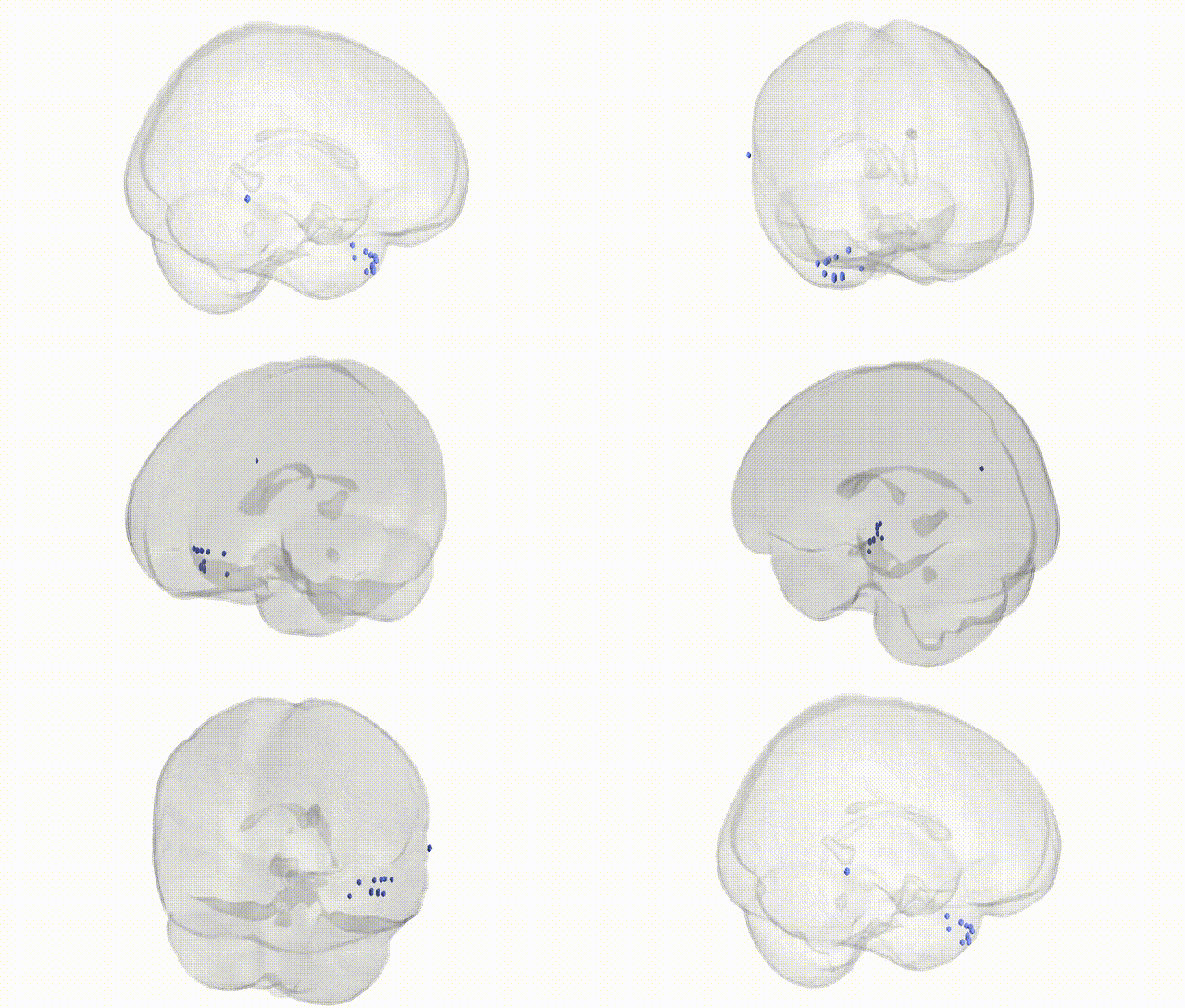
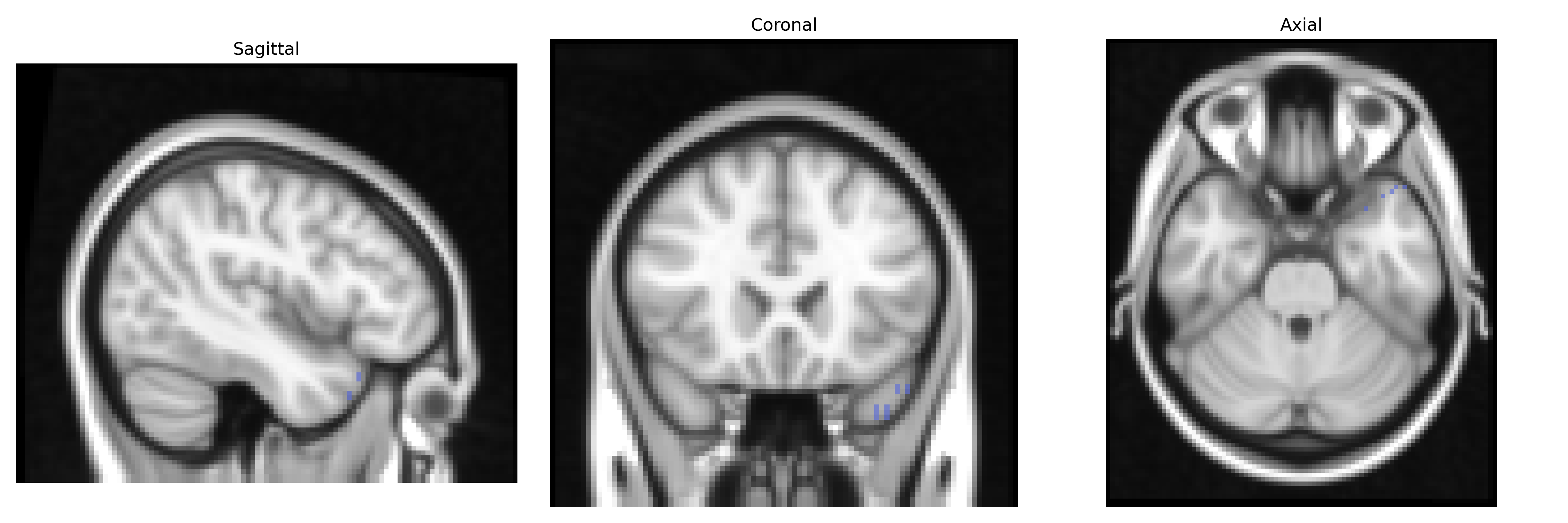
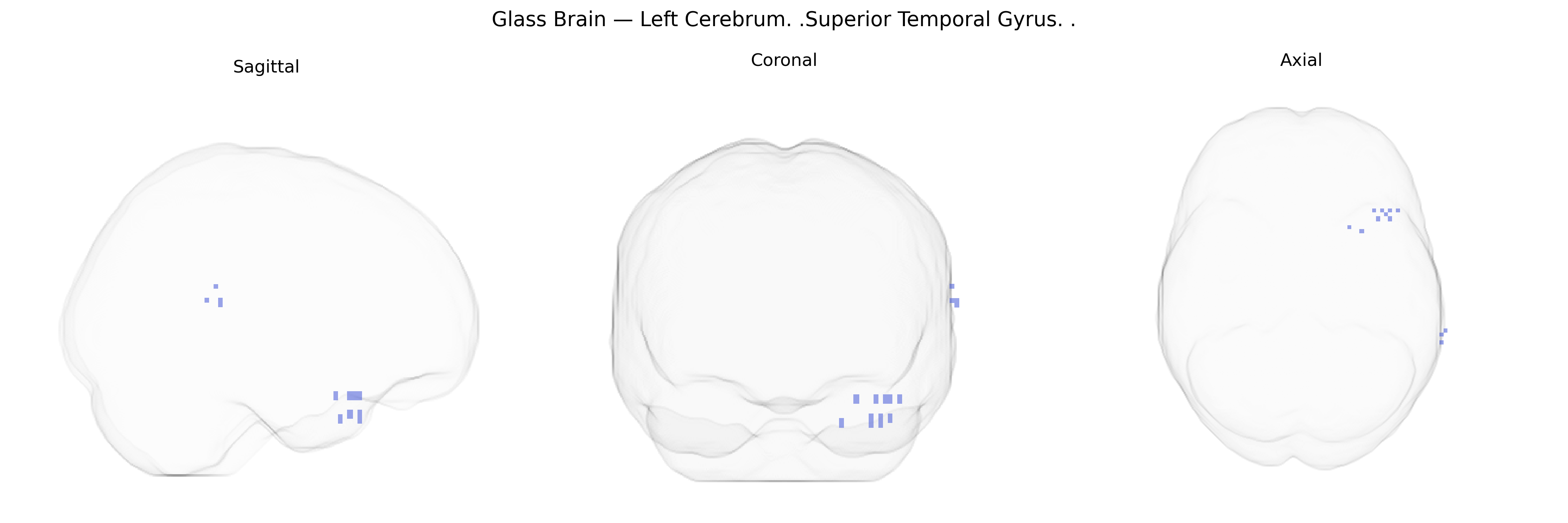
The bilateral Left Cerebrum, Superior Temporal Gyrus, is a cortical region of the temporal lobe situated on the lateral surface of the hemisphere, extending from the temporal pole posteriorly along the superior temporal sulcus. It encompasses key auditory association areas, including portions of the primary auditory cortex (Heschl’s gyrus nearby) and Wernicke’s area in the dominant (typically left) hemisphere, which is critical for phonological processing and language comprehension. Functionally, this gyrus is involved in processing complex sounds, speech perception, and aspects of social cognition such as interpretation of prosody and vocal emotional cues. It is cytoarchitectonically composed of parts of Brodmann areas 22 and neighboring regions, and is strongly interconnected with frontal and parietal language networks as well as limbic structures. Superior temporal gyrus
The bilateral left superior temporal gyrus (STG) has been implicated in multiple genetic and GWAS findings, particularly in relation to language, auditory processing, and neuropsychiatric disorders. Variants near FOXP2, CNTNAP2, and ROBO1, key genes in speech and language development, have been associated with structural and functional differences in left STG, including cortical thickness and activation during phonological and semantic tasks. Large-scale GWAS of brain imaging phenotypes (e.g., UK Biobank) have identified loci influencing superior temporal cortical surface area and thickness, frequently involving genes related to neurodevelopment (such as MIR137, GRIN2A, and other synaptic genes), and these structural measures partly mediate genetic risk for schizophrenia and bipolar disorder, which show consistent STG volume and connectivity abnormalities. Genetic studies of autism spectrum disorder, specific language impairment, and developmental dyslexia have linked risk variants in synaptic and axon guidance pathways to altered STG morphology or lateralization, often emphasizing left-hemisphere language networks. Additionally, GWAS of cognitive traits (verbal IQ, reading ability, phonological processing) and musical aptitude have implicated genes that modulate superior temporal auditory and language circuits, supporting a genetically influenced role of the left STG in speech perception, language comprehension, and higher-order auditory cognition.
Overview generated by GPT-4o (2026).
Region ID: 100
Hemisphere: bilateral
Atlas: Talairach labels 2mm
Full Quality Version: Download MP4
Full Quality Version: Download MP4
Wali Sidiqyar*, Gaurav Rudravaram*, Elyssa M. McMaster, Trent M. Schwartz, Adam M. Saunders, Kurt G. Schilling, Bennett A. Landman "Introducing SPINS: A Shared Public Visualization Library of Neuroanatomical Structures." Medical Imaging with Deep Learning- short paper
This resource is licensed under CC0 1.0 Universal (Public Domain).