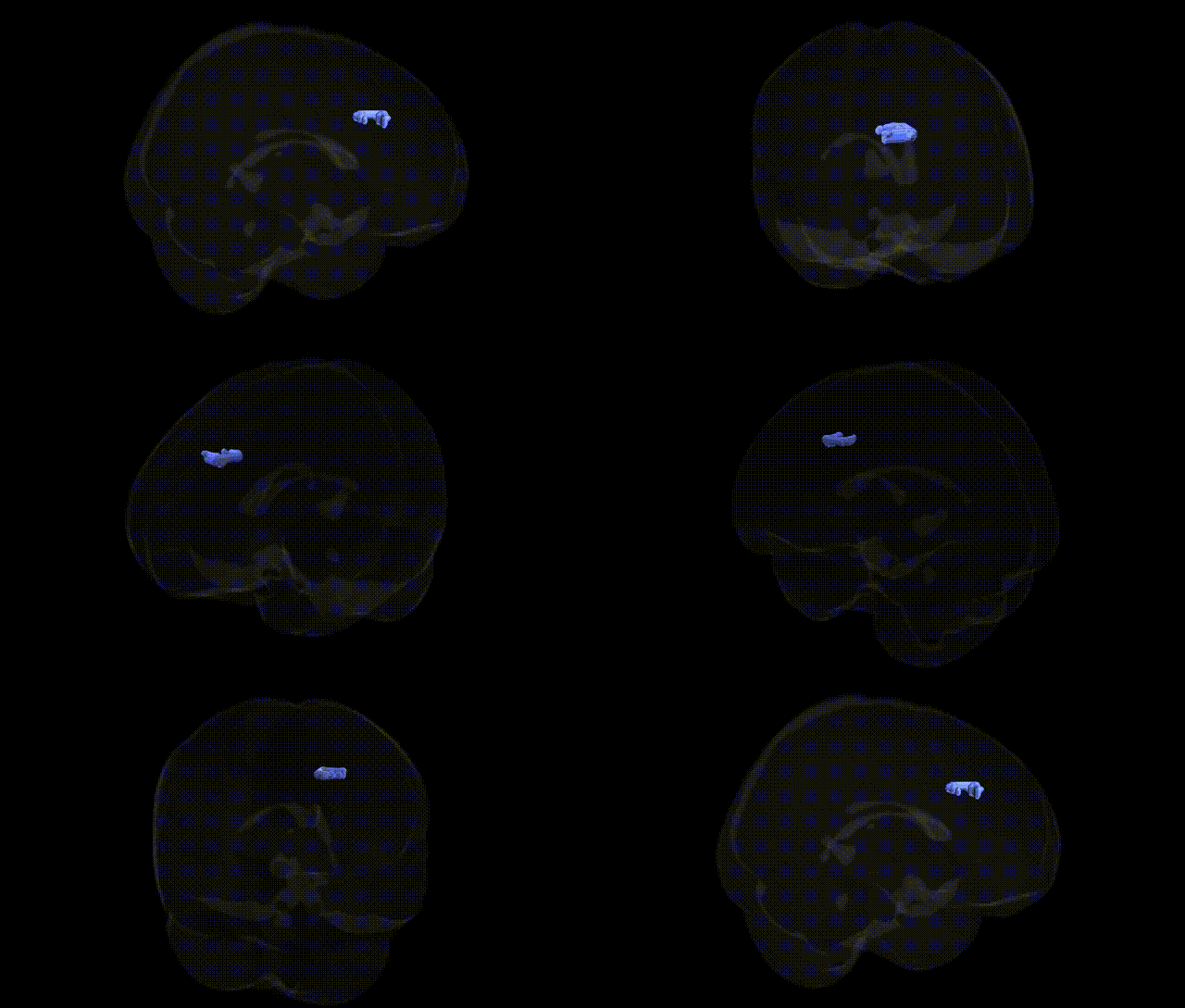
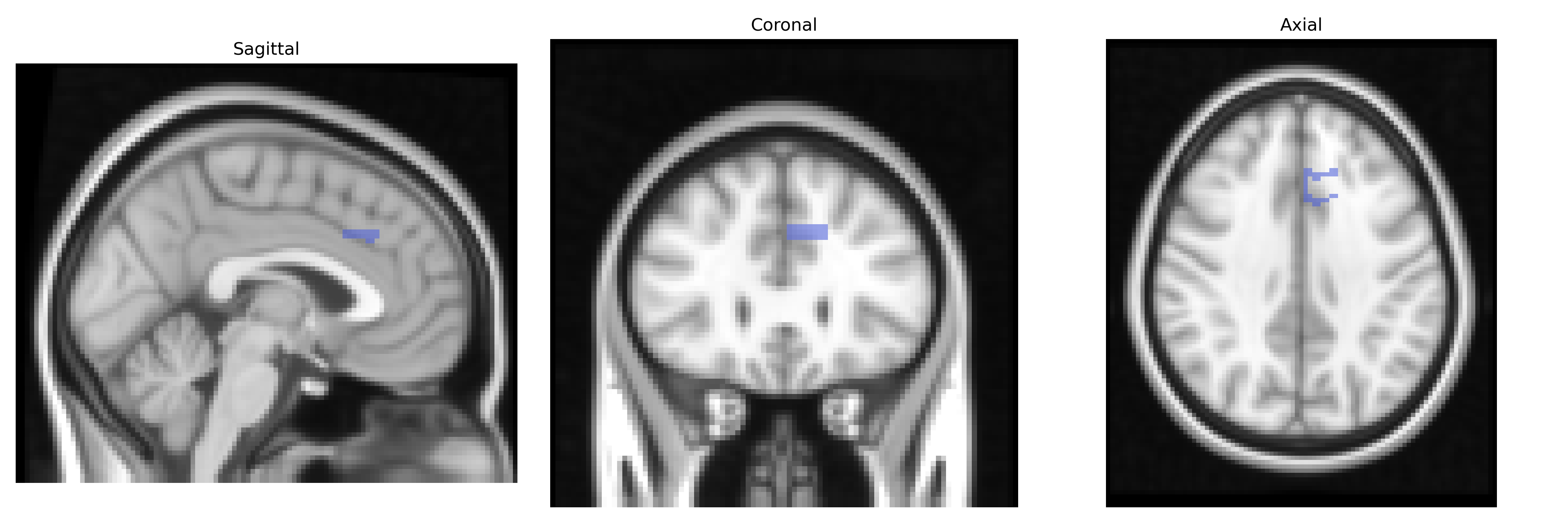
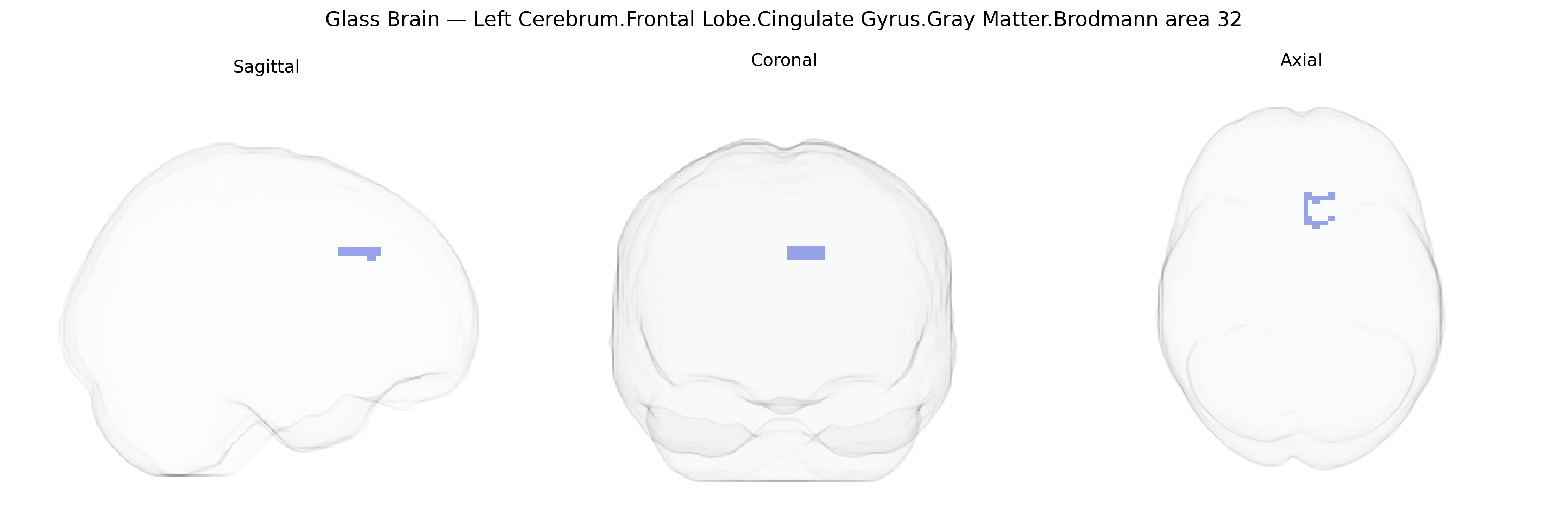
Bilateral Left Cerebrum.Frontal Lobe.Cingulate Gyrus.Gray Matter.Brodmann area 32 corresponds to the dorsal part of the anterior cingulate cortex, a medial frontal structure involved in cognitive control, conflict monitoring, decision-making, and the regulation of emotional and autonomic responses. Cytoarchitectonically, Brodmann area 32 is characterized by its agranular to dysgranular cortical organization and its dense reciprocal connectivity with the prefrontal cortex, premotor areas, limbic structures, and thalamic nuclei, supporting integration of motivational and cognitive information. Functionally, this region contributes to error detection, adjustment of behavior, evaluation of action outcomes, and modulation of sympathetic and parasympathetic activity, making it central to goal-directed behavior and affective regulation. There is no direct link for Brodmann area 32 as a standalone article; a closely related structure is the Anterior cingulate cortex.
The bilateral Left Cerebrum.Frontal Lobe.Cingulate Gyrus.Gray Matter.Brodmann area 32 (BA32), corresponding to dorsal/rostral anterior cingulate cortex within the Talairach 2 mm atlas, has been repeatedly implicated in genetic studies of psychiatric and cognitive traits rather than being the focus of region-specific genome-wide association studies (GWAS). Imaging genetics and large-scale consortia such as ENIGMA and UK Biobank have shown that common variants influencing cortical thickness, surface area, and gyrification in medial frontal and cingulate regions, including BA32, are enriched near genes involved in synaptic development, glutamatergic signaling, and neurodevelopmental pathways (for example, loci containing genes such as CRHR1, GRM3, and CACNA1C that are also implicated in mood and psychotic disorders). BA32 activity and structure have been associated with polygenic risk scores for major depressive disorder, schizophrenia, bipolar disorder, and anxiety, suggesting that cumulative genetic liability for these conditions partly manifests through altered anterior cingulate morphology and connectivity. GWAS of traits like neuroticism, cognitive control, and risk-taking have further linked risk loci to functional variation in medial prefrontal/anterior cingulate circuits, with BA32 commonly highlighted in fMRI-based intermediate phenotypes (e.g., error monitoring and conflict processing). Additionally, variants in serotonin transporter (SLC6A4) and catechol-O-methyltransferase (COMT) genes have been related to BA32 activation differences in tasks probing emotion regulation and executive control, and APOE genotype has been associated with structural and functional changes in this region in aging and Alzheimer’s disease cohorts. Overall, genetic associations involving BA32 largely emerge from broader circuit-level imaging genetics and psychiatric GWAS, in which this medial frontal/cingulate territory appears as a critical node mediating genetically driven differences in affect regulation, cognitive control, and vulnerability to mood and psychotic disorders.
Overview generated by GPT-4o (2026).
Region ID: 1006
Hemisphere: bilateral
Atlas: Talairach labels 2mm
Full Quality Version: Download MP4
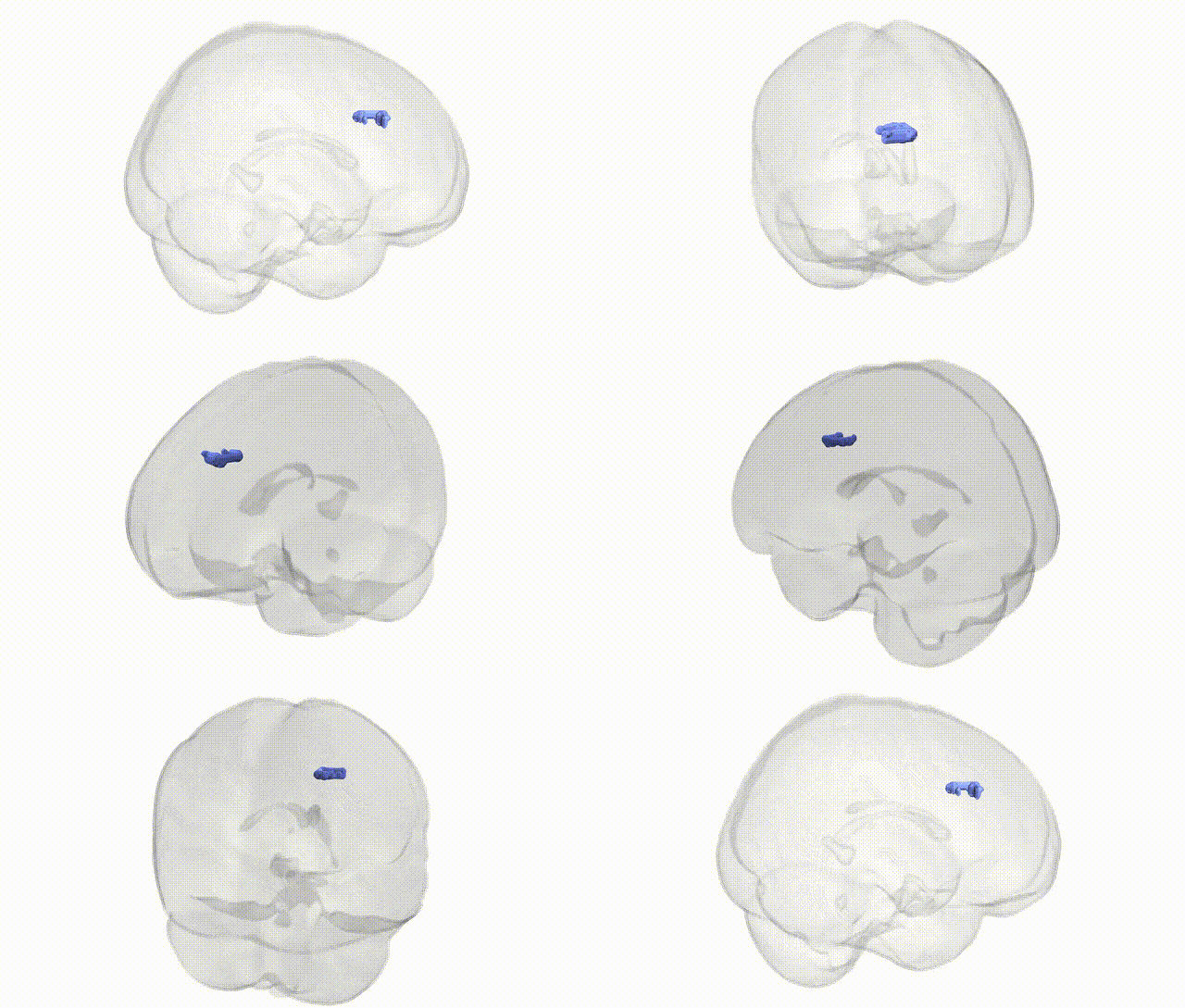
Full Quality Version: Download MP4
Wali Sidiqyar*, Gaurav Rudravaram*, Elyssa M. McMaster, Trent M. Schwartz, Adam M. Saunders, Kurt G. Schilling, Bennett A. Landman "Introducing SPINS: A Shared Public Visualization Library of Neuroanatomical Structures." Medical Imaging with Deep Learning- short paper
This resource is licensed under CC0 1.0 Universal (Public Domain).