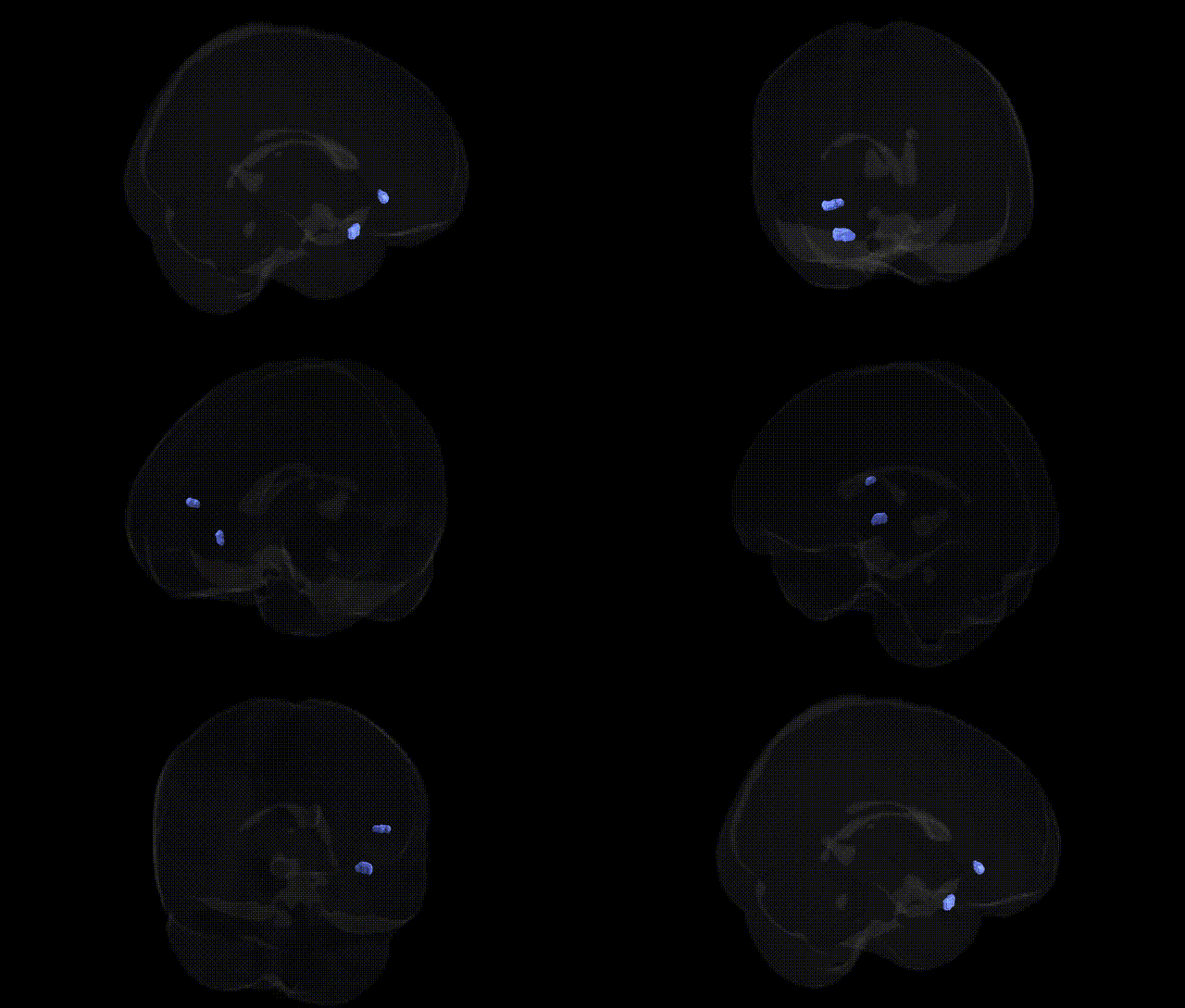
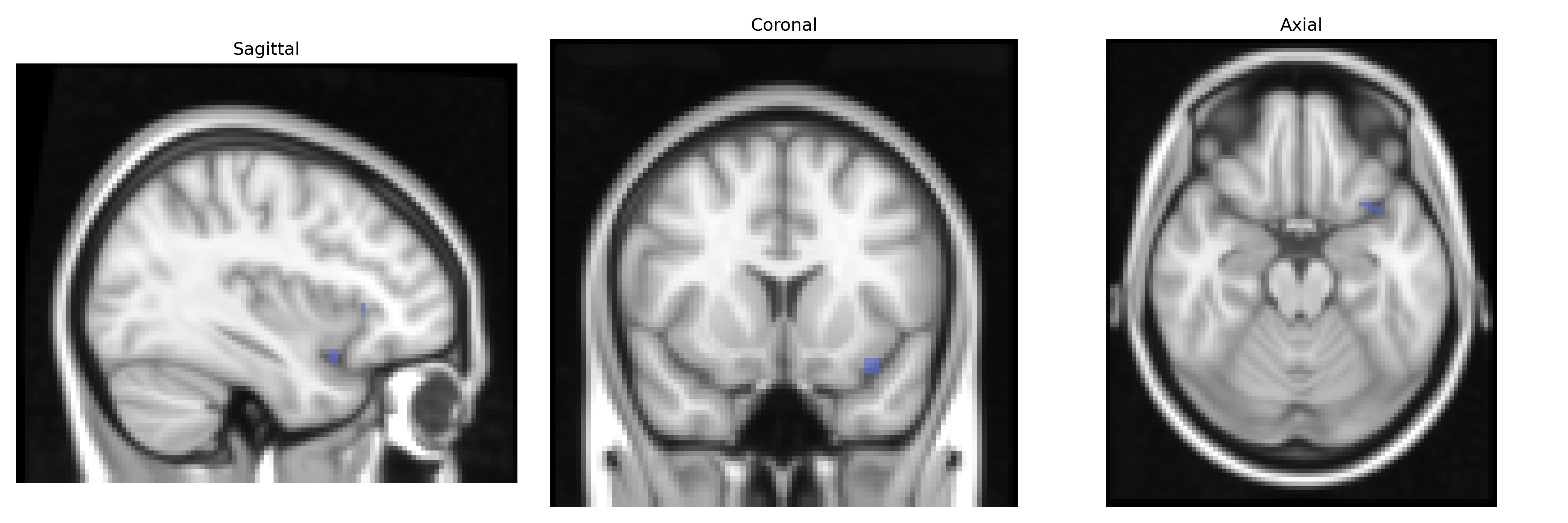
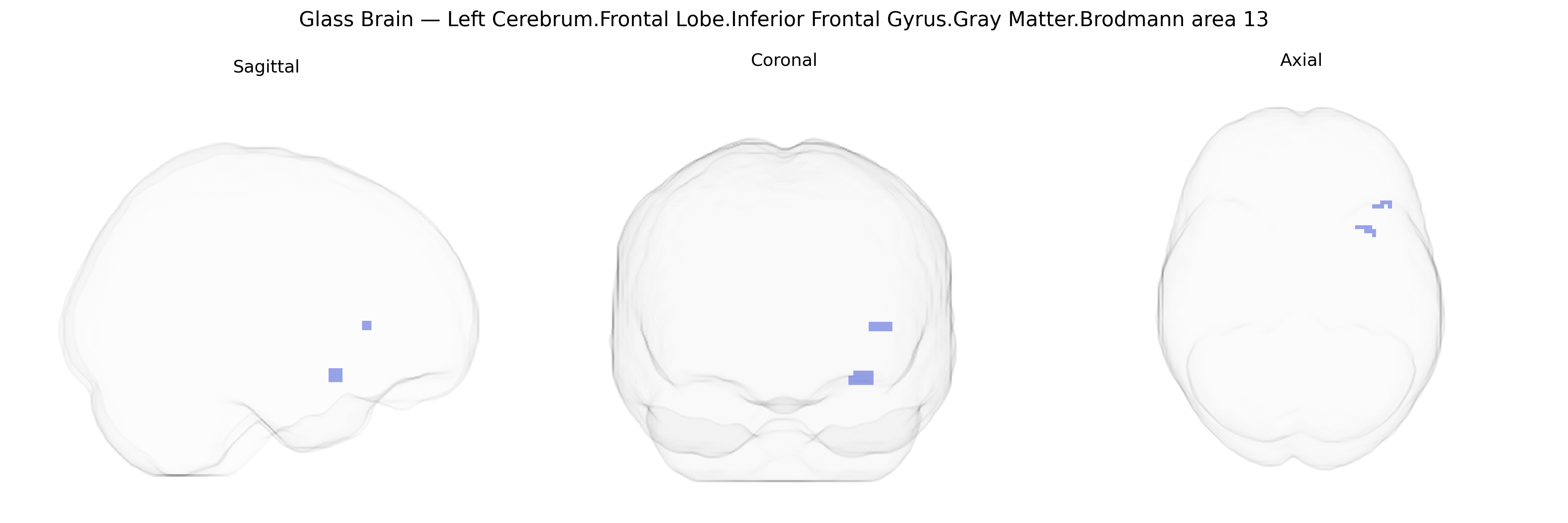
Bilateral Left Cerebrum.Frontal Lobe.Inferior Frontal Gyrus.Gray Matter.Brodmann area 13, as labeled in the Talairach 2 mm Atlas, refers to agranular prefrontal cortex located in the frontal lobe and associated with higher-order integrative functions, although in classical Brodmann maps BA13 is typically assigned to the insular region rather than the inferior frontal gyrus. Functionally, this territory participates in complex aspects of emotion, interoception, and multimodal sensory integration, and is often grouped within orbitofrontal and insular networks implicated in decision-making, social cognition, and autonomic regulation. There is no direct Wikipedia article for “Brodmann area 13” in the inferior frontal gyrus sense used by the Talairach atlas; a closely related and encompassing structure is the Insular cortex.
Genetic associations with the bilateral Left Cerebrum.Frontal Lobe.Inferior Frontal Gyrus.Gray Matter.Brodmann area 13 (as approximated in the Talairach labels 2 mm atlas, overlapping orbitofrontal/insular territories) emerge primarily from GWAS and imaging‑genetics studies linking variation in this region’s volume, cortical thickness, activation, and connectivity to psychiatric, cognitive, and addiction-related traits. Common variants in genes such as CACNA1C, ANK3, ZNF804A, and those within the major histocompatibility complex (e.g., complement component C4) have been associated with schizophrenia, bipolar disorder, and major depressive disorder, often with convergent evidence of altered inferior frontal/orbitofrontal morphology or function in carriers. GWAS of risk-taking behavior, alcohol and nicotine dependence, and other substance use traits implicate loci in dopaminergic and glutamatergic pathways (e.g., DRD2/ANKK1, CHRNA5-CHRNA3-CHRNB4, GABRA2), with imaging-genetic work frequently observing genotype-dependent differences in inferior frontal/orbitofrontal activation during inhibitory control and reward processing. Polygenic risk scores for ADHD and externalizing behaviors also show correlations with structure and function of inferior frontal regions involved in response inhibition. In addition, large-scale GWAS of brain imaging phenotypes (e.g., ENIGMA, UK Biobank) identify multiple loci influencing frontal lobe cortical thickness and surface area—including variants near genes involved in neurodevelopment (e.g., PAX6, TBR1, and WNT pathway components)—with spatial patterns that encompass inferior frontal and adjacent Brodmann area 13 territory, suggesting that a distributed set of neurodevelopmental and synaptic genes contribute to structural and functional variation in this region across individuals.
Overview generated by GPT-4o (2026).
Region ID: 294
Hemisphere: bilateral
Atlas: Talairach labels 2mm
Full Quality Version: Download MP4
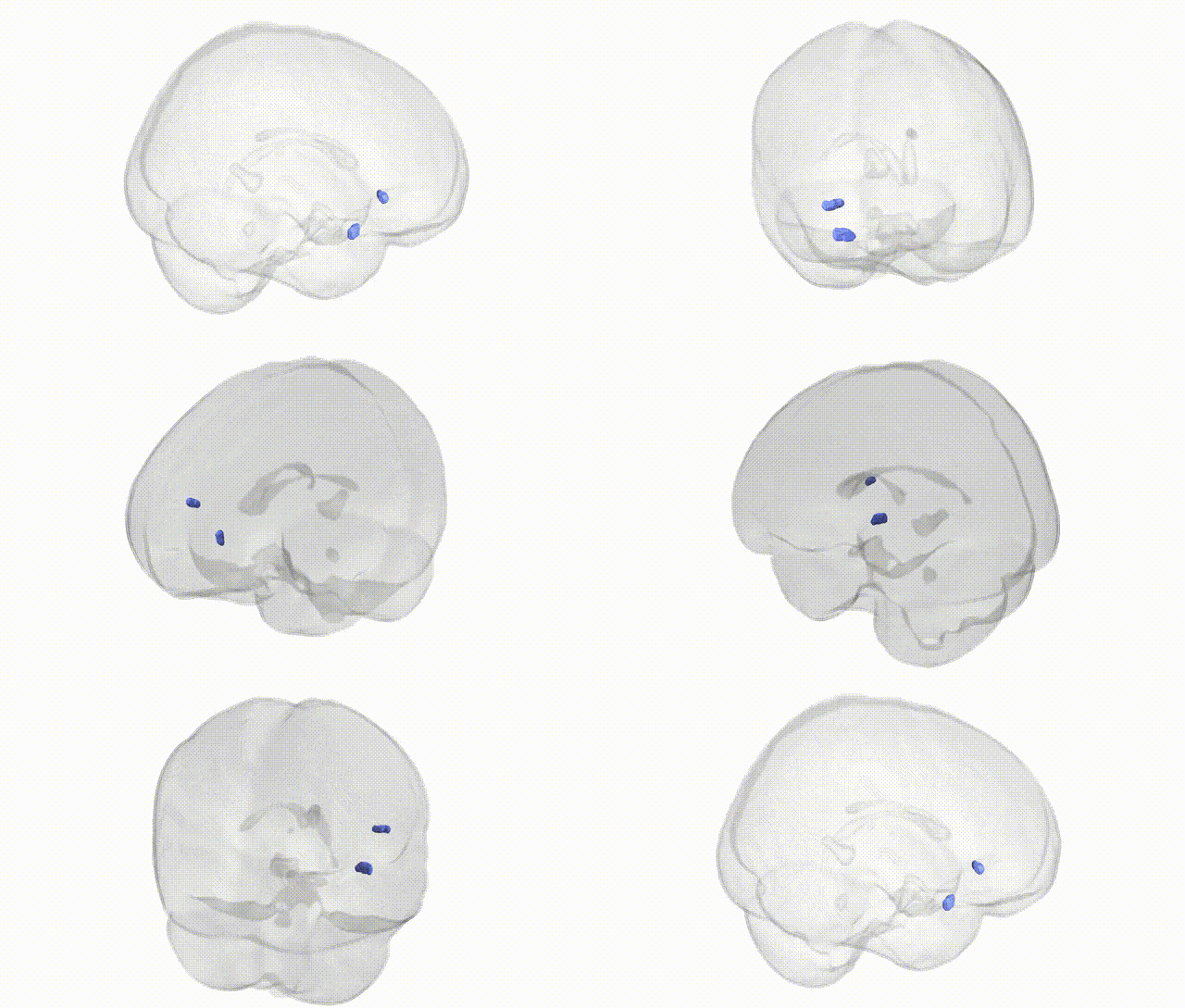
Full Quality Version: Download MP4
Wali Sidiqyar*, Gaurav Rudravaram*, Elyssa M. McMaster, Trent M. Schwartz, Adam M. Saunders, Kurt G. Schilling, Bennett A. Landman "Introducing SPINS: A Shared Public Visualization Library of Neuroanatomical Structures." Medical Imaging with Deep Learning- short paper
This resource is licensed under CC0 1.0 Universal (Public Domain).