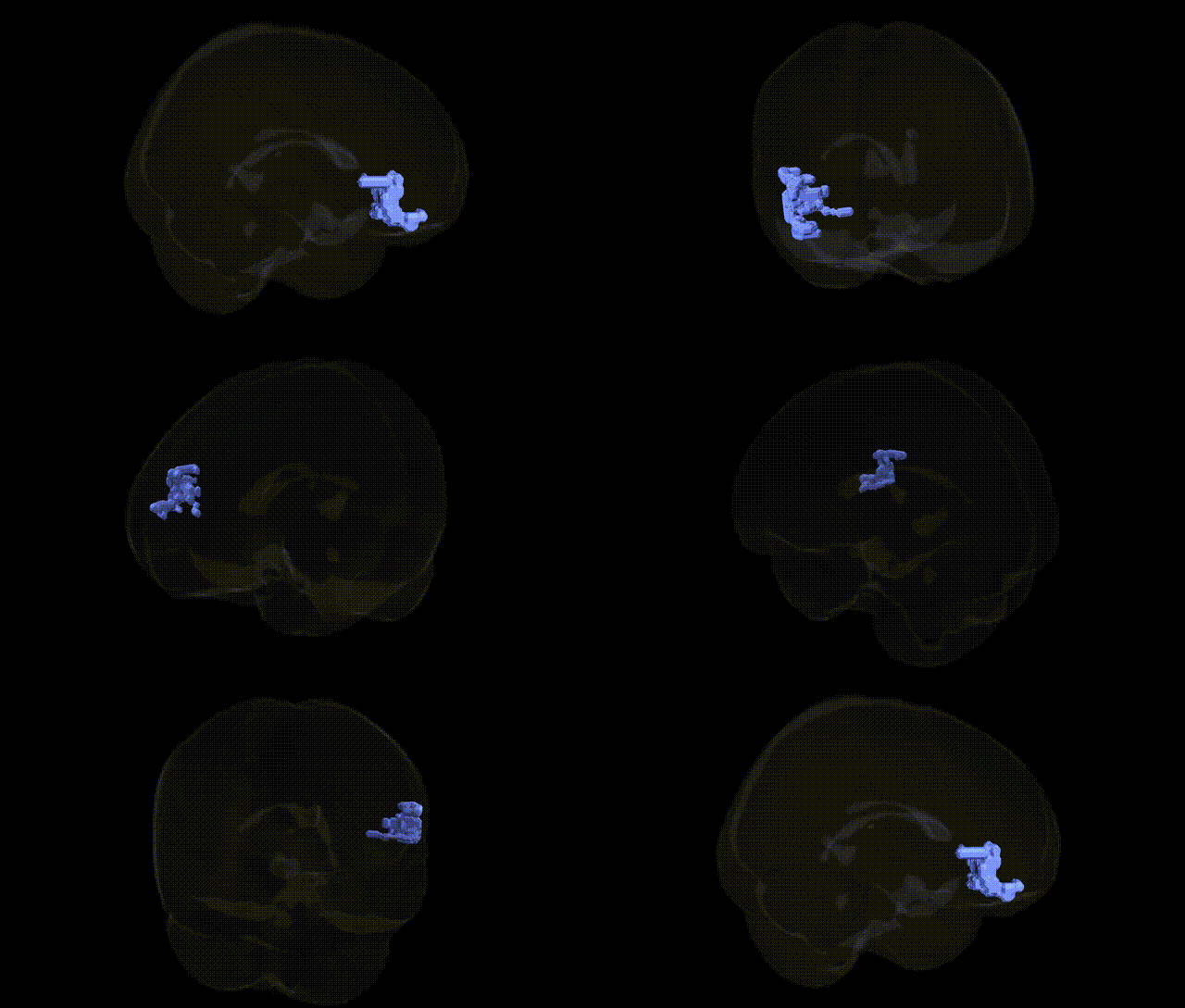
The bilateral Left Cerebrum.Frontal Lobe.Inferior Frontal Gyrus.Gray Matter.Brodmann area 45 corresponds to the pars triangularis of the inferior frontal gyrus, a key subdivision of the lateral prefrontal cortex implicated in higher-order language and cognitive processes. Brodmann area 45 participates in semantic processing, controlled retrieval of verbal information, and aspects of syntactic processing, and is commonly considered part of the left-lateralized “language network” along with Brodmann area 44 (pars opercularis). Functionally, this region contributes to speech production, comprehension of complex linguistic structures, and executive control over language-related tasks; it also shows activation in tasks involving working memory, response inhibition, and selection among competing representations. In the Talairach 2 mm Atlas, this label denotes gray matter within the inferior frontal gyrus defined cytoarchitectonically as BA45, with bilateral specification indicating homologous regions in both hemispheres, although language functions are typically dominant on the left. There is no direct link for this specific combined label; a closely related structure is Brodmann area 45.
The bilateral Left Cerebrum.Frontal Lobe.Inferior Frontal Gyrus.Gray Matter.Brodmann area 45 (Talairach 2 mm Atlas) corresponds closely to left inferior frontal gyrus/pars triangularis, a core component of the language network frequently implicated in genetic studies of cortical structure and cognition. GWAS of brain imaging phenotypes (e.g., ENIGMA, UK Biobank) have identified multiple loci—such as variants near genes including FOXP2, CNTNAP2, DCDC2, KIAA0319, and other neurodevelopmental and synaptic genes—associated with cortical thickness, surface area, and gray-matter volume in left inferior frontal and broader frontal language regions, as well as with reading ability, phonological processing, verbal IQ, and educational attainment. Imaging–genetics work has linked common risk variants for schizophrenia (e.g., in CACNA1C, ZNF804A, and polygenic risk scores), bipolar disorder, and major depression to altered structure or activation of BA45 during language, working memory, and cognitive control tasks, with some studies suggesting that frontal language network morphology mediates part of the genetic liability for psychosis and mood disorders. Rare and common variants affecting FOXP2 and related speech–language genes have been associated with functional differences in BA45 activation during articulation and verbal fluency, while stuttering, dyslexia, and specific language impairment show converging genetic and imaging evidence for involvement of inferior frontal regions including BA44/45. Large-scale GWAS of resting-state connectivity and task-based activation have also found heritable variation in fronto-temporal language circuits encompassing BA45, linking these patterns to polygenic scores for cognitive performance, neurodevelopmental traits (such as ADHD and autism spectrum conditions), and general brain maturation, although precise region-specific associations for Talairach-defined BA45 are typically embedded within broader frontal or language-network parcels rather than isolated to this single atlas label.
Overview generated by GPT-4o (2026).
Region ID: 602
Hemisphere: bilateral
Atlas: Talairach labels 2mm
Full Quality Version: Download MP4
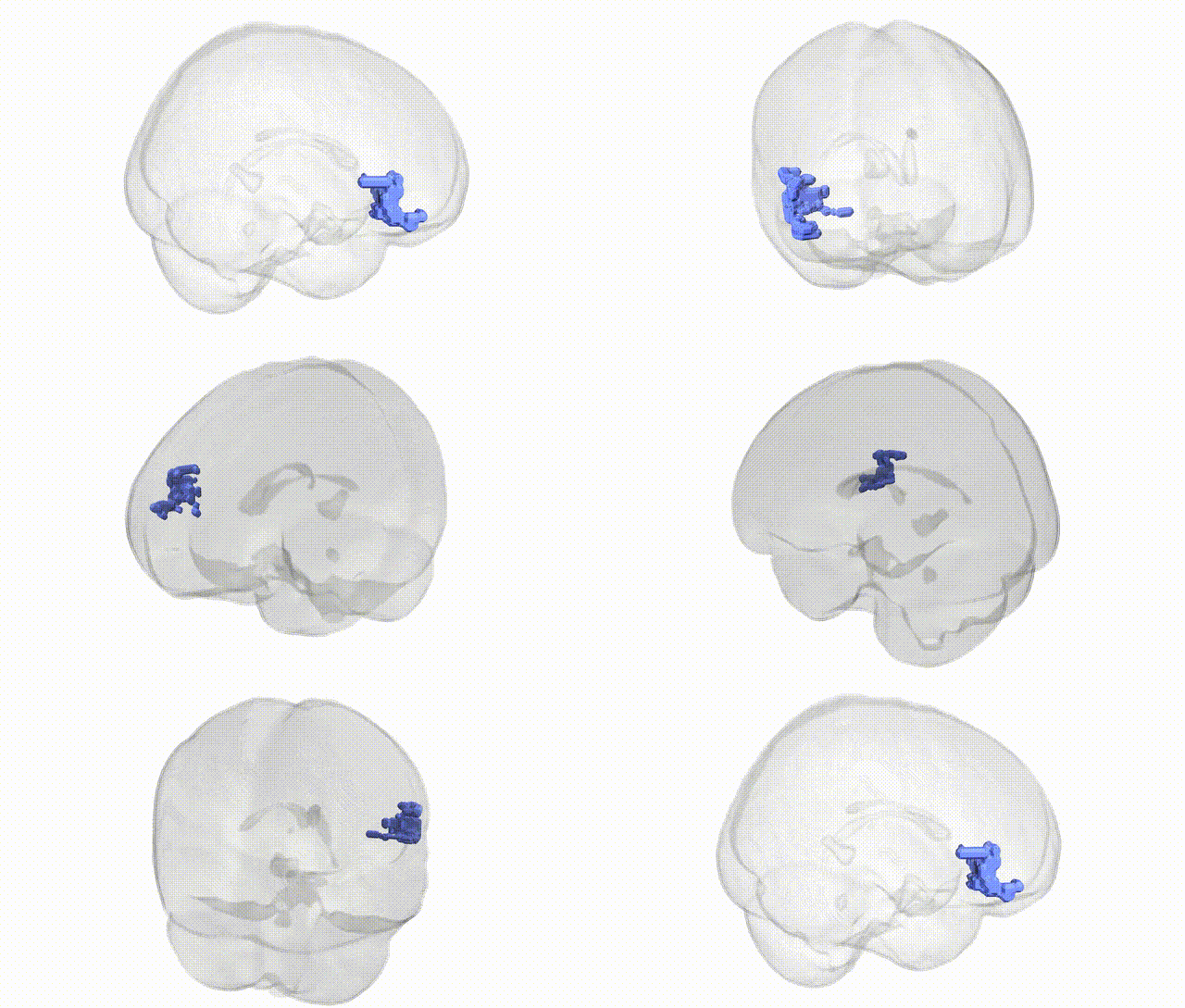
Full Quality Version: Download MP4
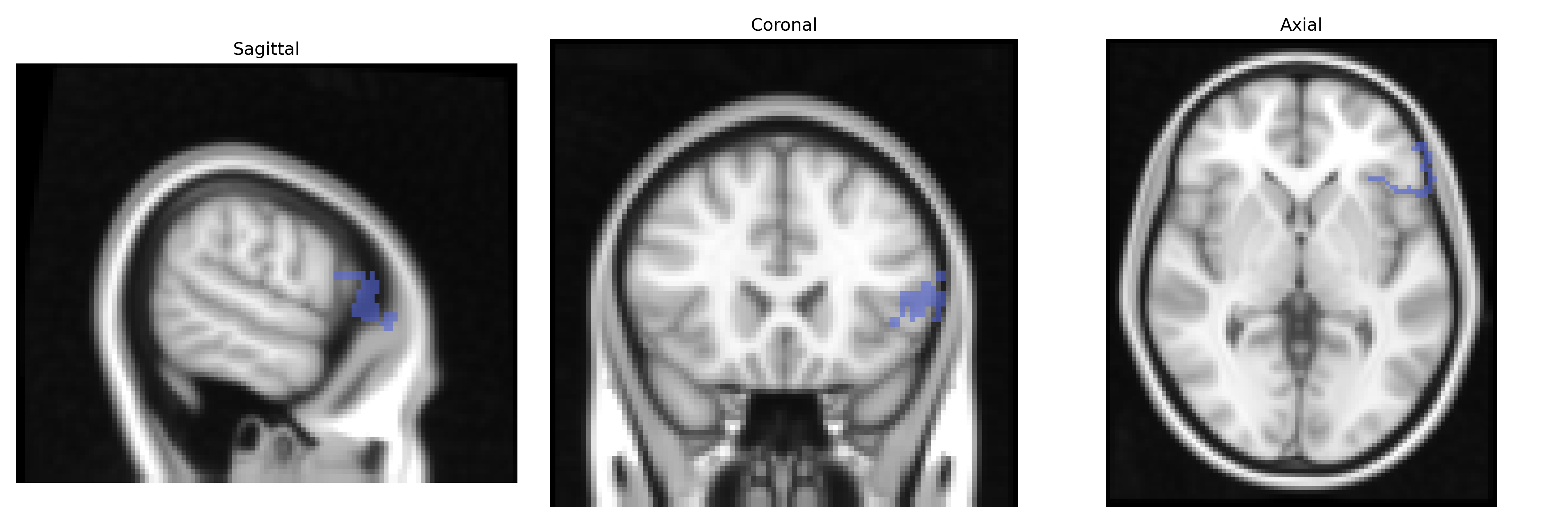
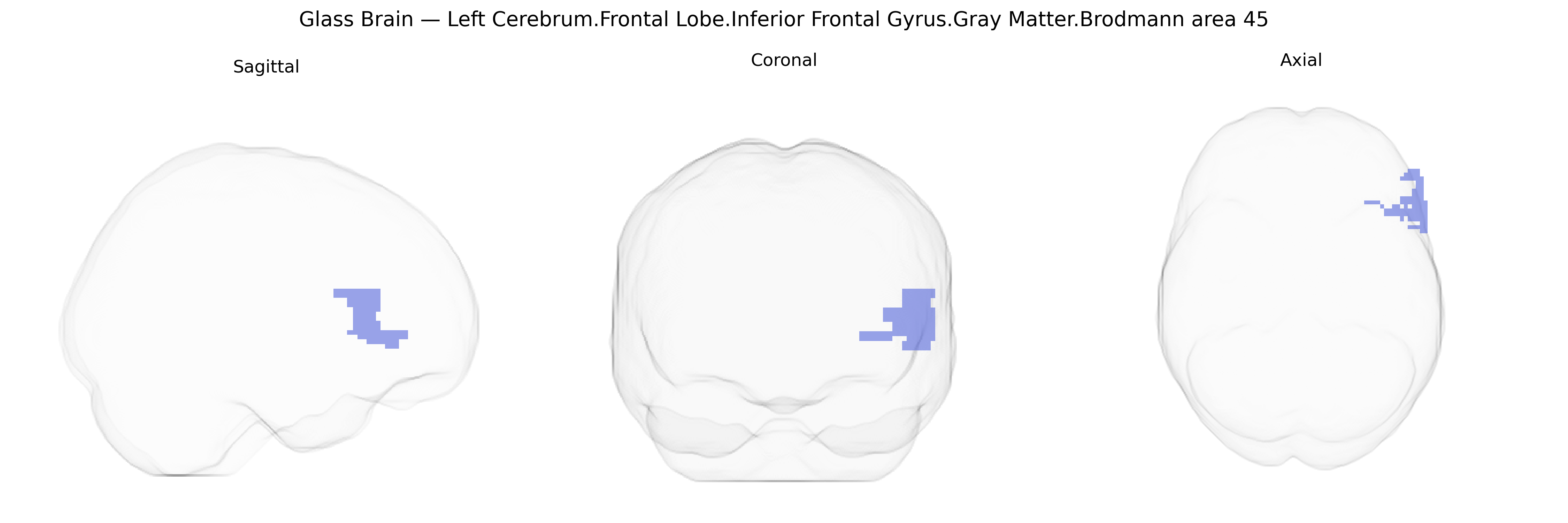
Wali Sidiqyar*, Gaurav Rudravaram*, Elyssa M. McMaster, Trent M. Schwartz, Adam M. Saunders, Kurt G. Schilling, Bennett A. Landman "Introducing SPINS: A Shared Public Visualization Library of Neuroanatomical Structures." Medical Imaging with Deep Learning- short paper
This resource is licensed under CC0 1.0 Universal (Public Domain).