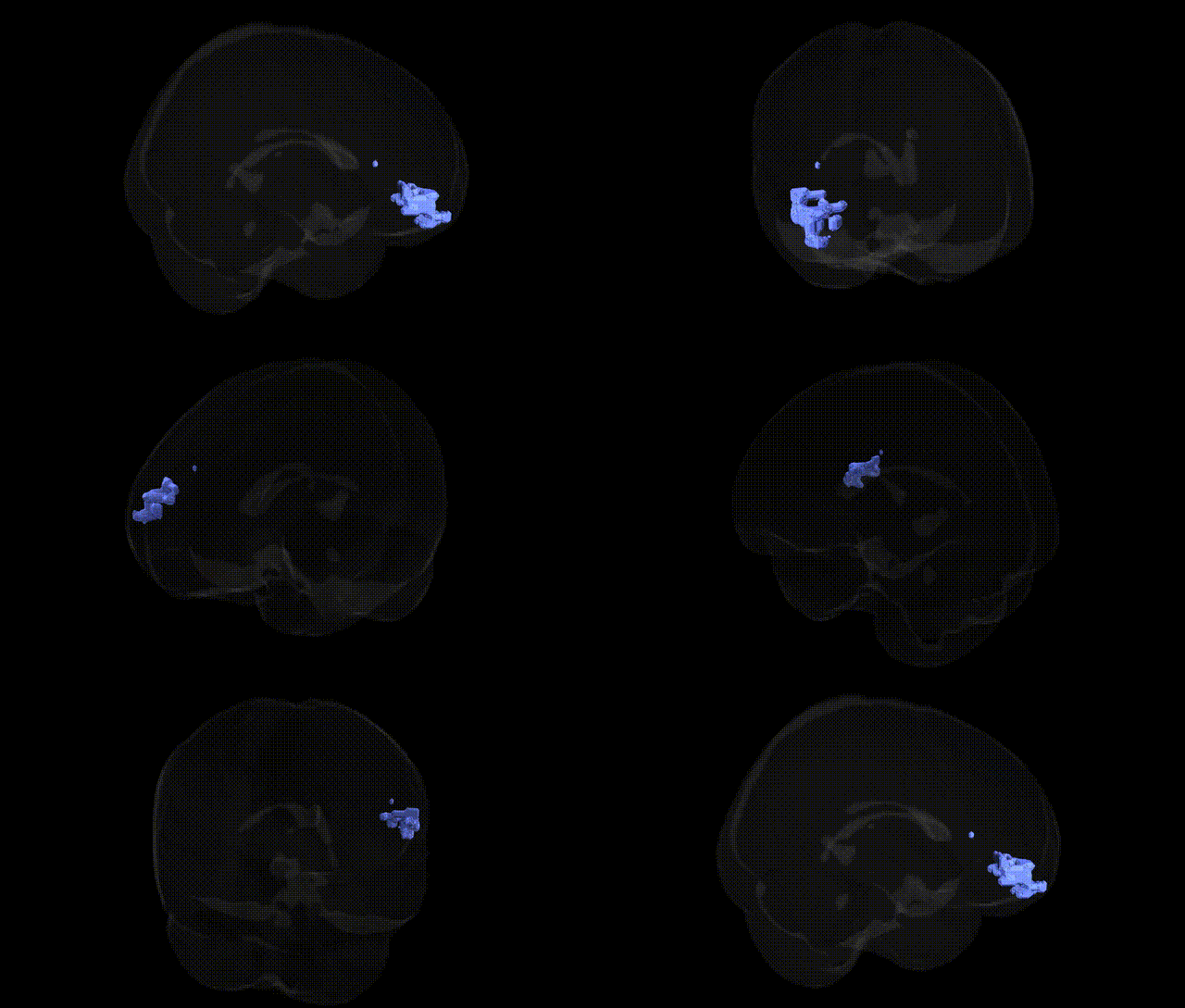
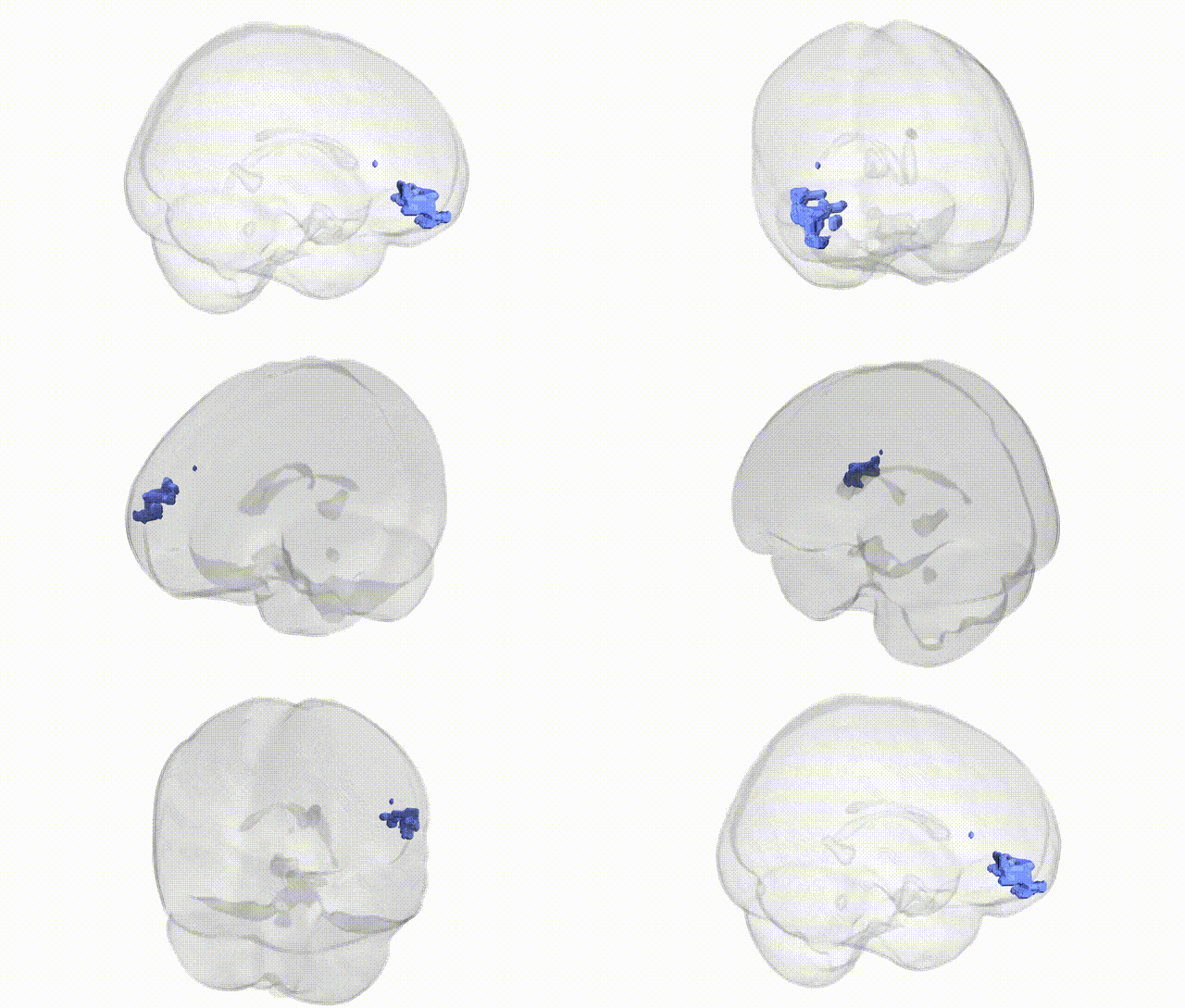
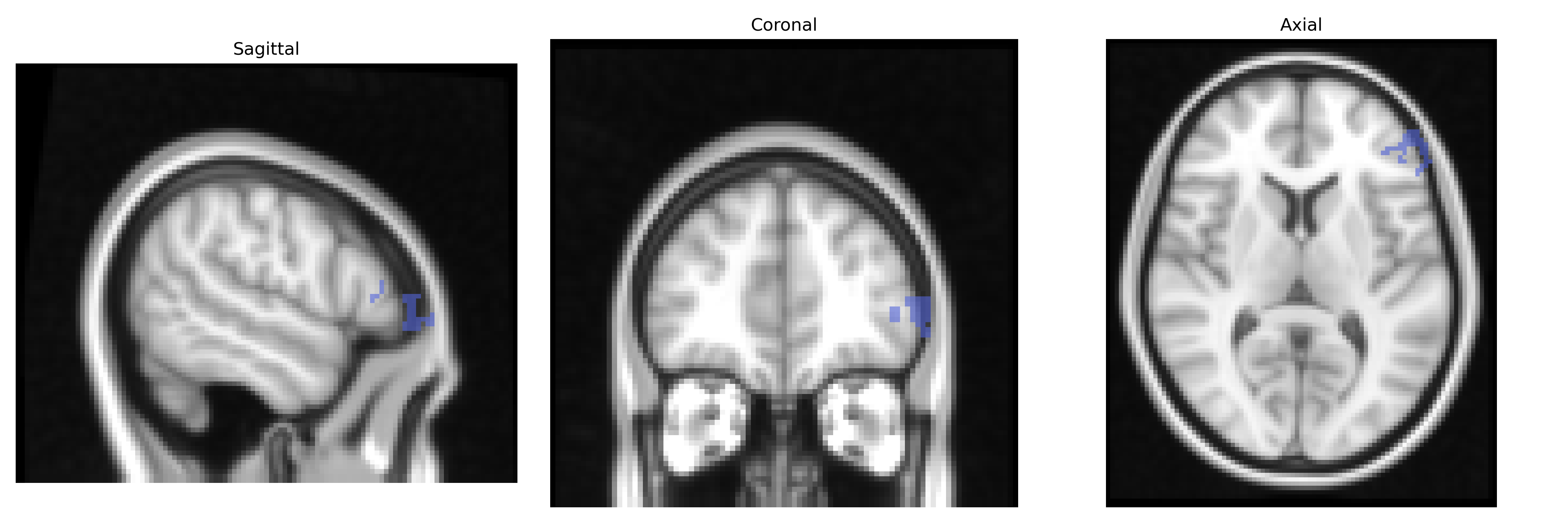
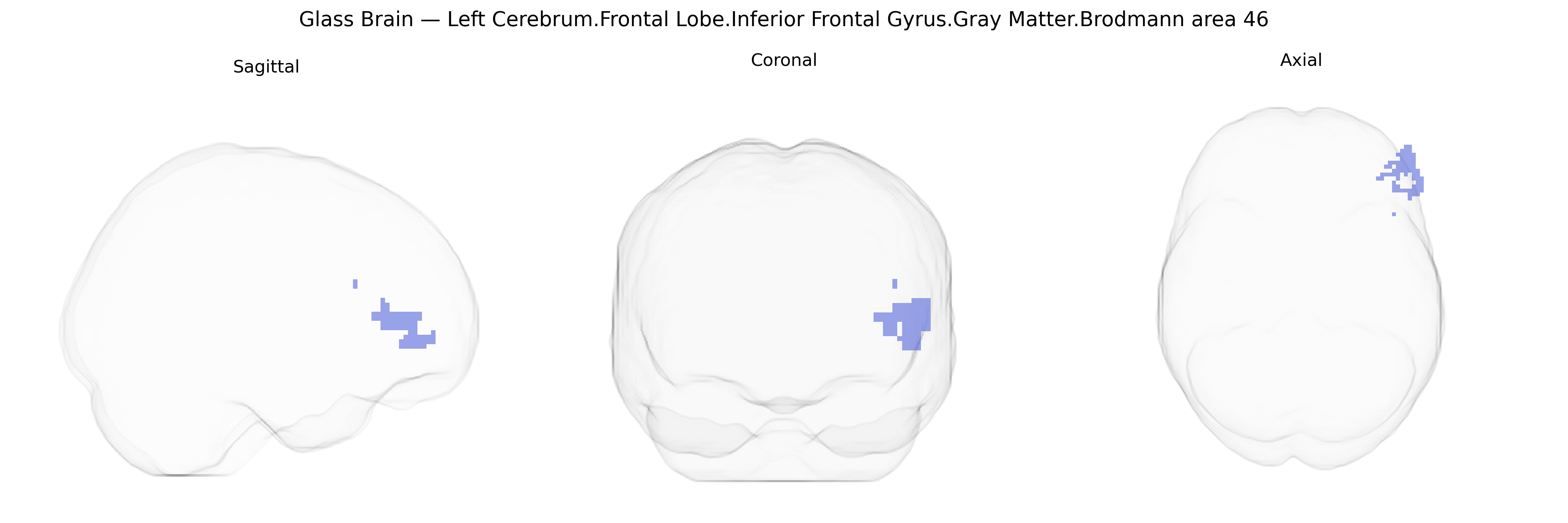
The bilateral Left Cerebrum.Frontal Lobe.Inferior Frontal Gyrus.Gray Matter.Brodmann area 46 corresponds to the dorsolateral prefrontal portion of the inferior frontal gyrus, a higher-order association cortex region implicated in executive functions such as working memory, cognitive control, planning, and the regulation of attention. Brodmann area 46 integrates multimodal sensory inputs and connects extensively with other prefrontal areas, parietal association cortices, and subcortical structures (including the thalamus and basal ganglia) to support goal-directed behavior, abstract reasoning, and flexible decision-making. Activity in this region is strongly associated with maintenance and manipulation of information in working memory and with the monitoring and updating of behavioral strategies. There is no direct Wikipedia article for this exact composite Talairach label; a closely related and encompassing structure is Dorsolateral prefrontal cortex.
The bilateral left inferior frontal gyrus (IFG) in Brodmann area 46, as defined in the Talairach 2 mm atlas, has been repeatedly implicated in genetic studies of cognitive and psychiatric phenotypes, particularly through GWAS that link variation in cortical thickness, surface area, and gray matter volume to common single-nucleotide polymorphisms. Large neuroimaging genetics consortia (e.g., ENIGMA, UK Biobank analyses) have identified polygenic influences on frontal lobe morphology, with significant heritability estimates for BA46-related measures and associations involving loci in genes tied to synaptic function, neuronal development, and neuroplasticity (such as variants near or within genes like BDNF, GRIN2B, CNTNAP2, CACNA1C, and others, depending on the specific study and phenotype). Genetic influences on IFG/BA46 structure and function have been linked to disorders including schizophrenia, bipolar disorder, major depressive disorder, attention-deficit/hyperactivity disorder, and autism spectrum disorder, where risk alleles and polygenic risk scores often show associations with altered prefrontal gray matter or connectivity, as well as to traits such as general cognitive ability, working memory, executive function, language processing, and impulsivity. Moreover, GWAS of cognitive and educational outcomes (e.g., years of education, intelligence) and of brain-based endophenotypes (like task-related activation or connectivity in frontal networks) often implicate gene sets involved in cortical development and synaptic signaling that are expressed in BA46, supporting a genetic contribution to individual differences in higher-order cognitive control and susceptibility to psychiatric illness mediated through this prefrontal region.
Overview generated by GPT-4o (2026).
Region ID: 607
Hemisphere: bilateral
Atlas: Talairach labels 2mm
Full Quality Version: Download MP4
Full Quality Version: Download MP4
Wali Sidiqyar*, Gaurav Rudravaram*, Elyssa M. McMaster, Trent M. Schwartz, Adam M. Saunders, Kurt G. Schilling, Bennett A. Landman "Introducing SPINS: A Shared Public Visualization Library of Neuroanatomical Structures." Medical Imaging with Deep Learning- short paper
This resource is licensed under CC0 1.0 Universal (Public Domain).