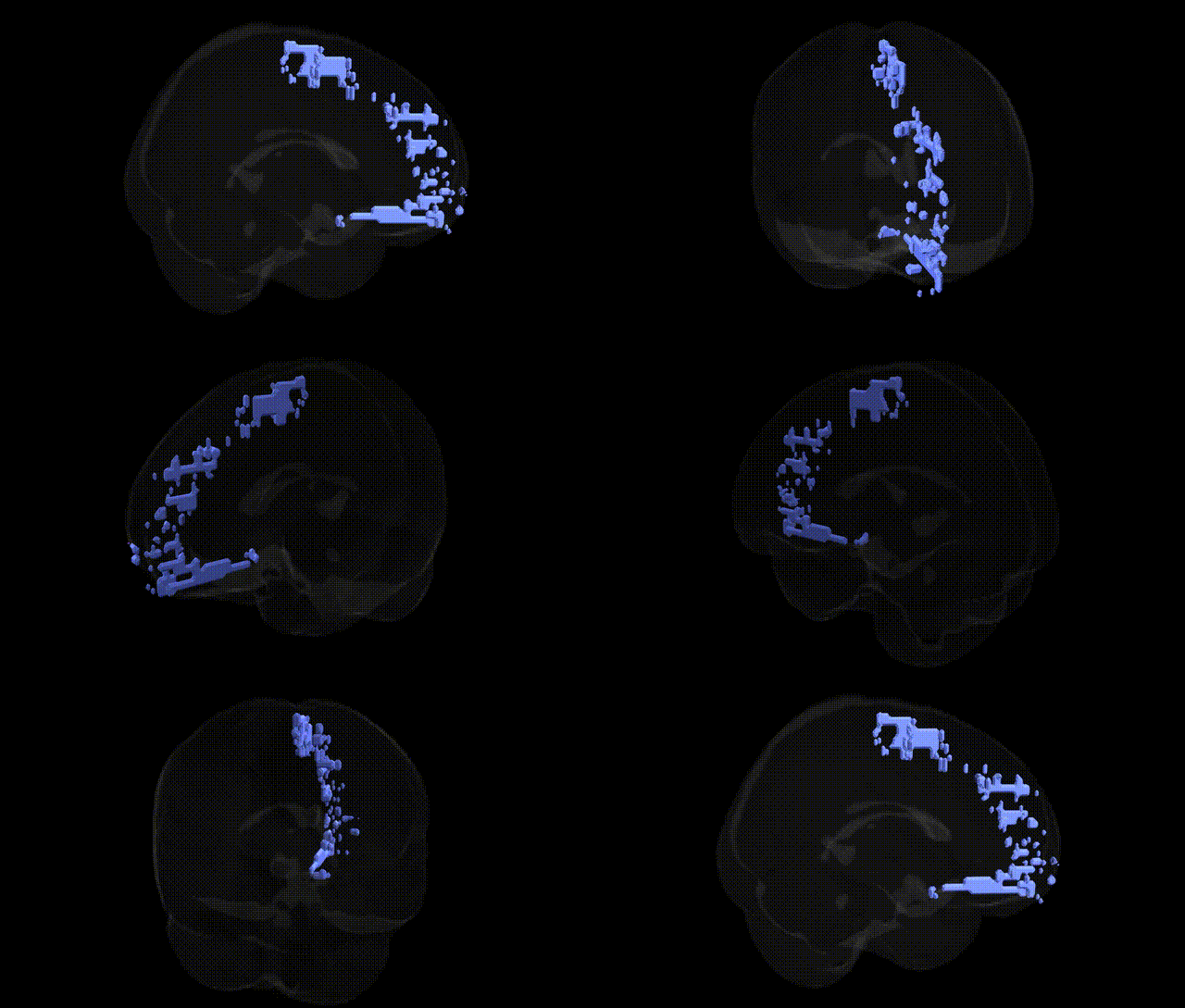
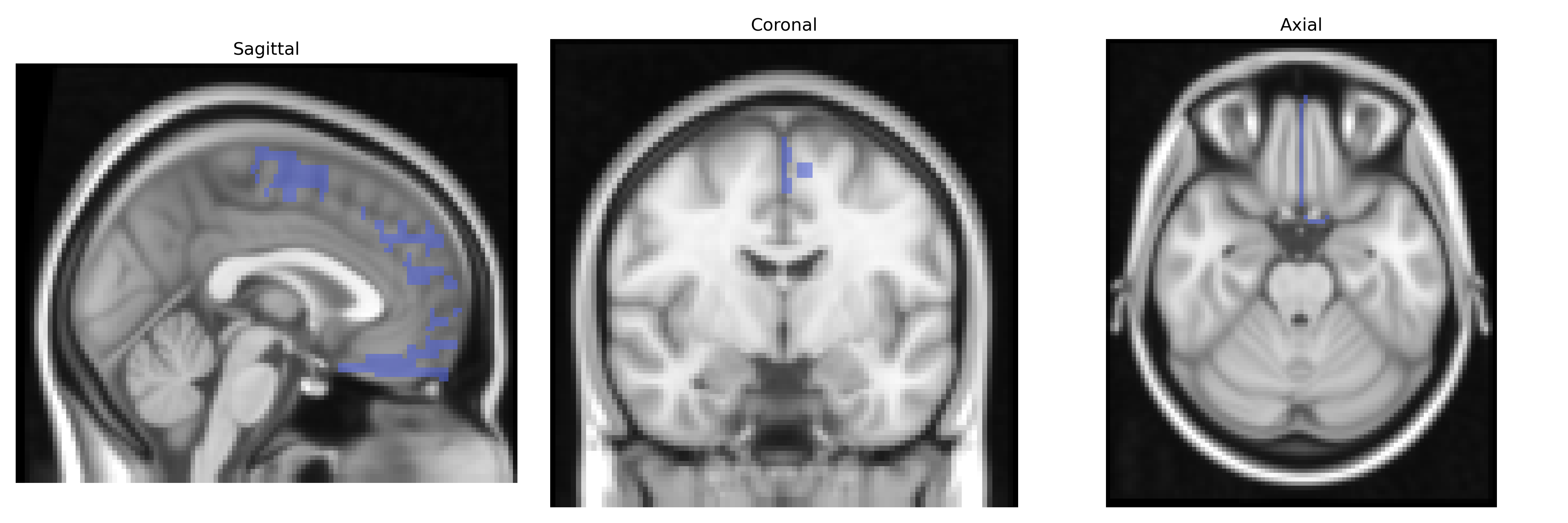
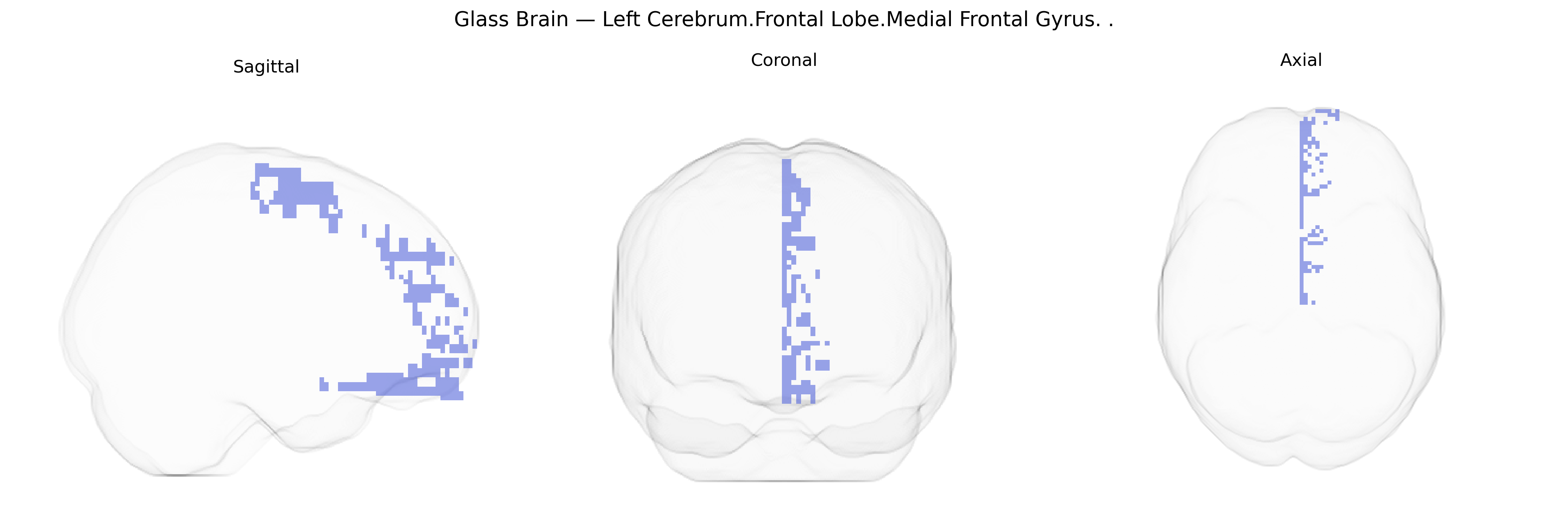
The bilateral Left Cerebrum.Frontal Lobe.Medial Frontal Gyrus corresponds largely to the medial portion of the superior frontal gyrus on the left hemisphere, extending along the medial wall of the frontal lobe and bordering structures such as the cingulate sulcus and prefrontal cortex. This region is implicated in higher-order executive functions, including action selection, decision-making, attentional control, and aspects of working memory, as well as in motivational and volitional processes. It participates in networks supporting self-referential thought and internally guided behavior, with strong connections to limbic and associative cortices. There is no direct Wikipedia article for “Medial Frontal Gyrus”; a related structure encompassing much of this territory is the Superior frontal gyrus.
The bilateral medial frontal gyrus (Talairach Left Cerebrum.Frontal Lobe.Medial Frontal Gyrus) lies within medial prefrontal/anterior cingulate territories that have been repeatedly implicated in genetic studies of cognition, personality, and psychiatric risk. GWAS of brain structure and functional MRI phenotypes (e.g., ENIGMA, UK Biobank) have identified common variants near genes involved in synaptic function and neurodevelopment—such as CNTNAP2, DISC1, DRD2, GRIN2B, and CACNA1C—associated with medial prefrontal/medial frontal cortical thickness, volume, or activity. Polygenic risk scores for schizophrenia, major depressive disorder, bipolar disorder, ADHD, autism spectrum disorder, and obsessive–compulsive disorder show associations with altered medial frontal/anterior cingulate morphology and connectivity, consistent with this region’s role in executive control and emotion regulation. Variants in serotonergic (e.g., HTR1A, SLC6A4), dopaminergic (e.g., COMT, DRD2), and glutamatergic (e.g., GRM3, GRIN2A/B) pathways have been linked to medial frontal activation differences in tasks probing cognitive control, error monitoring, and reward processing, and to traits such as neuroticism, harm avoidance, and impulsivity. Large-scale GWAS of cognitive performance and educational attainment have found enrichment of signals in genes expressed in medial frontal cortex, with corresponding associations to prefrontal measures of cortical surface area and thickness. Twin and heritability studies consistently indicate substantial genetic influence on medial frontal gyrus structure and function, integrating with GWAS evidence to position this region as a key anatomical substrate through which polygenic risk for mood and psychotic disorders, cognitive traits, and personality dimensions is expressed.
Overview generated by GPT-4o (2026).
Region ID: 223
Hemisphere: bilateral
Atlas: Talairach labels 2mm
Full Quality Version: Download MP4
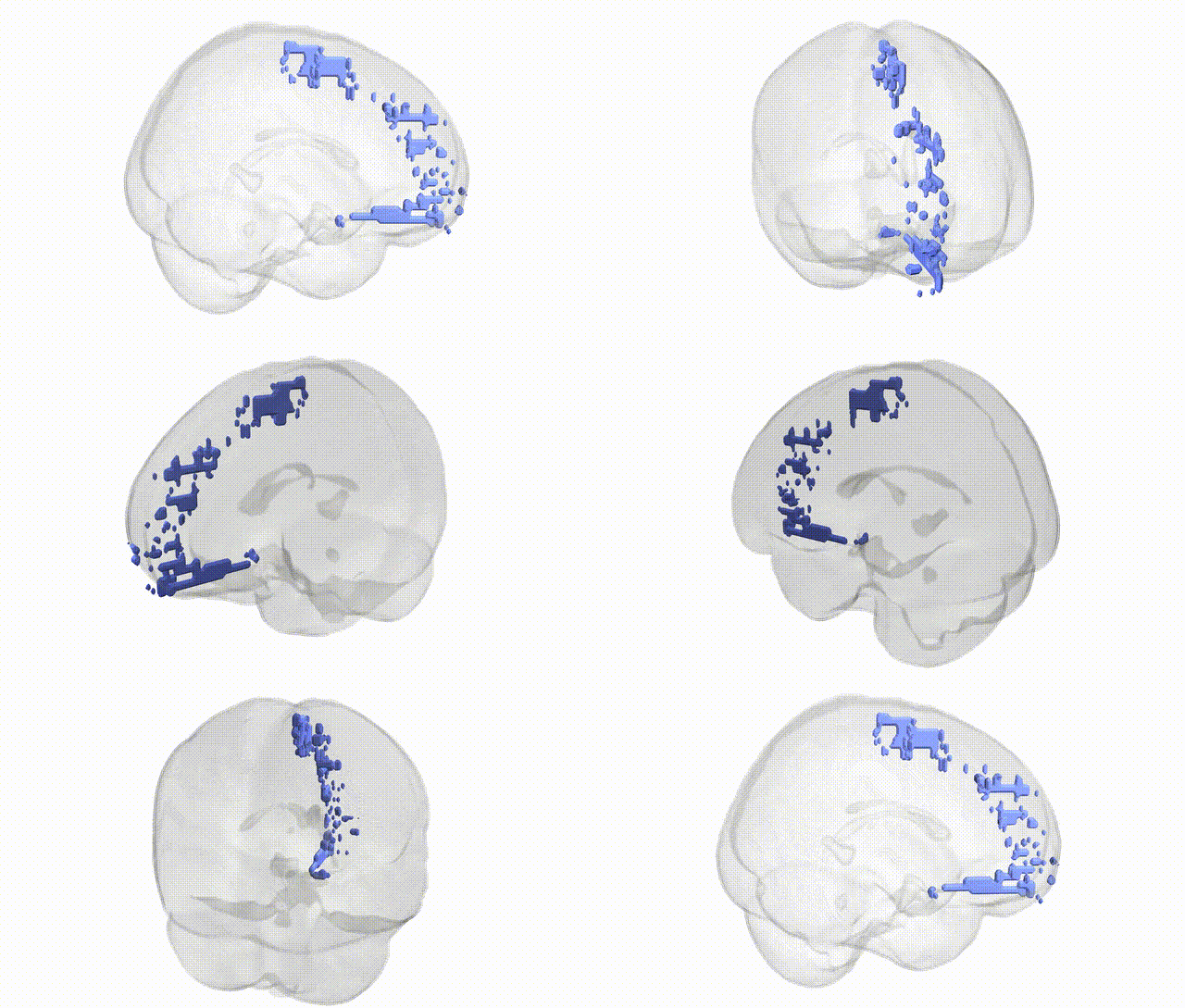
Full Quality Version: Download MP4
Wali Sidiqyar*, Gaurav Rudravaram*, Elyssa M. McMaster, Trent M. Schwartz, Adam M. Saunders, Kurt G. Schilling, Bennett A. Landman "Introducing SPINS: A Shared Public Visualization Library of Neuroanatomical Structures." Medical Imaging with Deep Learning- short paper
This resource is licensed under CC0 1.0 Universal (Public Domain).