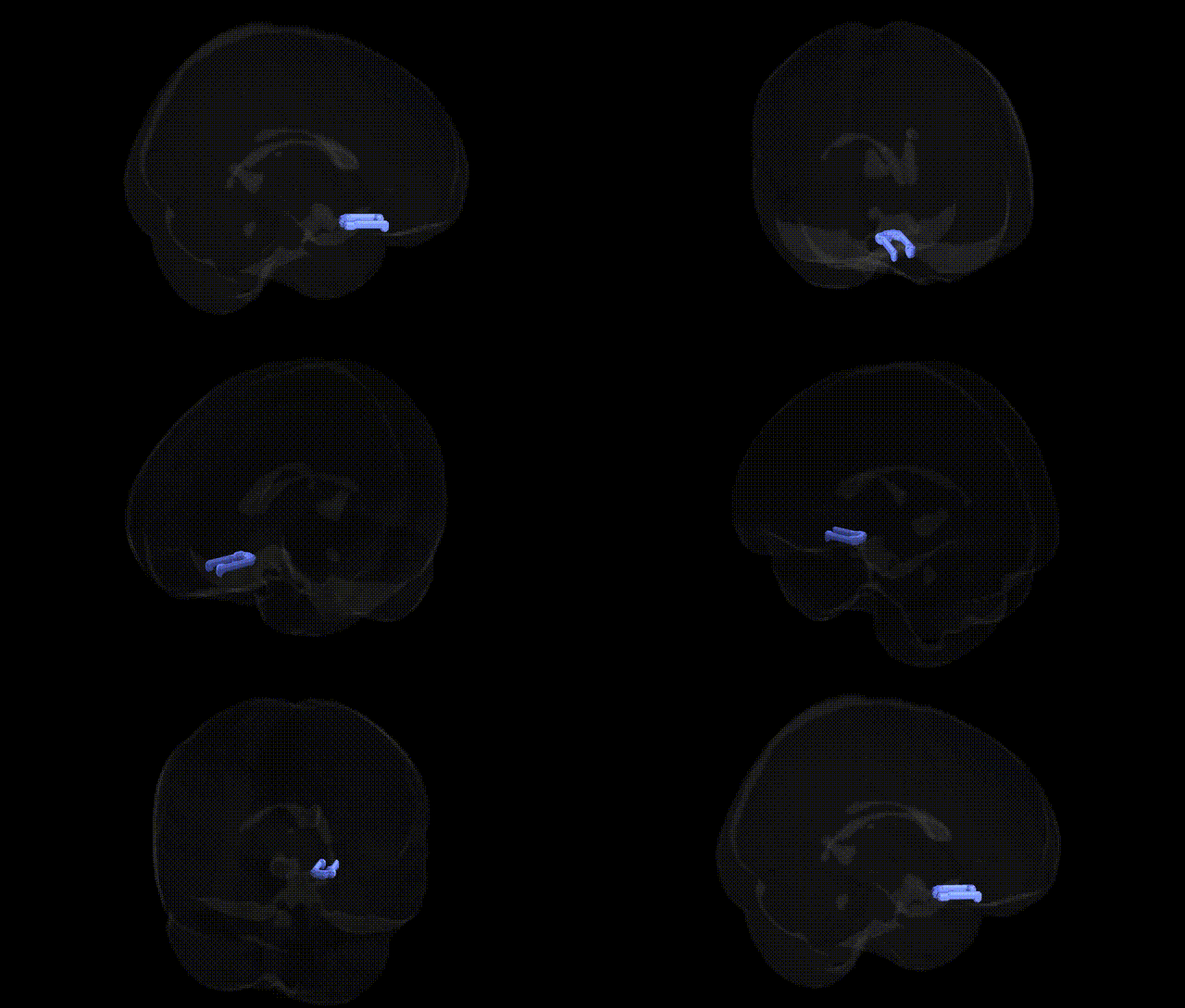
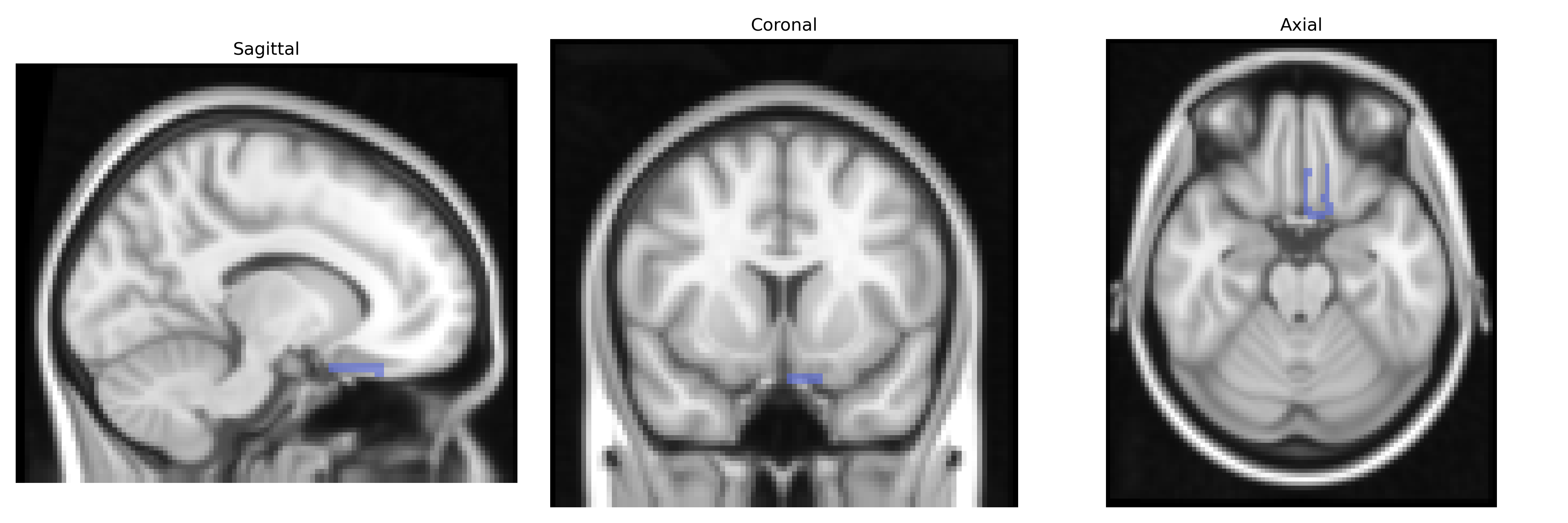
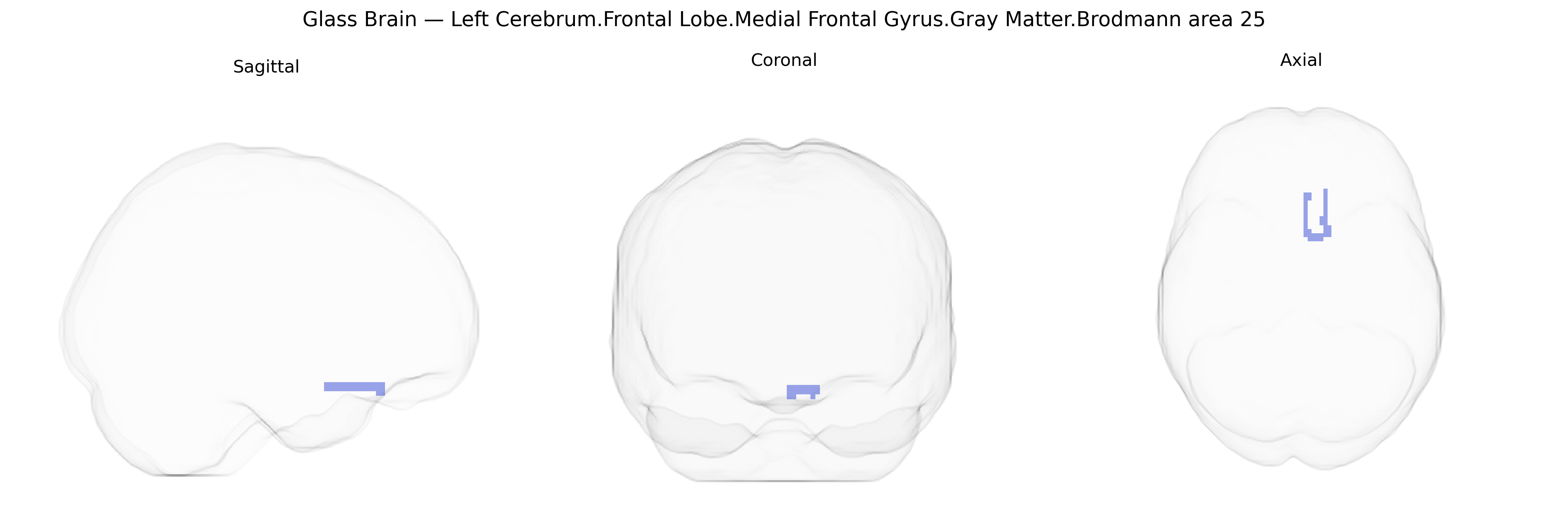
The bilateral Left Cerebrum.Frontal Lobe.Medial Frontal Gyrus.Gray Matter.Brodmann area 25 corresponds to a ventromedial prefrontal/limbic cortical territory commonly referred to as the subgenual cingulate cortex. Located deep in the medial frontal region beneath the genu of the corpus callosum, this area is part of the affective division of the anterior cingulate and is heavily interconnected with limbic and paralimbic structures, including the amygdala, hypothalamus, and ventral striatum. Brodmann area 25 is implicated in regulation of mood, autonomic responses, and stress reactivity, and has been closely associated with major depressive disorder and other affective conditions, making it a key target in research and clinical interventions such as deep brain stimulation for treatment-resistant depression. Subgenual anterior cingulate cortex
The bilateral Left Cerebrum.Frontal Lobe.Medial Frontal Gyrus.Gray Matter.Brodmann area 25 (subgenual anterior cingulate/ventromedial prefrontal region) has been repeatedly implicated in genetic studies of mood and stress-related psychopathology, particularly major depressive disorder (MDD), bipolar disorder, and suicidality. Imaging–genetics and GWAS-based imaging studies (e.g., ENIGMA, UK Biobank) have linked common variants in genes such as SLC6A4 (serotonin transporter), BDNF (Val66Met), FKBP5, and CRHR1—key regulators of serotonergic signaling and HPA-axis stress response—to structural and functional alterations in this subgenual cingulate/BA25 region, including gray matter volume changes and altered activation during emotional processing tasks. Large psychiatric GWAS consortia (PGC) identify risk loci in these and related synaptic, immune, and neurodevelopmental genes, and downstream transcriptomic and polygenic-score analyses often highlight BA25/subgenual cingulate as a hub where polygenic risk for depression and bipolar disorder converges on altered connectivity with limbic structures (amygdala, hippocampus) and default-mode network nodes. BA25 abnormalities influenced by genetic risk have also been associated with treatment response (e.g., to SSRIs and deep brain stimulation), neuroticism, stress sensitivity, and negative affect in population cohorts, supporting a genetically modulated role of this region in affect regulation and vulnerability to mood and anxiety disorders rather than in a single, discrete phenotype.
Overview generated by GPT-4o (2026).
Region ID: 226
Hemisphere: bilateral
Atlas: Talairach labels 2mm
Full Quality Version: Download MP4
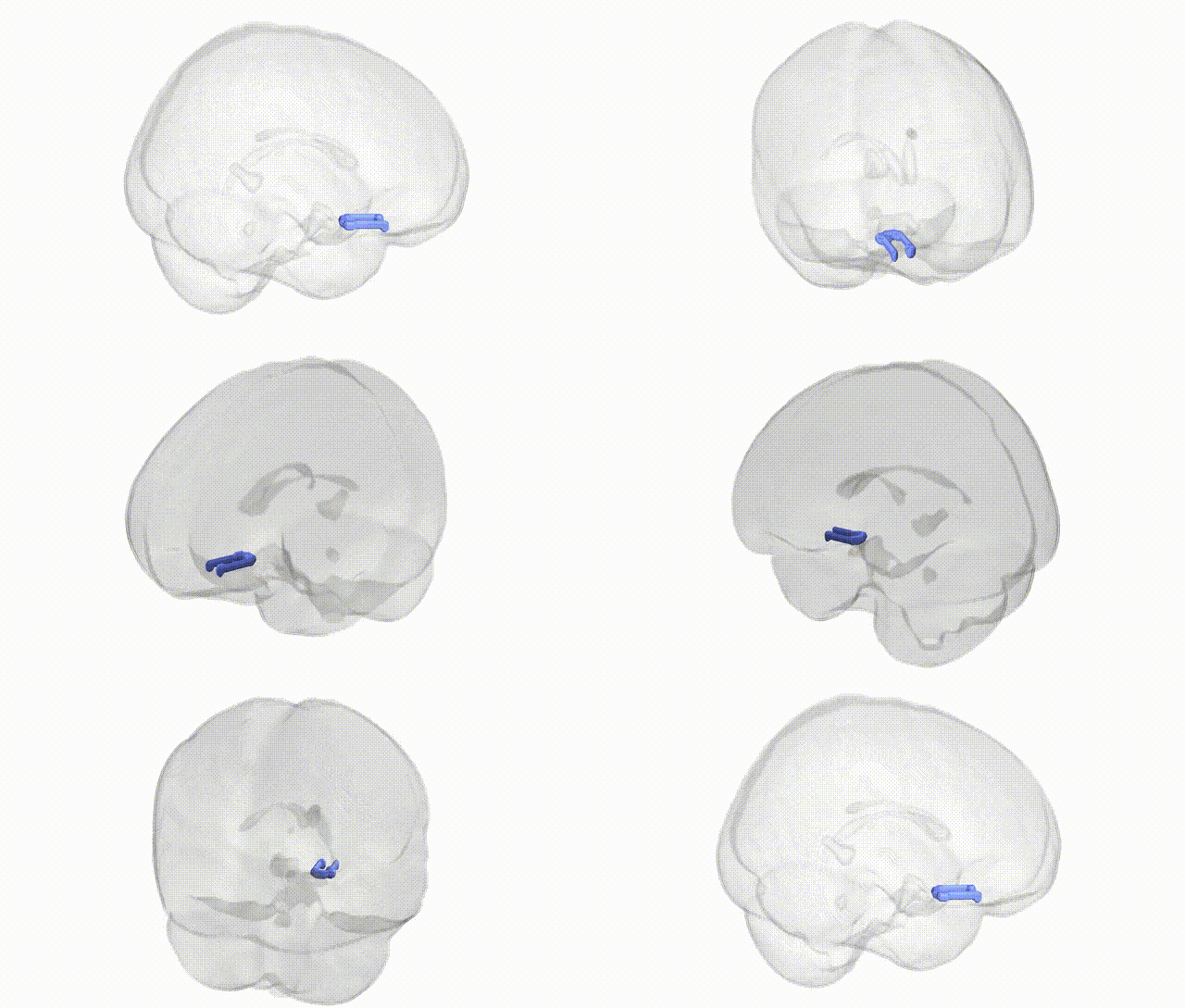
Full Quality Version: Download MP4
Wali Sidiqyar*, Gaurav Rudravaram*, Elyssa M. McMaster, Trent M. Schwartz, Adam M. Saunders, Kurt G. Schilling, Bennett A. Landman "Introducing SPINS: A Shared Public Visualization Library of Neuroanatomical Structures." Medical Imaging with Deep Learning- short paper
This resource is licensed under CC0 1.0 Universal (Public Domain).