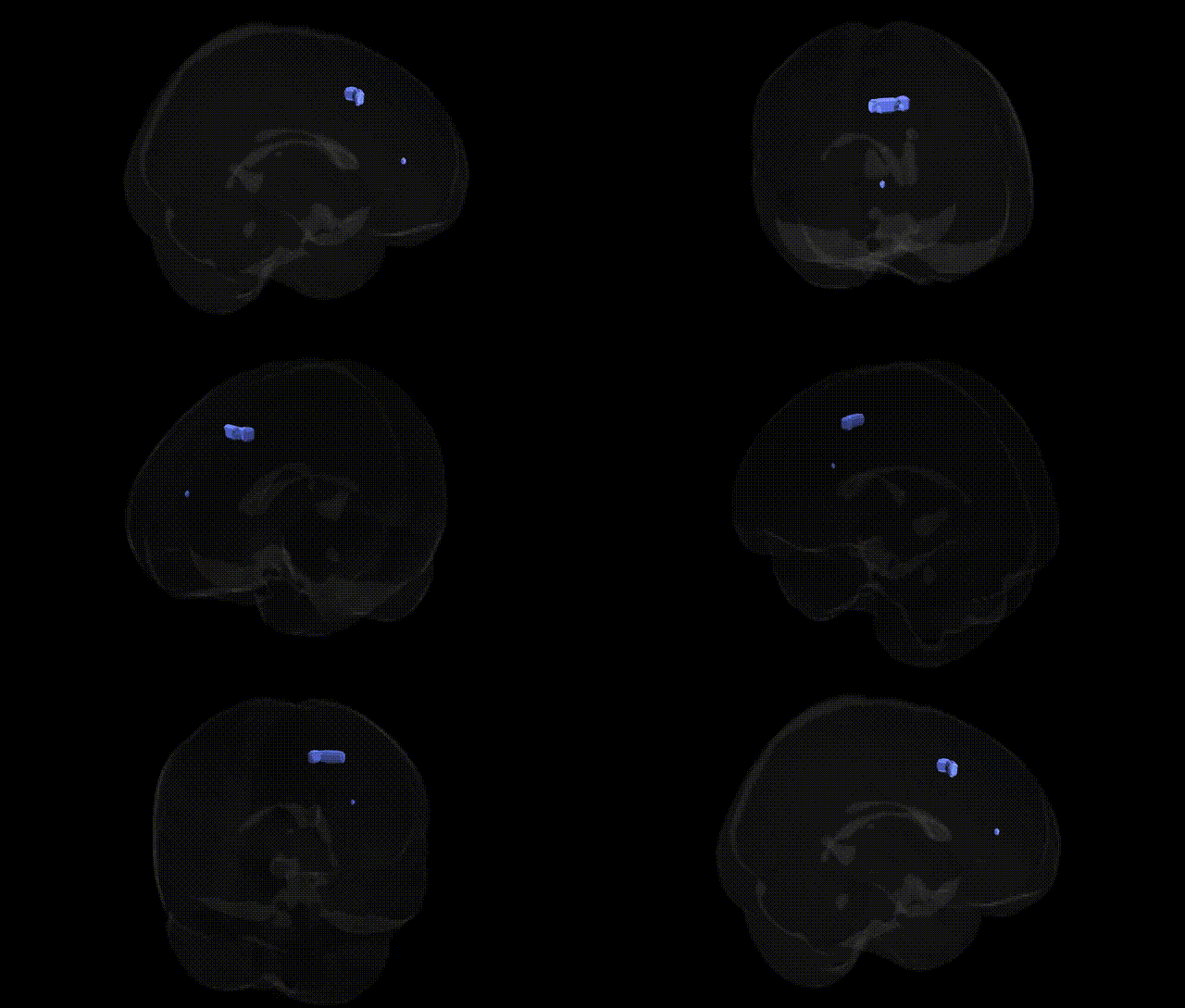
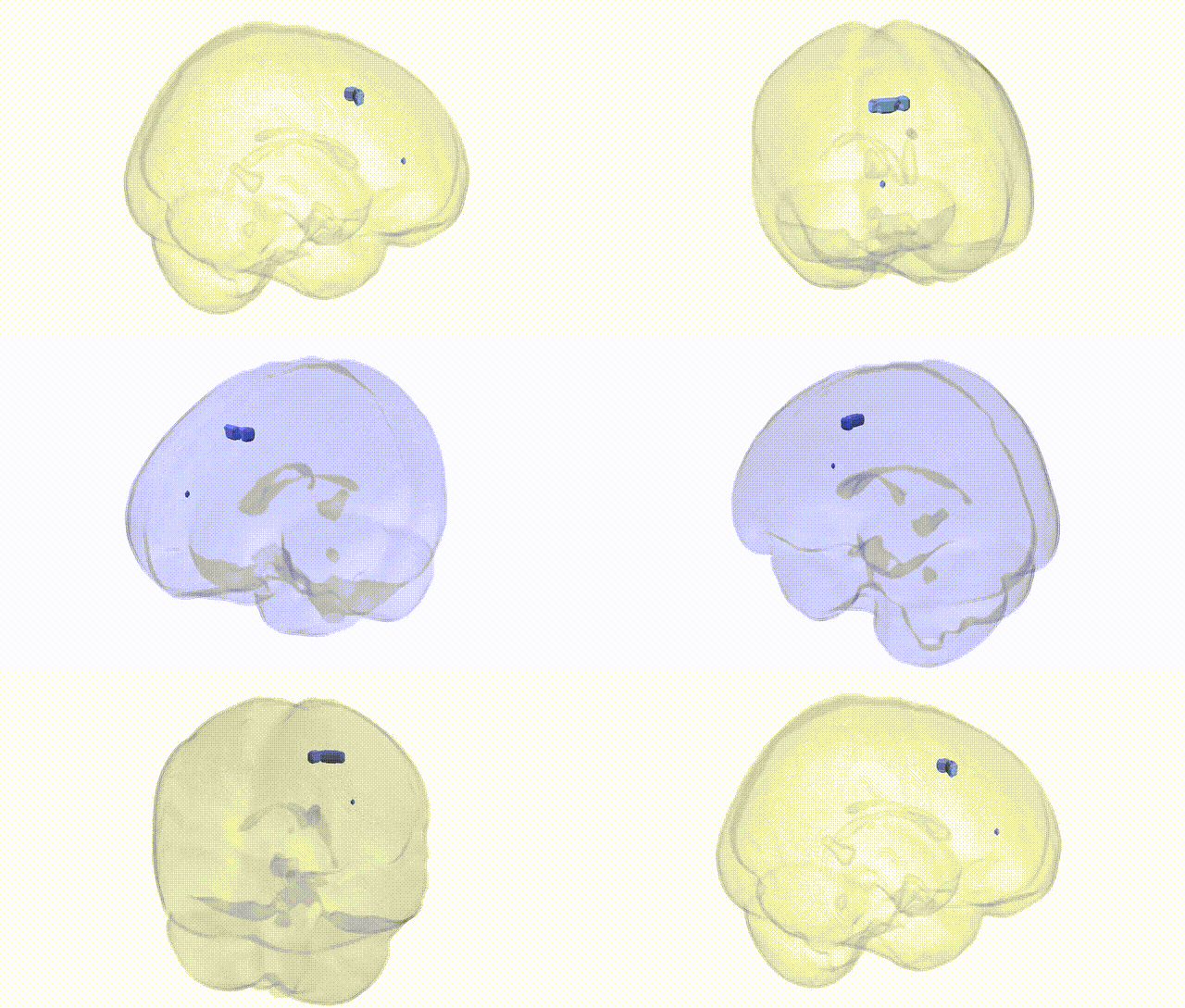
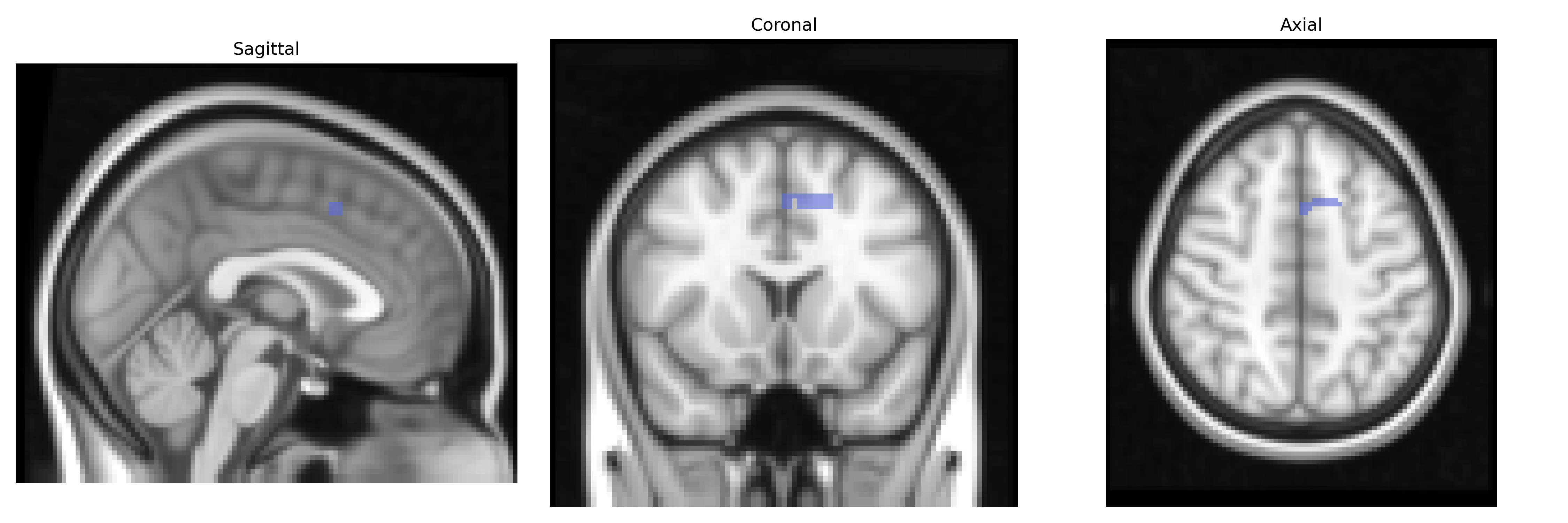
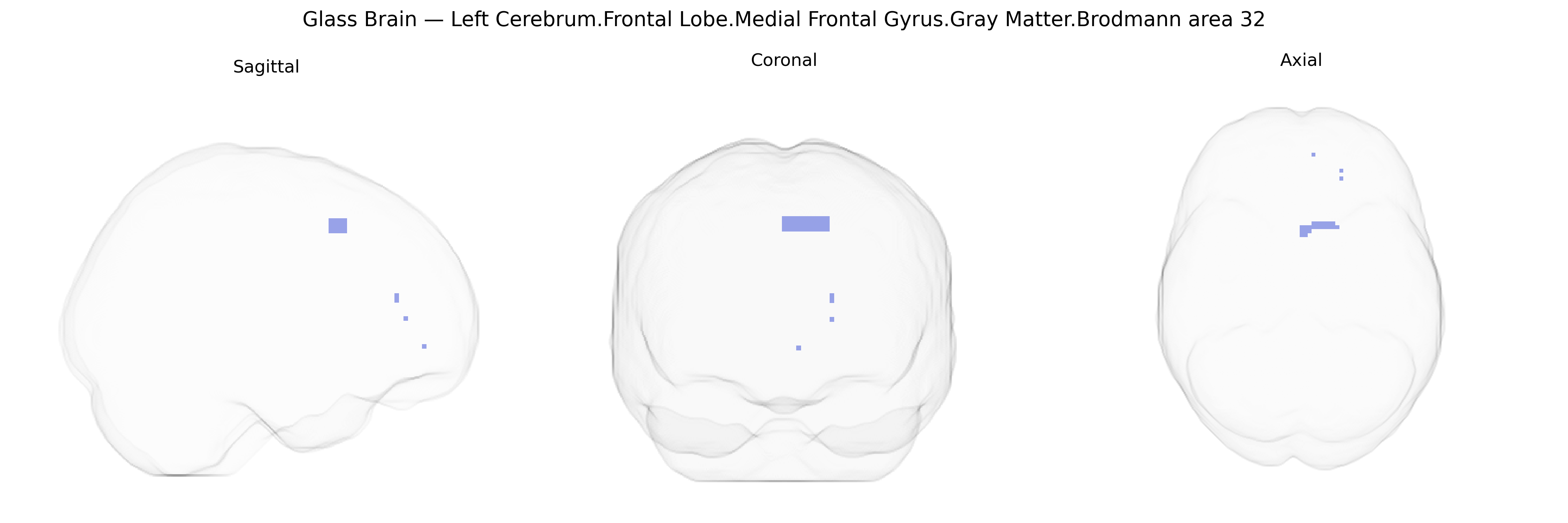
The bilateral Left Cerebrum.Frontal Lobe.Medial Frontal Gyrus.Gray Matter.Brodmann area 32 corresponds to the dorsal part of the anterior cingulate/medial prefrontal cortex, a limbic-associated frontal region implicated in emotion–cognition integration, conflict monitoring, decision making, and aspects of autonomic regulation. Cytoarchitectonically, Brodmann area 32 is agranular to dysgranular cortex situated around the cingulate sulcus, interconnected with prefrontal, limbic, and subcortical structures (including amygdala and thalamus), and participates in executive control over emotional responses, motivational processes, and evaluation of actions relative to goals and social context. There is no direct link for Brodmann area 32 itself; a closely related structure is the Anterior cingulate cortex.
The bilateral medial frontal gyrus (Brodmann area 32) in the left frontal lobe—part of the anterior cingulate/medial prefrontal circuitry—is repeatedly implicated in genetic and GWAS-based studies of psychiatric and cognitive phenotypes, although most findings target functional activation or connectivity rather than this specific Talairach-defined gray matter parcel. Variants in genes affecting glutamatergic and dopaminergic signaling (e.g., COMT, DRD2, GRM3) and synaptic plasticity (e.g., BDNF, CACNA1C) have been associated with structural and functional alterations in medial frontal/anterior cingulate regions, including gray matter volume, cortical thickness, and task-related activation during cognitive control and emotional regulation. Large imaging-genetics GWAS consortia (such as ENIGMA and UK Biobank-based studies) have identified polygenic influences on cortical morphology and surface area in the medial frontal and anterior cingulate cortex, with genetic correlations to major depressive disorder, schizophrenia, bipolar disorder, ADHD, anxiety, and neuroticism, as well as traits like cognitive performance, educational attainment, and risk-taking. Risk variants near immune and synaptic genes (e.g., MHC region, C4, complement-related pathways) show convergent effects on cingulo-frontal networks that include Brodmann area 32, supporting its role as a hub in genetically influenced circuits for salience processing, conflict monitoring, and affect regulation; however, current evidence maps more robustly to the broader anterior cingulate/medial prefrontal complex than to this specific atlas-labeled region alone.
Overview generated by GPT-4o (2026).
Region ID: 610
Hemisphere: bilateral
Atlas: Talairach labels 2mm
Full Quality Version: Download MP4
Full Quality Version: Download MP4
Wali Sidiqyar*, Gaurav Rudravaram*, Elyssa M. McMaster, Trent M. Schwartz, Adam M. Saunders, Kurt G. Schilling, Bennett A. Landman "Introducing SPINS: A Shared Public Visualization Library of Neuroanatomical Structures." Medical Imaging with Deep Learning- short paper
This resource is licensed under CC0 1.0 Universal (Public Domain).