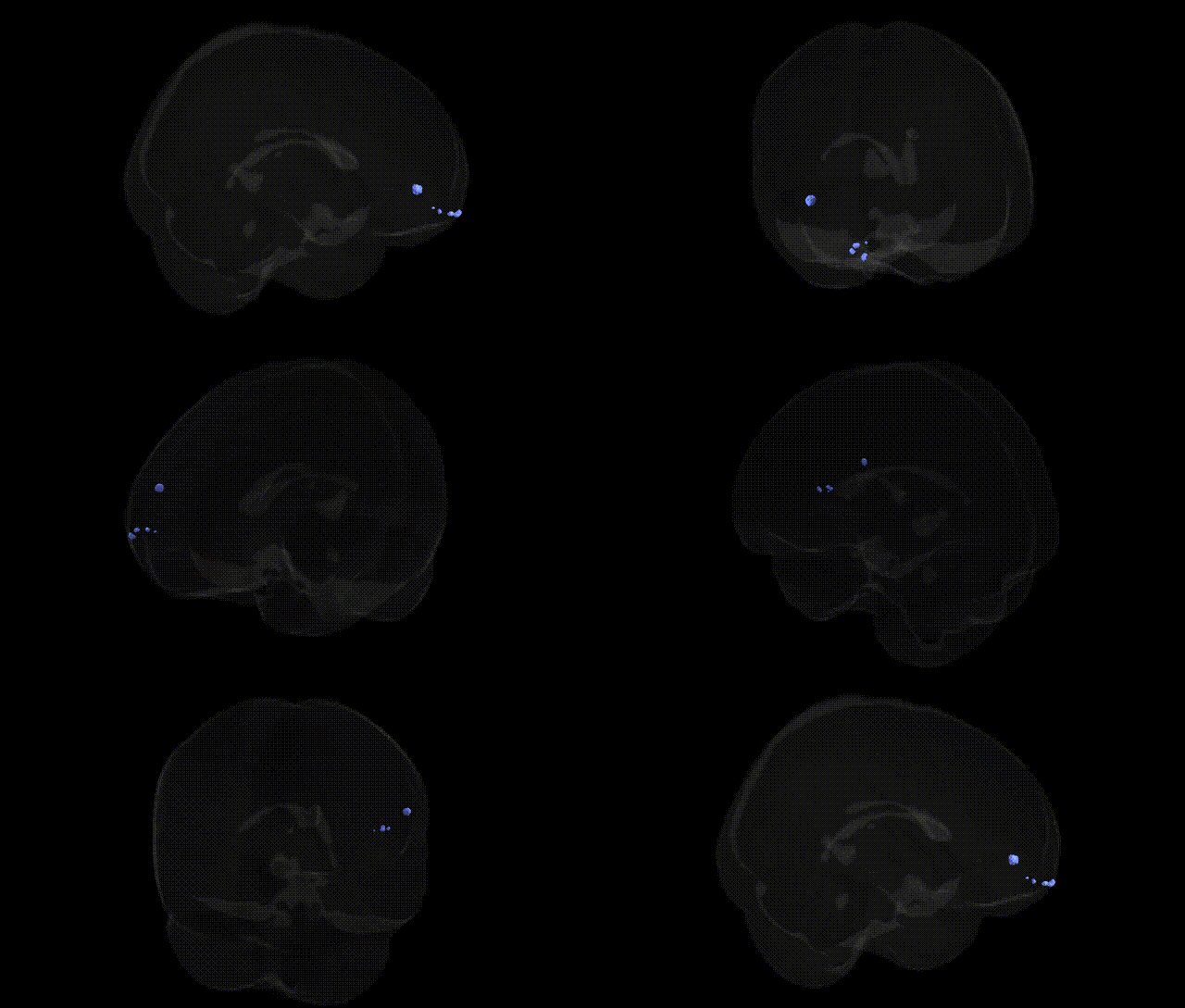
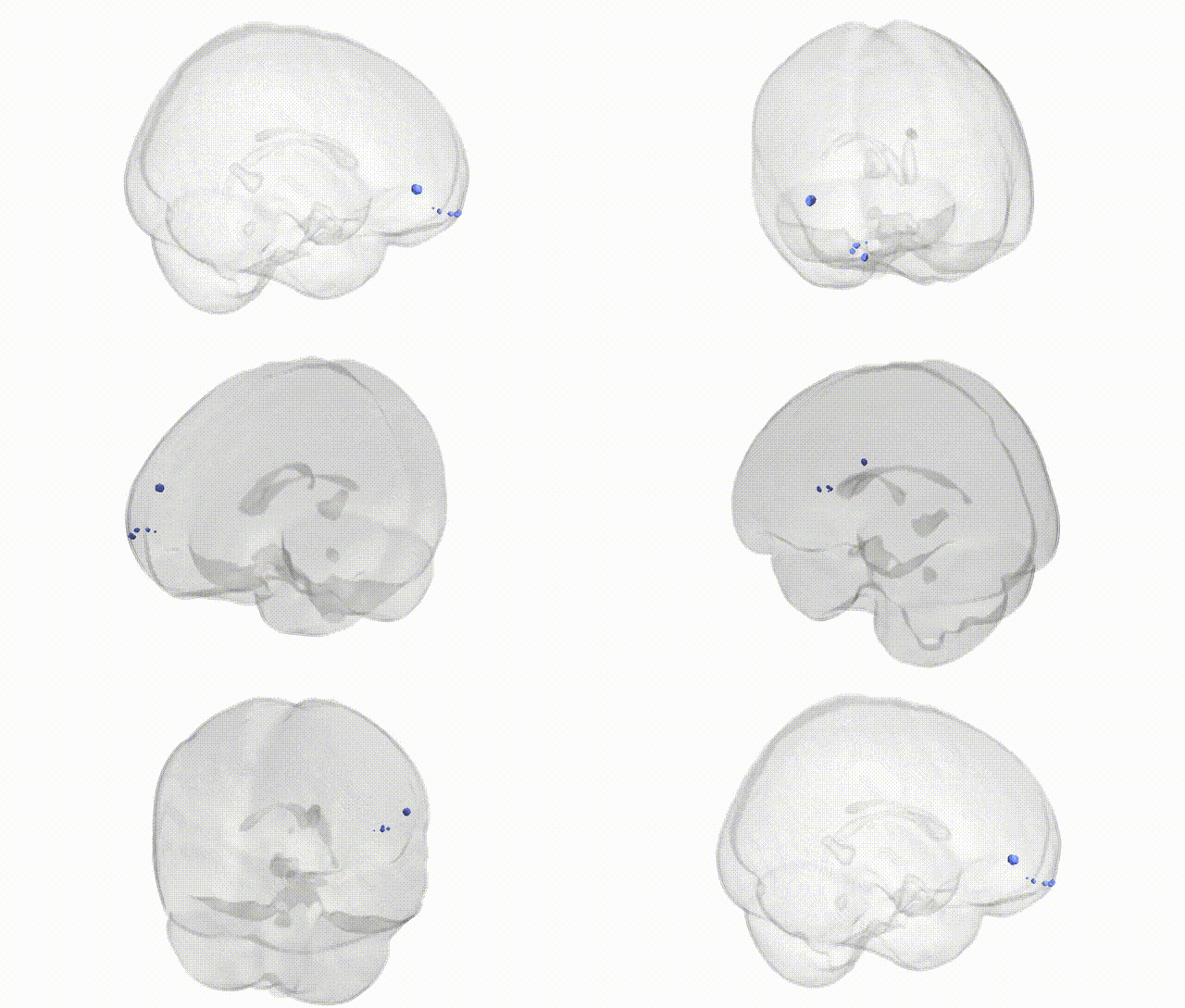
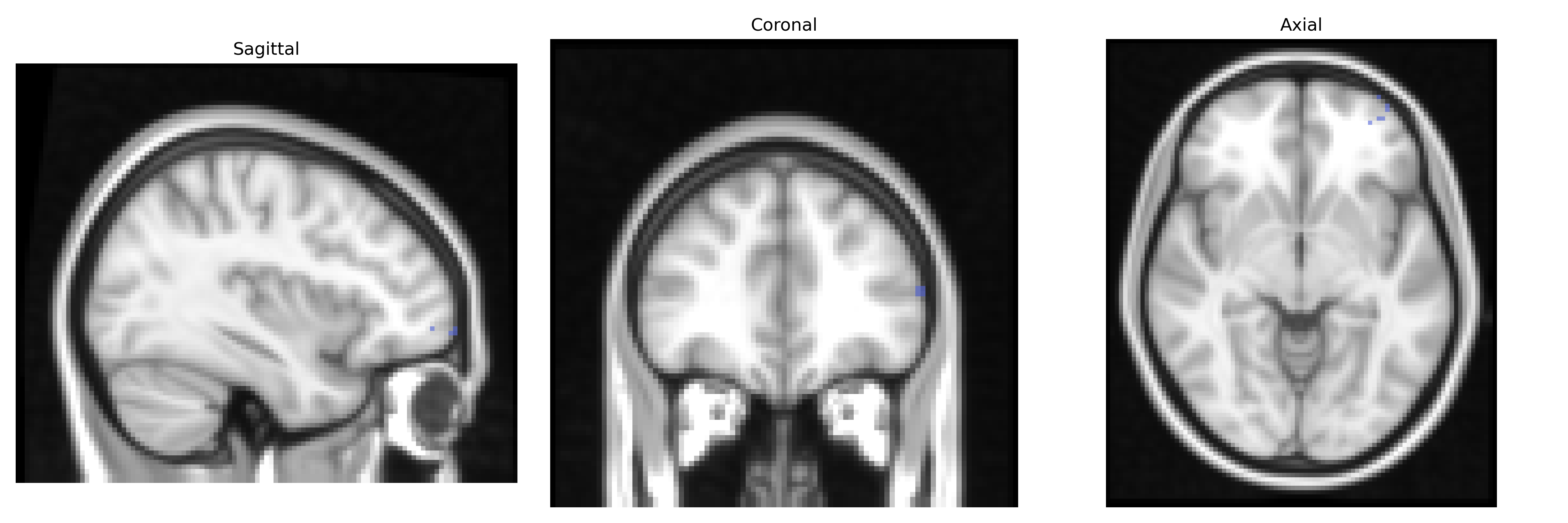
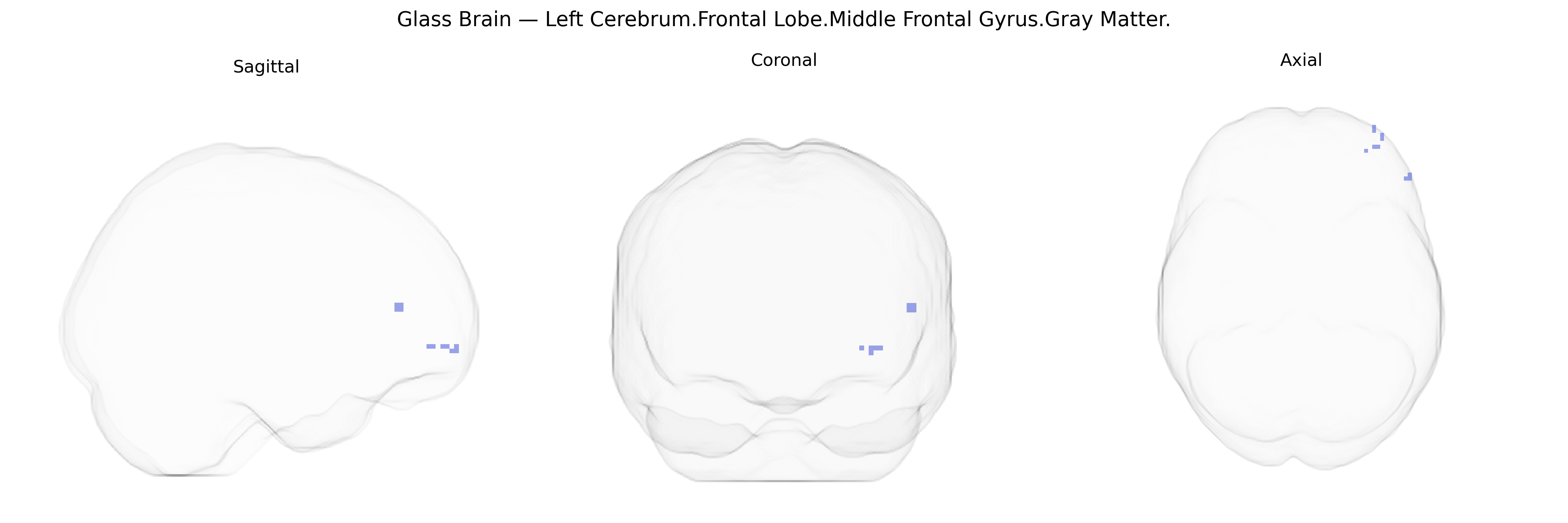
The bilateral Left Cerebrum.Frontal Lobe.Middle Frontal Gyrus.Gray Matter corresponds to cortical tissue in the dorsolateral frontal region, situated between the superior and inferior frontal gyri and anterior to the precentral gyrus. This area participates in higher-order executive functions, including working memory, attentional control, planning, decision-making, and aspects of cognitive flexibility, and forms part of the dorsolateral prefrontal cortex circuitry extensively interconnected with parietal, temporal, and subcortical structures such as the basal ganglia and thalamus. Neuronal populations here are largely pyramidal cells organized in canonical cortical layers, supporting long-range corticocortical and corticosubcortical projections that underpin integration of sensory information with goal-directed behavior. There is no direct link for the Talairach-defined label, but this region is functionally and anatomically related to the Middle frontal gyrus.
The bilateral left middle frontal gyrus gray matter (Talairach 2 mm atlas: Left Cerebrum.Frontal Lobe.Middle Frontal Gyrus.Gray Matter) is a key node of the dorsolateral prefrontal cortex, and genetic associations involving this region largely arise from imaging‑genetics and GWAS of cortical structure and function. Large-scale brain GWAS (e.g., ENIGMA, UK Biobank) have identified common variants in genes related to neurodevelopment, synaptic function, and axonal guidance (including loci near genes such as CENPW, IGF1, HMGA2, and others) that influence cortical thickness, surface area, and volume of lateral prefrontal regions encompassing the middle frontal gyrus. Polygenic risk scores for schizophrenia, bipolar disorder, major depressive disorder, and ADHD have been associated with altered gray-matter volume and functional activation in the middle frontal gyrus, implicating risk loci in genes affecting glutamatergic and dopaminergic signaling (e.g., CACNA1C, GRM3, DRD2) and synaptic plasticity (e.g., BDNF, CTNNB1). Variants linked to cognitive traits such as general intelligence, working memory, and educational attainment show convergent associations with structural and functional measures in the middle frontal gyrus, suggesting that many cognition-related GWAS hits exert effects via prefrontal circuitry. Additionally, genes involved in neurodevelopmental disorders (e.g., CNTNAP2, DISC1, FOXP2 pathways) and autism spectrum conditions have been tied to atypical activation or morphology in this region during executive, language, and social cognition tasks. Overall, genetic influences on this bilateral left middle frontal gyrus gray matter region reflect a broad set of neurodevelopmental and synaptic pathways shared across psychiatric disorders, cognitive traits, and normal variation in cortical architecture.
Overview generated by GPT-4o (2026).
Region ID: 617
Hemisphere: bilateral
Atlas: Talairach labels 2mm
Full Quality Version: Download MP4
Full Quality Version: Download MP4
Wali Sidiqyar*, Gaurav Rudravaram*, Elyssa M. McMaster, Trent M. Schwartz, Adam M. Saunders, Kurt G. Schilling, Bennett A. Landman "Introducing SPINS: A Shared Public Visualization Library of Neuroanatomical Structures." Medical Imaging with Deep Learning- short paper
This resource is licensed under CC0 1.0 Universal (Public Domain).