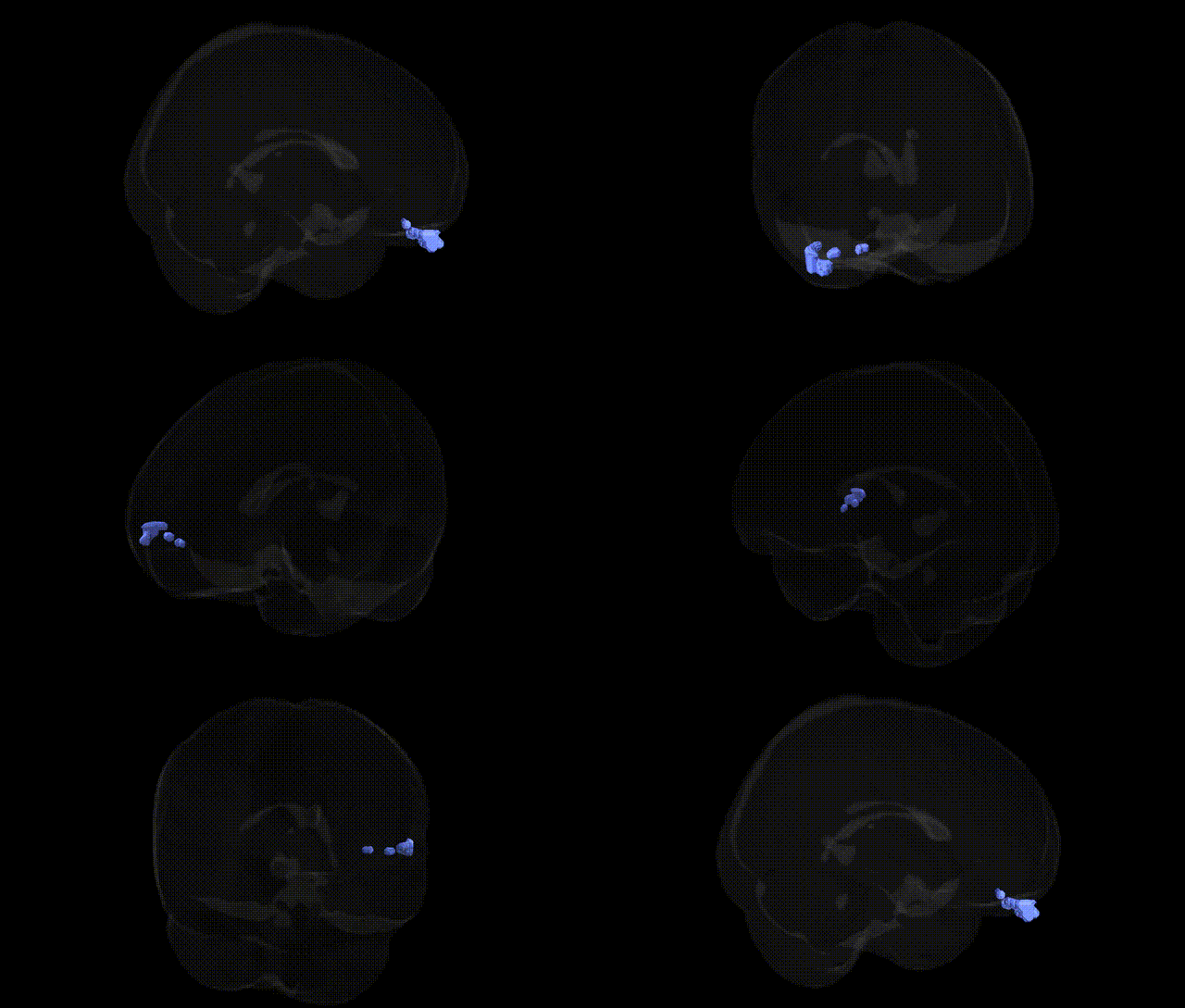
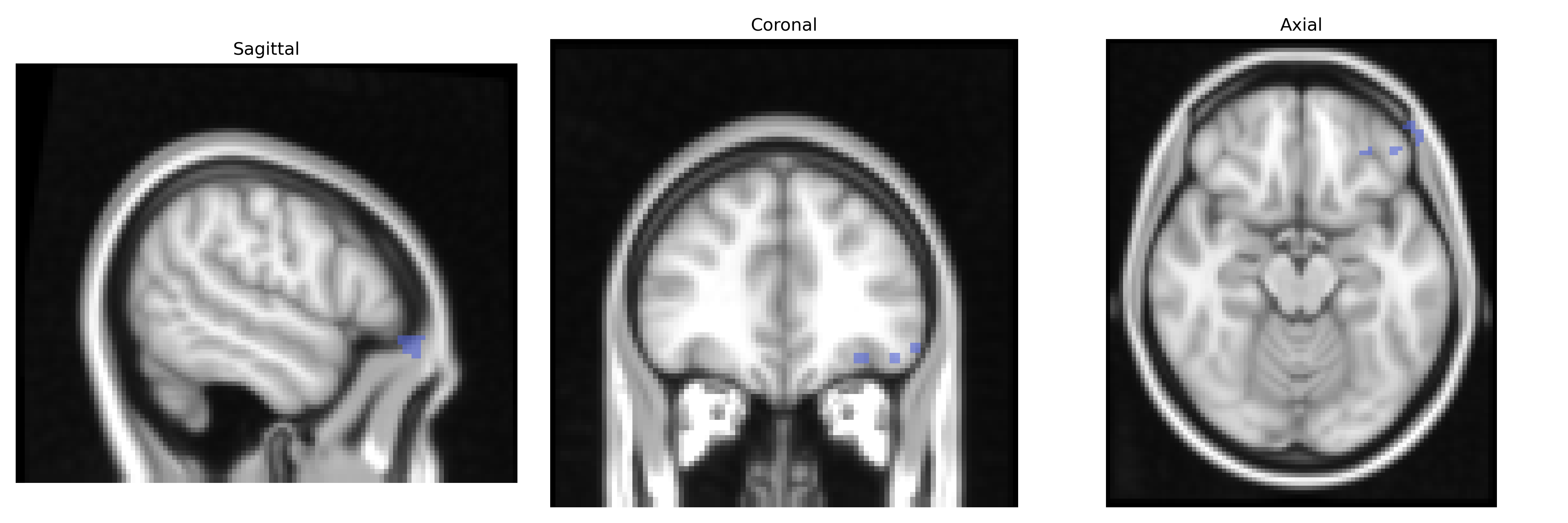
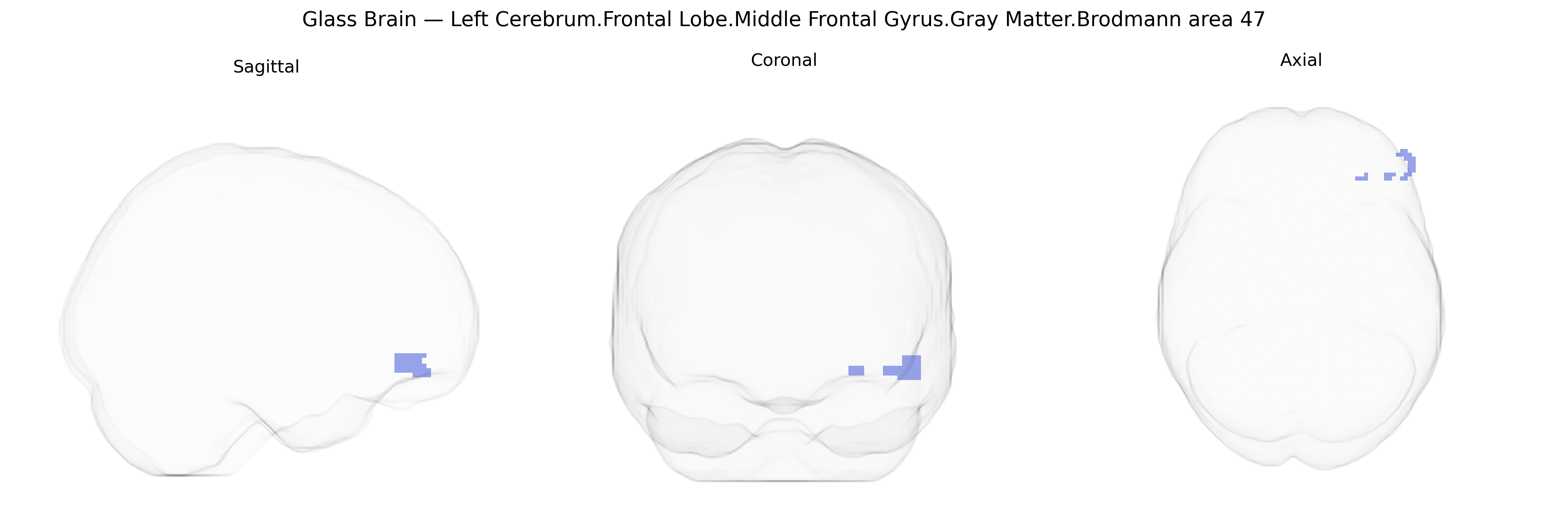
Bilateral Left Cerebrum.Frontal Lobe.Middle Frontal Gyrus.Gray Matter.Brodmann area 47 corresponds to a portion of the ventrolateral prefrontal cortex situated in the frontal lobe, specifically within the middle frontal gyrus region adjacent to the inferior frontal gyrus. Brodmann area 47 is cytoarchitectonically defined granular cortex implicated in higher-order cognitive and affective functions, including aspects of language processing (particularly semantic and syntactic operations), working memory, reward-related decision-making, and the integration of emotional and social information with goal-directed behavior. Functionally, this region participates in networks supporting response inhibition, evaluation of behavioral consequences, and flexible adaptation of actions in changing environmental contexts, and is interconnected with limbic, temporal, and other prefrontal areas. There is no direct Wikipedia article for this exact Talairach label; a closely related structure is Brodmann area 47.
The bilateral Left Cerebrum.Frontal Lobe.Middle Frontal Gyrus.Gray Matter.Brodmann area 47 (BA47), a ventrolateral prefrontal/ orbitofrontal region, has been repeatedly implicated in genetic studies of psychiatric and cognitive phenotypes, though most work targets broader inferior frontal or orbitofrontal areas rather than Talairach 2 mm BA47 specifically. GWAS of brain structure (e.g., ENIGMA and UK Biobank cohorts) have identified common variants in genes such as HMGA2, IGF1, and MAPT that influence frontal cortical thickness and surface area, with some clusters overlapping inferior/middle frontal gyri that include BA47. BA47’s role in language, semantic processing, and cognitive control links it indirectly to genetic findings for reading and language disorders (e.g., FOXP2 and CNTNAP2 pathways affecting inferior frontal activation), while imaging‑genetics studies have associated COMT, DRD2/DRD4, and 5‑HTTLPR (SLC6A4) variants with altered activation and connectivity in ventrolateral prefrontal regions during emotional regulation and decision-making tasks. Orbitofrontal/BA47 dysfunction is a consistent feature in disorders such as major depressive disorder, obsessive–compulsive disorder, addiction, and schizophrenia, and polygenic risk scores for these conditions correlate with structural and functional abnormalities in overlapping prefrontal territories, suggesting shared genetic architecture affecting synaptic plasticity, dopaminergic and serotonergic signaling, and neurodevelopmental pathways. However, fine-grained, atlas-level genetic associations explicitly tied to bilateral BA47 in the Talairach labels 2 mm Atlas remain sparse, with most evidence coming from region-of-interest or whole-brain imaging–genetics analyses that implicate a broader orbitofrontal/inferior frontal network rather than this precise label.
Overview generated by GPT-4o (2026).
Region ID: 409
Hemisphere: bilateral
Atlas: Talairach labels 2mm
Full Quality Version: Download MP4
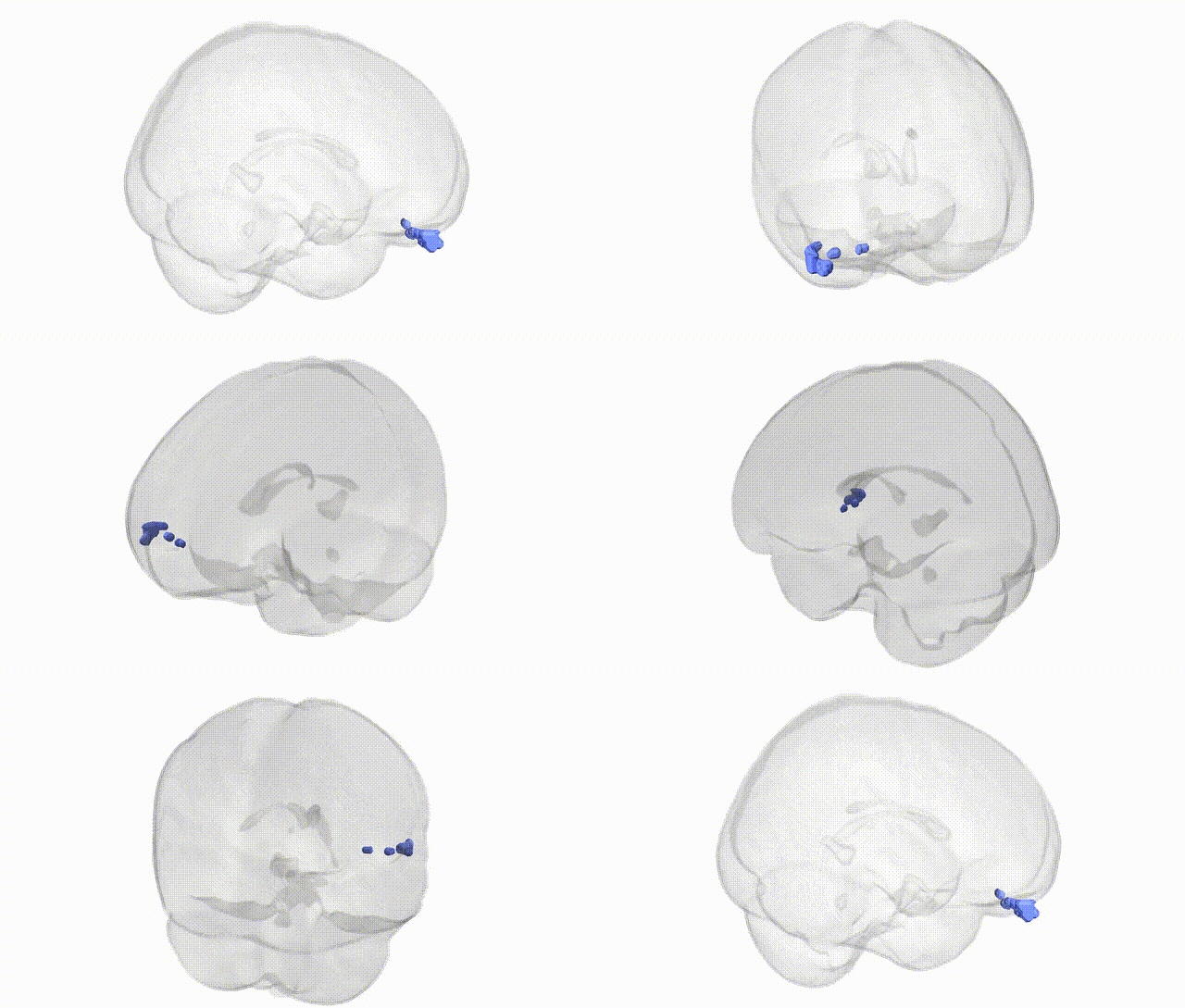
Full Quality Version: Download MP4
Wali Sidiqyar*, Gaurav Rudravaram*, Elyssa M. McMaster, Trent M. Schwartz, Adam M. Saunders, Kurt G. Schilling, Bennett A. Landman "Introducing SPINS: A Shared Public Visualization Library of Neuroanatomical Structures." Medical Imaging with Deep Learning- short paper
This resource is licensed under CC0 1.0 Universal (Public Domain).