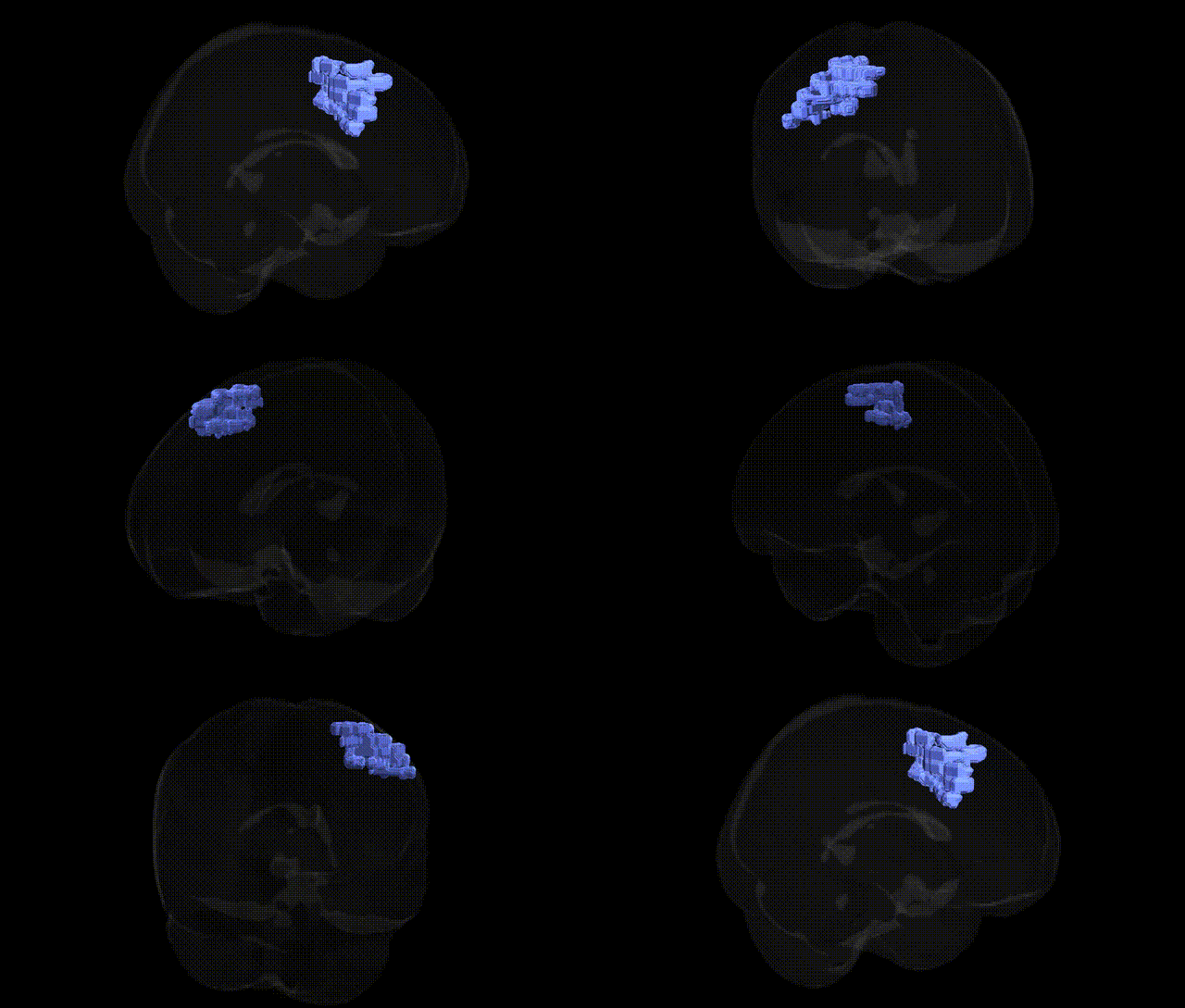
The bilateral Left Cerebrum.Frontal Lobe.Middle Frontal Gyrus.Gray Matter.Brodmann area 6, as defined in the Talairach 2 mm Atlas, corresponds to a portion of the premotor and supplementary motor cortex anterior to the primary motor area (BA4) in the frontal lobe. This agranular cortical region is involved in the planning, preparation, and sequencing of voluntary movements, integrating sensory and cognitive information to organize motor programs before execution. It plays a key role in motor imagery, movement coordination, and aspects of higher-order motor control, including the selection of appropriate motor responses based on internal goals and external cues. Functionally, it contributes to the transformation of intention into organized motor output and is interconnected with primary motor, parietal, and subcortical motor structures. There is no direct Wikipedia article for this exact labeled region; a closely related structure is Premotor cortex.
Genetic associations involving the bilateral Left Cerebrum.Frontal Lobe.Middle Frontal Gyrus.Gray Matter.Brodmann area 6 (premotor/supplementary motor territory) have emerged primarily from neuroimaging GWAS that link common variants to regional cortical thickness, surface area, and functional activation in motor and cognitive control tasks. Large-scale consortia such as ENIGMA and UK Biobank have identified loci in and near genes involved in neurodevelopment, synaptic organization, and axon guidance (e.g., variants near MAPT, CNTNAP2, and genes in Wnt and Notch pathways) that influence frontal cortical morphology, including BA6-related regions. BA6 has been implicated in motor planning, response inhibition, and working memory, and genetic studies of disorders with prominent motor or executive dysfunction—such as attention-deficit/hyperactivity disorder, Tourette syndrome, obsessive-compulsive disorder, schizophrenia, and autism spectrum disorder—frequently report structural or functional alterations in medial and lateral premotor areas; several risk loci (for example in DRD2, CACNA1C, GRIN2A, and synaptic scaffolding genes) show downstream effects on frontal circuit development and activity that extend into BA6. GWAS of general cognitive ability, educational attainment, and impulsivity/response inhibition have also identified polygenic influences on frontal cortical networks encompassing middle frontal and premotor regions, suggesting that many small-effect variants collectively modulate BA6 structure and function as part of broader frontostriatal and frontoparietal systems. While no single gene is uniquely and specifically tied to Talairach BA6 in isolation, convergent evidence from imaging genetics, brain-wide association studies, and disorder-focused GWAS indicates that polygenic architecture of neurodevelopmental and psychiatric risk acts on this premotor/executive hub, contributing to interindividual differences in motor control, cognitive flexibility, and vulnerability to disorders with frontal network dysfunction.
Overview generated by GPT-4o (2026).
Region ID: 1023
Hemisphere: bilateral
Atlas: Talairach labels 2mm
Full Quality Version: Download MP4
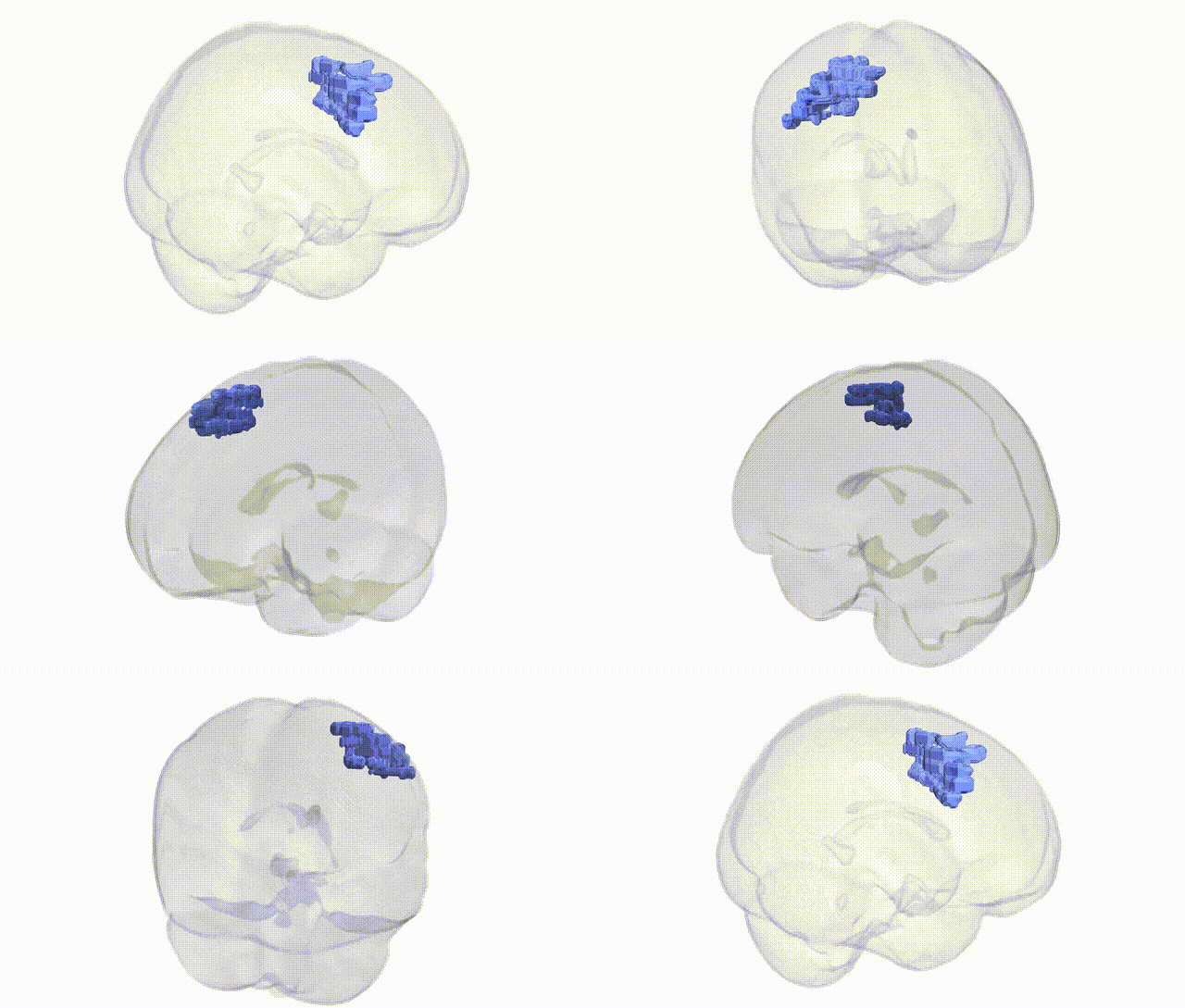
Full Quality Version: Download MP4
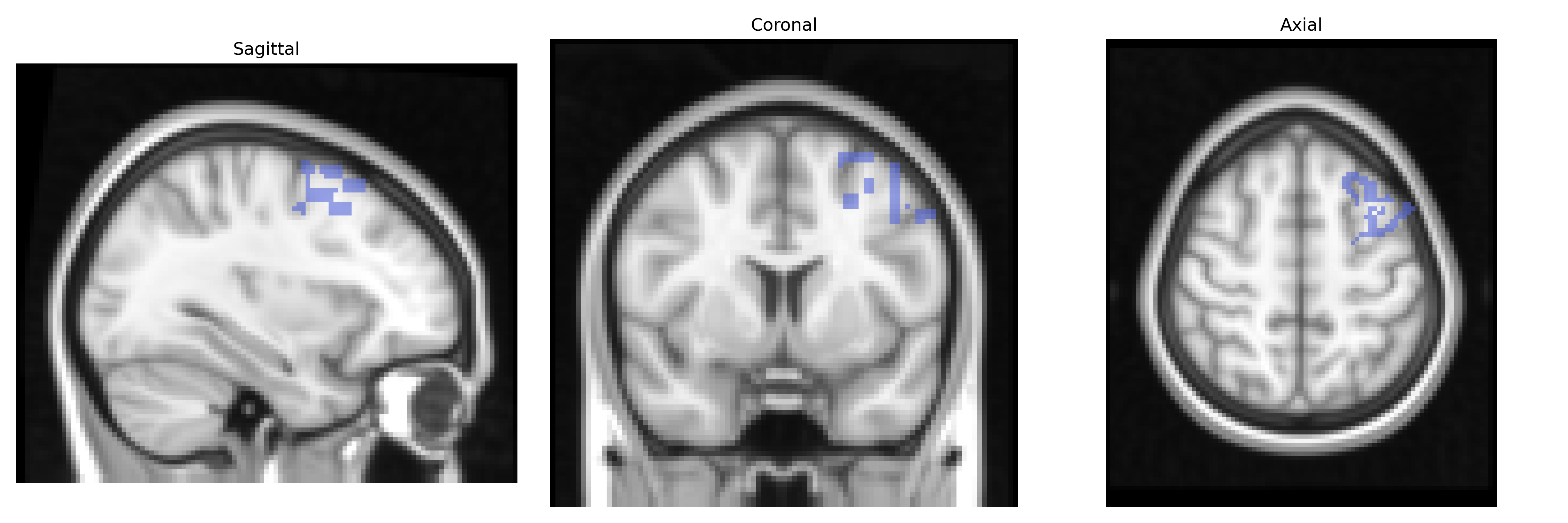
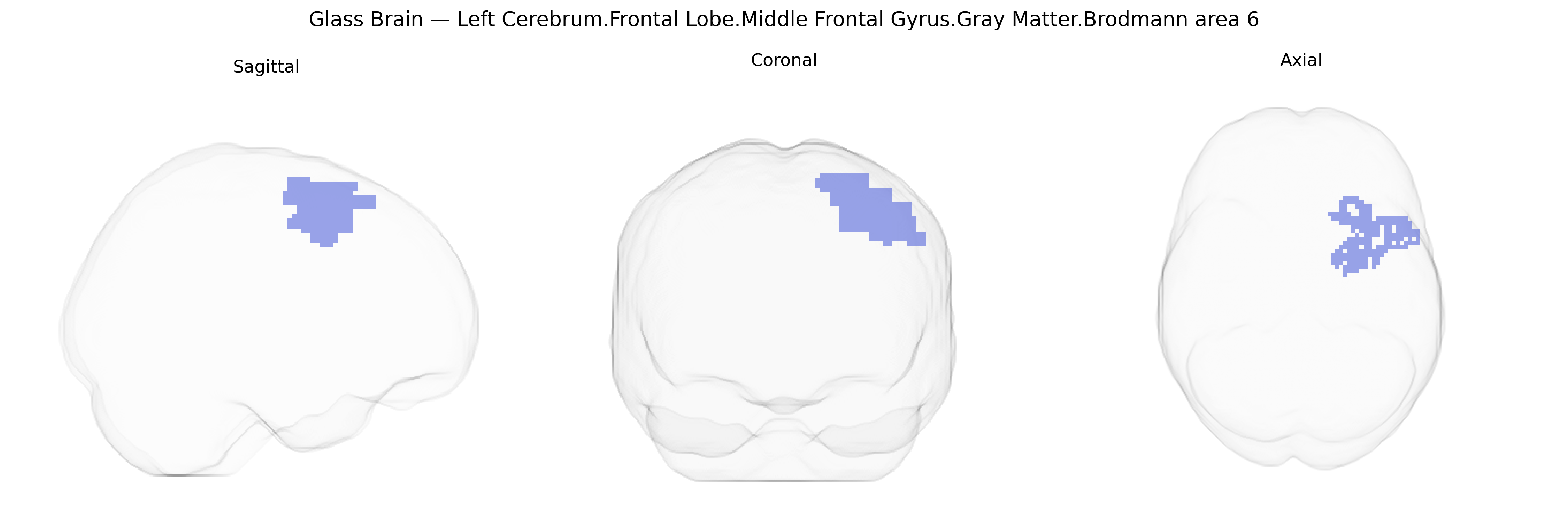
Wali Sidiqyar*, Gaurav Rudravaram*, Elyssa M. McMaster, Trent M. Schwartz, Adam M. Saunders, Kurt G. Schilling, Bennett A. Landman "Introducing SPINS: A Shared Public Visualization Library of Neuroanatomical Structures." Medical Imaging with Deep Learning- short paper
This resource is licensed under CC0 1.0 Universal (Public Domain).