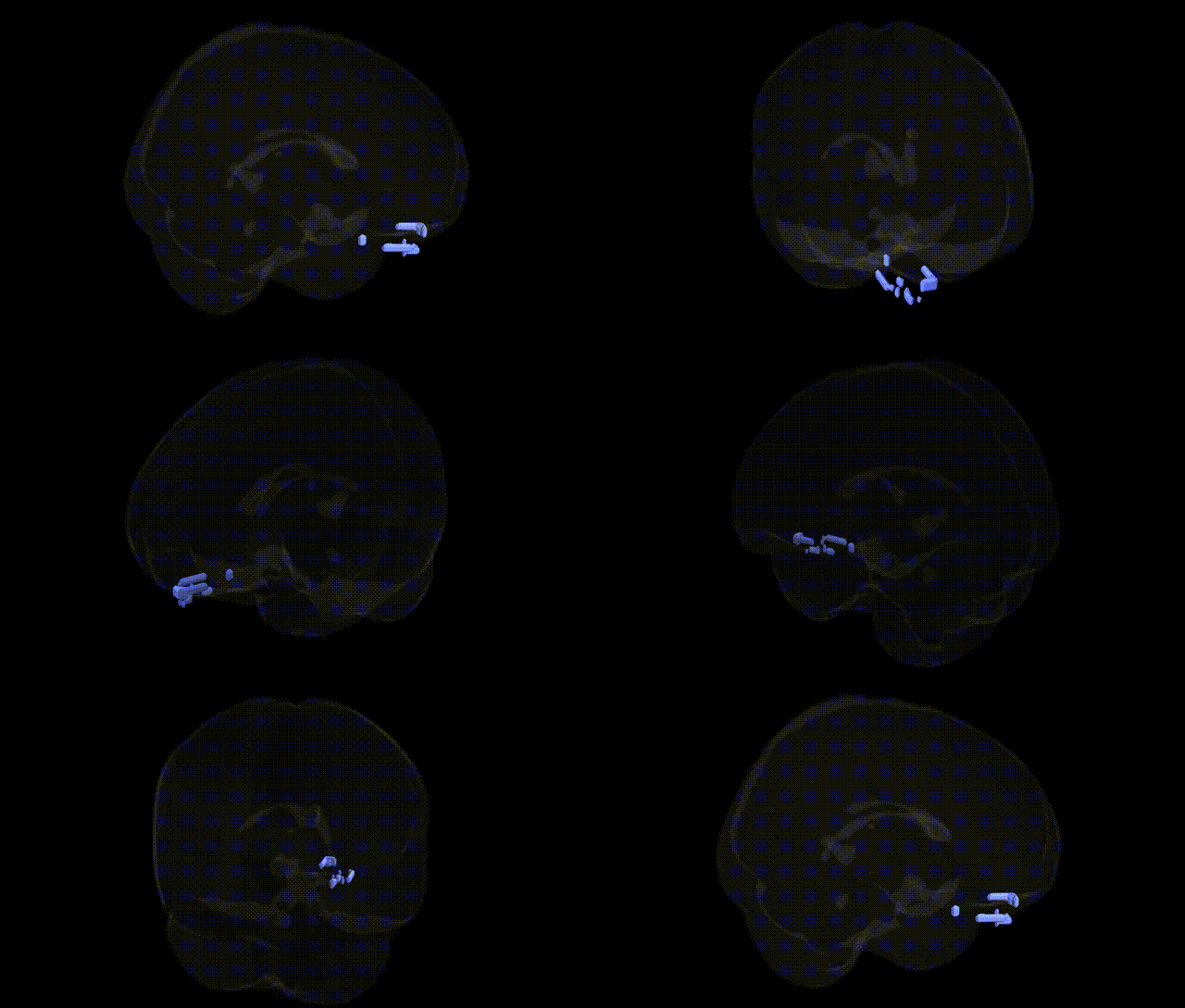
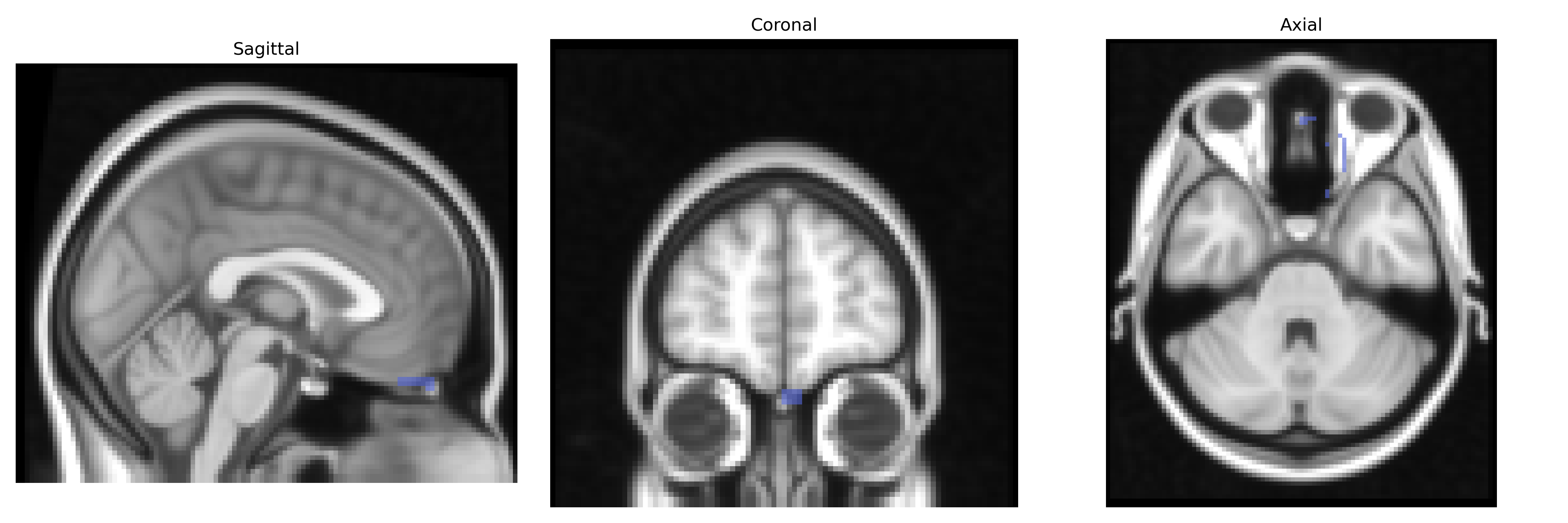
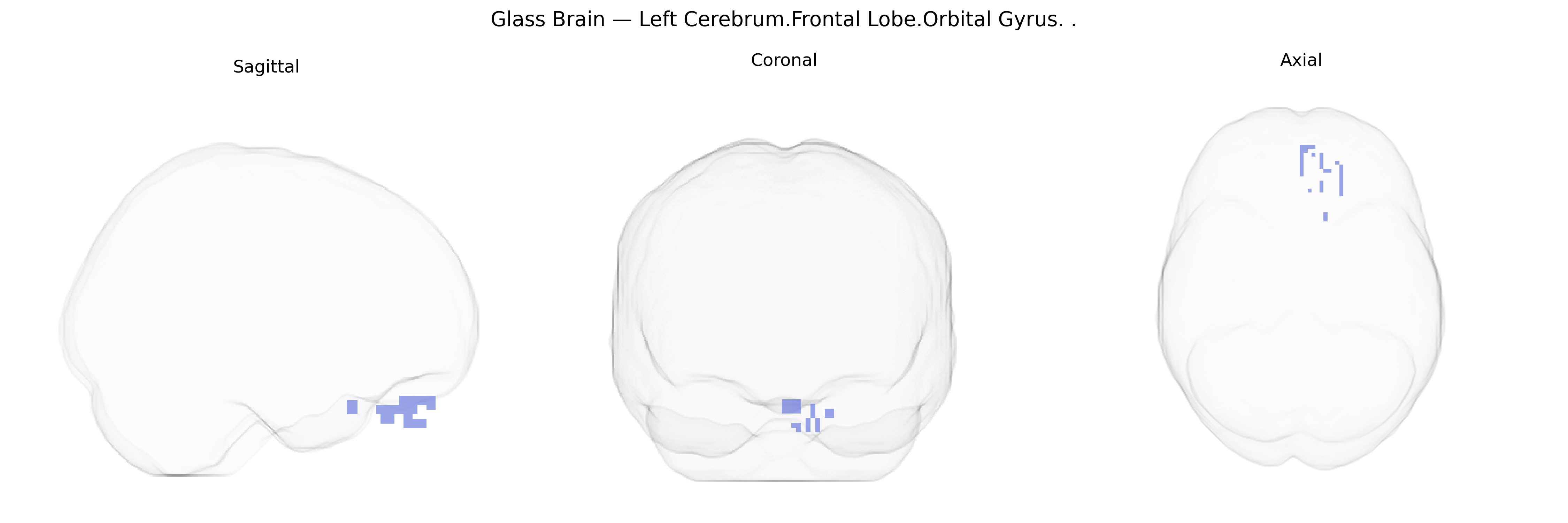
The bilateral Left Cerebrum.Frontal Lobe.Orbital Gyrus corresponds to the orbitofrontal portion of the frontal cortex situated on the ventral surface of the frontal lobe, overlying the orbits. This region is part of the prefrontal cortex and is strongly implicated in reward evaluation, decision-making, emotional and social behavior, and the integration of sensory information (particularly olfactory and gustatory) with affective and motivational states. It receives multimodal inputs from sensory association cortices and limbic structures (such as the amygdala) and projects to other prefrontal, limbic, and striatal regions, supporting cognitive processes like value-based choice, impulse control, and flexible behavioral adaptation. There is no direct link for “Orbital Gyrus,” but it is a component of the orbitofrontal cortex: Orbitofrontal cortex.
The Left Cerebrum Frontal Lobe Orbital Gyrus (orbitofrontal cortex; OFC) has been implicated in multiple genetic and GWAS findings largely through imaging genetics and disorder-focused studies rather than locus-specific analyses in the Talairach 2 mm atlas itself. Common variants in genes related to synaptic function and neurodevelopment (for example CACNA1C, BDNF, GRIN2B, and DISC1) have been associated with structural and functional variation in orbitofrontal regions, often in the context of psychiatric disorders. GWAS of cortical thickness and surface area (e.g., ENIGMA consortium studies) have identified loci influencing frontal and orbitofrontal morphology, including variants near genes involved in neuronal differentiation and axon guidance (such as CENPO, RSPO3, and variants in Wnt-related pathways), although these are typically reported for broader frontal or orbitofrontal parcels rather than a specific Talairach-defined gyrus. OFC-related activation and volume have been linked genetically to risk for major depressive disorder, bipolar disorder, schizophrenia, obsessive–compulsive disorder, and substance use disorders, with polygenic risk scores for these conditions correlating with orbitofrontal structure and function. In addiction and reward-related traits, variants in dopaminergic and serotonergic genes (e.g., DRD2, SLC6A4) show associations with OFC activation during decision-making and risk/reward tasks. More recent imaging GWAS of behavior and cognition have connected orbitofrontal measures to genetic influences on impulsivity, risk-taking, and neuroticism, indicating that this region serves as a key anatomical mediator through which distributed polygenic risk for psychiatric and personality traits exerts effects on behavior.
Overview generated by GPT-4o (2026).
Region ID: 105
Hemisphere: bilateral
Atlas: Talairach labels 2mm
Full Quality Version: Download MP4
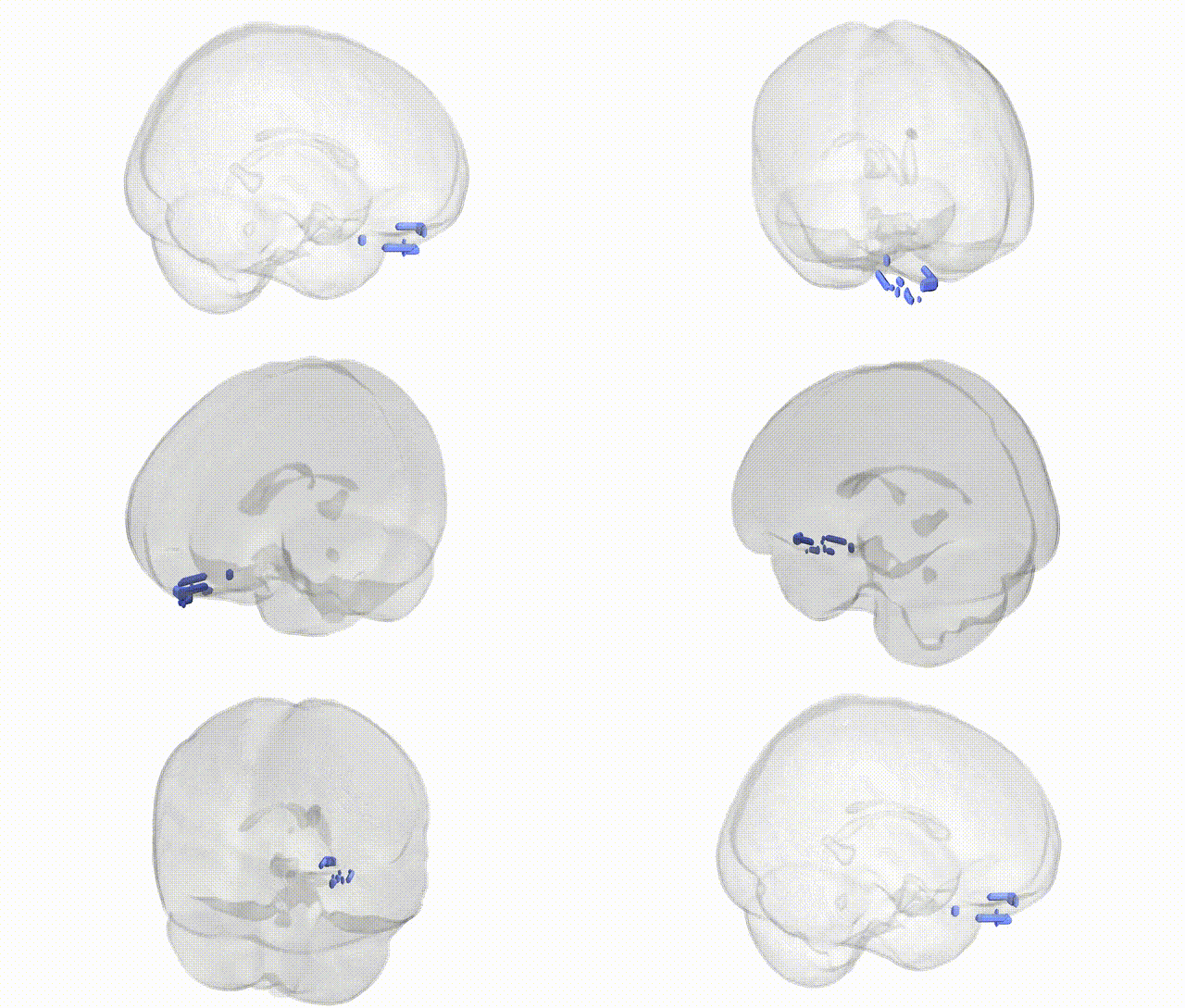
Full Quality Version: Download MP4
Wali Sidiqyar*, Gaurav Rudravaram*, Elyssa M. McMaster, Trent M. Schwartz, Adam M. Saunders, Kurt G. Schilling, Bennett A. Landman "Introducing SPINS: A Shared Public Visualization Library of Neuroanatomical Structures." Medical Imaging with Deep Learning- short paper
This resource is licensed under CC0 1.0 Universal (Public Domain).