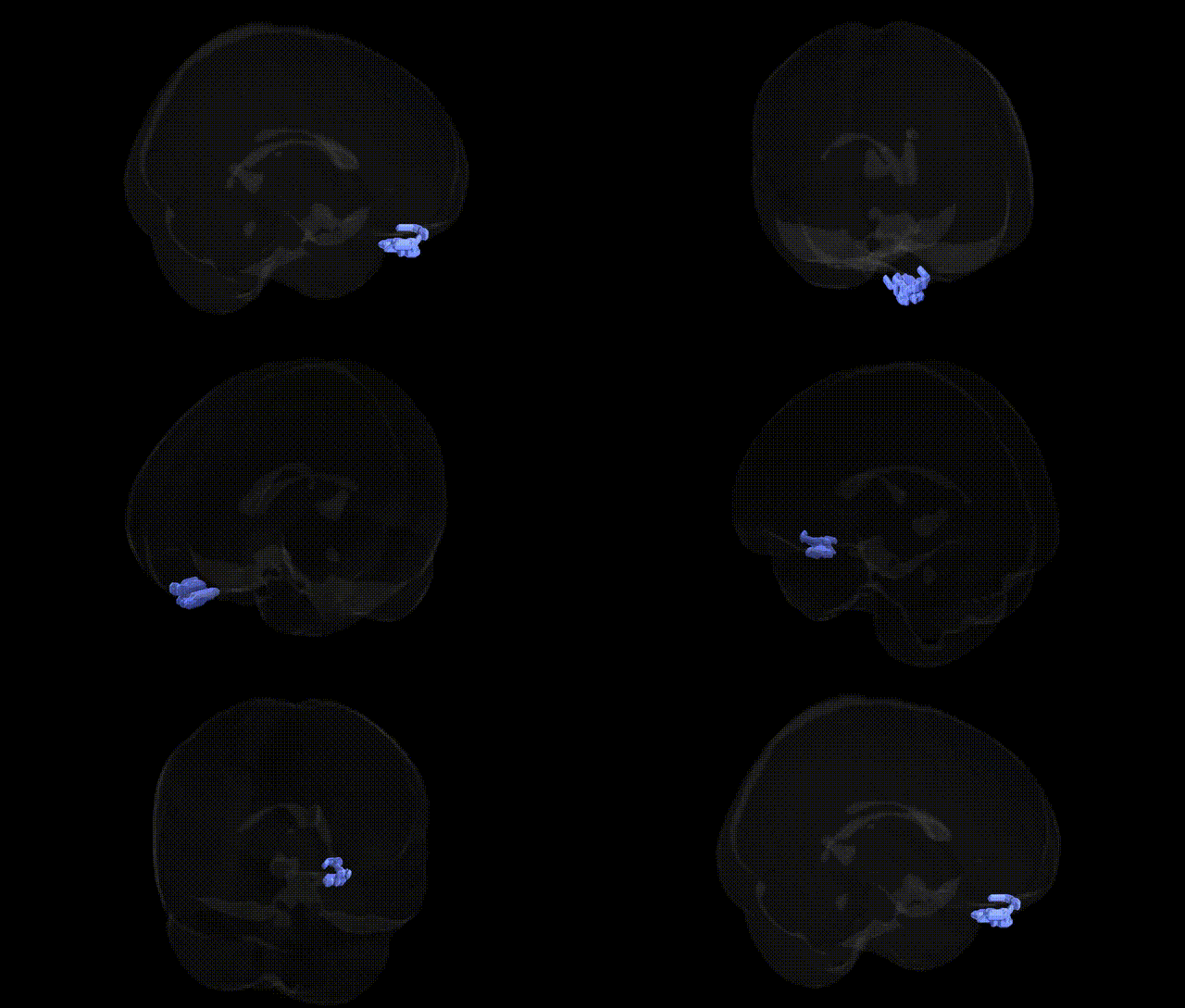
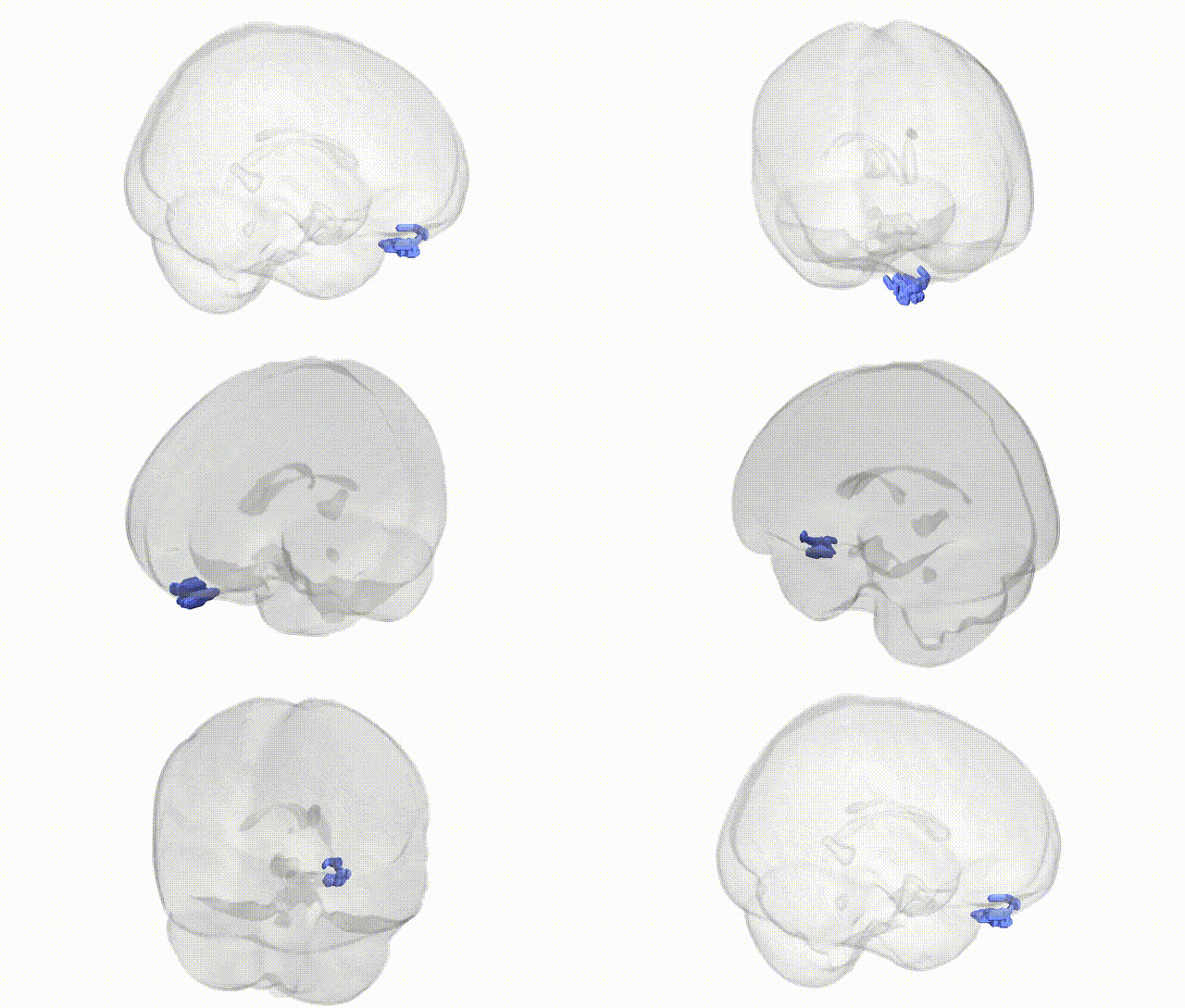
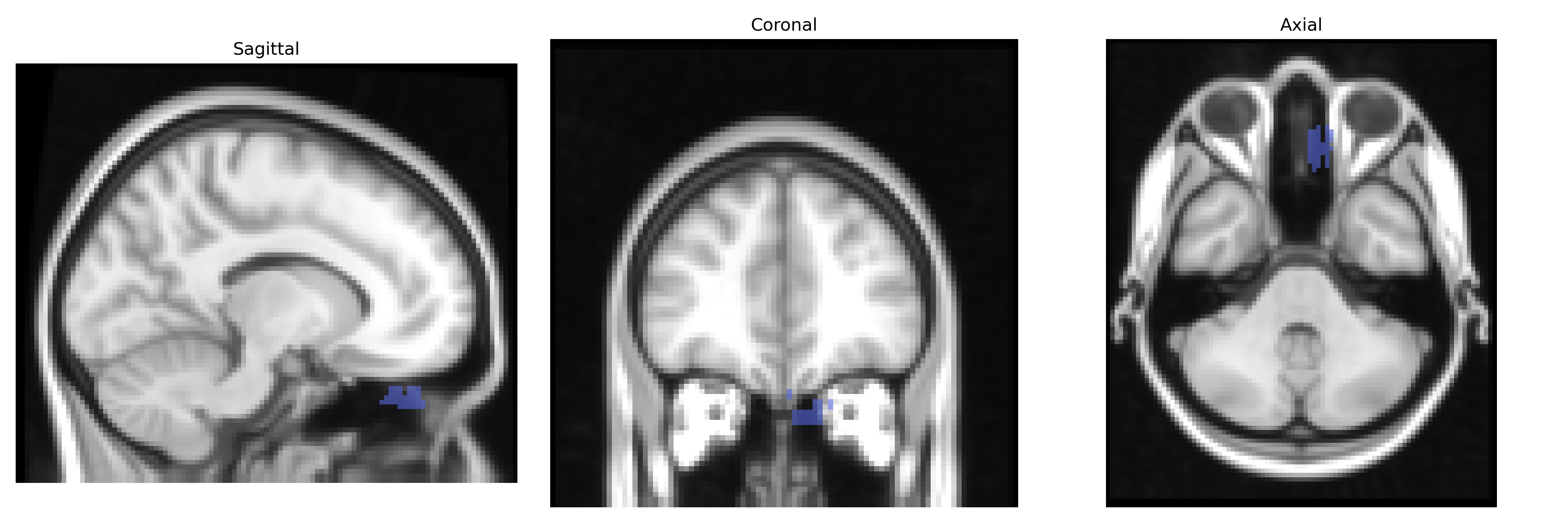
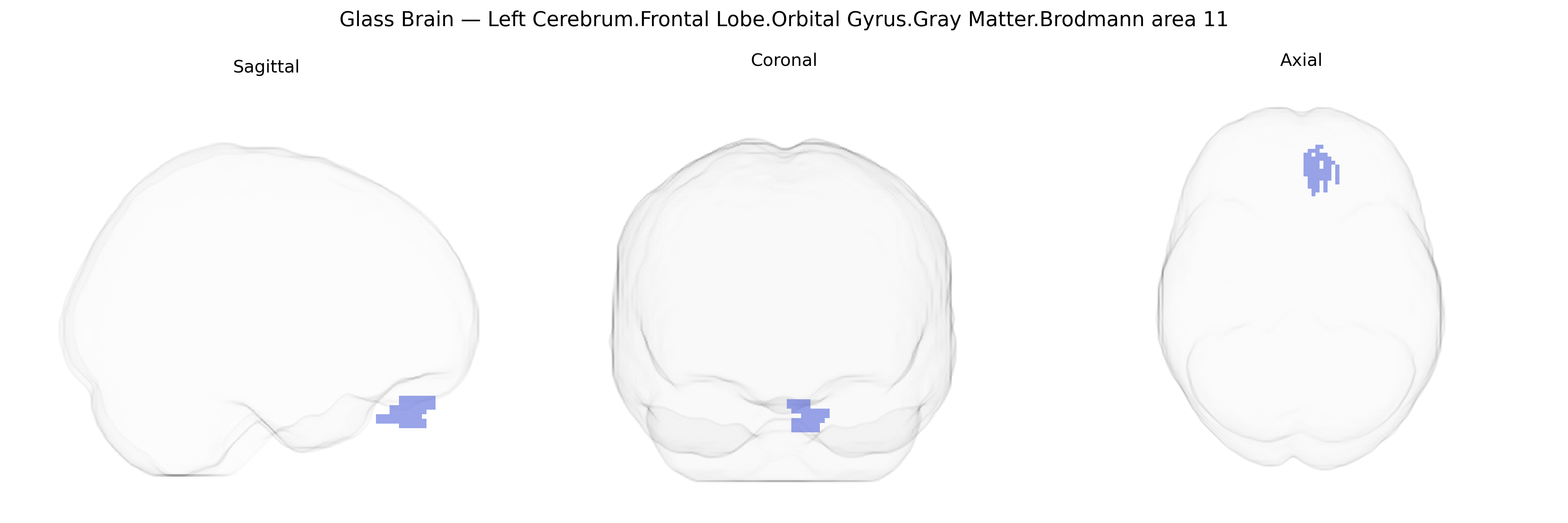
The bilateral Left Cerebrum.Frontal Lobe.Orbital Gyrus.Gray Matter.Brodmann area 11 corresponds to a portion of the orbitofrontal cortex located on the ventral surface of the frontal lobe, above the orbits. Brodmann area 11 is primarily associated with higher-order executive and affective functions, including decision-making, reward evaluation, emotional regulation, and adaptive learning based on changing reinforcement contingencies. Neuronal populations in this region integrate multimodal sensory inputs (including visceral and olfactory information) with internal state and past experience to guide flexible behavior, social judgments, and value-based choices. This area has dense connections with limbic structures such as the amygdala and hippocampus, as well as with other prefrontal regions, supporting its role in complex cognitive-emotional processing and behavioral control.
The bilateral left orbitofrontal cortex (OFC; frontal lobe orbital gyrus gray matter, Brodmann area 11) has been implicated in multiple genetic studies, particularly through GWAS of psychiatric and behavioral traits as well as imaging genetics of brain structure. Variants in genes affecting synaptic function and neurodevelopment—such as CACNA1C, ANK3, GRM3, and genes in glutamatergic and GABAergic pathways—have been associated with OFC-related phenotypes, including altered volume or cortical thickness in this region, especially in major depressive disorder, bipolar disorder, schizophrenia, and anxiety disorders. OFC (BA11) structure and function show heritability, with twin and GWAS studies linking common variants in neurodevelopmental and cell-adhesion genes (e.g., NCAM1, CNTNAP2, and others) to orbitofrontal anatomy and connectivity. Genetic risk scores for depression, neuroticism, and addiction phenotypes have been associated with OFC morphology or activation during reward and decision-making tasks, consistent with this region’s role in valuation and impulse control. Structural and functional alterations in BA11 have also been reported in GWAS-informed imaging studies of obsessive–compulsive disorder and substance use disorders, where risk alleles in dopaminergic and serotonergic genes (e.g., DRD2, SLC6A4) and in polygenic scores for alcohol and nicotine use correlate with OFC differences. Overall, while few GWAS pinpoint BA11-specific loci, converging imaging-genetic evidence indicates that polygenic risk for mood, psychotic, anxiety, and addiction disorders, along with personality traits such as neuroticism and impulsivity, is consistently associated with variation in orbitofrontal (BA11) gray matter structure and function.
Overview generated by GPT-4o (2026).
Region ID: 102
Hemisphere: bilateral
Atlas: Talairach labels 2mm
Full Quality Version: Download MP4
Full Quality Version: Download MP4
Wali Sidiqyar*, Gaurav Rudravaram*, Elyssa M. McMaster, Trent M. Schwartz, Adam M. Saunders, Kurt G. Schilling, Bennett A. Landman "Introducing SPINS: A Shared Public Visualization Library of Neuroanatomical Structures." Medical Imaging with Deep Learning- short paper
This resource is licensed under CC0 1.0 Universal (Public Domain).