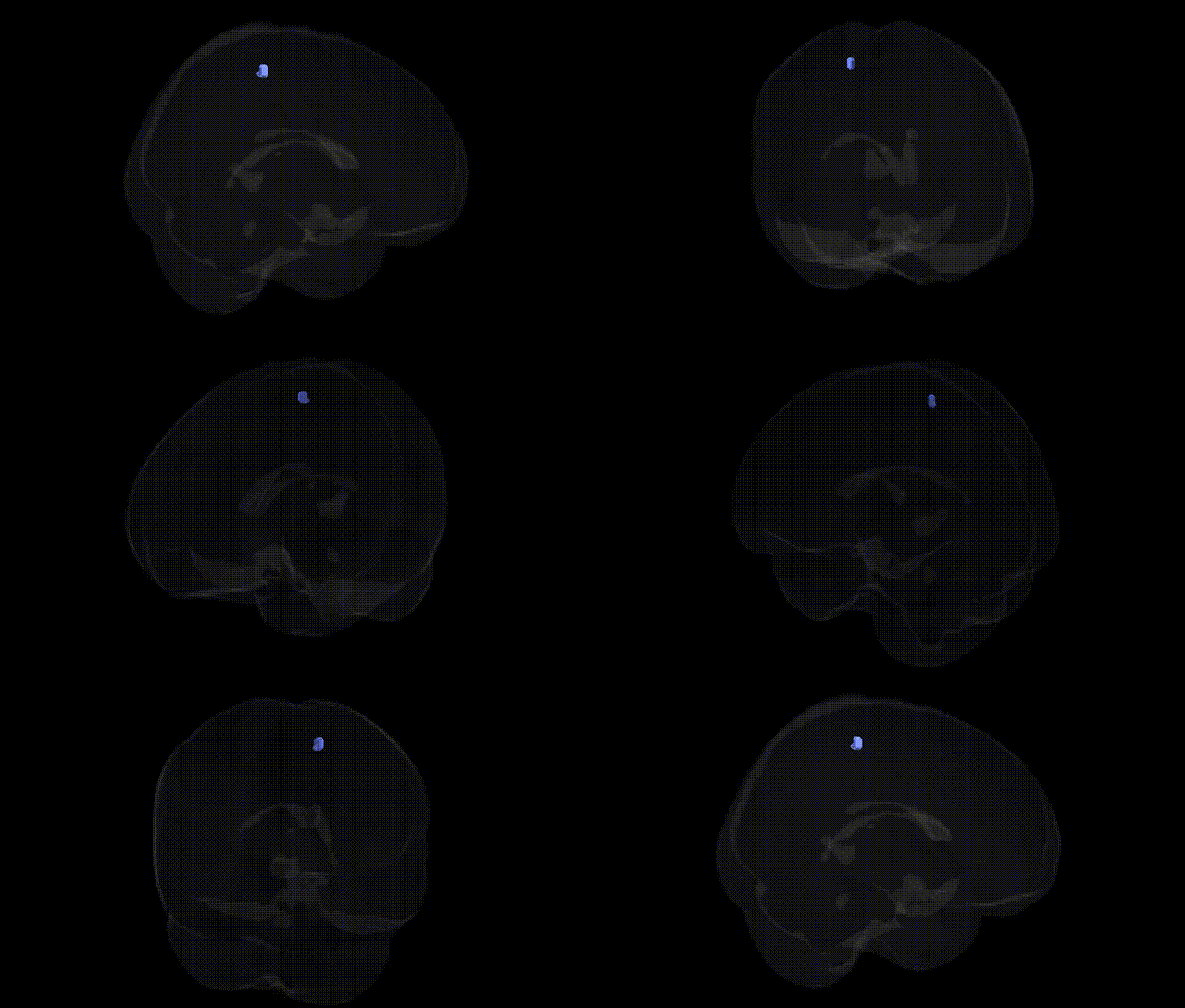
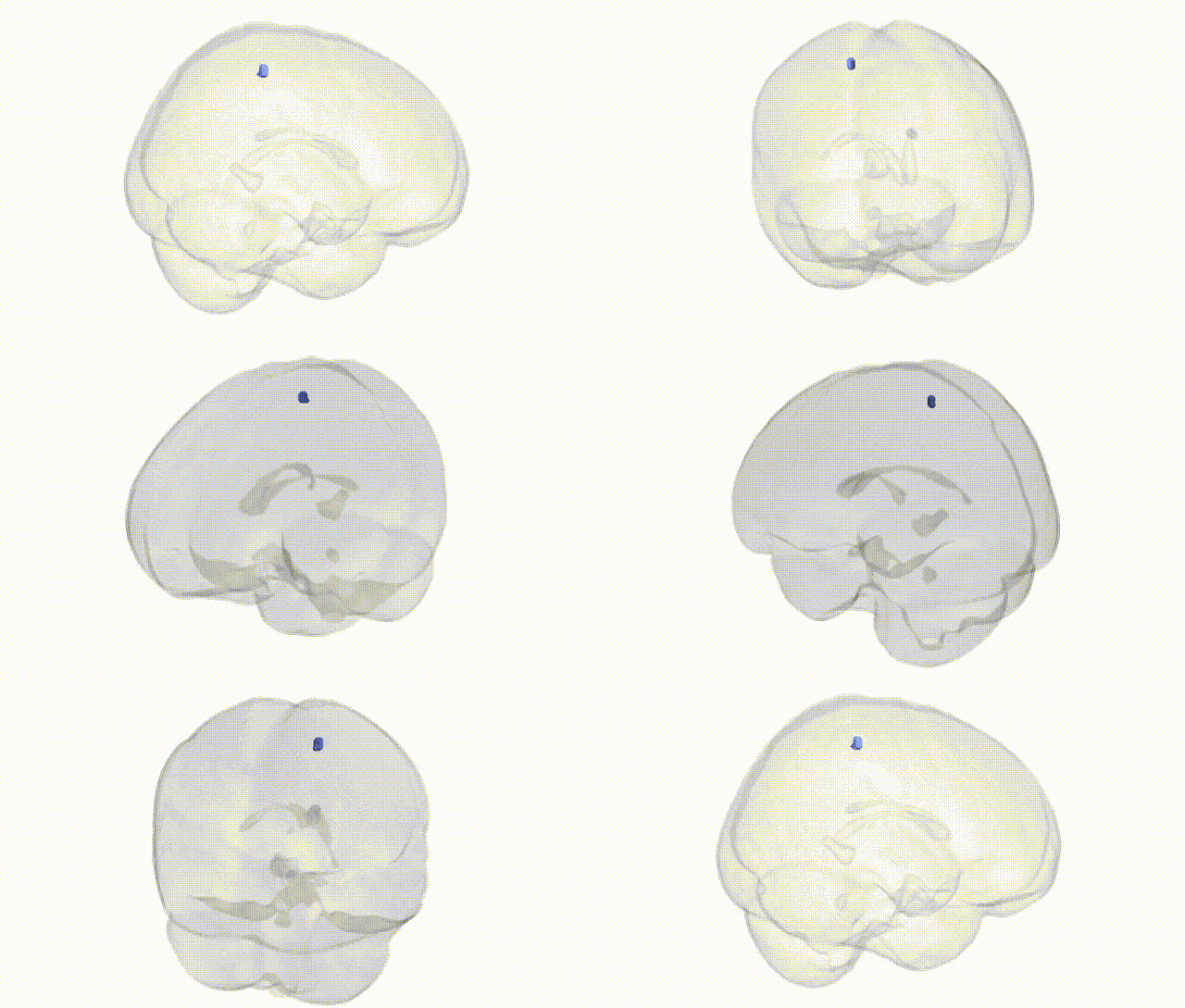
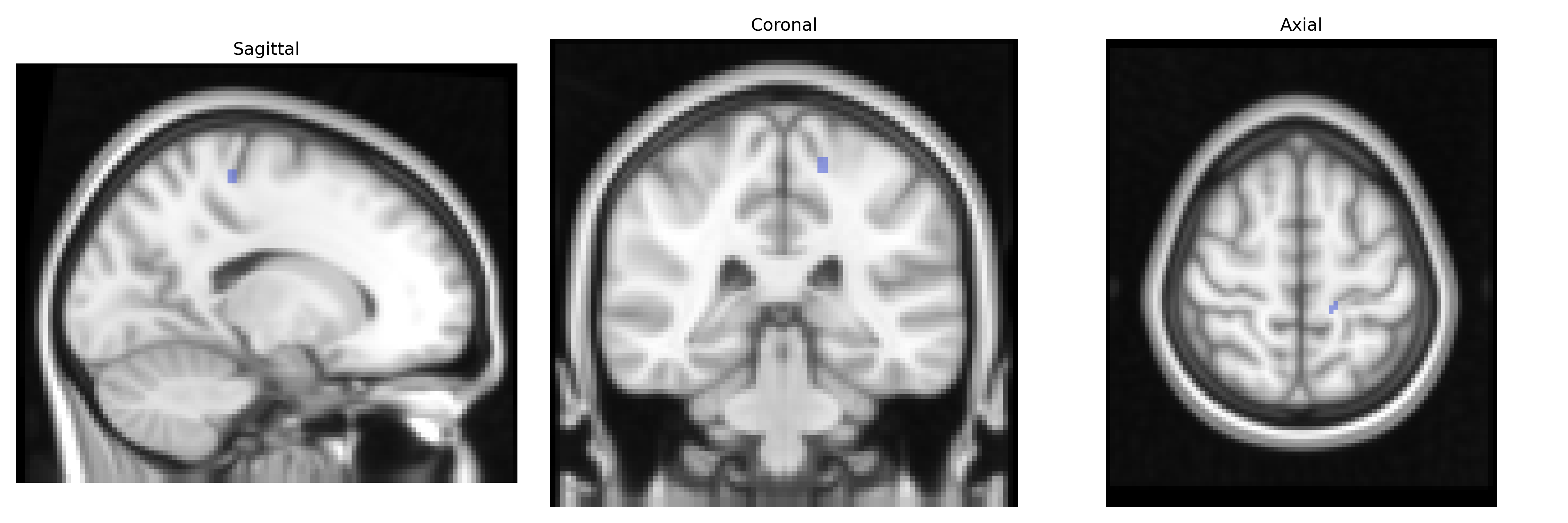
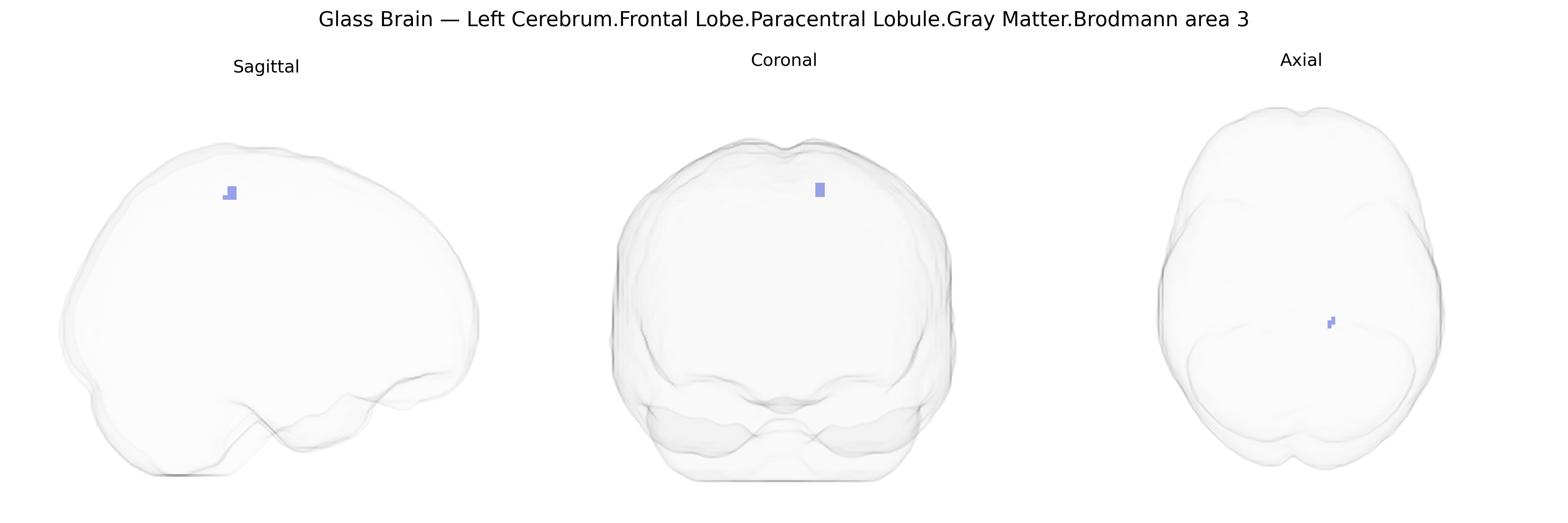
The bilateral Left Cerebrum.Frontal Lobe.Paracentral Lobule.Gray Matter.Brodmann area 3 corresponds primarily to the anterior portion of the paracentral lobule along the medial surface of the frontal lobe, overlapping the posterior part of the precentral gyrus and extending toward the central sulcus. Functionally, Brodmann area 3 forms a key component of the primary somatosensory cortex, receiving highly processed afferent input from the thalamus and encoding fine tactile discrimination, proprioception, and nociceptive signals from the contralateral body, with the paracentral region especially representing lower limb and pelvic areas. Neurons in this region exhibit precise somatotopic organization and are critical for integrating cutaneous and deep sensory information, thereby supporting sensorimotor coordination and perception of bodily state. There is no direct link for this exact composite label; related area: Brodmann area 3.
The bilateral left paracentral lobule gray matter in Brodmann area 3 (primary somatosensory cortex) has been implicated in several genetic and GWAS-based associations, largely through imaging genetics and neuropsychiatric studies rather than region-specific candidate gene work. Structural and functional variation in this sensorimotor territory shows heritability in twin studies and has been linked to common variants in genes affecting cortical development and synaptic signaling (e.g., in large brain GWAS by ENIGMA and UK Biobank consortia), including loci near genes such as HMGA2, TCF4, and others associated with global cortical thickness and surface area. GWAS of pain sensitivity and chronic pain conditions (e.g., migraine, chronic back pain) have reported that risk variants in ion channel and neurotransmission genes map, via imaging, to altered activation or morphology in primary somatosensory cortices, including paracentral regions. Neurodevelopmental and psychiatric disorder GWAS—such as for schizophrenia, autism spectrum disorder, ADHD, and major depression—identify polygenic risk that correlates with atypical cortical thickness, gyrification, or functional connectivity in sensorimotor regions, with some studies noting associations in the paracentral lobule as part of broader cortical networks rather than isolated effects. Motor and somatosensory cortex, including Brodmann area 3, is also a target of genetic influences in disorders affecting movement and sensation (e.g., dystonia, Tourette syndrome, and multiple sclerosis), where risk alleles in immune and synaptic genes relate to lesion distribution or compensatory reorganization that often involves paracentral territories. Overall, genetic associations for this specific Talairach-defined region are indirect and embedded in large-scale polygenic effects on somatosensory processing, pain, motor control, and neuropsychiatric liability rather than discrete single-gene links unique to Brodmann area 3.
Overview generated by GPT-4o (2026).
Region ID: 1088
Hemisphere: bilateral
Atlas: Talairach labels 2mm
Full Quality Version: Download MP4
Full Quality Version: Download MP4
Wali Sidiqyar*, Gaurav Rudravaram*, Elyssa M. McMaster, Trent M. Schwartz, Adam M. Saunders, Kurt G. Schilling, Bennett A. Landman "Introducing SPINS: A Shared Public Visualization Library of Neuroanatomical Structures." Medical Imaging with Deep Learning- short paper
This resource is licensed under CC0 1.0 Universal (Public Domain).