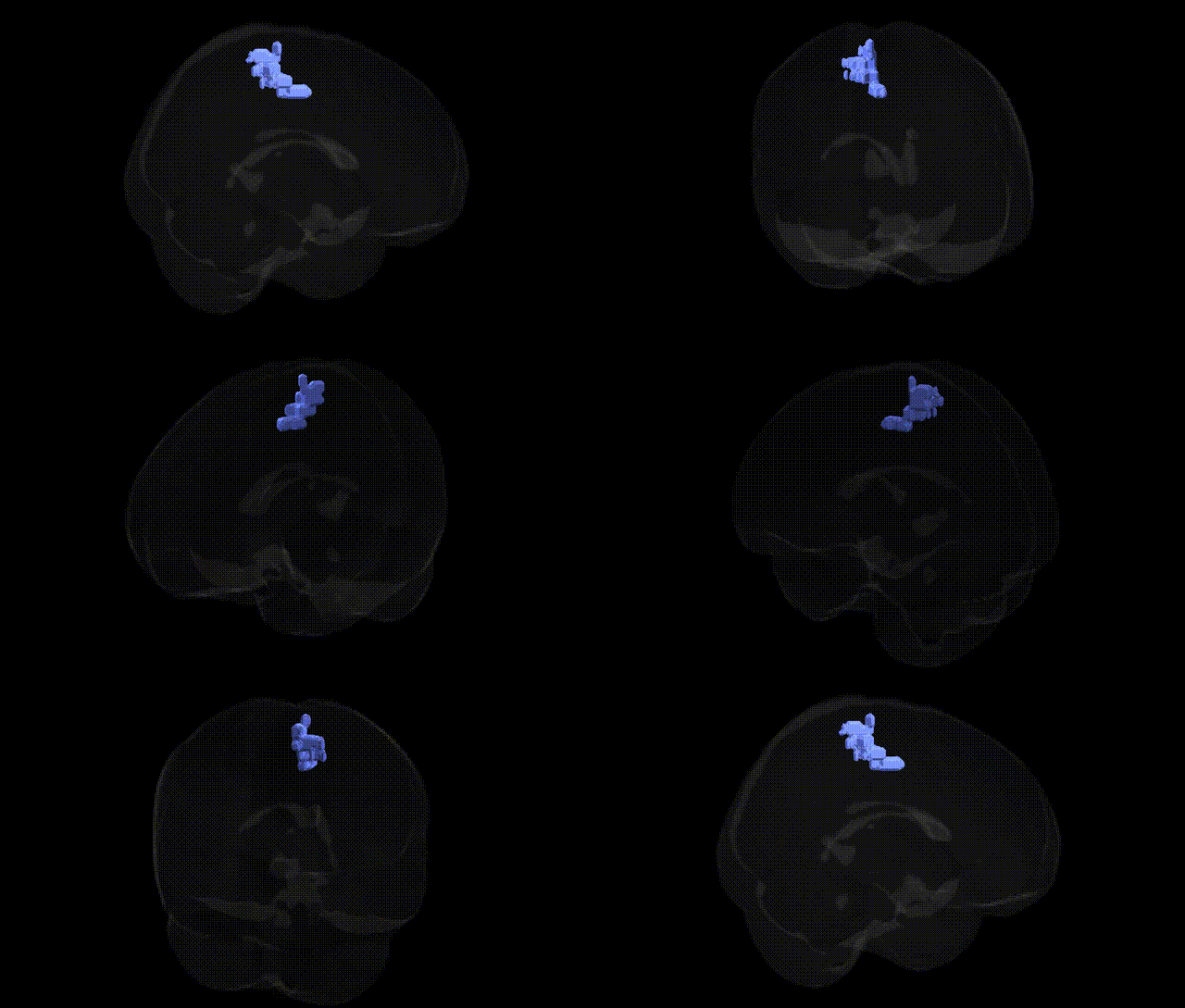
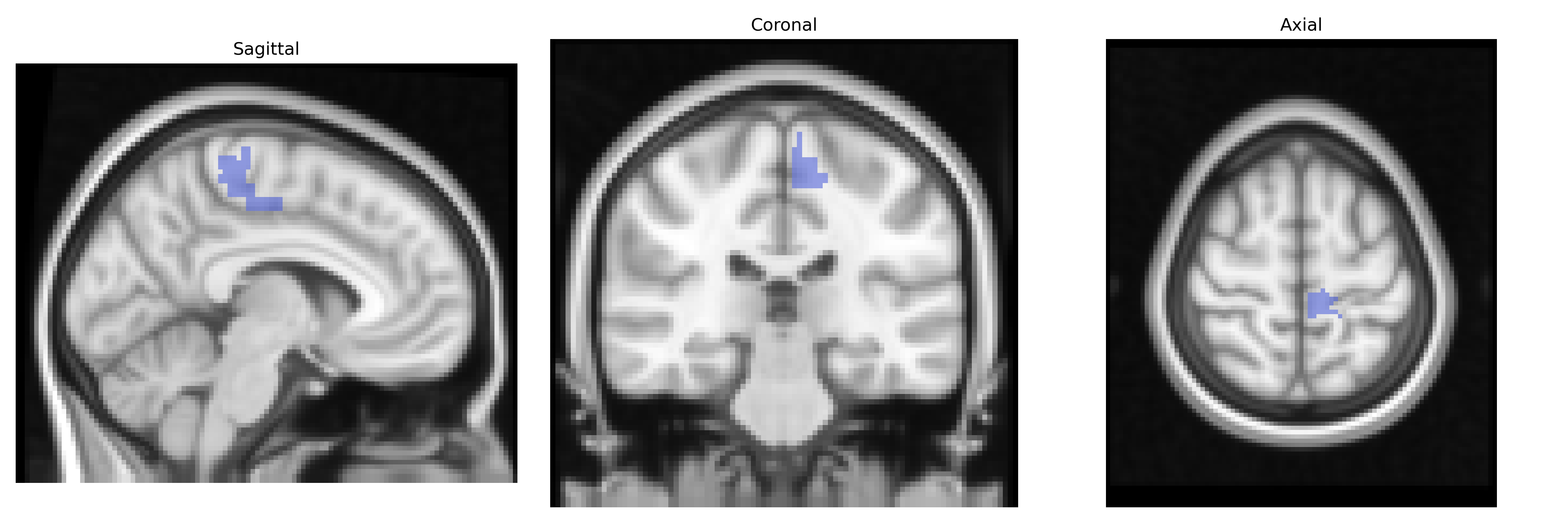
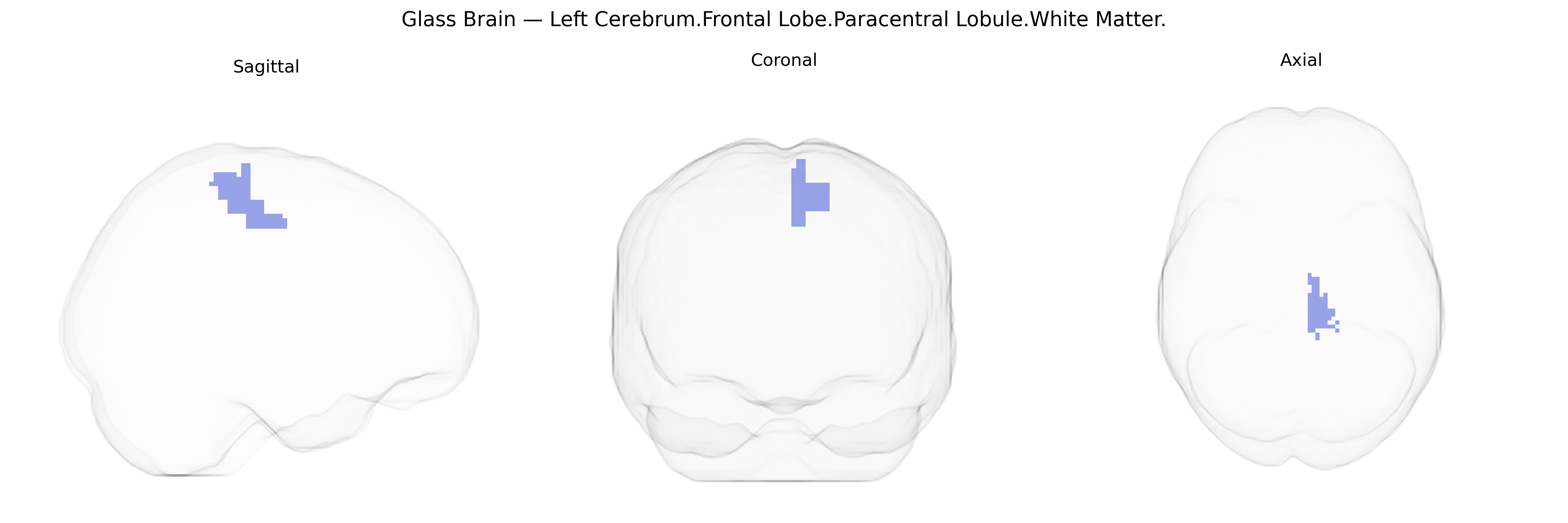
The bilateral Left Cerebrum.Frontal Lobe.Paracentral Lobule.White Matter corresponds to the subcortical fiber pathways underlying the paracentral lobule of the frontal lobe on the left hemisphere, encompassing descending and ascending projection fibers, association tracts, and short U-fibers that connect motor and somatosensory regions. This white matter region lies adjacent to the medial portion of the precentral and postcentral gyri, integrating signals involved in voluntary motor control—especially of the lower limb—and primary somatosensory processing, and serves as a conduit between cortical areas and deeper structures such as the basal ganglia, thalamus, and spinal cord. No direct Wikipedia article exists for this exact white matter designation; a related cortical structure is the Paracentral lobule.
The bilateral Left Cerebrum Frontal Lobe Paracentral Lobule White Matter, corresponding roughly to medial sensorimotor cortex and its underlying projection fibers, has been implicated in several genetic and GWAS-based associations, primarily through studies of cortical structure, motor function, and neuropsychiatric traits. Large-scale neuroimaging GWAS (e.g., ENIGMA, UK Biobank) have identified multiple common variants, particularly near genes involved in neurodevelopment, axon guidance, and myelination (such as variants in or near MAPT, AUTS2, and CNTN4), that influence regional cortical thickness, surface area, and white matter microstructure in medial frontal/sensorimotor territories overlapping the paracentral lobule. Polygenic risk for schizophrenia, bipolar disorder, and major depressive disorder has been associated with structural and connectivity alterations in this region’s white matter, although these associations are typically distributed rather than region-specific and involve many loci of small effect. Motor-related traits, including gait parameters and fine motor performance, show heritable variation linked to white matter integrity in sensorimotor pathways, with GWAS highlighting genes related to cytoskeletal organization and synaptic function, while familial and twin studies of cerebral palsy and motor development also implicate genetic influences on paracentral white matter vulnerability. Additionally, autoimmune and inflammatory conditions with genetic risk, such as multiple sclerosis, can preferentially affect periventricular and frontal white matter tracts projecting to the paracentral lobule, with risk variants in immune-related genes (e.g., HLA region) contributing to lesion patterns that secondarily alter this region’s structure and function. Overall, current evidence suggests that genetic effects on this specific Talairach-defined white matter region arise mainly from broad neurodevelopmental, myelination, and psychiatric risk loci that shape global and sensorimotor-network brain architecture rather than from variants uniquely targeting the paracentral lobule.
Overview generated by GPT-4o (2026).
Region ID: 1051
Hemisphere: bilateral
Atlas: Talairach labels 2mm
Full Quality Version: Download MP4
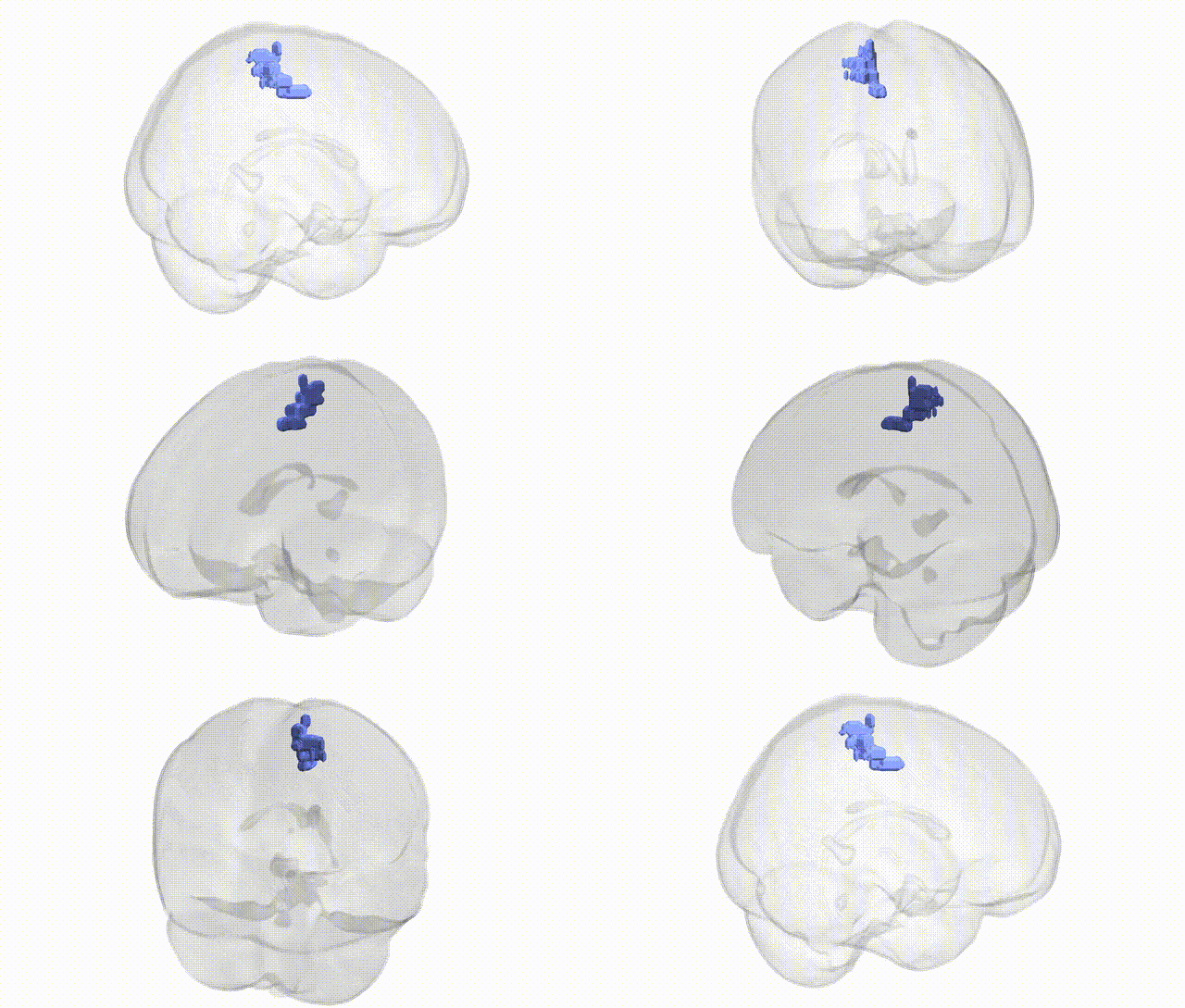
Full Quality Version: Download MP4
Wali Sidiqyar*, Gaurav Rudravaram*, Elyssa M. McMaster, Trent M. Schwartz, Adam M. Saunders, Kurt G. Schilling, Bennett A. Landman "Introducing SPINS: A Shared Public Visualization Library of Neuroanatomical Structures." Medical Imaging with Deep Learning- short paper
This resource is licensed under CC0 1.0 Universal (Public Domain).