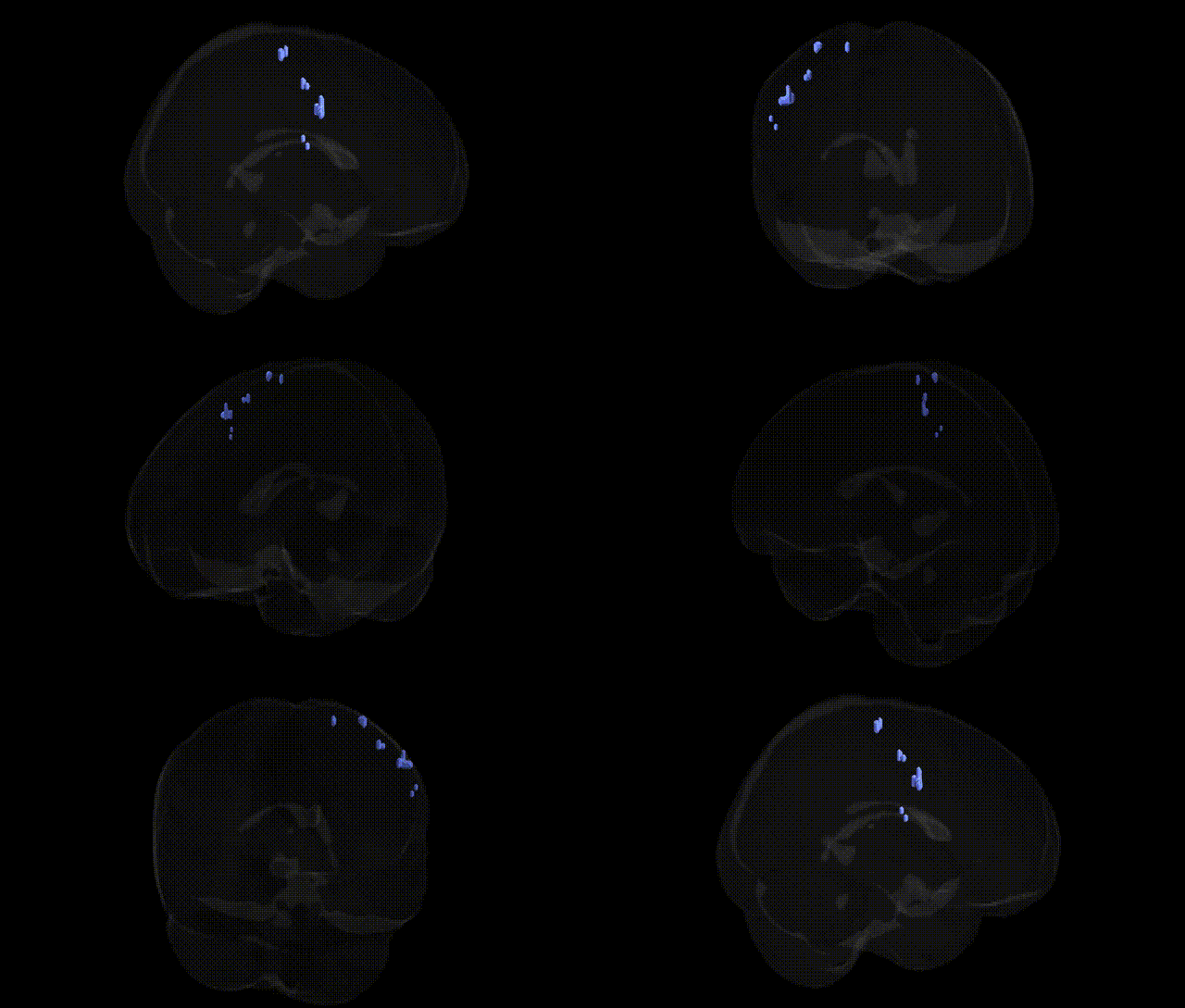
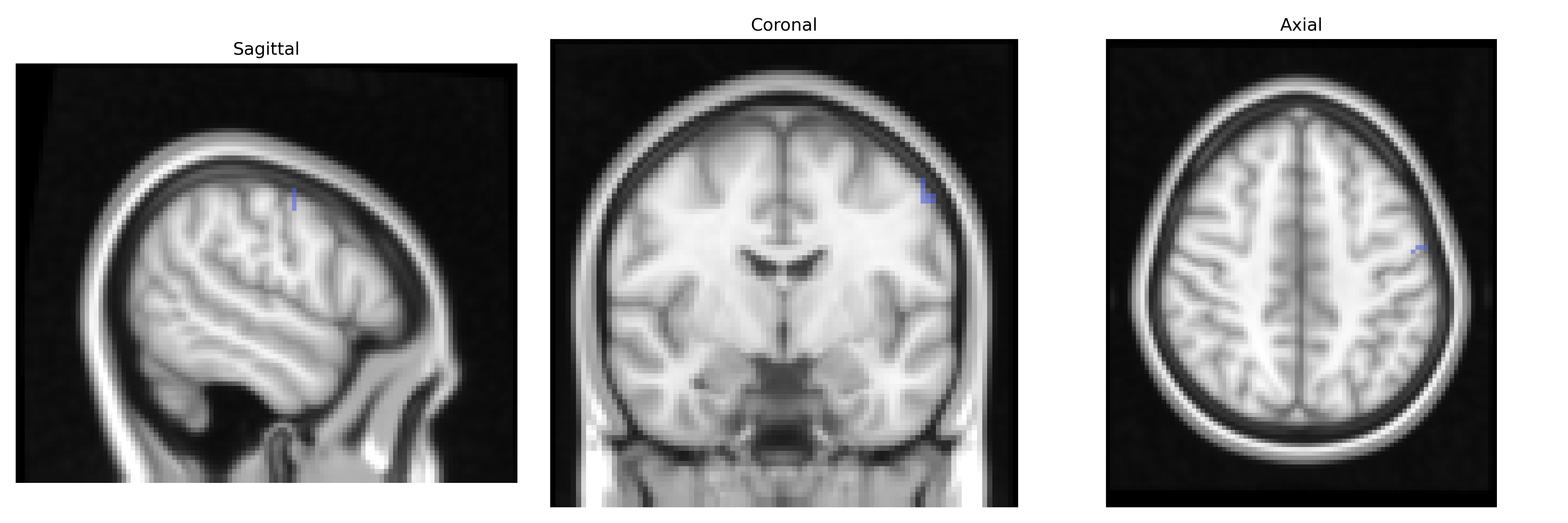
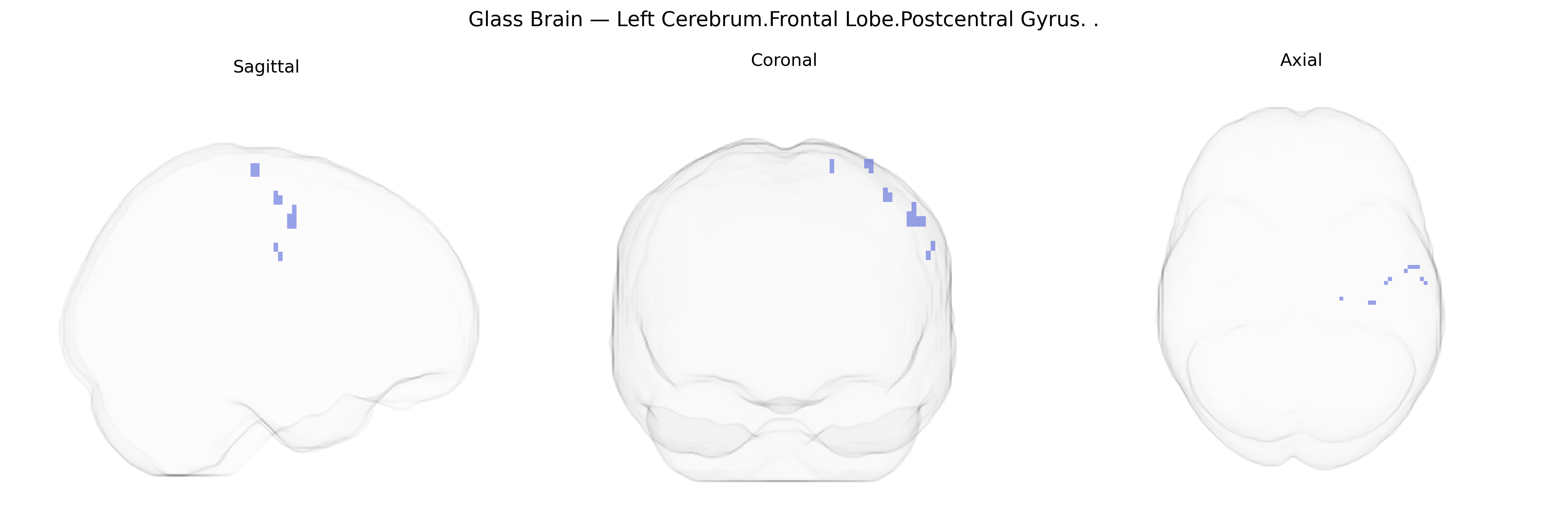
The bilateral Left Cerebrum.Frontal Lobe.Postcentral Gyrus label in the Talairach 2 mm atlas appears to be a misclassification, as the postcentral gyrus is anatomically part of the parietal lobe, not the frontal lobe. The postcentral gyrus is the primary somatosensory cortex (Brodmann areas 3, 1, and 2), receiving and processing tactile, proprioceptive, nociceptive, and temperature information from the contralateral side of the body via thalamocortical projections. Organized somatotopically as the sensory homunculus, it plays a crucial role in conscious perception of touch and body position, as well as in higher-order integration of somatosensory input that supports motor control, object manipulation, and body schema. There is no direct Wikipedia link matching the full atlas label, but the relevant structure is the postcentral gyrus: Postcentral gyrus.
The “Left Cerebrum.Frontal Lobe.Postcentral Gyrus” label in the Talairach 2 mm atlas likely reflects a minor parcellation discrepancy, as the postcentral gyrus is classically parietal; in large-scale imaging genetics, this area corresponds to sensorimotor cortex at the frontal–parietal border and has been implicated primarily through GWAS of cortical structure and function rather than single-gene associations. ENIGMA and UK Biobank–based GWAS have identified multiple loci (e.g., in genes involved in neurodevelopment, synaptic function, and cell adhesion such as CENPW, TBR1, and variants near microtubule- and axon-guidance genes) that influence regional cortical thickness and surface area in primary somatosensory/motor regions encompassing the postcentral gyrus, with polygenic architecture overlapping that of general cognitive ability and educational attainment. Imaging–genetics studies of schizophrenia, bipolar disorder, and major depressive disorder have associated risk polygenic scores with altered cortical thickness and gyrification in bilateral sensorimotor cortices, including postcentral regions, while autism spectrum disorder and ADHD GWAS-derived polygenic scores have been linked to atypical sensory processing and motor circuitry involving postcentral and adjacent frontal areas. Motor-related disorders such as ALS and focal dystonias show structural and functional changes in postcentral and precentral regions, with GWAS highlighting genes involved in axonal transport and neuronal survival that may indirectly modulate this area’s integrity. Large GWAS of chronic pain and somatosensory traits (e.g., neuropathic pain, tactile sensitivity) have implicated polygenic variants that correlate with altered activation and morphology in the postcentral gyrus, supporting a genetically influenced role in pain perception and somatosensory integration. Overall, genetic influences on this bilateral region appear highly polygenic and pleiotropic, shared with general cortical development and diverse neuropsychiatric and sensorimotor traits rather than being driven by region-specific “Postcentral Gyrus genes.”
Overview generated by GPT-4o (2026).
Region ID: 979
Hemisphere: bilateral
Atlas: Talairach labels 2mm
Full Quality Version: Download MP4
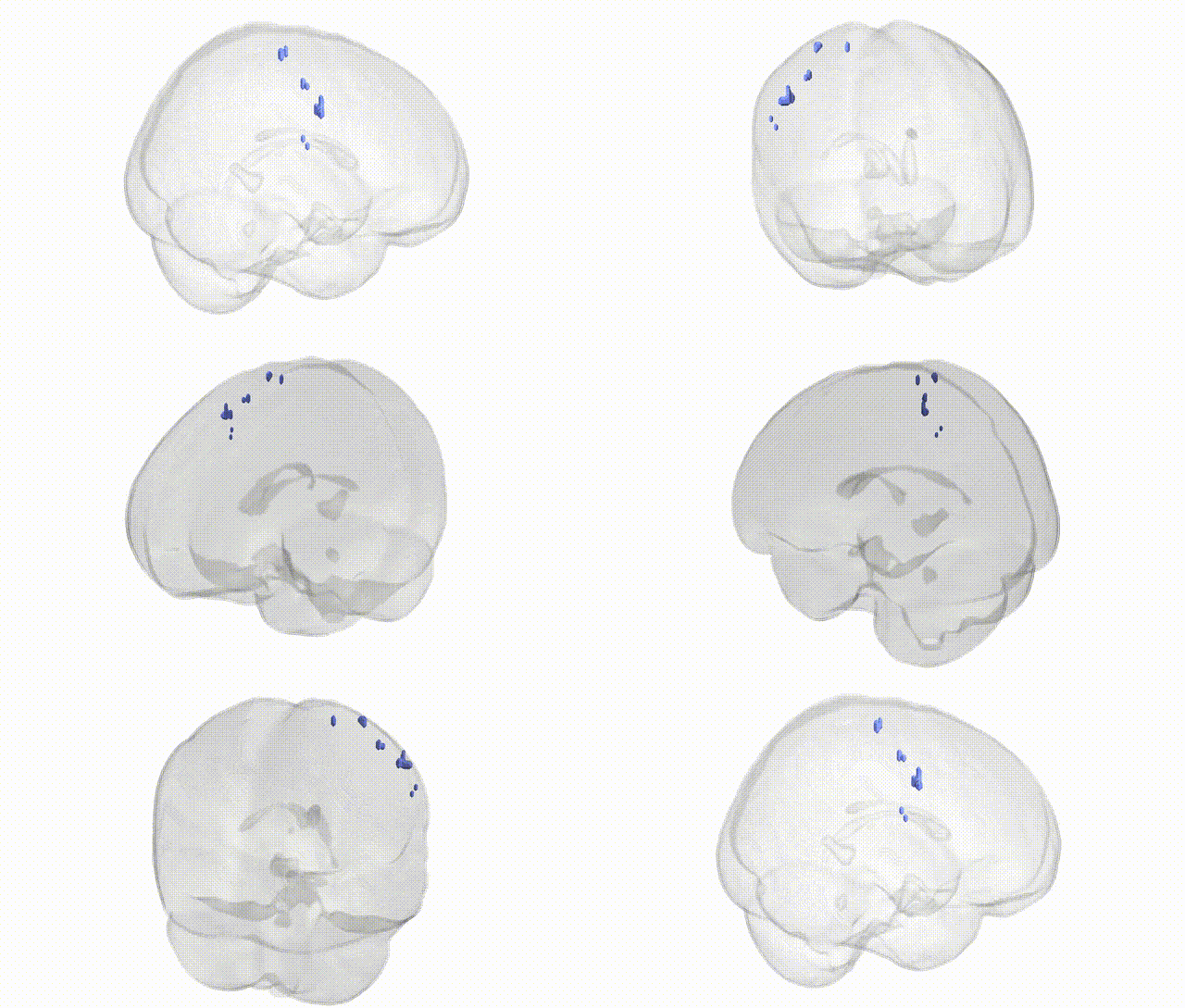
Full Quality Version: Download MP4
Wali Sidiqyar*, Gaurav Rudravaram*, Elyssa M. McMaster, Trent M. Schwartz, Adam M. Saunders, Kurt G. Schilling, Bennett A. Landman "Introducing SPINS: A Shared Public Visualization Library of Neuroanatomical Structures." Medical Imaging with Deep Learning- short paper
This resource is licensed under CC0 1.0 Universal (Public Domain).